
Farewell to a Rock Anchor: Remembering Scorpions Bassist Francis Buchholz
Remembering Francis Buchholz: The Quiet Architect of Scorpions’ Thunder
Former Scorpions and Michael Schenker bassist Francis Buchholz has died at 71, leaving behind a legacy that helped define arena rock bass playing and some of the most enduring hard rock records of the late 20th century. His precise, melodic low end powered Scorpions’ classic era, influenced generations of players, and remains etched into rock history even as fans and fellow musicians mourn his passing.
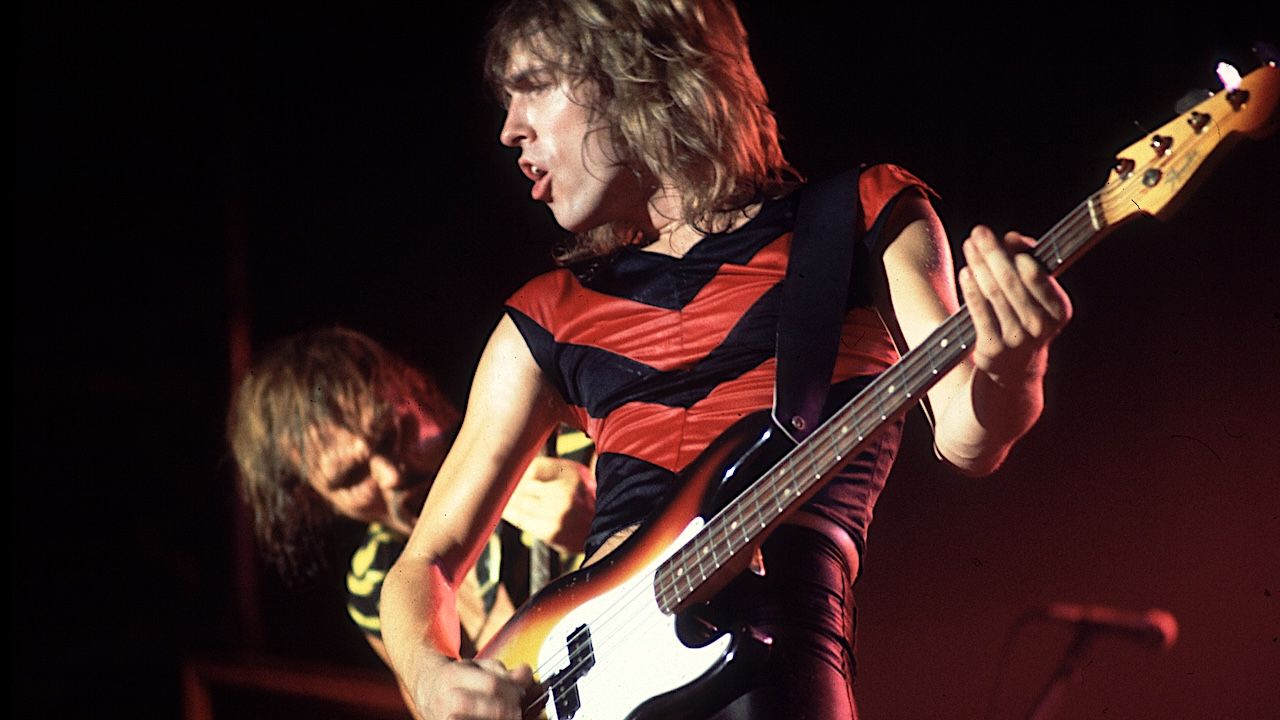
News of Buchholz’s death was confirmed by his family on January 23 via a Facebook statement, closing the chapter on a musician whose work quietly underpinned some of rock’s loudest anthems.
The Announcement and Immediate Reaction
The family’s post—shared across rock and metal communities—framed Buchholz’s passing with a mixture of grief and gratitude, capturing what he meant not just as a musician, but as a person.
“Though the strings have gone silent, his soul remains in every note he played and in every life he touched.”
Within hours, tributes began circulating from fans, musicians, and rock media. On platforms that have documented heavy music for decades—Louder, Classic Rock Magazine, and fan-run archives—threads quickly turned into informal memorials, with tour photos, vinyl collections, and personal stories of seeing Buchholz live.
For younger fans who may have discovered Scorpions via streaming playlists or Guitar Hero-era nostalgia, the news also served as a history lesson in how integral a bassist can be to a band built around twin guitars and a towering frontman.
From Hannover to Arenas: A Brief Career Overview
Born in 1954 in Hanover, West Germany, Francis Buchholz joined Scorpions in the mid-1970s, a period when the band was transitioning from cult European act into global hard rock force. By the time MTV would beam their videos into living rooms worldwide, Buchholz was already the rhythmic bedrock of the group.
He played on a run of albums that are now canon in hard rock history:
- “In Trance” (1975) – The beginning of Scorpions’ more focused, melodic hard rock sound.
- “Taken by Force” (1977) – A transitional record with a darker undercurrent.
- “Lovedrive” (1979) – Often cited as the turning point into their arena-ready era.
- “Animal Magnetism” (1980) – Slow-burning riffs and ominous grooves, with Buchholz front and center in the mix.
- “Blackout” (1982) – A breakthrough in the US, featuring the punchy bass lines that complemented Rudolf Schenker’s riffs.
- “Love at First Sting” (1984) – The commercial zenith, home to “Rock You Like a Hurricane” and “Still Loving You.”
- “World Wide Live” (1985, live) – A document of Scorpions at peak power, and a masterclass in stadium bass playing.
He later played with Michael Schenker, reinforcing his reputation as a go-to bassist for guitar-driven rock that needed both muscle and musicality.
This stretch of records didn’t just sell millions; they cemented Scorpions as a bridge between classic hard rock and what would become mainstream heavy metal, especially in the United States and Japan.
A Bassist’s Bassist: Playing Style and Musical Impact
In a genre that often worships guitar heroes, Francis Buchholz built his influence in a subtler way. He wasn’t a flash merchant, but a strategist—crafting lines that made songs feel bigger without distracting from the vocal or guitars.
Listen closely to tracks like:
- “No One Like You” – The bass locks with the snare in a way that makes the chorus explode.
- “Big City Nights” – Simple on paper, but the groove is what makes the song feel like a midnight stadium anthem.
- “The Zoo” – A textbook example of how a bass line can be menacing and minimalist at the same time.
His tone leaned punchy rather than boomy, articulate enough to cut through the Scorpions’ stacked guitars and synths on their ’80s releases. In that sense, he foreshadowed the more “present” bass sounds that would become standard in hard rock and metal production.
“Francis understood space. He knew when to fill it and when to leave it alone, and that’s why those songs still feel so massive.”
— A frequent sentiment among bass players discussing Buchholz’s work on forums and in interviews
Among musicians, he’s often cited as one of those players you notice most when he’s not there anymore—proof that invisibility, in rock terms, can be a compliment.
Scorpions, the Cold War, and Global Reach
To understand Buchholz’s place in rock history, you have to look beyond the charts. Scorpions were more than a successful band; they were part of the cultural soundtrack to the waning years of the Cold War. A German hard rock group breaking big in the US and across the Iron Curtain carried a certain symbolism.
While “Wind of Change” (1990) arrived just after Buchholz’s prime recording run with the band, the global touring infrastructure, fan base, and sound that made that song resonate were built on the albums he played on. Stadium tours across Europe, North America, and Asia in the ’80s turned Scorpions into one of the first truly global hard rock exports from continental Europe.
In rock documentaries and retrospectives, Scorpions are frequently name-checked alongside Judas Priest, Iron Maiden, and AC/DC as pillars of what would become the global “heavy metal” touring circuit. Buchholz was on the ground for that build-out, night after night, city after city.
In that context, Buchholz wasn’t just a bassist in a successful band—he was part of a cultural export that reshaped how European rock looked and sounded on the world stage.
Life After Scorpions: Collaborations and Later Work
After parting ways with Scorpions in the early ’90s, Buchholz didn’t chase the spotlight. Instead, he moved like a seasoned studio and touring pro—selective, dependable, and focused.
His work with Michael Schenker, in particular, kept him close to the orbit of players who valued both chops and songcraft. These collaborations leaned into classic hard rock and melodic metal, genres that never fully left the stage even as grunge, nu metal, and later trends grabbed headlines.
Interviews over the years painted Buchholz as a musician’s musician: thoughtful about arrangements, pragmatic about the industry, and more interested in the quality of the music than the volume of his press coverage.
In a rock era increasingly obsessed with front-facing personalities, Buchholz remained resolutely old-school: let the work speak, let the music travel farther than any one name.
Critical Assessment: Strengths, Weaknesses, and Legacy
Evaluating Buchholz’s career from today’s vantage point reveals both his clear strengths and the quieter limitations of his public profile.
What He Did Exceptionally Well
- Song-first bass playing: His lines served the track. This is why “World Wide Live” still feels massive compared to more technically “impressive” but less musical live records from the era.
- Consistency on landmark albums: From “Lovedrive” through “Love at First Sting,” there’s a reliability to the low end that ties Scorpions’ stylistic shifts together.
- Translating European hard rock to a global sound: His playing helped bridge Teutonic precision with radio-friendly hooks.
Where the Legacy Is Underrated
- Name recognition: Outside dedicated rock circles, his name rarely comes up alongside more widely celebrated bassists like John Paul Jones or Steve Harris, despite a discography that can stand in the same stadiums.
- Archival visibility: Many mainstream histories of metal and hard rock give Scorpions broad credit but seldom spotlight specific contributions from Buchholz.
Yet the streaming era has been quietly kind to his reputation. As younger players break down isolated bass tracks on YouTube or pick apart stems from classic albums, Buchholz’s lines are being re-evaluated not just as functional, but as elegant.
Where to Start: Essential Francis Buchholz Listening
For anyone wanting to explore or revisit Francis Buchholz’s work, a focused playlist tells the story better than any résumé. Consider this as a starting lineup:
- “The Zoo” – Animal Magnetism (1980)
A slow, stalking groove that shows how restraint can be cinematic. - “Blackout” – Blackout (1982)
Punchy, driving bass that keeps pace with one of Scorpions’ most energetic cuts. - “No One Like You” – Blackout (1982)
A perfect balance of hook and backbone, central to the song’s enduring radio life. - “Rock You Like a Hurricane” – Love at First Sting (1984)
Ubiquitous for a reason; underneath the iconic riff is a bass part that hits like a second rhythm guitar without losing low-end weight. - “Big City Nights” – Love at First Sting (1984)
A case study in how a straightforward bass line can make a chorus feel anthemic. - Selections from World Wide Live (1985)
To hear how those lines translate to a roaring arena, this live album is essential.
Many of these tracks are readily available on major streaming platforms, often in remastered form, making it easier than ever to appreciate the clarity and intent of his bass playing.
Closing Notes: A Quiet Giant in a Loud Genre
As the rock world processes the loss of Francis Buchholz, the most fitting tribute may be the simplest one: put the records on, and really listen. Behind the pyro, the leather, and the towering choruses, there’s a bassist meticulously holding chaos and clarity in balance.
His family’s statement—“though the strings have gone silent, his soul remains in every note he played”—lands differently when you revisit those records with his contribution in mind. It turns background into foreground, and a “supporting player” into what he quietly was all along: one of the architects of how hard rock feels.
Rock history has a way of eventually correcting its own credits. If the current wave of reassessment around classic-era metal and hard rock continues, Francis Buchholz’s name is likely to be spoken more often in the years ahead—not just as “former Scorpions bassist,” but as a reference point for what tasteful, powerful bass playing can do in a guitar-dominated world.
