
Ashley Tisdale Walks Away from a Toxic Mom Group — What Her Story Says About Modern Motherhood
Ashley Tisdale’s “Toxic Mom Group” Exit and What It Reveals About Modern Mom Culture
Ashley Tisdale has revealed she quit what she describes as a “toxic mom group” after being brought to tears, opening up a wider conversation about modern motherhood, online parenting culture, and the pressure on celebrity moms to present a perfect image. Her story, reported by the BBC, taps into a familiar tension between support and judgment in parenting communities, both online and offline.
Coming from someone many millennials still associate with the hyper-controlled gloss of High School Musical, Tisdale’s candid account cuts through the curated Instagram version of parenting. Instead, it spotlights how even famous, seemingly put‑together moms can feel cornered by comparison, unsolicited advice, and subtle (or not-so-subtle) shaming.
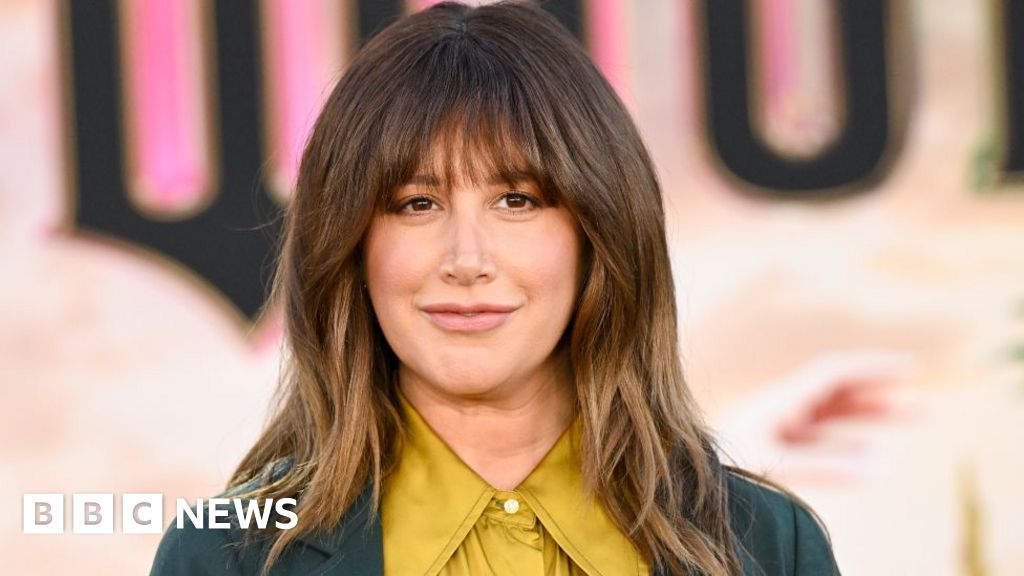
From Disney Darling to Candid Mom: The Cultural Context
For a generation that grew up with Disney Channel, Ashley Tisdale is pop-culture comfort food. She was Sharpay Evans, the ultra‑dramatic antagonist of High School Musical, the voice of Candace Flynn in Phineas and Ferb, and a fixture of 2000s teen entertainment. In recent years, she’s shifted into lifestyle and wellness spaces, sharing home design, skincare, and now motherhood with a sizable social media following.
That trajectory—from tightly managed studio projects to carefully curated Instagram branding—is typical for many former teen stars. But motherhood content is a uniquely fraught lane. Parenting advice accounts, “momfluencers,” and private mom groups tend to blur the line between support network and performance space, where vulnerability often co‑exists with unspoken competition over who’s doing it “right.”
The BBC’s coverage of Tisdale’s experience taps into this broader cultural shift, where celebrity moms no longer just do press junkets; they participate in parenting discourse, often in extremely public and scrutinised ways.
What Actually Happened in Ashley Tisdale’s “Toxic Mom Group”?
In her comments reported by the BBC, Tisdale describes joining a group of other new moms with the expectation of finding community—only to feel overwhelmed and emotionally drained instead. Rather than reassurance, she encountered judgment and pressure, to the point where she says she was “brought to tears” and ultimately decided to walk away.
“I remember leaving in tears and thinking, ‘If this is what being in a mom group is, I don’t want any part of it.’”
— Ashley Tisdale, as reported in BBC Entertainment coverage
While specific names and details are kept private, the scenario is instantly familiar to many parents: what begins as a WhatsApp or in‑person circle meant for solidarity slides into silent ranking systems—who bounced back fastest, who’s breastfeeding, whose baby is hitting milestones “on time.”

Tisdale’s decision to quit the group is less about celebrity drama and more about boundaries: recognising when a space that’s supposed to be nurturing has become emotionally unsafe.
The Anatomy of a “Toxic Mom Group”
The term “toxic” gets thrown around a lot, but in the context of parenting communities it usually refers to patterns that leave members feeling smaller, guilty, or constantly inadequate. Tisdale’s story surfaces several dynamics that are broadly recognisable, far beyond Hollywood:
- Covert judgment disguised as concern – Questions like “Oh, you’re not doing X?” or “Are you sure that’s best?” which are less about curiosity and more about subtle policing.
- One-size-fits-all parenting dogma – Treating one approach (sleep training, feeding style, screen time rules) as the gold standard and framing alternatives as irresponsible.
- Milestone Olympics – Comparing babies’ development as if it’s a leaderboard rather than a spectrum.
- Hierarchies of “good” and “bad” mothers – Those who conform to the group norms are quietly elevated; anyone deviating is pitied or criticised.
When stacked together, these elements can turn a community that’s meant to be a safety net into yet another stressor—especially for new parents already dealing with sleep deprivation, identity shifts, and, in many cases, postpartum anxiety or depression.
Why Ashley Tisdale’s Story Hits Differently Through the Celebrity Lens
Celebrity mom culture has gone through several eras. In the 2000s, tabloids relentlessly tracked “baby bumps” and “post‑baby bodies.” The 2010s ushered in the age of aspirational Instagram families—heavily filtered, heavily branded, and often contractually tied to sponsored products. Now, we’re in what might be called the “relatable confessional” era, where stars talk openly about IVF, miscarriages, postpartum depression, and burnout.
Tisdale’s account lands squarely in that third wave: not a glossy announcement, but a confession about where boundaries needed to be set. It echoes other high‑profile voices—like Chrissy Teigen or Hilary Duff—who have challenged idealised expectations of perfect, endlessly patient, always‑smiling motherhood.
“The mom group was supposed to make me feel less alone. Instead, I felt like I had to defend every choice I made as a parent.”
— Ashley Tisdale, paraphrased from interview remarks reported in entertainment media
The irony is that while celebrities have more resources—nannies, night nurses, private doctors—they’re also more vulnerable to public commentary and expectations. A “toxic mom group” for a celebrity isn’t just a dozen people in a WhatsApp thread; it can feel like an extension of the internet’s chorus of opinions.

Strengths, Weaknesses, and the Bigger Conversation
As an entertainment story, the BBC’s coverage works because it taps into both gossip‑adjacent curiosity (“What happened in that group?”) and a genuinely relatable issue. It frames Tisdale not as a scandal figure but as a case study in the emotional math of motherhood communities.
- Strengths:
- Highlights the emotional impact of subtle judgment in parenting circles.
- Connects a celebrity narrative to a widespread, everyday experience.
- Avoids overt sensationalism by respecting Tisdale’s privacy about specific individuals.
- Weaknesses / Limitations:
- The focus on one celebrity anecdote leaves out broader data on how mom groups function across different cultures and communities.
- There’s limited exploration of how race, class, or access to resources shape who can “opt out” of certain parenting spaces.
Still, for a mainstream entertainment piece, it effectively nudges readers toward self‑reflection: If a wealthy, well‑connected celebrity feels crushed by this kind of group, what does that say about the pressure on everyone else?
Related Viewing: Ashley Tisdale On Screen and In Conversation
For those who know Ashley Tisdale primarily as Sharpay, revisiting her work can be an oddly poignant experience in light of her more vulnerable public persona today.
- High School Musical trilogy (2006–2008) – Available on Disney+. Tisdale’s performance as Sharpay is all sharp elbows and comedic narcissism; it’s striking to contrast that cartoonish confidence with her current candidness about insecurity and overwhelm.
- Phineas and Ferb (2007–2015) – On Disney+. Voice work that showcases her comic timing as the perpetually frazzled Candace Flynn, another character endlessly judged for “overreacting.”
- Podcast interviews & wellness content – Recent appearances and her own digital content dive into topics ranging from anxiety to design to motherhood, rounding out the image of a former teen star trying to live a grounded adult life.
Mom Groups, Social Media, and the Changing Script of Motherhood
Tisdale’s “toxic mom group” episode lands at a time when the script for motherhood is actively being rewritten. Traditional, in‑person communities—neighbours, extended family, local parent groups—have been partly replaced or supplemented by digital spaces: Facebook groups, Instagram comment sections, private Discords and messaging threads.
These spaces can be transformative. They connect parents across geography, normalize diverse family structures, and offer late‑night advice when paediatricians’ offices are closed. But they also tend to magnify what sociologists call “intensive parenting”: the idea that good parenting requires constant optimization, endless research, and near‑perfect execution.

When a celebrity like Tisdale says, in effect, “Actually, I left that space because it hurt more than it helped,” it subtly pushes back against the idea that committed parents must tolerate any and all forms of “support,” no matter how draining. It reframes boundaries not as selfishness, but as part of sustainable caregiving.
Key Takeaways: What Ashley Tisdale’s Story Offers Other Parents
Stripped of the celebrity layer, Tisdale’s experience contains a handful of practical, almost quietly radical lessons:
- You’re allowed to leave any group that makes you feel worse, not better. Even if it’s labelled “support,” the real test is how you feel after participating.
- “Toxicity” can be subtle. It’s not always outright bullying; it’s often a steady drip of comparison, second‑guessing, and performative perfection.
- Celebrities aren’t immune to mom‑shaming. More visibility often means more pressure, not less.
- Boundaries are part of responsible parenting. Protecting your mental health is not indulgent; it’s a prerequisite for being present with your child.

Conclusion: Beyond the “Toxic Mom Group” Headline
BBC’s coverage of Ashley Tisdale leaving a toxic mom group sits at the intersection of celebrity news and social commentary. It uses a single, emotionally resonant anecdote to crack open a conversation about what modern parent communities are for—and who they’re actually serving.
As more public figures speak frankly about the messy, un‑Instagrammable parts of parenting, entertainment journalism is being nudged to evolve as well. Stories like this are less about scandal and more about solidarity: a reminder that feeling out of place in supposedly supportive spaces is not a personal failing, and that sometimes the healthiest move is simply to log off, leave the chat, and find (or build) a different kind of village.
Ultimately, the cultural impact of Tisdale’s account isn’t in the details of one unnamed group, but in the permission it gives readers to question the spaces they’re told they “should” be grateful for. If even Sharpay can walk away from a performance she didn’t sign up for, there’s room for everyday parents to do the same.
