
AI Music Generators, Copyright, and Web3: How Blockchain Could Reshape Ownership of Machine-Made Songs
AI music generators like Suno, Udio, and Stable Audio have made studio‑quality tracks accessible to anyone with a text prompt, but they have also ignited a high‑stakes debate around copyright, ownership, and royalties. At the same time, blockchain and Web3 infrastructure are quietly maturing into realistic rails for tracking provenance, encoding licenses as smart contracts, and automating revenue splits across both human and machine contributors. This article connects those dots, outlining how crypto‑native tools can structure rights and incentives in an era where music can be generated at scale by AI.
Executive summary
AI music generation has moved from novelty to infrastructure. Tools such as Suno, Udio, and Stable Audio now produce full‑length, mixed, and mastered songs from plain‑language prompts, driving viral content across TikTok, YouTube, and short‑form platforms. This shift exposes a critical gap: traditional copyright and royalty systems were never designed for infinite, prompt‑driven works, nor for models trained on massive datasets of licensed and unlicensed audio.
Crypto and blockchain technology cannot solve the underlying legal questions alone, but they can provide verifiable data, programmable payments, and interoperable identity layers for both humans and AI agents. For investors, labels, and Web3 builders, the opportunity is to design infrastructure that:
- Tracks provenance for AI‑assisted tracks on‑chain (who prompted what, when, and with which model).
- Tokenizes rights and revenue streams using NFTs and fungible tokens tied to clear license terms.
- Automates royalty distribution via smart contracts across vocalists, producers, dataset licensors, and, potentially, model operators.
- Integrates with existing Web2 platforms through APIs, watermarking, and on‑chain metadata standards.
The rest of this article:
- Maps the current AI music landscape and why it stresses legacy copyright.
- Explains how blockchain primitives (smart contracts, NFTs, on‑chain identity) can structure AI‑era music rights.
- Compares emerging crypto‑native music protocols and licensing models.
- Outlines actionable frameworks for creators, labels, and investors — plus the key risks and constraints.
AI music generators: from niche experiment to mainstream infrastructure
Text‑to‑music systems have rapidly improved in quality between 2023 and 2025, mirroring the trajectory of image and text models. Platforms like Suno and Udio now allow users to generate full tracks — complete with lyrics, vocals, instrumentation, and structure — by entering a short prompt describing genre, mood, and theme.
Typical use cases include:
- Creators making soundtrack music for short‑form videos or livestreams.
- Non‑musicians experimenting with song ideas without traditional production tools.
- Musicians using AI for demos, backing tracks, or rapid ideation before human refinement.
Social feeds are full of challenges such as “AI vs human producer” or “turn my followers’ comments into a song,” highlighting both the entertainment value and the speed of AI‑generated content. That same speed is what threatens to overwhelm streaming platforms and legacy royalty infrastructure.
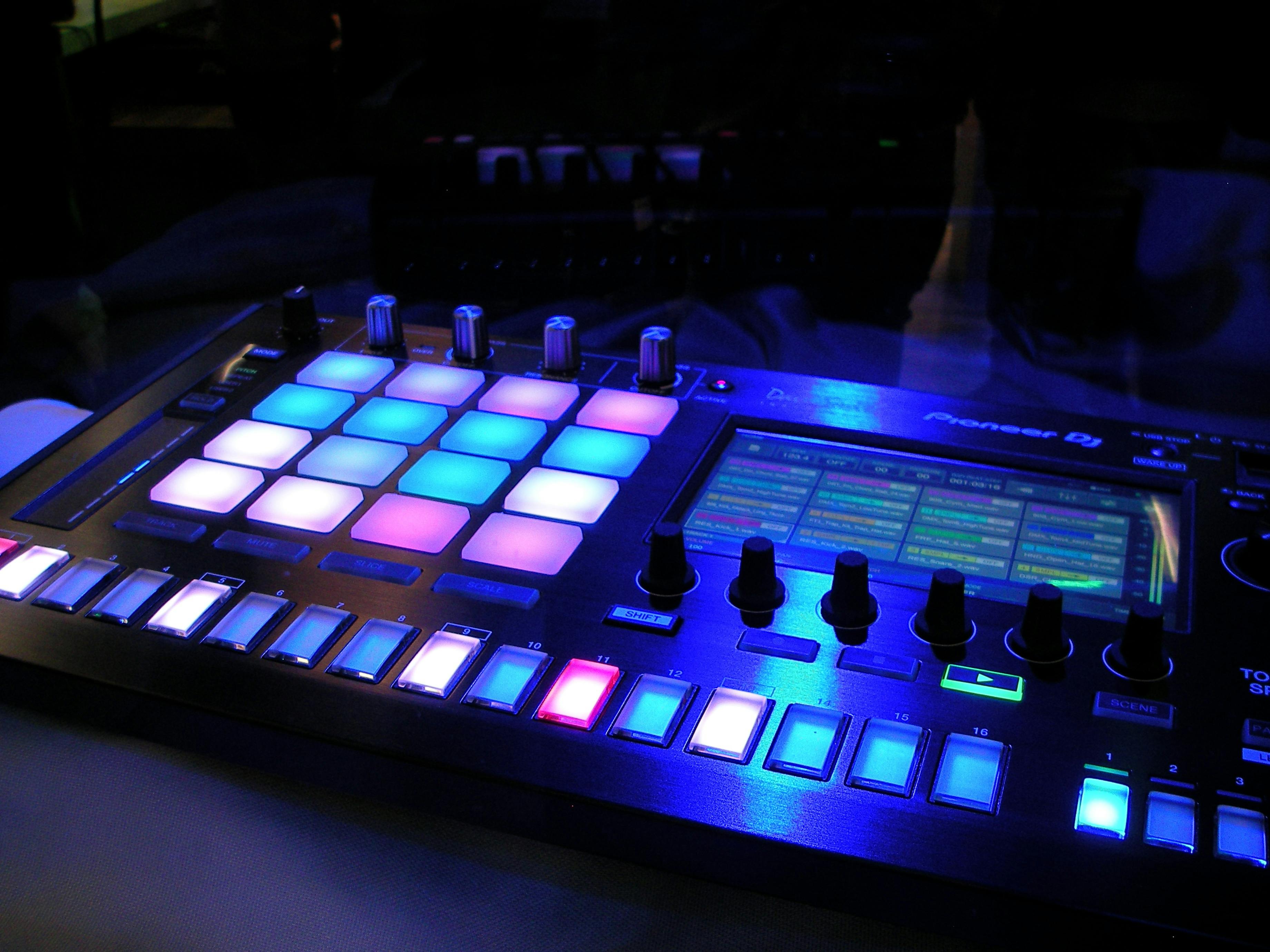
While precise user numbers for closed‑source tools are not always public, analytics from app stores and web traffic providers indicate exponential growth in AI‑music usage, echoing broader generative AI adoption. This volume is the backdrop for the copyright and monetization questions that follow.
The copyright problem: who owns AI‑generated music?
AI music generators sit at the intersection of three complex layers:
- Training data – often a mix of licensed, partner‑provided, or scraped recordings and stems.
- Models – proprietary or open‑source architectures that learn patterns from that data.
- Outputs – individual tracks that may or may not resemble existing works or artists’ vocal styles.
Key legal tensions include:
- Ownership of outputs: In many jurisdictions, works created entirely by non‑human agents are not clearly protected by copyright. Some platforms specify that users can commercially exploit generated tracks, while others restrict usage or retain certain rights.
- Training on copyrighted works: Rights holders argue that using copyrighted songs as training data without explicit licenses can be an unauthorized use, especially where outputs imitate style or voice.
- Voice and likeness: AI models can generate vocals closely resembling real artists, raising issues around publicity rights and unfair competition, even when melodies and lyrics are original.
“Existing copyright systems were not designed for works created with significant AI input, let alone fully autonomous AI creation. This creates uncertainty for both investors and creators in AI‑generated content markets.”
— Adapted from analyses by IP and copyright policy bodies
From a crypto and Web3 perspective, the challenge is not to “solve” copyright in the legal sense, but to provide verifiable technical structures for:
- Documenting how a piece was created (human‑only, AI‑assisted, or fully synthetic).
- Recording the model, version, and platform used.
- Encoding usage permissions in machine‑readable, enforceable smart contracts.
Why blockchain is a natural fit for AI‑generated music rights
Blockchain and crypto were designed for verified ownership, programmable value flows, and transparent audit trails. These are precisely the features missing from today’s AI music ecosystem, which is dominated by opaque model training, unclear output terms, and centralized platform control.
Core blockchain primitives that map well to AI music include:
- Smart contracts: Self‑executing code that can encode licensing terms (e.g., “this track can be used for UGC on social platforms, but not in TV ads”) and trigger automatic on‑chain royalty splits when a usage event or payment is recorded.
- NFTs (non‑fungible tokens): Unique tokens representing specific tracks, stems, or even AI prompt recipes, enriched with metadata on authorship, AI models used, and license conditions.
- On‑chain identity: Wallet‑linked identities for human creators, labels, AI model providers, and even autonomous “AI agents,” allowing attribution and revenue routing.
- Composable DeFi rails: Streaming payments, revenue‑backed tokens, and collateralization of catalog income, all of which can be extended to AI and AI‑assisted catalogs once rights are well‑defined.
This infrastructure does not eliminate the need for off‑chain enforcement (e.g., DMCA takedowns, contract law), but it provides an objective, tamper‑resistant record of who agreed to what and when — a critical step for an AI‑native music economy.
Comparing traditional vs Web3 approaches to AI music rights
The table below contrasts legacy music rights workflows with Web3‑enabled architectures for AI‑generated music.
| Dimension | Traditional Web2 Rights Management | Web3 / Crypto‑Native Approach |
|---|---|---|
| Ownership record | Distributed across labels, PROs, spreadsheets, contracts | NFTs and on‑chain registries with immutable provenance |
| Royalty splits | Manually negotiated, updated via amendments | Smart‑contract‑defined splits for creators, labels, AI model providers |
| Payment & settlement | Quarterly or semi‑annual royalty statements, high friction | On‑chain, near‑real‑time micropayments via stablecoins or native tokens |
| AI attribution | Rarely tracked formally, buried in TOS | On‑chain metadata for prompts, model versions, and AI contribution level |
| Interoperability | Closed publisher and label systems | Open standards across streaming, marketplaces, and metaverse venues |
On‑chain provenance: logging prompts, models, and human input
In an AI‑heavy workflow, provenance is not just about “who pressed export,” but about how much creative intent and effort came from humans versus models. For crypto‑native rights management, a practical approach is to record at least three layers of provenance on‑chain:
- Prompt provenance – the text prompt (or a hashed version) and timestamp.
- Model provenance – model name, version, provider, and license type.
- Human contribution – edits, overdubs, mix/master changes, and additional stems added after generation.
This information can be stored in NFT metadata or in a decentralized storage layer (e.g., IPFS or Arweave) and referenced on‑chain. That provenance becomes:
- Evidence in disputes over originality or unauthorized mimicry.
- A signal for platforms deciding how to surface, label, or monetize AI‑heavy content.
- A data layer for future regulation, e.g., mandatory AI‑use disclosures.

NFTs as licensing containers for AI‑generated tracks
NFTs are often reduced to “JPEGs,” but their more important property is that they can carry structured, machine‑readable rights information. For AI music, an NFT can represent:
- The master recording of an AI‑assisted or fully AI‑generated track.
- Derivative licenses for UGC, commercial sync, or live performance usage.
- Bundles of stems or “style packs” that other models can condition on.
Crucially, the NFT metadata can specify:
- Permitted uses (e.g., “non‑commercial UGC only,” or “commercial usage up to $X in revenue without additional clearance”).
- Attribution requirements and display of AI involvement.
- Royalty percentages and distribution logic among creators and AI infrastructure providers.

Programmable royalty models for AI‑assisted music
Once rights are tokenized, smart contracts can split revenue among:
- Human songwriters, vocalists, and producers.
- Labels or publishers providing financing, marketing, or catalog access.
- AI model operators, dataset licensors, and tool providers.
A crypto‑native royalty contract might implement logic like:
- 70% to human creatives, pro‑rated by contribution.
- 20% to rights holders of training data (if explicitly licensed and tracked).
- 10% to the AI platform or model provider.
All splits would be:
- Transparent and auditable on‑chain.
- Adjustable via governance if stakeholders agree (e.g., token‑holder votes).
- Payable in stablecoins or platform tokens, enabling fractional micro‑royalties.
| Recipient group | Example share | Notes |
|---|---|---|
| Human songwriters & performers | 60–75% | Weighted by credited contribution |
| Label / publisher | 10–25% | Negotiated based on financing and promotion |
| AI model & platform providers | 5–20% | Could be split between model, hosting, dataset licensors |
Emerging Web3 music and AI ecosystems
While full‑stack AI music protocols are still early, we can learn from existing Web3 music projects and extrapolate how they might integrate AI components.
- On‑chain music catalogs: Protocols that tokenize masters and publishing rights via NFTs or ERC‑20 tokens can extend their schemas to include AI‑usage metadata and model‑based royalty splits.
- Decentralized streaming platforms: Web3 music streaming dApps can label tracks based on AI involvement (e.g., human‑only, AI‑assisted, AI‑primary) and route rewards accordingly, potentially giving listeners the choice to prioritize human‑created works.
- Creator DAOs: Collective governance structures that own shared catalogs can decide how much AI to incorporate, under what ethical guidelines, and how to enforce attribution norms.
The missing link in most current systems is deep integration with mainstream AI tools. Over the next few years, expect to see:
- AI platforms exposing webhooks or APIs that can trigger on‑chain minting events whenever a track is generated.
- Wallet‑based single sign‑on (SSO) for creative tools, binding usage to on‑chain identities.
- Standard schemas for representing AI involvement across chains and platforms.
Risks, limitations, and what crypto cannot fix
Crypto solves coordination and verification problems; it does not automatically resolve underlying legal or ethical conflicts. Stakeholders should be realistic about what Web3 can and cannot do for AI music.
What crypto can help with:
- Transparent provenance and attribution.
- Automated, programmable royalty accounting.
- Interoperable identity and rights representation across apps and chains.
What crypto cannot do on its own:
- Decide whether training on copyrighted audio constitutes infringement in a given jurisdiction.
- Prevent all misuse of voice cloning or style imitation without strong platform rules.
- Guarantee that all users respect on‑chain license terms in off‑chain behavior.
Additional practical risks include:
- Regulatory uncertainty around both AI and tokenized rights (securities classification, consumer protection).
- Security vulnerabilities in smart contracts that govern valuable catalogs and royalty flows.
- User experience friction for non‑crypto‑native creators (wallets, gas fees, key management).
Actionable frameworks for creators, labels, and investors
To navigate AI music and Web3 strategically, different stakeholders can adopt structured playbooks rather than ad‑hoc experiments.
For creators and producers
- Classify your workflows into human‑only, AI‑assisted, and AI‑primary projects.
- Standardize provenance capture (save prompts, model versions, sessions) and link that to on‑chain metadata when minting music NFTs.
- Adopt clear licenses — use standardized on‑chain license templates that specify AI involvement and allowed downstream AI usage.
For labels and rights holders
- Audit catalog exposure — understand where and how your works may be used in training or emulation contexts.
- Pilot blockchain‑based royalty systems for select AI‑assisted projects to test granular splits, reporting, and transparency.
- Develop AI‑specific rider clauses in artist contracts, clarifying permissible uses of AI and rights around artist likeness.
For investors and builders in crypto
- Focus on infrastructure, not hype — prioritize protocols that solve rights data, provenance, payments, and interoperability over short‑term “AI music NFT” speculation.
- Design for compliance — build with regulatory flexibility and off‑chain legal enforceability in mind.
- Integrate with Web2 platforms — value will accrue to tools that connect AI generation, social platforms, and on‑chain rights rather than siloed experiments.
The road ahead: AI‑native music rights on Web3 rails
AI music is not a passing fad; it is becoming embedded in how content is produced across entertainment, advertising, and user‑generated media. Without new infrastructure, rights and revenue for this content will default to a small number of centralized AI platforms and distributors.
Blockchain and crypto offer a credible alternative: open, composable rails where:
- Every track — human, AI‑assisted, or fully synthetic — can carry verifiable provenance and licensing.
- Participants in the creative and technical stack (artists, labels, model providers, dataset licensors) are compensated programmatically and transparently.
- Listeners and platforms gain clarity on what they are consuming and how it can be reused.
For now, the most productive strategies are experimental and iterative: run limited‑scope pilots, use transparent on‑chain structures, and stay close to both legal developments and creator communities. Those who build credible AI‑era rights rails today will be well positioned as copyright, regulation, and market norms converge over the next cycle.
