
AI-Designed Proteins: How Post–AlphaFold Biology Is Rewriting Drug Discovery and Microbiology
Over just a few years, tools like DeepMind’s AlphaFold and its successors have moved protein structure prediction from a grand challenge to a practical starting point for almost any molecular biology project. The rapid expansion from prediction to design is now driving what many researchers call the “post–AlphaFold biology revolution”: an AI-first approach in which algorithms not only infer the 3D shapes of proteins but also propose entirely new molecules with desired functions, from enzymes that digest plastics to next-generation biologic drugs.
In this new landscape, sequence databases, high-throughput wet-lab automation, and AI models form a closed loop. Microbiologists, structural biologists, and drug developers are already exploiting this loop to explore dark corners of protein space, characterize microbial communities, and accelerate therapeutic discovery. At the same time, debates over openness, intellectual property, and safety are intensifying as generative models begin to design increasingly potent biological molecules.

The convergence of AI and protein science is not merely a new tool in the biologist’s toolkit; it is reshaping how hypotheses are generated, how experiments are prioritized, and how quickly lab results can translate into real-world therapies and technologies.
Mission Overview: From Predicting Protein Folds to Designing New Biology
The central “mission” of AI-driven protein design is to map and engineer the space of possible proteins: to understand which amino-acid sequences fold into which 3D structures, and how those structures determine function. Historically, this problem was tackled through:
- X-ray crystallography
- NMR spectroscopy
- Cryo-electron microscopy (cryo-EM)
These methods remain gold standards but are resource-intensive and slow. AlphaFold2, RoseTTAFold, OpenFold, and newer models (including large-scale joint sequence–structure models released between 2023–2025) changed the equation by predicting protein structures at near–experimental accuracy for many targets.
“We’re looking at a future where AI is embedded in every step of the protein-design process, from hypothesis generation to experimental validation.” — Adapted from commentary by John Jumper and colleagues in Nature.
The post–AlphaFold revolution extends this achievement in three core directions:
- Structure prediction at unprecedented scale.
- Generative modeling for de novo protein design.
- Tight integration with automated, data-driven wet labs.
Technology: Structure Prediction at Global Scale
AlphaFold, RoseTTAFold, and Open-Source Successors
AlphaFold2’s performance at CASP14 in 2020 effectively solved the core structure-prediction benchmark for many single-chain proteins. Over subsequent years, open-source reimplementations such as OpenFold and ColabFold democratized access, while improvements in multiple-sequence alignment, protein language models, and GPU acceleration made large-scale batch prediction feasible.
As of 2025–2026:
- Databases like the AlphaFold Protein Structure Database contain predicted structures for hundreds of millions of proteins.
- Metagenomic projects routinely feed newly discovered sequences directly into prediction pipelines.
- Large protein language models (e.g., ESM, ProtT5, and newer multimodal models) can reason about structure without explicit evolutionary alignments for many targets.
Implications for Microbiology and Evolution
Microbiologists now use predicted structures to annotate genes from environmental samples, assigning tentative functions even when sequence similarity is weak. This has accelerated understanding in:
- Carbon and nitrogen cycles — Better characterization of enzymes involved in carbon fixation, methane metabolism, and nitrogen fixation.
- Microbiome biology — Structural clues help infer host–microbe interactions and small-molecule metabolism in the gut.
- Viral ecology — Putative functions can be assigned to viral proteins with no close homologs in existing databases.
Evolutionary biologists also use structural predictions to study fold conservation and innovation across deep time, revisiting questions about how new protein architectures emerge.
Technology: Generative Models for Protein Design
Predicting how a natural sequence folds is powerful, but the truly transformative step is designing new sequences that fold and function as desired. Between 2022 and 2025, a wave of generative models emerged, including:
- Diffusion models that generate 3D protein backbones and compatible sequences.
- Autoregressive and transformer-based language models that “write” protein sequences token by token.
- Graph neural networks that operate directly on protein structures.
These models allow researchers to specify constraints (e.g., a binding pocket shape, catalytic residues, or interface with a target protein) and then sample candidate designs that meet those constraints in silico.
Applications in Drug Discovery
AI-designed proteins are increasingly central in biologics pipelines:
- Enzyme therapeutics that degrade toxic metabolites or environmental pollutants in the body.
- Bi-specific and multi-specific binders engineered to engage multiple targets simultaneously, such as T cell–redirecting therapies in oncology.
- Next-generation antibodies and scaffolds with improved stability, solubility, and reduced immunogenicity.
Many AI-native biotech startups now couple protein language models with high-throughput screening to iterate rapidly on drug candidates. Media coverage often highlights these firms as part of the broader trend of “AI-native pharma.”
Industrial and Environmental Enzymes
Beyond therapeutics, generative design is driving:
- Plastic-degrading enzymes tailored for PET and other polymers.
- Biofuel-related enzymes that more efficiently break down lignocellulose.
- Biocatalysts for greener chemical manufacturing with lower temperature and solvent requirements.
“Our goal isn’t just to mimic what evolution has already explored, but to navigate parts of protein space that biology has barely touched.” — Paraphrasing comments from David Baker’s protein-design group.
These capabilities are still constrained by model accuracy, training data biases, and real-world biophysics, but early industrial case studies are encouraging, with AI-designed enzymes often reaching performance that would have taken years of directed evolution to achieve.
Technology: Integration with Wet-Lab Automation and Self-Driving Labs

A defining feature of the post–AlphaFold era is the tight coupling between in silico design and in vitro validation. Advances in automation and synthetic biology have enabled:
- Rapid DNA synthesis and assembly of thousands of gene variants.
- High-throughput expression systems in microbes or cell-free systems.
- Multiplexed assays to measure activity, binding, or stability.
- Robotic liquid handlers and imaging systems integrated with scheduling software.
In a typical AI–lab loop:
- AI models generate hundreds to tens of thousands of candidate protein sequences.
- Top candidates are synthesized and expressed using automated pipelines.
- Assays measure outputs such as catalytic efficiency or binding affinity.
- Experimental data feeds back into model training, forming an active-learning cycle.
Companies and academic labs are building “self-driving labs” where algorithms autonomously select the next experiments to run. This paradigm is frequently highlighted in journals like Nature Biotechnology and on professional platforms like LinkedIn, where automation and AI specialists share case studies and workflows.
Scientific Significance: A New Lens on Life’s Molecular Machinery
The scientific impact of AI-driven protein design is multi-layered, affecting how we understand and manipulate biological systems.
Rewriting Functional Annotation
For decades, functional annotation has relied heavily on sequence homology: if a new protein looked similar enough to one with a known function, it was annotated accordingly. Structural predictions now add a powerful orthogonal view:
- Proteins with low sequence identity but high structural similarity can be flagged as putative homologs.
- Active-site geometry can suggest catalytic mechanisms or substrate specificity.
- Predicted interfaces help identify complexes and interaction networks.
This is particularly transformative in microbiology, where the majority of proteins in metagenomic datasets were previously labeled “hypothetical” despite being abundant in nature.
Connecting Genomes, Proteomes, and Phenotypes
AI offers a practical route to connect:
- Genomic variation (mutations, polymorphisms)
- Proteomic consequences (altered structure/stability)
- Phenotypes (disease risk, microbial fitness, drug response)
For example, by modeling the effect of single amino-acid variants on protein folding or binding interfaces, researchers can prioritize variants most likely to cause disease, or predict which resistance mutations may emerge against a therapeutic protein.
New Tools for Education and Communication
Interactive tools powered by AlphaFold-like models are increasingly used in teaching. Students can:
- Input sequences and visualize predicted structures in real time.
- Explore how mutations reshape active sites or binding pockets.
- Relate abstract biochemistry concepts to concrete 3D forms.
This visualization-rich environment is helping bridge the gap between abstract molecular biology and tangible, spatial reasoning—an important trend highlighted in education-focused conferences and online courses.
Milestones: Key Breakthroughs in the Post–AlphaFold Era
Since AlphaFold2’s debut, several milestones have marked the evolution from prediction to design and deployment.
Global Structure Databases
The release and continual expansion of structure databases such as:
- AlphaFold DB
- ESM-based structure resources from Meta AI
- Community-driven repositories integrating OpenFold predictions
have made structural annotations available for large swaths of the tree of life, including microbes from soil, oceans, and human-associated environments.
First AI-Designed Proteins with In Vivo Efficacy
Early proof-of-concept studies demonstrated that fully AI-designed proteins can function in living systems, including:
- De novo binders that neutralize viral proteins.
- Designed enzymes that operate efficiently in bacterial or yeast hosts.
- Protein switches controlling cell signaling pathways.
These studies, some led by the Institute for Protein Design and industry partners, are widely cited in review articles and featured in science news outlets.
Regulatory and Clinical Milestones
While most AI-designed biologics are still progressing through preclinical stages, regulators are beginning to encounter dossiers where AI models played a central role in candidate selection. White papers from regulatory agencies and consortia now discuss:
- How to document AI’s role in design and risk assessment.
- Best practices for data, model, and experiment traceability.
- Standards for reproducibility when AI-driven design is involved.
Scientific Significance: Impact on Microbiology and Ecology
Microbial communities—from ocean plankton to soil biomes and the human gut—encode a staggering diversity of proteins. AI-powered structure prediction and design are revealing the functional logic of this diversity.
Metagenomics at Structural Resolution
In metagenomics, environmental DNA is sequenced without isolating individual organisms. AI models:
- Translate sequence fragments into predicted protein structures.
- Suggest potential enzymatic or binding functions.
- Help reconstruct metabolic pathways operating in the environment.
This structural layer transforms metagenomic data from a “bag of genes” into a more interpretable network of functions, enabling:
- Targeted discovery of enzymes for bioremediation or industrial use.
- Analysis of how microbial communities respond to climate change.
- Identification of unique proteins that mediate host interactions.
Microbiome and Human Health
In the human microbiome, AI-derived structure and function predictions underpin:
- Mapping microbial enzymes that modify dietary components or drugs.
- Predicting bioactive metabolites with potential effects on immunity or the nervous system.
- Engineering probiotic strains with designed proteins for therapeutic purposes.
Such efforts feed into microbiome-based therapies and personalized nutrition, frequently discussed on scientific social media and at precision-medicine conferences.
Challenges: Open Science, Proprietary Models, and Governance
The rapid progress of AI in protein science has reignited debates about openness vs. proprietary control.
Open-Source Tools and Community Resources
Projects like OpenFold, ColabFold, and various open protein language models exemplify the open-science ethos. Benefits include:
- Reproducible research and transparent benchmarks.
- Broader access for academic groups and low-resource settings.
- Community vetting of failure modes, biases, and best practices.
Proprietary Platforms and IP Tensions
In parallel, several companies maintain closed, proprietary AI models and massive in-house datasets, arguing that:
- Exclusive data and models justify high R&D investments.
- Proprietary designs need strong IP protection to attract funding.
This tension manifests in:
- Disputes over patenting AI-designed proteins and training data.
- Concerns about concentration of power over core biological design capabilities.
- Calls for governance frameworks that balance innovation and openness.
“We must ensure that the capacity to design biology with AI does not become the exclusive domain of a few institutions.” — From policy discussions by bioethicists and AI-governance experts.
Biosafety and Dual-Use Concerns
While AI can accelerate beneficial applications, it also raises dual-use questions. Current policy and technical discussions focus on:
- Guardrails in generative models to avoid obviously harmful designs.
- Screening and oversight in DNA synthesis and distribution.
- Risk–benefit assessments for publishing highly enabling information.
The consensus among leading organizations emphasizes responsible innovation, with multi-stakeholder input from scientists, ethicists, and policymakers.
Milestones and Practical On-Ramps: Tools, Products, and Learning Resources
For researchers, students, and practitioners eager to engage with AI-driven protein design, a growing ecosystem of tools and resources is available.
Software and Online Platforms
- AlphaFold and ColabFold: Accessible via web interfaces and notebooks, enabling quick structure prediction from sequences.
- Rosetta / RosettaFold: A rich framework for protein modeling and design, widely used in academic labs.
- Protein language models: Open releases (such as ESM and ProtT5 variants) that allow embeddings and generative tasks.
Tutorials, open-source pipelines, and discussion forums on GitHub, specialized Slack/Discord communities, and platforms like r/CompBio help new users get started.
Recommended Reading and Courses
- Review articles in journals like Nature Reviews Molecular Cell Biology and Cell summarizing AI in structural biology.
- Online lectures from conferences such as NeurIPS, ICML, and ISMB covering protein ML methods.
- YouTube channels and MOOCs focusing on structural bioinformatics and deep learning (for instance, talks streamed from leading research institutes and biotech companies).
Hands-On Lab and Computing Equipment
For wet-lab practitioners building competence in this area, hardware and lab tools that support reproducible experiments are important. On the computational side, high-memory workstations or cloud GPU instances are common choices; on the experimental side, accurate pipetting, temperature control, and imaging are critical.
As a practical example, many early-career researchers and small labs use benchtop equipment and standardized kits to validate AI-designed proteins. For readers setting up or upgrading personal or small-group lab spaces, it can be useful to combine:
- Reliable micropipettes for small-volume work.
- Benchtop incubators and shakers for microbial expression.
- Basic spectrophotometers or plate readers for activity assays.
For self-study and planning, books on protein engineering and biophysics—such as popular texts and handbooks widely available online—provide foundational context that complements AI-focused resources.
Challenges: Technical Limitations and Open Problems
Despite remarkable advances, AI-driven protein design is far from omnipotent. Major challenges remain in bridging simulation and reality.
Model Accuracy and Generalization
Current models perform best on single, globular proteins with ample training data. They can struggle with:
- Large multi-domain or multi-protein complexes.
- Intrinsically disordered regions and conformational ensembles.
- Membrane proteins and heavily glycosylated proteins.
Moreover, models can be overconfident, assigning high scores to designs that later fail in the lab. This makes robust uncertainty estimation and calibration an active research area.
Biophysics Beyond the Fold
Correct folding is necessary but not sufficient. Real-world function depends on:
- Dynamic motions and allosteric transitions.
- Protein–protein, protein–DNA/RNA, and protein–small-molecule interactions.
- Cellular context: expression levels, localization, post-translational modifications.
Integrating simulation techniques (e.g., molecular dynamics) and multi-scale modeling with AI remains an open frontier.
Data Quality and Bias
Training data for structural models is enriched for proteins amenable to crystallography and cryo-EM, which may bias models toward certain folds or properties. As models are increasingly used to extrapolate into underexplored regions of sequence space, careful benchmarking and experimental validation are essential.
Conclusion: Toward Programmable Biology
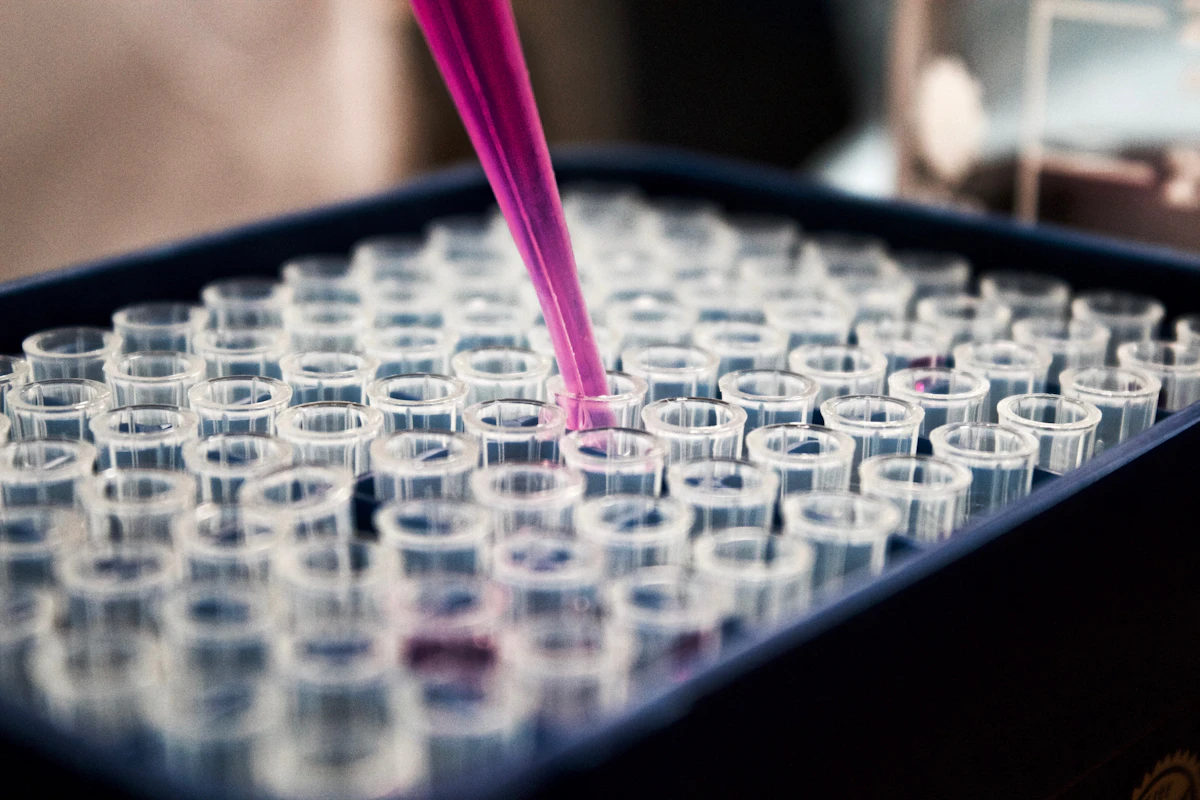
The post–AlphaFold era marks a shift from descriptive to prescriptive molecular biology. Instead of only asking “What does this sequence do?”, researchers increasingly ask “What sequence do we need to achieve this function?” AI-driven protein design, coupled with metagenomics, microbiome studies, and automation, is turning that question into a routine engineering problem for many tasks.
Over the coming decade, we can expect:
- More AI-designed biologics entering clinical trials.
- Custom enzymes embedded in industrial workflows and environmental interventions.
- Deeper integration of AI-driven design in synthetic biology and cell engineering.
- Continued evolution of regulatory, ethical, and safety frameworks.
The most profound change may be conceptual: biology is increasingly seen as a high-dimensional design space that can be navigated with algorithms, rather than solely as a system to be observed. Navigating that space responsibly—balancing open science, equitable access, safety, and innovation—will be one of the defining scientific and societal challenges of the next generation.
Additional Value: How to Stay Current and Get Involved
For readers who want to engage more deeply with AI-driven protein design and the broader post–AlphaFold revolution, consider the following strategies:
- Follow key labs and researchers on platforms like X/Twitter and LinkedIn (e.g., accounts associated with DeepMind’s AlphaFold team, the Institute for Protein Design, and major computational biology labs).
- Subscribe to field-specific newsletters that track new preprints on bioRxiv, arXiv, and medRxiv in computational biology and structural bioinformatics.
- Participate in open-source projects related to protein ML, contributing documentation, benchmarks, or new models.
- Attend cross-disciplinary events where AI, biology, policy, and ethics communities intersect, helping shape responsible governance for programmable biology.
By building a basic foundation in both molecular biology and machine learning—and staying plugged into the rapidly evolving conversation—you can help shape how this powerful technology is developed and applied in the years ahead.
References / Sources
- AlphaFold Protein Structure Database (EMBL-EBI)
- Callaway, E. “Revolutionary AI reveals the structure of protein universe.” Nature (2021).
- Jumper, J. et al. “Highly accurate protein structure prediction with AlphaFold.” Nature (2021).
- Baek, M. et al. “Accurate prediction of protein structures and interactions using a three-track neural network.” Science (2021).
- Institute for Protein Design, University of Washington
- Nature Collection: Machine learning in structural biology
- ESM Metagenomic Atlas (Meta AI)
