
AI-Designed Proteins: How Generative Models Are Rewriting the Rules of Biology
In this article, we explore how tools like AlphaFold, generative protein models, and closed-loop AI–lab workflows are transforming drug discovery, industrial enzymes, and biomaterials, what makes these technologies technically powerful, and why their rapid spread demands thoughtful governance.
AI-driven protein design sits at the intersection of machine learning, structural biology, and synthetic biology. Proteins are not just passive building blocks; they are dynamic molecular machines that catalyze reactions, sense signals, form structures, and regulate life at the nanoscale. Until recently, designing new proteins with specific functions required years of trial-and-error mutagenesis, screening, and structural guesswork. Now, advances in deep learning are collapsing these timelines from years to weeks or even days.
This shift began with breakthroughs in predicting 3D protein structure from sequence, most famously DeepMind’s AlphaFold and the RoseTTAFold family of models. The field has quickly moved from prediction to generation—using large language models, diffusion models, and other generative architectures to propose sequences that are likely to fold into desired shapes and perform specific tasks. These AI systems are not just learning biology; they are starting to propose new biology.
“We are witnessing a transition from reading and editing biological code to writing it from scratch with the help of AI.” — Adapted from commentary in Nature on protein design and AlphaFold.
The implications span drug discovery, green chemistry, climate solutions, materials science, and fundamental biology, while also amplifying concerns about dual-use risks, lab safety standards, and the democratization of powerful design tools.
Mission Overview: Why AI-Designed Proteins Matter Now
The “mission” of AI-designed proteins is to turn biology into a programmable, designable substrate—much like software. Instead of being constrained to molecules found in nature, scientists can now explore vast spaces of never-before-seen proteins, optimized for:
- Binding and neutralizing disease targets (e.g., viral proteins, cancer receptors).
- Catalyzing specific chemical reactions for industrial processes.
- Self-assembling into nanostructures or biomaterials with tailored properties.
- Sensing environmental cues for diagnostics or smart therapeutics.
This is trending for several reasons:
- Drug discovery acceleration: Faster generation of therapeutic candidates against difficult targets in oncology, immunology, and rare diseases.
- Enzymes for green chemistry: Biocatalysts that reduce energy and waste, supporting decarbonization and circular manufacturing.
- Novel biomaterials: Protein-based fibers, gels, adhesives, and optical materials that can be renewed or biodegraded.
- Open tools and ecosystems: GitHub repositories, open models, and cloud platforms that spread capabilities globally.
Collectively, these trends position AI-designed proteins as a foundational technology, often compared to CRISPR in transformative potential, but operating at the level of molecular design from first principles.
Technology: From AlphaFold to Generative Protein Models
The core technical shift is from predicting what nature already has to generating what nature never tried. Several classes of AI models enable this.
Structure Prediction as the Foundation
AlphaFold2, released by DeepMind and expanded as AlphaFold Protein Structure Database, showed that deep learning could predict many protein structures at near-experimental accuracy. In 2023–2024, updates like AlphaFold-Multimer and the later AlphaFold3 approach extended this capability to complexes, ligands, and nucleic acids, further enriching training data and design constraints.
Parallel tools such as RoseTTAFold and related Rosetta-based methods added flexibility and community adoption, offering researchers hybrid physics- and learning-based design workflows.
Protein Language Models (pLMs)
Protein language models treat amino acid sequences like sentences and proteins like paragraphs. Using transformer architectures similar to GPT, models such as:
- ESM (Evolutionary Scale Modeling) from Meta AI
- ProtT5 and related models from academic labs
- Commercial and open-source models deployed on cloud platforms
learn representations of sequence that encode structure, function, and evolutionary constraints. These models can:
- Generate plausible new sequences from scratch.
- Suggest mutations that preserve or enhance function.
- Predict whether mutations are likely to be deleterious.
Diffusion and Other Generative Models
Diffusion models—originally popularized for image generation—have been adapted to design 3D protein backbones and sequences simultaneously. Examples include:
- RFdiffusion (from the Baker lab) for binder and scaffold design.
- Backbone-generating models that propose novel folds and interfaces.
- Models that jointly design protein–protein or protein–ligand complexes.
These models perform iterative “denoising” in a latent space representing 3D coordinates and sequence, converging on structures that respect physical and steric constraints.
Closed-Loop AI–Lab Integration
Perhaps the most transformative trend is the emergence of closed-loop design–build–test–learn (DBTL) pipelines:
- AI models propose many protein candidates optimized for specified objectives.
- Robotic or semi-automated labs synthesize, express, and characterize these proteins.
- Experimental data (binding affinity, stability, activity) feed back into the models.
- Models retrain or fine-tune to improve subsequent design cycles.
“Closed-loop protein engineering systems are emerging as the blueprint for future laboratories, where AI and automation co-evolve.” — Paraphrased from synthetic biology perspectives in Nature Biotechnology.
Visualizing AI-Designed Proteins
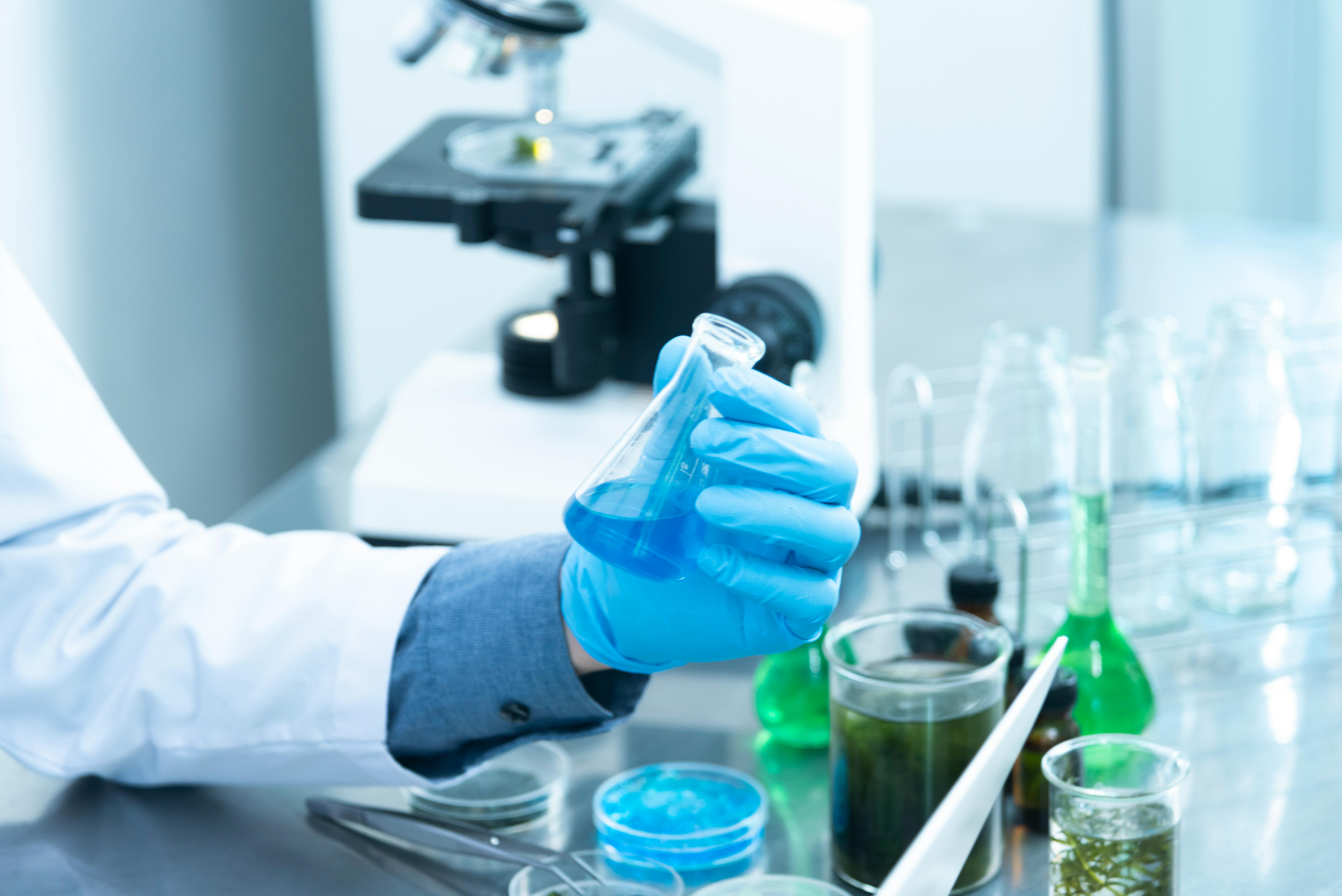
High-quality visualizations help scientists and the public grasp how AI-designed proteins fold, bind, and assemble. Below are illustrative, royalty-free images relevant to the field.


Scientific Significance: Rethinking What Proteins Can Do
AI-designed proteins are scientifically important because they expand the accessible “protein universe.” Natural evolution samples only a minuscule fraction of all possible amino acid sequences. Generative models allow researchers to:
- Explore radically new folds and topologies that nature never discovered.
- Decouple function from strict evolutionary lineages.
- Test hypotheses about the relationships between sequence, structure, and function.
Drug Discovery and Therapeutic Proteins
Traditional antibody discovery and biologics design are constrained by pre-existing scaffolds. AI-designed binders and mini-proteins can:
- Target “undruggable” sites such as flat protein–protein interfaces.
- Achieve high specificity with smaller, more stable scaffolds.
- Enable new therapeutic modalities, including protein-based gene delivery or logic-gated therapeutics.
For example, teams have designed de novo proteins that bind viral spike proteins with high affinity, potentially serving as antivirals or diagnostics, as documented in Science.
Enzymes for Green Chemistry and Climate Solutions
AI-designed enzymes can catalyze reactions under mild, aqueous conditions, replacing high-temperature and high-pressure industrial processes. Potential applications include:
- Biodegradation of plastics and persistent pollutants.
- Carbon capture and conversion via engineered carbonic anhydrases or other CO2-active enzymes.
- Bio-based production of fuels, fertilizers, and specialty chemicals.
Biomaterials and Nanoscale Engineering
Beyond catalysis, proteins can self-assemble into:
- Fibers and hydrogels for tissue engineering and wound healing.
- Nanocages and virus-like particles for drug delivery and vaccines.
- Dynamic materials that respond to pH, light, or mechanical forces.
“De novo design of protein assemblies opens a route to materials whose structure and function are programmable at atomic resolution.” — Inspired by work from David Baker and colleagues in Nature.
Milestones: Key Breakthroughs in AI Protein Design
The field has moved rapidly through a series of technical and conceptual milestones:
- Early Computational Design (2000s–2010s)
Rosetta-based methods produced the first de novo proteins and designed enzymes, but with limited success rates and heavy expert intervention. - AlphaFold2 and Structure Prediction Revolution (2020–2021)
At CASP14, AlphaFold2 achieved near-experimental accuracy for many targets, prompting the release of structural predictions for millions of proteins, reshaping structural biology. - Rise of Protein Language Models (2020–2023)
Models such as ESM-1b and ESM-2 showed that self-supervised learning on massive sequence datasets could infer structural and functional properties without explicit labels. - Diffusion-Based Generative Design (2022–2024)
RFdiffusion and related methods enabled high-throughput design of binders, scaffolds, and novel folds, with increasing experimental validation. - Closed-Loop AI–Automation Platforms (2023–2025)
Leading biotech companies and consortia integrated cloud AI with robotic labs, creating end-to-end systems for protein discovery, optimization, and scale-up.
By 2025–2026, AI-designed proteins are being integrated into early-stage pipelines at many pharmaceutical and industrial biotech firms, while academic labs routinely use open-source models for exploratory design.
Challenges: Limits, Risks, and Open Questions
Despite impressive progress, AI-designed protein technology faces major scientific, engineering, and ethical challenges.
Biological Complexity and Off-Target Effects
Proteins operate in crowded, dynamic cellular environments that are far more complex than in silico models. Key issues include:
- Misfolding, aggregation, or unexpected interactions with host proteins.
- Immunogenicity when used as therapeutics.
- Differences between in vitro assay conditions and in vivo performance.
Data Biases and Model Generalization
Training data for protein models are heavily biased toward well-studied organisms and protein families. This can:
- Limit performance in underrepresented sequence or structural spaces.
- Cause models to overfit to known motifs and miss genuinely novel solutions.
- Embed historical research biases (e.g., over-focus on certain disease targets).
Biosecurity and Dual-Use Concerns
As generative models become more capable and accessible, policymakers worry about misuse—for example, designing harmful proteins or enhancing pathogen traits. Responsible development demands:
- Access controls for the most capable design tools and models.
- Screening requirements for DNA synthesis orders and protein constructs.
- International standards for dual-use research oversight.
“Innovation in synthetic biology must be matched by innovation in governance, risk assessment, and global norms.” — Adapted from U.S. National Academies reports on synthetic biology.
Regulatory and Ethical Frameworks
Regulatory agencies are still adapting frameworks designed for traditional biologics. Open questions include:
- How to evaluate safety of de novo proteins with no natural precedent.
- What transparency or explainability standards to require for AI-designed therapeutics.
- How to share benefits globally and avoid exacerbating inequities in access to advanced therapies or green technologies.
Practical Tooling: How Researchers and Developers Get Started
A growing ecosystem of open-source tools, cloud platforms, and educational resources is lowering the barrier to entry for AI-driven protein design.
Open-Source and Community Resources
- AlphaFold GitHub — Reference implementation and workflows for structure prediction.
- RFdiffusion — Diffusion-based backbone and binder design.
- ESM Models — Protein language models from Meta AI with tools for structure prediction and mutation analysis.
- Educational YouTube channels such as Niko McCarty and Two Minute Papers explaining AI and synthetic biology concepts.
Recommended Reading and Learning Path
- Gain foundational understanding of protein structure and function (intro biochemistry textbooks or online courses).
- Study basics of machine learning and deep learning with an emphasis on sequence models.
- Explore hands-on tutorials for AlphaFold, ESM, or Rosetta on small benchmark problems.
- Progress to designing simple binders or small enzymes and testing sequences via local or cloud tools.
Lab and Maker Tools (Hardware and Kits)
For advanced students and labs wishing to validate AI-designed proteins experimentally, basic molecular biology equipment is essential. Some widely used, accessible tools include:
- Compact PCR systems for amplifying DNA.
- Benchtop centrifuges and microplate readers for measuring activity and binding.
- Starter kits for protein expression in E. coli or cell-free systems.
For example, molecular biology starter kits and compact lab gear available on marketplaces such as Amazon can help teaching labs or small startups prototype workflows more affordably (ensure compliance with local biosafety regulations and institutional approvals).
Related Consumer Tools and Books
While AI-designed proteins themselves are typically developed in professional labs, several consumer-accessible resources can deepen understanding of synthetic biology and AI:
- Life Remade: How Synthetic Biology Is Redesigning Nature, Humans, and Our Future — A contemporary overview of synthetic biology’s societal impact.
- Deep Medicine: How Artificial Intelligence Can Make Healthcare Human Again — Explores how AI reshapes medicine, including biologics and diagnostics.
- Inventing Life: The Systems Biology Revolution — A broader perspective on designing biological systems.
These resources do not teach you to design proteins directly, but they provide crucial context on ethics, policy, and the broader trajectory of life science technologies.
Future Directions: Toward Programmable Living Systems
AI-designed proteins are likely to be only the first step in a larger transformation toward programmable cells and organisms. Emerging directions include:
- Multi-component design: Joint design of proteins, RNA, and small molecules to build sophisticated circuits and pathways.
- Integrated models of whole cells: Linking molecular design to cell behavior, metabolism, and tissue-level outcomes.
- Real-time adaptive therapeutics: Proteins that can be reprogrammed or evolved in situ in response to disease progression.
- Environmental biosensors: Designed proteins embedded in materials or organisms that monitor pollutants or pathogens and trigger safe responses.
At each step, the same design principles apply: specify an objective, use AI to navigate vast design spaces, test and refine in the lab, and iterate with increasing sophistication and safety safeguards.
Conclusion: A New Era of Synthetic Biology, If We Steward It Wisely
AI-designed proteins exemplify a broader shift in biology from descriptive science to generative engineering. Deep learning, diffusion models, and language models empowered by massive biological datasets are giving researchers unprecedented leverage to design new molecules, materials, and therapies.
Yet the technology’s benefits—faster drug discovery, greener chemistry, advanced biomaterials—come with serious responsibilities. Technical uncertainty, data biases, dual-use risks, and regulatory gaps all demand careful, ongoing attention. The scientific community, policymakers, and the public will need sustained dialogue and adaptive governance to ensure that AI-driven protein design is deployed safely and equitably.
Over the next decade, success will not be measured only by how many proteins AI can design, but by how thoughtfully those designs are translated into real-world applications that improve health, protect the environment, and expand human knowledge without compromising safety or ethics.
Additional Resources and Ways to Stay Informed
To keep up with fast-moving developments in AI protein design and synthetic biology:
- Follow expert voices on professional networks such as LinkedIn and X (Twitter), including researchers from groups like the Institute for Protein Design.
- Subscribe to newsletters like SynBioBeta and Nature’s AI in Biology collections.
- Watch conference talks and tutorials from events such as NeurIPS, ICML, and synthetic biology meetings (many are available on YouTube).
- Explore public datasets and competitions that encourage responsible innovation in protein design and bioinformatics.
For students and professionals entering the field, combining skills in programming, machine learning, and molecular biology is particularly valuable. Cross-disciplinary literacy allows you to reason about both the capabilities and limitations of AI models in real biological contexts—a critical competency as AI-designed proteins move from hype to everyday practice.
References / Sources
The following sources provide deeper technical and conceptual background. All links are publicly accessible at the time of writing:
- Jumper, J. et al. (2021). Highly accurate protein structure prediction with AlphaFold. Nature. https://www.nature.com/articles/s41586-021-03819-2
- Watson, J. L. et al. (2022). Broadly applicable and accurate protein design by integrating structure prediction networks and diffusion generative models. https://doi.org/10.48550/arXiv.2209.15611
- Rives, A. et al. (2021). Biological structure and function emerge from scaling unsupervised learning to 250 million protein sequences. PNAS. https://www.pnas.org/doi/10.1073/pnas.2016239118
- Baek, M. et al. (2021). Accurate prediction of protein structures and interactions using a three-track neural network. Science. https://www.science.org/doi/10.1126/science.abj8754
- Langan, R. A. et al. (2019). De novo design of proteins that function as molecular switches. Nature. https://www.nature.com/articles/s41586-019-1432-8
- National Academies of Sciences, Engineering, and Medicine. (2018). Biodefense in the Age of Synthetic Biology. https://nap.nationalacademies.org/catalog/24831
- AlphaFold Protein Structure Database. https://alphafold.ebi.ac.uk
- Institute for Protein Design (University of Washington). https://www.ipd.uw.edu
