
AI-Designed Proteins: How Generative Models Are Rewiring Synthetic Biology
Protein science is being rewritten in real time. Instead of waiting for evolution or laborious trial-and-error in the lab, researchers can now ask artificial intelligence to imagine entirely new proteins—enzymes that break down plastics, bind tightly to cancer targets, or self-assemble into nanostructures that never existed in nature. This fusion of AI and synthetic biology is accelerating discovery, compressing timelines from years to months, and redrawing the boundaries of what is biologically possible.
At the heart of this shift are deep learning tools such as AlphaFold, RoseTTAFold, and a fast-growing ecosystem of generative models that design proteins from scratch (de novo). Together, they transform protein engineering into a data-driven design–build–test–learn pipeline, analogous to how computer-aided design (CAD) reshaped mechanical engineering.
Mission Overview
The overarching mission of AI-driven protein design is to turn proteins into an engineerable substrate—components that can be rationally designed, programmed, and integrated into larger biological systems with predictable behavior.
- Precision therapeutics: Create proteins that bind disease targets with antibody-like or better specificity while minimizing off-target toxicity.
- Sustainable industry: Replace harsh chemical processes with biocatalysts that work at mild temperatures, neutral pH, and in water.
- Smart biosensors: Design proteins that fluoresce, change shape, or emit signals when they encounter specific molecules or pathogens.
- Programmable materials: Build self-assembling protein architectures for drug delivery, tissue scaffolds, and bioelectronics.
- Platform for synthetic biology: Provide standardized, modular protein parts that plug into gene circuits, metabolic pathways, and engineered cells.
“We are moving from reading and editing biology to writing it from first principles.” — George Church, Harvard geneticist, on the trajectory of synthetic biology.
Visualizations like these—dense constellations of helices and sheets—have become the new icons of AI in biology, shared widely across X (Twitter), LinkedIn, YouTube, and TikTok. They symbolize a critical shift: from deciphering nature’s proteins to designing bespoke molecular machines.
Technology: From Structure Prediction to Generative Protein Design
Protein design sits at the intersection of sequence (amino-acid order), structure (3D shape), and function (what the protein does). AI models operate across all three layers, building on decades of structural biology, genomics, and biophysics.
AlphaFold, RoseTTAFold, and the Structure Revolution
AlphaFold, introduced by DeepMind and updated as AlphaFold2 and AlphaFold3, demonstrated that deep neural networks can predict many protein structures at near-experimental accuracy from sequence alone. Its open database now contains hundreds of millions of predicted structures, dramatically expanding the structural coverage of the proteome.
- Input: Amino-acid sequence and multiple sequence alignments (evolutionary information).
- Core technology: Attention-based neural networks (transformers) that learn pairwise residue interactions and 3D geometry.
- Output: 3D coordinates with confidence metrics for each residue.
RoseTTAFold, developed by the Baker lab, independently validated and extended this approach, integrating with the Rosetta modeling suite to support design workflows.
Generative Models: Imagining New Proteins
The next wave is not just predicting structures but generating new ones—de novo proteins that satisfy specified constraints. Several classes of generative models are now central to this effort:
- Diffusion models: Trained to gradually transform random noise into realistic protein backbones or atomic coordinates, analogous to text-to-image models like Stable Diffusion.
- Transformers for sequences: Large language models (LLMs) for proteins, such as ESM, ProGen, and ProtGPT2, learn a “grammar” of amino-acid sequences and can autocomplete or design sequences with desired motifs.
- Graph neural networks (GNNs): Treat proteins as graphs of residues or atoms, enabling fine-grained control of geometry and constraints on distances and angles.
- Hybrid models with energy functions: Combine generative models with physics-based or statistical energy terms to favor stable, foldable, and functional designs.
In practice, researchers often specify:
- Target binding site geometry or pocket shape.
- Symmetry or topology (e.g., helical bundles, beta barrels, cages).
- Surface properties (charge, hydrophobicity) for solubility and specificity.
The model then proposes candidate backbones and sequences, which are screened in silico and prioritized for synthesis.
“Generative protein design is starting to feel like using a molecular-level CAD tool.” — David Baker, University of Washington, reflecting on deep-learning–driven design.
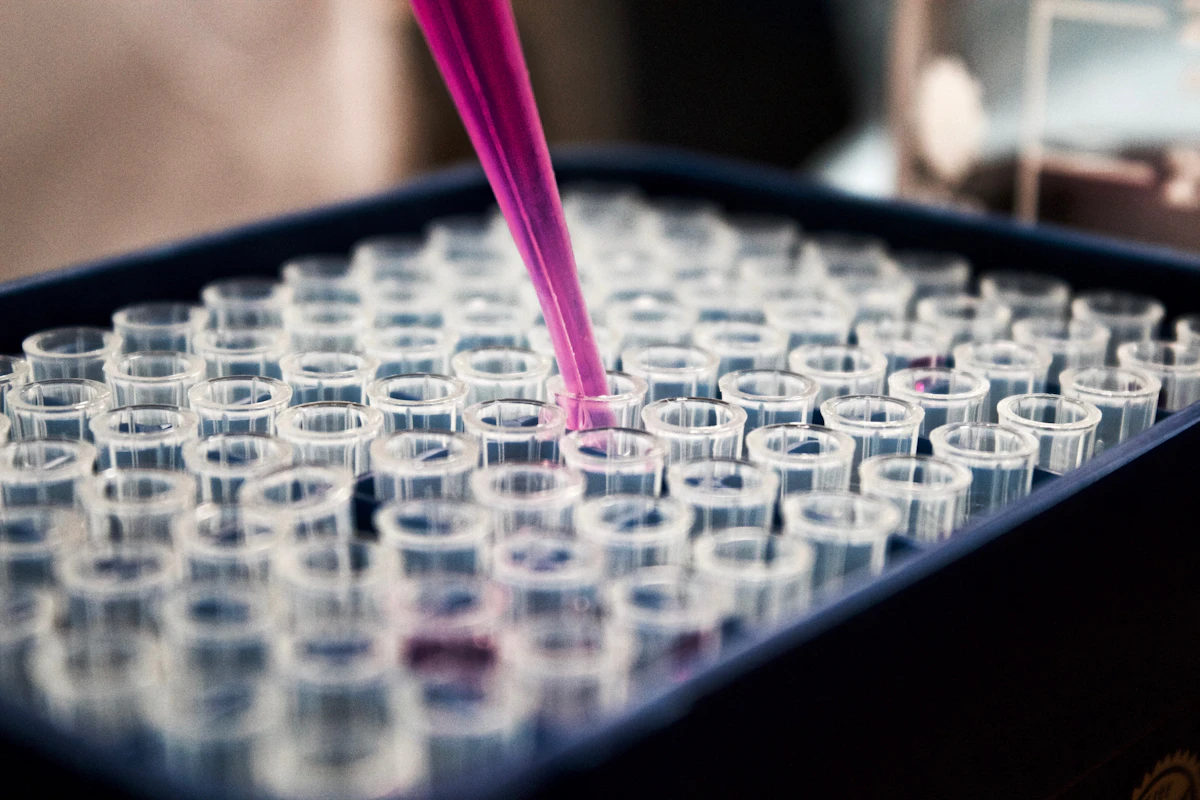
These labs increasingly resemble integrated software–hardware platforms: racks of GPUs for model training next to automated liquid handlers and plate readers for rapid experimental validation.
Design–Build–Test–Learn: The New Workflow
AI-driven protein design plugs naturally into the synthetic biology engineering cycle. Instead of iterating solely in wet labs, much of the exploration happens in silico, with only the most promising designs progressing to experiments.
1. Design
Researchers define the problem in machine-readable terms:
- Desired reaction (e.g., hydrolysis of a plastic monomer).
- Target molecule or epitope for binding (e.g., spike protein of a virus).
- Environmental constraints (pH, temperature, solvent, co-factors).
Generative models propose thousands to millions of candidates. Additional filters—stability predictors, aggregation propensities, immunogenicity predictors—narrow the list.
2. Build
Selected sequences are synthesized (often via DNA synthesis providers) and expressed in host systems such as E. coli, yeast, CHO cells, or cell-free systems. Automation enables:
- Parallel cloning of hundreds or thousands of variants.
- Standardized expression and purification pipelines.
- Barcoding to track each construct through the workflow.
3. Test
High-throughput assays measure:
- Enzymatic activity (kinetics, substrate range).
- Binding affinity and specificity (e.g., via SPR, ELISA, or biolayer interferometry).
- Stability (melting temperature, protease resistance).
- Cellular phenotypes, toxicity, and off-target interactions.
4. Learn
Experimental data are fed back into the models, improving:
- Scoring functions for ranking future designs.
- Understanding of sequence–structure–function landscapes.
- Model calibration across different protein families and environments.
This closed loop can compress cycles that historically took years into months or even weeks, especially when combined with cloud labs and robotic platforms.
Scientific Significance: Why AI-Designed Proteins Matter
The scientific impact of AI-designed proteins spans molecular biology, medicine, environmental science, and materials engineering. Several domains are already seeing concrete advances.
Next-Generation Therapeutics
AI-designed proteins can function as:
- Binders and scaffolds: Small, stable proteins that target disease markers (e.g., tumor antigens, inflammatory cytokines) with antibody-like specificity but improved manufacturability.
- Enzyme therapeutics: Enzymes engineered to correct metabolic deficiencies or degrade toxic metabolites.
- Decoy receptors: Proteins that mimic human receptors to neutralize viruses or toxins before they reach real cells.
For readers interested in the experimental side, books like “Protein Engineering: Methods and Protocols” provide detailed lab protocols that now integrate naturally with AI-driven design tools.
Green Chemistry and Industrial Biocatalysis
Enzymes are attractive replacements for conventional catalysts because they operate under mild conditions and are highly selective. AI design is enabling:
- Enzymes that depolymerize PET plastics faster and at lower temperatures.
- Biocatalysts tailored for pharmaceutical intermediates, reducing waste from multi-step chemical syntheses.
- Pathway optimization in microbes for bio-based production of fuels, solvents, and specialty chemicals.
Biosensors and Diagnostics
Protein-based biosensors can transduce molecular recognition into fluorescent, electrochemical, or mechanical signals. AI design helps:
- Engineer binding pockets specific to pollutants, metabolites, or viral proteins.
- Attach reporting domains such as fluorescent proteins or split enzymes.
- Tune dynamic range and response kinetics for practical detection limits.
Novel Biomaterials and Nanostructures
Self-assembling protein cages, fibers, and lattices are emerging as a platform for:
- Targeted drug delivery (cargo-loaded capsules that recognize specific tissues).
- Tissue engineering scaffolds with precise mechanical properties.
- Bioelectronic interfaces that couple proteins to conductive materials.
“We’re starting to treat protein structures like programmable matter.” — Frances Arnold, Nobel laureate in Chemistry, on the future of enzyme engineering.
While AI models operate in silico, their impact is ultimately realized in living systems—cells, tissues, and organisms whose emergent behaviors are far more complex than single protein structures.
Milestones in AI-Designed Protein Research
Since 2020, progress has been rapid, with key milestones drawing significant attention in both academic literature and social media.
Breakthroughs and Demonstrations
- AlphaFold and RoseTTAFold launches: Near-complete coverage of many proteomes, accelerating basic biology and target discovery.
- De novo mini-protein binders: Designed proteins that bind viral antigens (e.g., SARS-CoV-2 spike) and neutralize the virus in vitro.
- Improved plastic-degrading enzymes: AI-guided mutations boosted the activity and thermostability of PET hydrolases.
- Symmetric protein cages: Designed to encapsulate cargo and potentially serve as vaccine scaffolds or drug delivery vehicles.
Integration with Large Language Models
Protein LLMs trained on massive sequence databases have shown emergent capabilities:
- Generating functional enzymes with minimal or no human-guided optimization.
- Transferring “knowledge” from natural evolution to guide de novo designs.
- Interpreting mutational effects via embeddings that correlate with fitness landscapes.
On platforms like YouTube, creators such as Two Minute Papers and Kurzgesagt have helped popularize these advances, making complex AI–biology interactions accessible to a broad audience.
Commercialization and Startups
Startups in the AI-protein and synthetic biology space have raised substantial funding, focusing on:
- Therapeutic protein discovery and optimization.
- Industrial enzymes for textiles, food, and materials.
- Platform technologies that combine AI design with automated labs.
Investor interest tracks Google Trends spikes and viral posts, reflecting the perception that AI-designed proteins could play a role analogous to “software” in the biological domain.
Challenges: Technical, Ethical, and Regulatory
Despite impressive successes, AI-designed proteins face significant challenges that are central to current debates in genetics, microbiology, and bioethics communities.
Technical Limitations
- Generalization beyond training data: Many models are trained heavily on natural proteins; their performance in regions of sequence space far from nature remains uncertain.
- Model interpretability: Understanding why a design works—what interactions are critical, how robustness emerges—is still difficult, complicating rational improvements.
- Environment dependence: Proteins behave differently in vivo than in idealized in vitro conditions. Crowding, post-translational modifications, and cellular context can make or break performance.
- Multi-objective optimization: Real-world applications often require balancing activity, stability, solubility, immunogenicity, and manufacturability simultaneously.
Biosecurity and Dual-Use Concerns
Dual-use refers to technologies that can be used for both beneficial and harmful purposes. With AI-designed proteins, concerns include:
- Designing proteins that could enhance pathogen virulence or immune evasion.
- Creating novel toxins with no natural counterpart.
- Lowering barriers for inexperienced actors to attempt risky experiments.
“Advances in AI-driven biological design must be paired with safeguards that prevent misuse while preserving the benefits for health, climate, and the economy.” — U.S. OSTP commentary on AI and biosecurity.
Policy responses under discussion include:
- Screening DNA synthesis orders for sequences of concern.
- Access controls and tiered release for powerful design models.
- Best-practice guidelines for responsible publication and open-source tools.
Ethical and Societal Considerations
- Informed consent and clinical risk: For cell and gene therapies using synthetic proteins, patients and regulators must understand long-term risks and off-target effects.
- Environmental release: Engineered microbes expressing AI-designed proteins (for bioremediation or agriculture) must be evaluated for ecological impact and containment.
- Equitable access: There is a risk that advanced protein design platforms concentrate in a few wealthy institutions, widening global health and innovation gaps.
Visualizing folding landscapes highlights a key challenge: proteins must not only adopt a target structure but do so reliably under physiological conditions.
Integrating AI-Designed Proteins with CRISPR and Synthetic Genomes
AI-designed proteins do not exist in isolation. They are increasingly integrated with gene-editing tools and synthetic genomes, enabling new modalities in cell and gene therapy, metabolic engineering, and programmable immunity.
CRISPR Systems with Custom Effectors
Beyond the canonical Cas9 nuclease, researchers are:
- Designing novel Cas variants or fusion proteins with improved specificity or alternative functions (e.g., base editing, prime editing).
- Attaching AI-designed regulatory domains to CRISPR scaffolds to modulate gene expression without cutting DNA.
- Engineering guide RNA-binding proteins for more precise spatiotemporal control.
Engineered Microbes and Cell Therapies
Synthetic biology companies are building:
- Microbial factories: Genomes rewritten to express cascades of AI-designed enzymes for high-yield production of chemicals or therapeutics.
- Immune cell therapies: T cells or NK cells expressing synthetic receptors, signaling domains, or “logic gates” constructed from AI-designed proteins.
- Living diagnostics: Commensal bacteria engineered to detect and respond to disease markers in the gut or skin.
For professionals wanting a deeper background on the biology, comprehensive texts like “Molecular Biology of the Cell” remain invaluable references when interpreting how designed proteins behave inside complex cellular systems.
Tooling Ecosystem and Practical On-Ramps
The tooling landscape for AI protein design is evolving rapidly, ranging from open-source academic software to commercial platforms.
Open-Source and Community Tools
- AlphaFold and ColabFold: Widely used for structure prediction with user-friendly interfaces.
- Rosetta and RosettaScripts: Longstanding software suite for protein modeling and design, now integrating deep-learning components.
- ESM (Meta), ProtTrans, and related LLMs: Provide embeddings and generative capabilities for sequences.
- Foldseek and MMseqs2: Fast tools for comparing and clustering sequences and structures.
Cloud Labs and Automation
Cloud-based lab services allow researchers to send digital designs and receive experimental data without owning physical wet-lab infrastructure. This complements AI tools by:
- Scaling up build–test capacity via robotics and standardized protocols.
- Shortening feedback cycles for model refinement.
- Enabling remote and distributed R&D teams.
For computational biologists and data scientists, standard equipment such as a capable workstation or laptop with a dedicated GPU—complemented by cloud compute—remains essential. Curated lab guides and kits from vendors often reference standard texts and protocols that integrate seamlessly with AI workflows.
Conclusion: Toward Programmable Biology
AI-designed proteins sit at the leading edge of a larger shift toward programmable biology. As models improve, they will not only design isolated proteins but orchestrate entire pathways and systems, considering trade-offs among energy use, robustness, and evolutionary stability.
The promise is profound: faster drug discovery, cleaner industrial processes, responsive diagnostics, and novel materials. Yet realizing this potential responsibly requires:
- Transparent benchmarks and rigorous experimental validation.
- Robust safety and security frameworks co-developed with regulators and ethicists.
- Open but governed data and model-sharing practices.
- Investment in education so that more researchers can leverage these tools wisely.
Over the next decade, it is plausible that many new therapeutics, catalysts, and biomaterials will trace their origins not to serendipitous discovery, but to deliberate design sessions with AI systems—where scientists specify goals and constraints, and the models propose molecular implementations.
In that future, the most impactful practitioners will be those who fluently navigate both worlds: grounded in biochemical and biophysical reality, yet comfortable using AI as a creative collaborator in the design of life’s molecular machinery.
Further Reading and Resources
For readers who wish to dive deeper into AI-designed proteins and synthetic biology, the following resources provide a mix of technical depth and accessible overviews:
- Nature collection on AI in protein science
- Science Magazine: Artificial Intelligence in Biology
- DeepMind’s AlphaFold explainer on YouTube
- #aiproteindesign discussions on LinkedIn
- Synthetic Biology community resources
Practical Learning Path
- Strengthen fundamentals in biochemistry, structural biology, and thermodynamics.
- Learn Python, basic machine learning, and deep learning frameworks (PyTorch, TensorFlow).
- Experiment with AlphaFold/ColabFold for structure prediction on public protein sequences.
- Explore Rosetta and open-source generative models for simple design tasks.
- Engage with online courses, workshops, and open competitions in protein design.
References / Sources
Selected references and sources used in preparing this overview:
- Callaway, E. “What’s next for AlphaFold and the AI protein-folding revolution?” Nature (2021).
- Watson, J. L. et al. “De novo design of proteins using neural networks.” Science (2023).
- Jumper, J. & Hassabis, D. “Protein structure: AI’s new revolution.” Nature (2022).
- White House OSTP. “Fact Sheet: Executive Order on Safe, Secure, and Trustworthy Artificial Intelligence.” (2023).
- Arnold, F. et al. “The future of enzyme engineering in the age of AI.” Cell (2024).
Note: Many primary research articles are behind paywalls; preprints are often accessible via bioRxiv and arXiv.
