
AI Assistants Everywhere: How Copilots Are Taking Over Your Operating System
This deep dive explores why generative AI assistants are suddenly everywhere, what technologies make them work, where they truly help, and where they remain fragile or risky.

Figure 1: Concept visualization of a user interacting with AI assistants across devices. Image credit: Pexels / Tara Winstead.
Mission Overview: From Chatbots to Ambient AI Assistants
In just a few years, generative AI assistants have evolved from experimental chatbots in a browser tab to core features of mainstream platforms. Microsoft is weaving Copilot into Windows and Office, Apple is rolling out system‑level “Apple Intelligence,” Google is pushing Gemini into Android and Workspace, and independent tools from OpenAI, Anthropic, and others are being embedded in everything from email clients to design software.
Coverage across outlets like Ars Technica, The Verge, TechCrunch, and Wired reflects two simultaneous forces: a frantic platform race to integrate AI everywhere, and a growing unease about privacy, hallucinations, and long‑term societal impact.
At the highest level, the “mission” of this wave of assistants is to become an ambient, context‑aware layer that:
- Understands natural language, images, and increasingly audio/video.
- Has access to your apps, files, and settings to take actions, not just answer questions.
- Learns your preferences over time to personalize recommendations and workflows.
“We’re moving from a world where you go to the computer, to a world where the computer comes to you.”
— Satya Nadella, CEO of Microsoft
OS‑Level Integration: Assistants as the New Interaction Layer
One of the most significant shifts is the move from AI as a web app to AI as a first‑class operating‑system feature. Instead of opening a browser and visiting a chatbot, the assistant appears in your system search, keyboard, notification center, and even right‑click menus.
Natural‑Language System Search and Control
Traditional system search requires keywords and exact file names. OS‑level AI search allows queries like:
- “Find the slides I presented to marketing about Q3 growth.”
- “Show me the photo of my bike I took in Berlin at night.”
- “Open the document John sent last week about our data retention policy.”
Under the hood, this relies on:
- Local indexing of text, images, and metadata from files and apps.
- Embedding models that convert content and queries into vectors in a shared semantic space.
- Retrieval‑augmented generation, where the assistant finds relevant items first, then composes a natural‑language answer or action plan.
Contextual Help and Task Automation
OS‑integrated assistants can see what is on your screen (subject to permission) and offer contextual actions:
- Suggesting replies to an email currently in view.
- Summarizing a PDF document you have open.
- Creating a calendar event based on text in a chat window.
- Automating repetitive steps (“Every Friday, compile these spreadsheets into a summary email”).
“The assistant is becoming less like a website you visit and more like a background capability of the operating system.”
— Dieter Bohn, technology commentator, writing for The Verge
This deep integration raises strategic and regulatory questions: if your primary way of using the computer is mediated by the OS vendor’s assistant, switching platforms becomes harder, strengthening ecosystem lock‑in and putting antitrust regulators on alert.
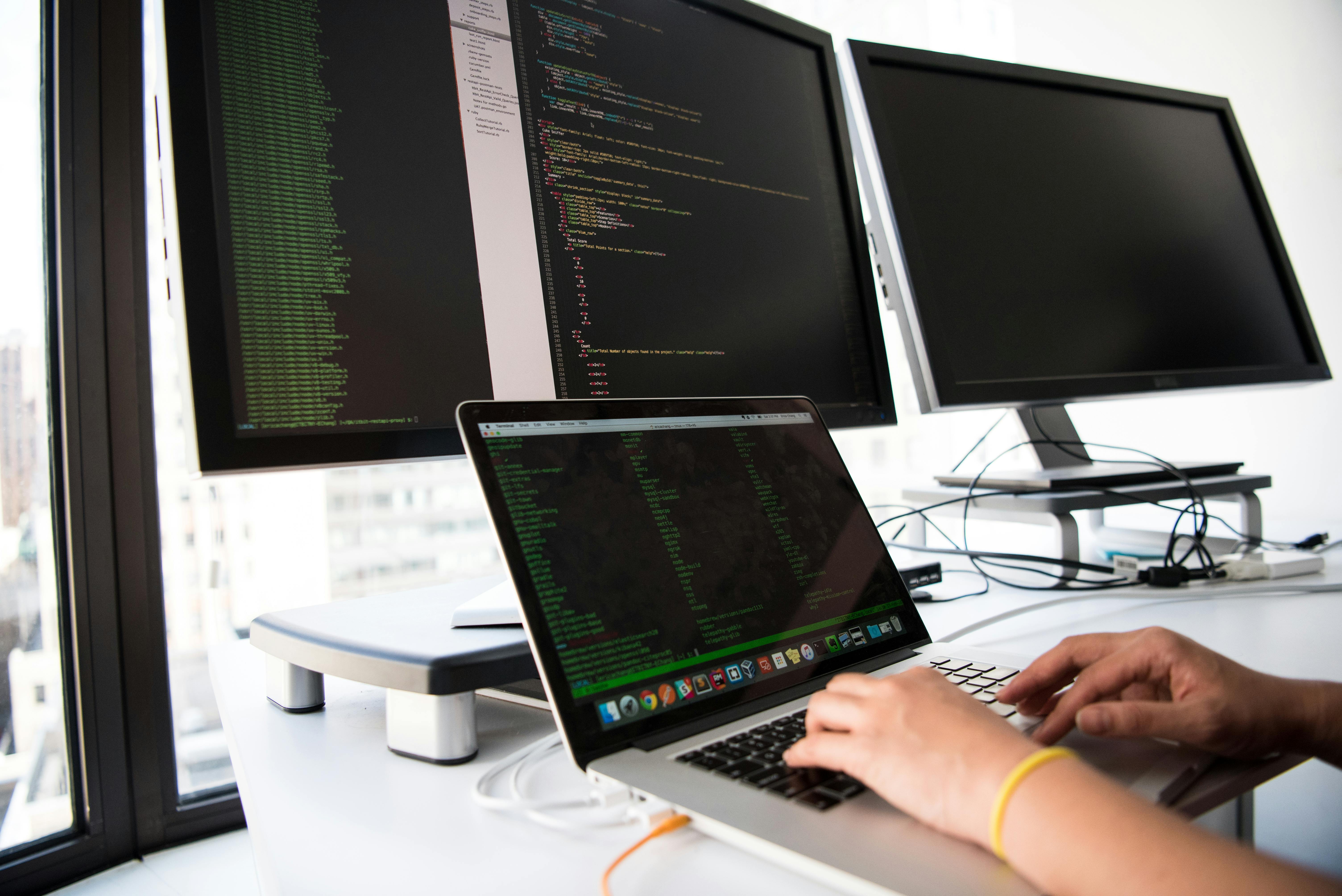
Figure 2: Developers increasingly rely on AI-assisted coding tools alongside traditional IDEs. Image credit: Pexels / Christina Morillo.
AI in Productivity & Developer Tools
Productivity suites and developer tools are where users feel AI assistants most directly. GitHub Copilot, OpenAI’s Code Interpreter‑style tools, and IDE integrations from JetBrains and Microsoft have sparked intense discussion on communities like Hacker News.
Developer Copilots
AI coding assistants can:
- Autocomplete functions and boilerplate code.
- Generate tests and documentation from code.
- Explain unfamiliar code snippets in natural language.
- Suggest refactorings and performance optimizations.
Empirical studies (e.g., Microsoft’s internal research and independent experiments published in 2023–2025) show average productivity gains, especially for routine tasks. However, they also document new failure modes:
- Subtle security vulnerabilities introduced by plausible‑looking code.
- Incorrect use of APIs or outdated libraries.
- Over‑reliance by juniors who accept code without fully understanding it.
“These tools are best seen as power tools for professionals, not substitutes for understanding.”
— Bertrand Meyer, computer scientist, in Communications of the ACM
Office Copilots: Email, Slides, and Spreadsheets
Office assistants in suites like Microsoft 365, Google Workspace, and Notion help with:
- Drafting emails and summarizing long threads.
- Generating slide decks from outlines or documents.
- Summarizing meeting transcripts and action items.
- Analyzing spreadsheets with natural‑language queries.
Workers report meaningful time savings on routine communication and reporting, but also:
- Template fatigue: AI‑generated content can feel generic or formulaic.
- Over‑delegation: risk of sending AI‑drafted messages without adequate review.
- Skill decay: concerns that writing and analytical skills may atrophy over time.
Hands‑On Tools for Curious Users
For individuals and professionals wanting to experiment at home, there is a growing ecosystem of hardware and books that explain and support AI‑assisted workflows:
- NVIDIA Jetson Nano Developer Kit – popular in the US maker community for experimenting with local AI and edge inference.
- Artificial Intelligence: A Modern Approach (4th Edition) – a widely recommended foundational text for understanding AI principles beyond hype.
Technology: How Modern AI Assistants Actually Work
Behind the friendly chat interfaces lies a complex stack of models, retrieval pipelines, and orchestration logic. While implementations differ, most modern assistants share several core components.
1. Foundation Models
Large language models (LLMs) and multimodal models, such as GPT‑4‑class systems, Anthropic’s Claude family, Google’s Gemini, and open‑source models like LLaMA‑based variants, form the linguistic and reasoning core. Trained on trillions of tokens, they learn statistical patterns of language and code, enabling:
- Text generation and editing.
- Code synthesis and explanation.
- Multi‑turn dialogue and tool selection.
2. Retrieval‑Augmented Generation (RAG)
Because foundation models are static snapshots of their training data, assistants often combine them with:
- Document stores (vector databases) built from user data, corporate wikis, and the public web.
- Embedding models that encode queries and documents into high‑dimensional vectors.
- Retrieval steps that fetch relevant content for each query.
- Grounded generation where the LLM conditions its answer on retrieved passages, and sometimes cites sources.
3. Tool Use and Action Engines
Assistants integrated into operating systems and apps can call external tools:
- File system and calendar APIs.
- Third‑party services (CRM, ticketing systems, CI/CD pipelines).
- Specialized models (vision, speech‑to‑text, code execution sandboxes).
This “tool use” is often implemented through structured outputs (e.g., JSON) that describe the desired action, which the orchestration layer then executes under policy constraints and user permissions.
4. Personalization and On‑Device Intelligence
To remain privacy‑preserving yet personalized, vendors increasingly blend:
- Cloud models for heavy lifting.
- On‑device models for sensitive context, quick tasks, and offline operation.
- Federated learning or preference storage that doesn’t centralize raw user data.
Apple’s announcements around “Private Cloud Compute” and on‑device inference, as well as Qualcomm, NVIDIA, and Apple silicon advances, indicate a trend toward more local intelligence, which can reduce latency and improve privacy.

Figure 3: Scientists and analysts increasingly use AI assistants to explore large datasets. Image credit: Pexels / ThisIsEngineering.
Scientific Significance: Changing How We Compute and Create
Beyond convenience features, the rise of generative AI assistants is scientifically significant because it:
- Demonstrates emergent capabilities from scale in deep learning architectures.
- Blurs boundaries between programming languages and natural language.
- Enables non‑experts to access computational power and analysis tools.
Human–Computer Interaction (HCI)
For decades, HCI research moved from command lines to GUIs to touch and voice. AI assistants introduce:
- Conversational interfaces that can orchestrate multiple apps.
- Intent‑based computing, where users express goals, not step‑by‑step instructions.
- Mixed‑initiative interaction, where the system proactively suggests actions.
This shifts cognitive load: users need less procedural knowledge (which menu to click) but more evaluative judgment (is this output correct, safe, and appropriate?).
Democratization of Expertise
In fields like data science, law, and medicine—where access to expertise is uneven—assistants can:
- Help non‑specialists explore datasets with plain‑language questions.
- Draft legal documents or summarize case law (with human review).
- Generate literature reviews and code for scientific workflows.
“AI assistants are expanding access to powerful methods, but they do not replace domain expertise—they amplify it, for better or worse.”
— Fei‑Fei Li, computer scientist, in various public talks and interviews
The net impact depends on governance: if assistants become closed, paywalled, and centralized, they may concentrate power rather than democratize it.
Business Models, Competition, and Platform Strategy
Analysts often compare the AI assistant wave to previous platform shifts—mobile, cloud, and the web. The stakes are high: whoever controls the assistant layer may control user attention and data flows.
Search and Browser Disruption
AI assistants challenge traditional search in several ways:
- Users ask questions directly to chatbots rather than typing keywords into a search box.
- Answers often appear as synthesized paragraphs, reducing clicks to individual websites.
- Browsers integrate assistants into the address bar and side panels, competing with standalone search engines.
This threatens ad‑driven models that rely on page views and raises questions about how content creators will be compensated when their work is used as training data or summarized inline.
Vertical AI Assistants
TechCrunch and similar outlets are tracking a surge of startups building domain‑specific copilots:
- Legal research assistants that draft motions and summarize case law.
- Medical documentation tools that transcribe and structure patient visits.
- Financial research copilots that analyze filings and earnings calls.
- Creative tools for video editing, game design, and music production.
These vertical assistants often combine general‑purpose LLMs with curated, proprietary datasets and specialized user interfaces.
Cloud, Chips, and the Cost of Intelligence
Running large models is expensive. Cloud providers bundle AI credits with infrastructure deals, and chip vendors race to optimize inference and training hardware. This creates reinforcing loops:
- More efficient chips → cheaper inference → more assistant features.
- More usage data → better models and personalization.
- Better assistants → deeper lock‑in to specific clouds and platforms.
Privacy, Data Governance, and Hallucinations
With assistants embedded deep in operating systems and productivity tools, data governance becomes central. These systems may see:
- Files, emails, calendars, and call transcripts.
- Screen contents when screen‑context features are enabled.
- Usage patterns (which apps you use, when, and for how long).
Training Data and User Logs
Key policy questions include:
- Are user prompts and outputs used to retrain models by default?
- Can enterprise customers opt out of data retention and training?
- How are minors’ data and sensitive topics handled?
In response to regulatory pressure, major vendors now highlight:
- Separate “no‑training” modes for enterprise and regulated sectors.
- Data‑minimization and strict retention policies.
- EU‑specific deployments to comply with the AI Act and GDPR.
Hallucinations and Reliability
Despite rapid progress, hallucinations—confident but false outputs—remain a core limitation. Wired and Ars Technica routinely document:
- Fabricated citations in legal and academic contexts.
- Invented configuration flags or APIs in developer assistants.
- Misleading medical or financial guidance when guardrails fail.
“These systems don’t know things; they model what plausible answers look like.”
— Gary Marcus, cognitive scientist and AI critic
To mitigate risk, responsible deployments combine:
- Grounding answers in retrieved, verifiable documents.
- Uncertainty estimation and explicit disclaimers for low‑confidence outputs.
- Human‑in‑the‑loop review for high‑stakes use cases.
- Policy filters to block dangerous instructions or sensitive topics.
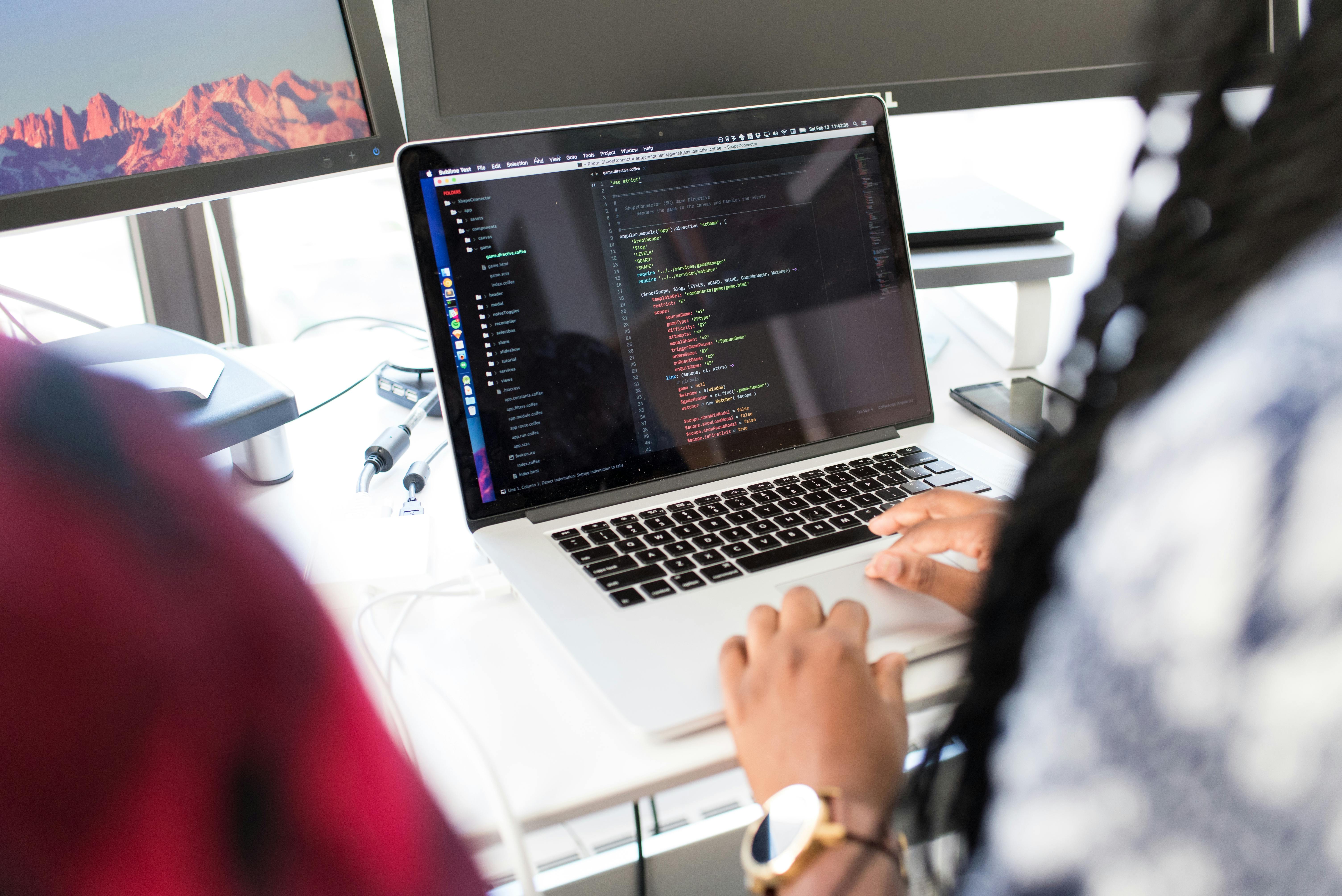
Figure 4: Classrooms and workplaces are rethinking learning and collaboration in the era of AI assistants. Image credit: Pexels / Christina Morillo.
Cultural and Ethical Impact
AI assistants are not just a technical upgrade; they change how we learn, create, and relate to work.
Education and Learning
Educators simultaneously see:
- Benefits: personalized tutoring, language practice, and instant feedback.
- Risks: plagiarism, shortcutting learning, and dependency on AI explanations.
Many institutions respond by:
- Designing assignments that require process documentation and reflection.
- Teaching “AI literacy” – how to question, verify, and critique AI outputs.
- Using AI detection tools cautiously, recognizing their limitations.
Creative Work and Copyright
Artists, writers, and musicians debate:
- Whether training on copyrighted works without consent is fair use or exploitation.
- How to protect unique styles from being cloned by generative models.
- How to be compensated when AI systems derive value from their work.
Legislatures and courts in the US, EU, and elsewhere are gradually clarifying how copyright applies to training data, generated works, and model outputs, but the legal landscape remains in flux as of early 2026.
Accessibility and Inclusion
On the positive side, accessibility advocates highlight:
- Real‑time captioning and translation for meetings.
- Image descriptions for visually impaired users.
- Voice‑driven computing for users with limited mobility.
Well‑designed assistants, aligned with standards like WCAG 2.2, can make digital environments more inclusive—provided interfaces remain transparent, controllable, and respectful of user autonomy.
Milestones: How We Got Here (2018–2025)
While conversational AI research stretches back decades, several recent milestones accelerated mainstream adoption:
- 2018–2019: Transformer Breakthroughs
Google’s Transformer architecture, BERT, and early GPT models demonstrated that large, pre‑trained language models could be fine‑tuned for many tasks. - 2020–2022: Scaling Laws and GPT‑3/3.5 Era
Public APIs for large models enabled startups and researchers to build chatbots and copilots quickly; GitHub Copilot’s launch normalized AI code suggestions. - Late 2022–2023: Chatbot Mainstreaming
Conversational tools like ChatGPT reached hundreds of millions of users, prompting competitors and sparking the current assistant race. - 2023–2024: Multimodality and Tool Use
Models gained image, audio, and tool‑calling capabilities, enabling assistants that can “see” your screen, browse the web, and manipulate files via APIs. - 2024–2025: OS and Hardware Integration
Major OS vendors announced deep assistant integration, while chipmakers and device manufacturers ship hardware optimized for on‑device inference.
Challenges and Open Questions
Despite impressive capabilities, AI assistants face technical, social, and regulatory hurdles.
Technical Challenges
- Robustness: ensuring consistent performance across edge cases and adversarial inputs.
- Long‑term memory: tracking user preferences and context over months without privacy compromise.
- Real‑time reasoning: supporting low‑latency, on‑device decisions for wearables and mobile devices.
Regulation and Standards
The EU AI Act, US executive orders, and emerging global frameworks are beginning to:
- Classify high‑risk AI use cases and impose stricter requirements.
- Demand transparency about capabilities, limitations, and data usage.
- Encourage impact assessments and auditing, especially for public‑sector deployments.
Socioeconomic Impacts
AI assistants may:
- Automate portions of knowledge work, reshaping roles in customer support, software development, and content creation.
- Shift value from individual creators to platforms that aggregate and summarize their work.
- Exacerbate or mitigate inequality, depending on how access, pricing, and education are managed.
For professionals, the pragmatic approach is to treat assistants as “multipliers” of existing skills and invest in AI‑native competencies rather than ignoring or fully delegating to the tools.
Practical Advice: Using AI Assistants Responsibly
For individuals and organizations, several practical guidelines can maximize benefits while limiting risks.
For Individual Users
- Keep a human in the loop: review outputs, especially for decisions involving money, health, or legal consequences.
- Guard your data: configure privacy settings, avoid pasting highly sensitive information into cloud assistants, and prefer on‑device processing when available.
- Develop AI literacy: learn how prompts, examples, and feedback influence results; follow reputable educators on platforms like YouTube and LinkedIn.
For Teams and Organizations
- Define acceptable‑use policies for AI tools, including data‑handling rules.
- Start with low‑risk workflows (drafting, summarization, internal research) before touching customer‑facing or regulated tasks.
- Provide training and guidance rather than assuming staff will “figure it out” safely.
For deeper strategic insight, many leaders find value in accessible overviews such as: The Power of Platforms , which, while not AI‑specific, helps contextualize current platform battles.
Conclusion: Toward a World of Ambient Intelligence
The rapid integration of generative AI assistants into operating systems, browsers, productivity suites, and consumer apps represents a genuine shift in how we interact with technology. Instead of thinking in terms of discrete programs and files, we increasingly think in terms of goals and conversations.
Whether this shift ultimately empowers individuals or entrenches a small number of dominant platforms will depend on design choices made now: transparency about data use, support for open standards and interoperability, investment in public‑interest research, and education that equips users to reason critically about AI outputs.
Used thoughtfully, AI assistants can act as powerful amplifiers of human capability—helping us write, code, learn, and create more effectively. Used carelessly, they risk becoming black boxes that concentrate power, erode skills, and spread subtle errors at scale. The technology is moving fast; our norms, institutions, and personal habits must move with it.
Additional Resources and Further Reading
To explore AI assistants and their implications in more depth, consider:
- “How GPT Models Work” – technical explainer on YouTube
- OpenAI Research and technical reports
- Anthropic research papers on alignment and constitutional AI
- Google DeepMind and Google AI Blog
- LinkedIn thought leadership posts from AI researchers, ethicists, and product leaders.
References / Sources
- Ars Technica – AI and machine learning coverage
- The Verge – Artificial Intelligence section
- TechCrunch – AI news and startup coverage
- Wired – AI features and long‑form analysis
- Hacker News – community discussions on AI assistants
- OpenAI – research papers and model reports
- Anthropic – research on Claude models and alignment
- Google AI Blog and Google DeepMind Blog
- European Commission – The EU AI Act
- Nature – AI in science collection
Staying current with these sources, along with rigorous technical papers and critical commentary, is one of the best ways to develop a balanced, expert view of AI assistants as they continue to evolve.
