
AI Assistants Everywhere: How Cloud Giants and Tiny On‑Device Models Are Reshaping Work
Artificial intelligence assistants have moved far beyond the early novelty of conversational chatbots. In 2025–2026, we are living through a shift toward AI as an infrastructural layer: woven into search engines, productivity suites, operating systems, mobile devices, and developer workflows. From cloud-based rivals to ChatGPT—such as Google’s Gemini, Anthropic’s Claude, Meta’s Llama-based assistants, and xAI’s Grok—to compact on-device models running directly on “AI PCs” and smartphones, assistants are increasingly everywhere users type, speak, or tap.
Coverage in outlets like TechCrunch, The Verge, Wired, and Ars Technica now focuses less on “AI that can chat” and more on a complex ecosystem of tools that summarize meetings, generate code, reason over documents, and run locally for privacy-sensitive tasks. The result is a rapidly changing baseline for what users expect from software—and a serious set of questions about reliability, ethics, copyright, and governance.
Mission Overview: From Single Chatbot to Ubiquitous AI Layer
The overarching mission of modern AI assistants is to offload cognitive labor—searching, drafting, summarizing, translating, coding, and organizing—so humans can focus on higher‑level thinking and creativity. Rather than existing as a single app, assistants are becoming an invisible layer baked into every productivity surface.
- In search: conversational, multi-step answers instead of ten blue links.
- In productivity suites: automatic meeting notes, email drafting, and document summarization.
- In coding tools: AI pair programmers embedded inside IDEs and terminals.
- On devices: offline transcription, image editing, and personalized recommendations.
“We are watching AI assistants transition from discrete products into a general‑purpose interface to computation, knowledge, and creativity.”
— Fei‑Fei Li, Co‑Director, Stanford Human‑Centered AI Institute (source)
This shift is why AI assistants dominate discussion across Hacker News, GitHub, and tech podcasts: they are no longer a side feature but a central user interface paradigm for digital work.
Technology: Cloud LLMs, Multimodal Models, and On‑Device AI
Under the hood, the new generation of AI assistants rests on three pillars: large language models (LLMs), multimodal architectures, and increasingly capable on‑device inference powered by dedicated AI hardware.
Cloud-Scale LLMs and Multimodal Systems
At the cloud tier, companies run foundation models with hundreds of billions of parameters, trained on mixed corpora of text, code, and images. These systems underpin services like:
- ChatGPT and GPT‑4.1/4.2 style assistants integrated into Microsoft 365, GitHub Copilot, and Bing.
- Google Gemini assistants embedded into Search, Docs, Android, and YouTube features.
- Anthropic Claude models, often favored for safety‑oriented enterprise deployments.
- Open models like Llama 3.x and Mistral, tuned and hosted by many vendors.
Modern assistants are usually multimodal: they can accept and reason over text, images, sometimes audio, and structured data. This enables workflows such as:
- Uploading a PDF contract and asking for a risk summary.
- Feeding in code snippets and unit tests to identify bugs.
- Describing a diagram or screenshot and asking for step‑by‑step instructions.
- Analyzing charts or dashboards for trends or anomalies.
On‑Device AI and NPUs
A major 2024–2026 trend is the emergence of “AI PCs” and “AI phones” with dedicated neural processing units (NPUs) that accelerate local inference. Intel Core Ultra, AMD Ryzen AI, Apple Silicon, and Qualcomm Snapdragon X chips all include NPUs optimized for transformers and diffusion models.
On-device models are typically smaller (from a few hundred million to a few billion parameters) but are heavily optimized through:
- Quantization (e.g., 4‑bit or 8‑bit weights).
- Pruning and weight sharing.
- Distillation from larger teacher models.
- Efficient architectures such as Mistral‑style or Phi‑style small models.
This enables features like:
- Offline voice transcription and translation for meetings or interviews.
- Local photo enhancement, background blur, and generative edits.
- Personalized summarization of notes, messages, and browsing sessions.
- Low‑latency “type‑ahead” and drafting suggestions integrated into system keyboards.
Developer Tooling and Open-Source Models
Communities on GitHub and Hugging Face have built robust ecosystems for running open models locally. Popular tools and frameworks include:
- llama.cpp for highly optimized CPU/GPU inference.
- Text Generation WebUI and other front-ends for local assistants.
- Hugging Face Hub for sharing and fine‑tuning models.
- Vector database integrations (e.g., Pinecone, Qdrant) for retrieval‑augmented generation (RAG).
“Open models are turning AI assistants into a configurable commodity, enabling any developer or organization to build domain‑specific copilots.”
— Thomas Wolf, Co‑founder, Hugging Face (interviews & essays)
Visualizing the AI Assistant Ecosystem
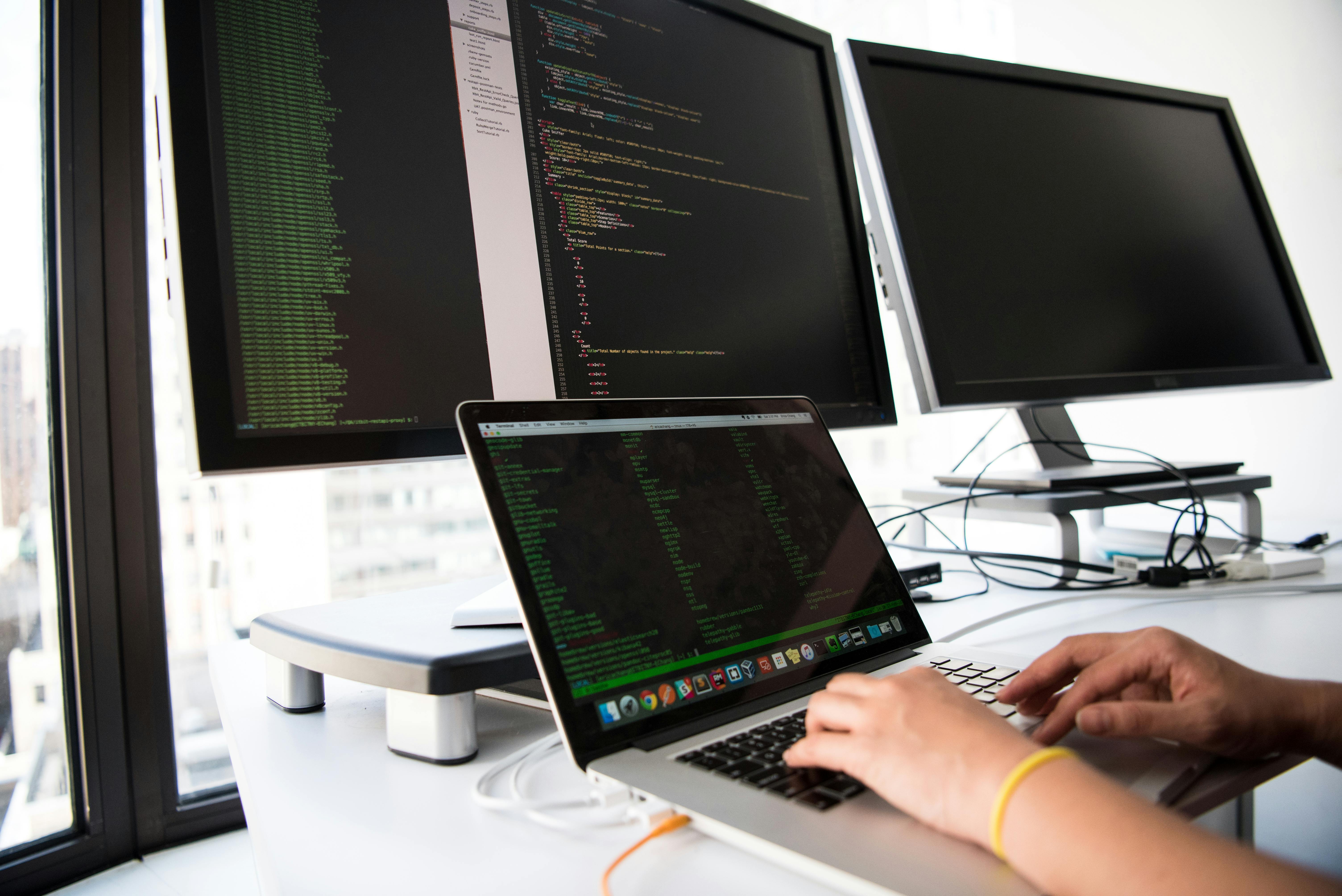
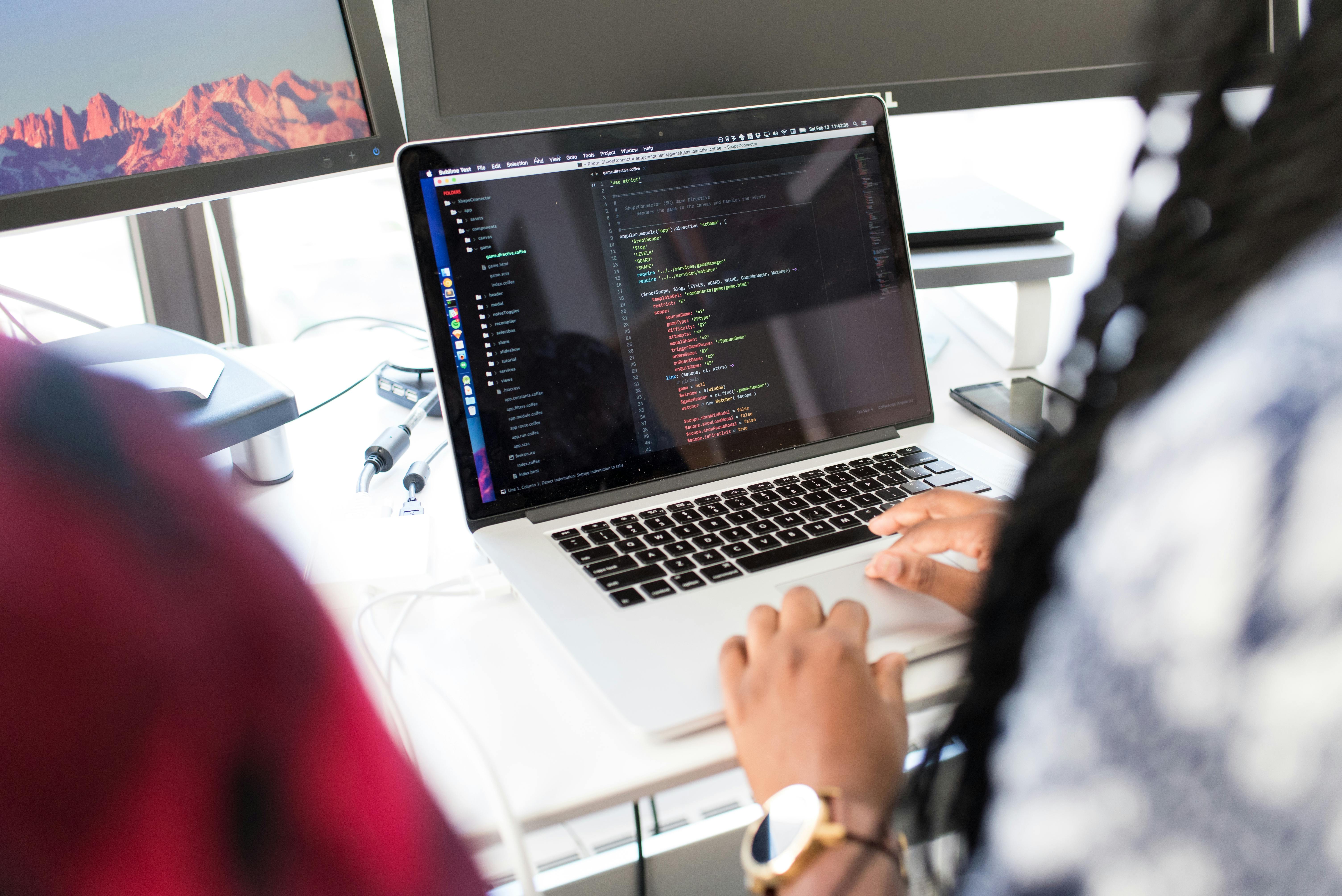
The following images illustrate the shift from monolithic cloud assistants to a layered ecosystem spanning devices, apps, and infrastructure.


Scientific Significance: Scaling Laws, Alignment, and Human–AI Collaboration
The rise of assistants is not just a product trend; it reflects scientific progress in representation learning, optimization, and human–computer interaction.
Scaling Laws and Efficient Training
Research summarized in works like “Scaling Laws for Neural Language Models” (Kaplan et al.) and later refinements has guided how labs choose model size, dataset size, and compute budgets. Empirically, performance continues to improve with more compute, but only if data quality and diversity remain high.
- Self‑supervised learning on web, code, and curated corpora remains central.
- Reinforcement learning from human feedback (RLHF) and constitutional AI approaches help align outputs with user intent.
- Speculative decoding, flash attention, and better parallelism reduce inference latency, critical for interactive assistants.
Alignment and Safety Research
As assistants become deeply embedded in workflows, misalignment risks—hallucinations, unsafe instructions, biased outputs—become more consequential. Organizations like Anthropic, OpenAI, DeepMind, and academic groups are investing heavily in:
- Red‑teaming and adversarial evaluation.
- Tool‑use restrictions and tiered capability exposure.
- Watermarking and provenance tracking for generated media.
- Techniques for reducing hallucinations via improved retrieval and calibration.
“The question is no longer whether AI assistants will be used, but whether they will be robust, steerable, and aligned with human values at the scale society requires.”
— Dario Amodei, CEO, Anthropic (research overview)
Human–AI Collaboration as a New Modality of Work
Scientifically, ubiquitous assistants create a living laboratory for studying human–AI collaboration. Fields such as cognitive science, organizational behavior, and HCI are examining:
- How reliance on AI affects skill acquisition and retention.
- When AI suggestions improve or degrade judgment quality.
- How to design interfaces that keep humans “in the loop” without overwhelming them.
- New measures of productivity and creativity in AI‑augmented environments.
Milestones: From Novelty Chatbots to Integrated Copilots
Over the last few years, several inflection points have shaped how AI assistants are perceived and used.
- Public release of general‑purpose chatbots: The introduction of user‑friendly chat interfaces demonstrated that LLMs could be useful beyond research labs, sparking global interest and competition.
- AI inside productivity suites: Deep integration of assistants into office apps turned AI into a daily companion for emails, documents, and presentations.
- AI pair programmers: Tools like GitHub Copilot showed that LLMs could consistently boost developer productivity for many coding tasks.
- On-device assistants in flagship phones and PCs: Major vendors announced devices with NPUs expressly marketed as “AI computers,” bundling offline and low‑latency features.
- Open-source ecosystem explosion: The release of high‑quality open models, plus easy deployment stacks, made it possible for small teams to ship tailored copilots.
Each milestone has expanded both user expectations and regulatory scrutiny, pushing companies to iterate on safety and transparency.
Challenges: Safety, Copyright, Governance, and User Trust
The ubiquity of AI assistants surfaces a dense cluster of technical, legal, and societal challenges that are still far from resolved.
Hallucinations, Reliability, and Evaluation
Despite dramatic improvements, current models can still fabricate plausible‑sounding but incorrect information. This is especially problematic in domains like law, medicine, and finance. Key open questions include:
- How to systematically measure hallucination rates in real‑world conditions.
- How to calibrate confidence and surface uncertainty to users.
- When to require tool‑use (e.g., web search, databases) vs. model‑only answers.
Copyright and Training Data
Lawsuits from authors, news organizations, and artists focus on how training datasets were collected and how outputs interact with copyright. Courts and regulators in the US, EU, and elsewhere are grappling with:
- Whether training on publicly available content constitutes fair use.
- How (or whether) to compensate rights holders.
- What transparency standards should be imposed for training data disclosures.
Regulation and Global Governance
Governments are actively exploring AI safety frameworks, including the EU AI Act, US executive orders on AI, and national AI strategies in the UK and Asia. Proposals touch on:
- Classification of “high‑risk” AI systems and required audits.
- Watermarking or provenance requirements for synthetic media.
- Liability regimes for harmful or discriminatory outputs.
- Export controls on leading‑edge chips and models.
Privacy and Data Protection
On-device AI offers a powerful counterweight to cloud‑only architectures by minimizing data transfer. However, privacy concerns remain:
- How user data is logged, retained, and used for further model training.
- Whether enterprise deployments can guarantee data separation.
- How to honor regulations like GDPR and CCPA in global products.
“The next generation of AI assistants must be built on a foundation of privacy by design, not as an optional afterthought.”
— European data protection guidance (summarized by CNIL and other authorities)
Practical Usage: How Professionals and Creators Are Adopting AI Assistants
Across tech media, YouTube, TikTok, and podcasts, one recurring theme is how quickly professionals integrate AI assistants into daily workflows—especially in software development, content creation, and knowledge work.
Developers and Power Users
On platforms like GitHub and Hacker News, power users often run multiple assistants simultaneously:
- A cloud LLM for complex reasoning and multi‑step planning.
- A fast local model for offline coding help and text manipulation.
- Domain‑specific copilots (e.g., for security analysis or data science).
Many maintain prompt libraries and custom tools, effectively treating assistants as programmable agents rather than static bots.
Content Creators and Educators
YouTube and TikTok creators use assistants for idea generation, scripts, thumbnail concepts, and SEO descriptions. Educators leverage them for lesson planning, quiz generation, and adaptive explanations tailored to student questions—while debating how to discourage plagiarism and over‑reliance.
Knowledge Workers and Enterprises
In enterprises, assistants are being embedded into CRMs, customer support systems, and BI dashboards. Typical use cases include:
- Automatic summarization of customer tickets and call transcripts.
- Drafting responses that human agents review and edit.
- Conversational analytics over sales and operations data.
- “Knowledge copilots” trained on internal documentation via RAG.
Hardware and Tools: Building a Personal AI Stack
For users who want to go beyond default cloud assistants, assembling a personal AI stack involves choosing the right hardware, software, and workflows.
Choosing Hardware for Local Models
Running local assistants benefits from strong CPUs, ample RAM, and modern GPUs or NPUs. Many enthusiasts opt for AI‑centric laptops or desktops that balance portability with compute.
For example, creators and developers in the US frequently choose high‑performance laptops such as:
- A powerful Windows laptop with a modern GPU suitable for local LLMs and Stable Diffusion workloads, which can also run emerging “AI PC” features: High-performance Windows laptop with RTX GPU for AI workloads on Amazon .
- For users prioritizing quiet performance and battery life when running small models locally, an Apple Silicon laptop with unified memory is also a strong option, with extensive community support for on-device ML tools.
Key Software Components
A typical personal AI stack might include:
- A primary cloud assistant for complex tasks and access to the latest frontier models.
- One or more local models for privacy‑sensitive data like journals, medical notes, or proprietary code.
- RAG pipelines that index personal documents and notes for private semantic search.
- Browser extensions or keyboard integrations that bring assistants into any text field.
Tutorials on YouTube and blogs like The Next Web and Engadget frequently showcase example setups, benchmarking different model combos and workflows.
Future Trends: Agents, Personalization, and Ambient Computing
As we look toward the late 2020s, three interlocking trends are likely to define AI assistants: agentic behavior, deep personalization, and ambient integration into environments.
Agentic Assistants
Present‑day assistants largely respond to user prompts. Research and product roadmaps, however, point toward agentic systems that:
- Break down goals into multi‑step plans.
- Invoke tools and APIs autonomously within defined constraints.
- Monitor relevant data sources and proactively flag important changes.
- Collaborate with other agents (e.g., one for research, one for scheduling).
Richer Personalization with Privacy Controls
On-device storage and encrypted profiles will allow assistants to build long‑term models of user preferences, writing style, and priorities, without leaking raw data to vendors. Expect:
- User‑controllable “personas” and styles.
- Configurable memory scopes (per‑app, per‑project, device‑local only).
- Federated learning or similar techniques to improve models without direct data upload.
Ambient and Multimodal Interfaces
With microphones, cameras, AR devices, and sensors becoming ubiquitous, assistants may shift toward ambient presence—always available but context‑aware and unobtrusive. Podcasts and research labs are already exploring:
- Wearable AI devices that capture and summarize conversations.
- AR overlays for real‑time translation, labeling, and instructions.
- Hands‑free voice interactions that blend with physical workflows.
Conclusion: Living with AI Assistants as a New Normal
The conversation around AI assistants has decisively shifted from “Can they chat?” to “How should we design, regulate, and live with them?” From cloud‑scale LLMs powering search and productivity suites to compact on-device models respecting privacy and latency, assistants are redefining how software and hardware are built.
The next few years will determine whether this technology becomes a trusted, reliable co‑pilot or a fragmented patchwork of partially aligned tools. The outcome will depend on:
- Technical progress in safety, reliability, and grounding.
- Regulatory frameworks that protect users without stifling innovation.
- Open ecosystems that allow experimentation while respecting rights holders.
- Thoughtful design of interfaces that keep humans empowered and informed.
For readers following Engadget, The Verge, and similar outlets, understanding AI assistants now means understanding a layered infrastructure that touches every aspect of digital life. Whether you are a developer, manager, student, or creator, building literacy in how these systems work—and how to use them responsibly—will be a core professional skill in the decade ahead.
Extra: How to Evaluate an AI Assistant for Your Own Use
When choosing among the growing range of AI assistants—cloud, local, or hybrid—it helps to apply a simple evaluation checklist.
Key Questions to Ask
- Capability: Does it handle the tasks you actually need (coding, writing, data analysis, image work)?
- Latency: Is it responsive enough for interactive use on your devices?
- Privacy: Where is your data stored, and can you opt out of training?
- Cost: Are subscription or API costs aligned with the value you gain?
- Integration: Does it plug into your existing tools (IDE, office suite, browser, chat apps)?
- Transparency: Does the provider publish model cards, safety docs, and limitations?
By periodically revisiting these questions, you can evolve your personal AI stack as the ecosystem continues to change, staying both productive and intentional about how much autonomy you delegate to your digital assistants.
References / Sources
Further reading and reputable sources covering AI assistants, LLMs, and on-device AI:
- TechCrunch – AI coverage
- The Verge – Artificial Intelligence
- Wired – AI
- Ars Technica – AI
- Stanford Human‑Centered AI Institute
- Hugging Face – Papers and resources
- OpenAI – Research
- Anthropic – Research
- US White House – AI policy resources
- EU AI Act – Unofficial but curated documentation
- Hacker News – Community discussions on AI tools
- YouTube – AI assistant workflow tutorials
