
Zuckerberg’s Metaverse Reset: What Meta’s Deep Cuts Really Mean for the Future of Virtual Worlds
Meta Platforms Inc., the company formerly known as Facebook, is once again reshaping its future. According to reporting from Bloomberg and other financial media, Mark Zuckerberg is preparing meaningful cuts to the company’s metaverse initiatives—an area he once called “the next chapter of the internet” and the very reason behind the company’s 2021 rebrand. These moves come amid intense pressure to prioritize artificial intelligence, improve profitability, and respond to skeptical investors who question the payoff of multi‑billion‑dollar virtual reality bets.
The change does not mean the metaverse is dead, but it does suggest that Meta is shifting from “grow at any cost” to “prove the business case.” As Wall Street scrutinizes every dollar of Reality Labs spending, Meta appears to be tightening its focus on near‑term winners—mixed reality headsets, productivity tools, and AI‑driven experiences—rather than the fully immersive, open-ended virtual world once showcased in glossy demos.
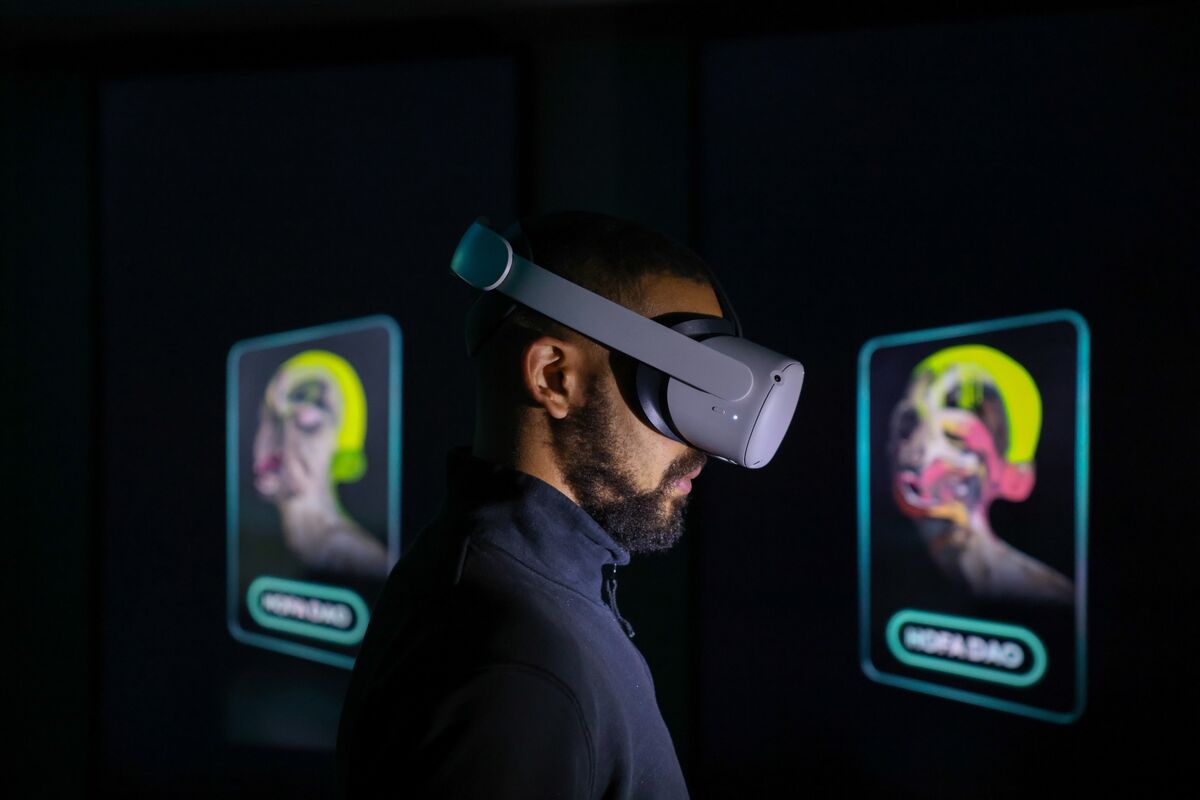
From “Metaverse First” to “AI and Efficiency First”
When Meta rebranded from Facebook in October 2021, Zuckerberg pitched the metaverse as the company’s long‑term North Star. Since then, Reality Labs—the division behind Quest headsets, Horizon Worlds, and AR research—has generated tens of billions of dollars in operating losses. While Meta’s core advertising business remained strong, rising interest rates, macroeconomic uncertainty, and competition from TikTok and other platforms amplified investor fatigue with long‑dated, speculative bets.
In parallel, the AI boom exploded. OpenAI’s ChatGPT, Anthropic’s Claude, and rapid advances at Google, Microsoft, and others changed the narrative about where the next technology platform shift would happen. Meta, with its large AI research team and powerful Llama models, suddenly had an opportunity to lead—but only if it was willing to refocus resources.
“In times of change, the boldest thing you can do is stay focused on the long term—while being brutally honest about what’s working today.”
— Often echoed in Mark Zuckerberg’s discussions with investors about Meta’s strategy
Reports of deep cuts to metaverse efforts should be seen through this lens: not as a full abandonment, but as a reprioritization where AI, efficiency, and monetizable mixed reality use cases get a far bigger share of funding and leadership attention.
Inside Reality Labs: Where the Cuts Are Likely to Land
Reality Labs is a sprawling group that spans VR hardware, AR glasses research, operating systems, content studios, and experimental software like Horizon Worlds. Analysts and insiders expect Meta’s new cost discipline to hit the most speculative and far‑out projects first.
Likely areas of downsizing
- Early‑stage AR hardware experiments: Ultra‑light AR glasses, neural input devices, and advanced optics projects that may take 5–10 years to commercialize could see slower timelines or reduced headcount.
- Underperforming consumer apps: Social VR platforms such as Horizon Worlds, which have struggled with user retention and mainstream appeal, may face fewer new features and more consolidation.
- Non‑core content studios: Internal teams producing entertainment experiences or games that do not clearly drive headset adoption or revenue could be pared back in favor of partnerships.
Areas that are likely to be protected—or even strengthened
- Quest hardware and mixed reality: Devices like the Meta Quest 3, which blend VR and pass‑through AR, are central to any realistic metaverse roadmap and already have a base of enthusiastic users.
- Productivity and collaboration tools: Virtual offices, whiteboarding, and integration with platforms like Microsoft Teams and Zoom have a clearer enterprise revenue narrative.
- AI‑powered experiences: Intelligent avatars, generative 3D environments, and AI‑assisted content creation directly align with Meta’s broader AI strategy.
For employees, the shift means more rigorous performance metrics and tighter alignment with revenue or user‑growth goals. For partners and developers, it means prioritizing apps and services that extend the life and utility of Quest devices rather than speculative world‑building.
How Meta’s Metaverse Cuts Affect Investors and the Stock Story
The investment community has long been divided on Meta’s metaverse ambition. Some likened it to Amazon’s long‑term bet on cloud computing; others saw it as an expensive distraction from a cash‑generating ads business. Each quarterly report revealing more Reality Labs losses intensified the debate.
Deep cuts to metaverse spending change that narrative in several ways:
- Improved margins in the near term: Reducing multi‑billion‑dollar R&D outlays could directly boost operating income, supporting a “profitable AI and ads” storyline that many institutional investors prefer.
- Lower execution risk: By shedding the most speculative projects, Meta can concentrate management capacity on fewer, higher‑impact initiatives in AI, commerce, and core apps.
- Long‑term optionality remains: Meta can still launch new headsets, evolve Horizon, and explore AR; it just won’t be burning capital at the same rate.
For retail investors, this may feel like a pivot back toward fundamentals: user growth, engagement, ad pricing, and AI‑enhanced products across Facebook, Instagram, Messenger, and WhatsApp.
Those looking to understand the broader implications for tech stocks can compare Meta’s strategy shift with moves at Microsoft’s HoloLens program and Apple’s Vision Pro efforts, which are also slowly evolving their narratives from “metaverse” to more practical spatial computing and productivity themes.
What This Means for VR & AR Devices: Quest, Apple Vision Pro, and Beyond
Even as Meta scales back the most ambitious parts of its metaverse dream, the VR and AR device market remains very real—and increasingly competitive. Meta’s Quest 2 became one of the most popular consumer VR devices ever, and the more powerful Quest 3 is battling for attention against Apple’s high‑end Vision Pro and a wave of mixed reality headsets from other manufacturers.
Consumer hardware: still a critical battleground
- Meta Quest 3: Positioned as an affordable mixed reality device, the Quest 3 has been widely covered by reviewers as a strong balance of performance and price for gaming, fitness, and productivity.
- Apple Vision Pro: Apple’s entry into spatial computing—at a far higher price point—targets professionals, creators, and early adopters, focusing on premium display quality and seamless integration with Apple’s ecosystem.
- Enterprise headsets: Specialized devices for design, simulation, training, and remote collaboration continue to grow quietly in industrial sectors, even when consumer hype cools.
For consumers interested in experiencing VR today, that competition has created an expanding ecosystem of accessories and content. For example, dedicated VR head straps, controllers, and protective cases are among the most‑purchased add‑ons for Quest users in the U.S.
A widely used option for comfort‑focused gamers is the BOBOVR M3 Pro Head Strap for Meta Quest 3, designed to distribute weight more evenly during long sessions. Accessories like this illustrate how a robust market can thrive even if a platform owner slows its most speculative R&D.
To understand the broader hardware landscape, resources such as UploadVR and Road to VR provide independent reviews and data‑driven coverage of headsets, controllers, and new releases.
Developers & Creators: Risks, Opportunities, and What to Build Next
For developers and creators who embraced Meta’s metaverse vision, news of deep budget cuts can feel unsettling. Yet history shows that platforms often go through consolidation phases after an initial wave of exuberance. The key is understanding where Meta is still investing—and where user behavior is already strong.
Where developers can still win
- Games and fitness apps: Game studios producing immersive titles and indie developers building fitness experiences (boxing, rhythm, movement‑based workouts) continue to see strong demand among Quest users.
- Productivity and collaboration tools: Virtual coworking spaces, design review environments, and training simulations are increasingly relevant as companies explore hybrid work.
- Cross‑platform 3D tools: Assets and workflows that work across Meta, Apple, SteamVR, and the open web (via WebXR) reduce dependence on any single company’s strategy.
Developers who want to future‑proof their work are increasingly turning to engines and standards that support portability—such as Unity, Unreal Engine, and open 3D formats like glTF and USD. Following industry leaders like Epic Games’ Tim Sweeney and NVIDIA CEO Jensen Huang on platforms like LinkedIn and X (formerly Twitter) can also help creators track emerging best practices and strategic shifts.
“The metaverse is best thought of not as a single destination, but as the 3D evolution of the internet itself.”
— A framing often used by technologists and investors discussing spatial computing
Even if Meta itself becomes more selective, the skills developers are building—3D design, spatial UX, real‑time networking—will remain in demand across gaming, film, architecture, simulation, and AI‑generated worlds.
AI + Metaverse: Convergence, Not Replacement
One of the most important strategic shifts at Meta is the repositioning of the metaverse as an application area for AI rather than the company’s core identity. Instead of pouring resources into manually built virtual worlds, Meta is increasingly exploring how generative AI can create environments, avatars, and interactions on the fly.
How AI could supercharge virtual and mixed reality
- Generative environments: AI tools can instantly design 3D spaces from text prompts, enabling users to “step into” a meeting room, game level, or learning environment that did not exist minutes before.
- Smarter avatars and NPCs: AI‑driven characters can respond naturally to voice and gestures, turning static worlds into responsive, conversational spaces.
- Personalized experiences: AI can adapt difficulty, layout, or visual style in real time based on a user’s behavior and preferences.
Meta’s open‑source Llama models, which power a growing family of assistants and creative tools, are likely to show up inside VR and AR experiences—controlling in‑world agents, supporting creators, and powering voice‑first interfaces. This suggests that the company’s retreat from pure “metaverse” branding may actually accelerate more practical forms of spatial computing over the next five years.
For a deeper dive into how AI and spatial computing intersect, see research from organizations such as the MIT Media Lab and Stanford’s Virtual Human Interaction Lab, which publish studies on presence, immersion, and human‑tech interaction.
Regulation, Safety, and Public Perception
Any conversation about Meta’s strategic shifts must account for the regulatory and societal context. Lawmakers in the U.S., Europe, and other regions are closely watching Meta’s influence on privacy, competition, digital well‑being, and the spread of misinformation. Scaling back the metaverse push may indirectly reduce one line of scrutiny—particularly around children in VR environments—but it does not lessen broader regulatory pressure.
In many ways, AI has become an even larger focus for policymakers than VR. As Meta moves more investment into AI-powered tools and recommendation systems, it will face new questions about transparency, bias, data usage, and content governance. Public trust, already fragile from past controversies, will depend on how responsibly Meta deploys both AI and immersive technologies.
Analysts watching this space increasingly recommend following updates from the European Commission, the U.S. Federal Trade Commission, and independent research groups such as the AI Ethics Initiative for balanced perspectives on tech platforms’ responsibilities.
What Everyday Users Should Watch Next
For most people, the biggest immediate changes will not be in flashy keynote demos but in subtle shifts across apps they already use daily—Instagram, Facebook, WhatsApp, Messenger, and Threads. Meta is likely to lean on AI‑driven features in these products to justify its reallocation of resources away from long‑horizon metaverse projects.
Practical signals to track
- Frequency of new VR hardware launches: Fewer or more incremental headset updates would confirm that Meta is stretching device cycles and prioritizing profitability.
- AI feature rollouts: Watch for new generative AI tools inside Reels, messaging apps, and business tools—these reflect the company’s new strategic center of gravity.
- Developer incentives: Shifts in grants, revenue‑sharing, and promotional support signal which app categories Meta wants to grow most.
- Public statements from leadership: Quarterly earnings calls and interviews provide clues on how leadership now ranks metaverse projects versus AI and core social products.
Users who want to stay ahead of these trends can follow technology reporters at outlets like Bloomberg Technology, The Verge, and WIRED, many of whom provide regular explainers and newsletters on Meta’s moves.
Additional Context: How This Fits Into 20 Years of Platform Shifts
Meta’s metaverse retrenchment is easier to understand when viewed against two decades of platform evolution: desktop web, mobile, cloud, and now AI‑enhanced spatial computing. Each wave produced both clear winners and expensive experiments that never fully paid off.
The pattern is familiar:
- Bold vision and heavy R&D investment
- Over‑hype and inflated expectations
- Market correction and budget tightening
- Consolidation around a smaller set of durable use cases
Meta appears to be entering stage three and four for the metaverse while accelerating stage one and two for AI. That does not erase the importance of immersive technologies; it simply reframes them as one piece of a larger puzzle in which AI, mobile, and mixed reality converge.
For readers interested in a deeper historical and strategic perspective, the following resources provide useful background:
- Venture capitalist Matthew Ball’s essays and book on the metaverse, available via his official site, which break down the economic and technical building blocks of virtual worlds.
- Long‑form interviews with Mark Zuckerberg on podcasts such as Lex Fridman’s YouTube channel, where he discusses AI, VR, and Meta’s evolving roadmap in detail.
- Academic white papers and case studies on virtual reality adoption and human behavior in digital spaces from institutions like Stanford’s VR labs.
As Meta shifts gears, the most valuable skill for observers, investors, and creators is not betting on a single buzzword—but learning to read the signals that reveal where user value, business models, and technical breakthroughs are truly converging.
