
Why King Charles III’s Westminster Abbey Christmas Message Matters in 2025
King Charles III chose the symbolic heart of Britain’s spiritual life, Westminster Abbey, as the setting for his 2025 Christmas Day broadcast, leading the royal family to church on foot and signaling a speech centered on pilgrimage, tradition, and quiet continuity at a moment of cultural and political uncertainty across the United Kingdom and the wider Commonwealth.
King Charles III’s Westminster Abbey Christmas Address: Tradition, Pilgrimage, and Soft Power
The Christmas message from the monarch is one of British television’s longest-running traditions, but Charles’s decision to anchor this year’s broadcast in Westminster Abbey adds an extra layer of symbolism. It is the site of his coronation, generations of royal weddings and funerals, and now a carefully framed backdrop for a king trying to define his reign through service, reflection, and environmental and spiritual themes rather than spectacle.
From Sandringham Sofas to Sacred Stone: Why Westminster Abbey Matters
Historically, the royal Christmas message has been a domestic affair: think cozy rooms at Sandringham, understated trees, and a monarch seated at a desk with family photos in the background. Queen Elizabeth II’s broadcasts leaned into that living-room intimacy, matching mid-century television’s role as the new family hearth.
Westminster Abbey, by contrast, is all about scale, history, and ceremony. It is where:
- Every British coronation since 1066 has taken place.
- Charles was crowned in 2023, setting the tone for his modern-yet-rooted monarchy.
- National rituals—state funerals, memorials, and royal weddings—are staged for both the nation and the world.
By placing his Christmas address there, Charles is subtly shifting the annual broadcast from a family message to something closer to a civic liturgy: reflective, ritualistic, and visually steeped in continuity.
A Christmas Broadcast Framed as Pilgrimage
Reports ahead of the broadcast indicated that Charles would focus on the idea of pilgrimage. For a modern, mostly secular TV audience, it is an unexpectedly old-fashioned word—but a purposeful one.
In royal and religious language, “pilgrimage” can be read on two levels:
- Spiritual journey: The Abbey location underlines the spiritual—even if not strictly doctrinal—dimension, inviting viewers to think of Christmas as a time of personal reflection and moral direction.
- Civic journey: For the UK and Commonwealth, pilgrimage can also mean the collective trek through economic pressures, political divisions, and global instability.
“At the close of another year, we may each reflect on the paths we have taken and the steps we are yet to make.”
The language is deliberately broad. It avoids partisan positions yet allows viewers to project climate anxiety, cost-of-living struggles, or cultural polarization onto a shared metaphor of “the road ahead.”
The Royal Walk to Church: Optics, Image, and Family Dynamics
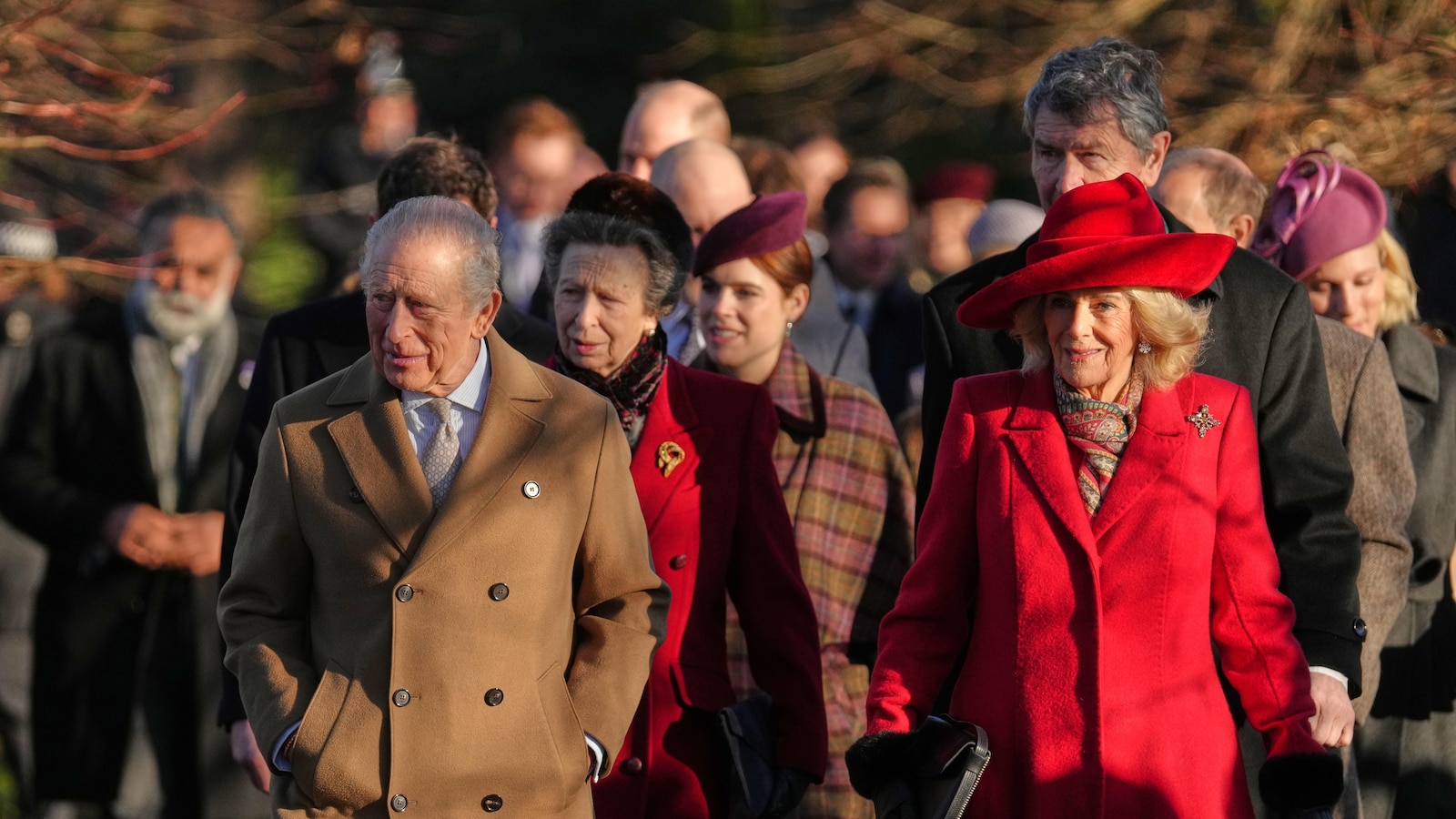
Hours before the broadcast, the king led his family to church on foot—another carefully stage-managed tradition at Sandringham that doubles as a live-action publicity still. In the social-media era, that walk has become one of the most photographed royal moments of the year.
Broadcasters love the sequence because it’s effectively a live red carpet for monarchy: fashion, body language, and family pecking orders are all on display. Who walks next to whom? Who chats with the king? Which faces are missing? These details offer soft clues to an institution that rarely spells out its internal politics.
In recent years, that walk has also been read against the backdrop of:
- Shifts in working vs. non-working royals.
- Ongoing public interest in intergenerational dynamics within the family.
- Media debates over the monarchy’s future role, cost, and relevance.
This year’s choreography, then, acts as a visual prelude to the king’s more formal message from the Abbey—informal optics leading into sacred stone.
The Christmas Broadcast as Prestige TV Event
The royal Christmas speech might be one of the most old-fashioned concepts on television, but it has quietly adapted to the streaming era. The broadcast is simulcast across major UK networks, uploaded to official royal channels, clipped for social media, and subtitled and sign-interpreted to meet modern accessibility standards.

The choice of Westminster Abbey fits this hybrid model:
- Visually cinematic: High ceilings, stained glass, and candlelight make for prestige-drama visuals that sit comfortably next to shows like The Crown in viewers’ mental playlists.
- Social-media ready: A single shot of the king in the Abbey is instantly shareable and recognizable without context.
- Brand-consistent: For the Royal Household, the broadcast doubles as yearly “brand maintenance”—reaffirming continuity and soft power without explicit political messaging.
In ratings terms, the speech competes less with entertainment specials and more with the background noise of holiday life: it is the sort of event viewers may not watch live, but expect to catch in clip form across the day.
Key Themes: Service, Stability, and Global Uncertainty
While full transcripts of Christmas messages often read blandly on paper, their real force lies in what is emphasized, omitted, or visually underlined. Based on reporting about this year’s address, three themes stand out.
- Service as pilgrimage: Charles has consistently framed his role less as hereditary privilege and more as duty. By rooting the speech in a place of national worship, he extends that framing to the institution itself: monarchy as long-haul service, not short-term performance.
- Unity without uniformity: Expect language about shared values, compassion, and community that acknowledges hardship without naming specific governments or policies. The Christmas speech has long been a safe space for moral language that avoids party politics.
- Global perspective: As monarch to multiple Commonwealth realms, Charles traditionally references conflicts, humanitarian crises, and environmental issues, while keeping the tone empathetic rather than prescriptive.
“This annual message is one of the last surviving forms of non-partisan, moral broadcasting on mainstream television.”
— Media commentator on the role of the royal Christmas speech
How Charles’s Christmas Messages Differ from Elizabeth II’s
Comparisons between Charles III and his mother are inevitable, particularly around rituals she effectively defined for modern audiences. Queen Elizabeth II’s Christmas broadcasts were known for:
- Simple, often homely sets.
- Quietly personal reflections on family milestones.
- An understated but explicit Christian framework.
Charles, while respectful of that tradition, has tended to:
- Lean into visually symbolic locations (the Quire of St George’s Chapel, now Westminster Abbey).
- Highlight themes like environmental stewardship and interfaith understanding.
- Use “pilgrimage” and “journey” language that resonates with both religious and secular audiences.
This year’s Abbey broadcast underlines that shift: the monarchy moving from “family Christmas card” to “national sermon,” though always couched in careful, inclusive language.
Not Just Pageantry: Critiques and Limitations
Any royal spectacle, however reverent the setting, comes with built-in critiques. In the case of this Christmas broadcast, commentators are likely to raise several points.
- Monarchy vs. modern austerity: For some, a message delivered from one of the most storied religious buildings in the world will feel out of step with viewers struggling with bills, housing, or public services.
- Symbol without policy: The king’s role is constitutionally non-political, which means he can identify broad values but not dictate solutions. To critics, that can sound like well-produced vagueness.
- Relevance outside the UK: In some Commonwealth countries, debates over republicanism continue. For those audiences, the Christmas broadcast might feel more like inherited habit than meaningful address.
Yet even critics often concede that, as a cultural artefact, the speech occupies a strange but enduring niche: a rare moment when a nation—and to an extent, a post-imperial network of nations—stops for a few minutes of shared reflection, however skeptically received.
Production Design: How the Abbey Shapes the Story
Beyond the words themselves, the production design of the Westminster Abbey broadcast carries a quiet narrative. From camera angles to lighting, every choice reinforces the themes of continuity and contemplation.

Typical techniques include:
- Warm, low lighting to keep the atmosphere intimate despite the cavernous setting.
- Shallow depth-of-field shots that keep the king in focus while softly blurring the architecture, suggesting both grounding and transcendence.
- Cutaway shots to candles, choir stalls, and memorials, subtly reminding viewers of continuity with past generations.
The result is a broadcast that feels less like a press conference and more like a short, polished meditation film, albeit one anchored in a very traditional institution.
Cultural Impact: A Ritual Competing with Streaming and Social Feeds
Measured against the on-demand chaos of modern entertainment, a scheduled royal speech might seem anachronistic. Yet the very “slowness” of the Christmas broadcast is part of its cultural function.
In media terms, the speech:
- Acts as a yearly check-in on the tone, health, and priorities of the monarchy.
- Provides footage and quotes that news outlets will recycle in “year in review” segments.
- Invites immediate response and remixing online—from serious commentary to parody and memes.
Choosing Westminster Abbey ensures the 2025 edition is particularly “clippable.” Even viewers ambivalent about royalty are more likely to encounter short edits and stills across their timelines, especially given the striking visuals.
Related Viewing: Royal Rituals on Screen
If Charles’s Westminster Abbey broadcast has you curious about how royalty and ritual are portrayed on screen, there is a growing ecosystem of related content.
- The Crown (Netflix) – A dramatized, critically acclaimed series that has shaped global perceptions of the House of Windsor.
- Charles III: The Coronation Year – Documentary coverage providing behind-the-scenes context to the king’s public role.
- BBC and ITV royal specials – Annual Christmas and New Year broadcasts that often frame or follow-up on the royal message.
Conclusion: A King in Conversation with His Past—and His Public
By choosing Westminster Abbey for his Christmas Day broadcast, King Charles III is doing more than chasing a dramatic backdrop. He is placing his message in the long shadow of English and British history, aligning his language of “pilgrimage” with the stones that have witnessed coronations, wars, reformations, and reinventions.
In an era where “appointment television” is fading and institutions are constantly re-litigated in public, the royal Christmas speech still manages to function as a small, shared pause. Whether you see it as a comforting ritual, an outdated relic, or simply background noise to Christmas lunch, this year’s Abbey setting makes one thing clear: Charles intends his reign to be read as a long, deliberate walk rather than a sprint—a pilgrimage in public, surrounded by the ghosts of history and the glow of the TV camera.
