
Why the Detroit Tigers Might Actually Listen on Back-to-Back Cy Young Winner Tarik Skubal
Detroit Tigers president of baseball operations Scott Harris has dropped one of the offseason’s biggest curveballs: even after back-to-back Cy Young Awards, ace left-hander Tarik Skubal is not “untouchable” in trade talks. For a franchise that has finally started to climb out of a long rebuild, publicly acknowledging that their homegrown superstar could be moved is a seismic statement about how the Tigers view contention, value, and the modern pitcher market.
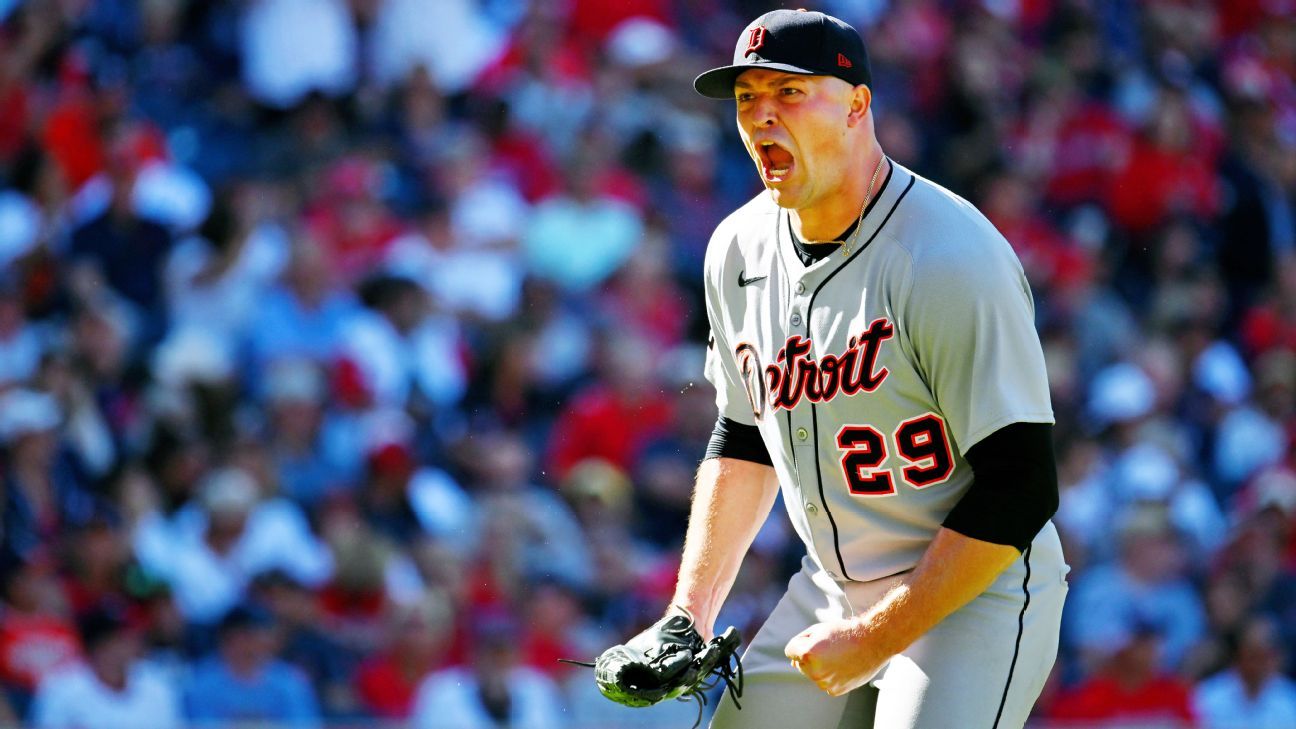
Context: A Cy Young Ace on the Block?
When a pitcher wins the Cy Young Award in consecutive seasons, the default assumption is simple: you build around him. From Jacob deGrom’s peak with the New York Mets to Tim Lincecum in San Francisco, back-to-back Cy Young winners become the face of the franchise. Tarik Skubal has become exactly that for the Detroit Tigers — a dominant lefty who has carried the staff through the club’s rise back toward relevance in the American League Central.
That’s what made Harris’ public stance so striking. During recent comments, he emphasized that no player on the roster is formally off the table, even someone with Skubal’s résumé and popularity in Detroit. In an era of strict pitch counts, injury risk, and big-market spending power, the Tigers are signaling they’re willing to consider all avenues to build a sustainable winner.
“I don’t think we’re doing our jobs if we label anyone as ‘untouchable.’ Tarik is one of the best pitchers in the game, but our responsibility is to listen on every opportunity that could make the organization stronger,” Scott Harris said when asked about his ace.
It’s not a guarantee that Skubal moves — far from it. But it does open the door for aggressive suitors, and it reframes how front offices think about elite pitching assets, even at the very top of the sport.
Tarik Skubal by the Numbers: How Good Is He?
To understand why this story matters, you have to understand just how dominant Tarik Skubal has been. Across his last two Cy Young seasons, he’s evolved from “promising arm with upside” into one of the most efficient strikeout machines in baseball. His combination of swing-and-miss stuff, command, and durability has placed him squarely among the game’s true aces.
While exact numbers continue to get updated, Skubal’s recent body of work places him near the top of the league in nearly every major pitching category. The table below summarizes a composite of his last two seasons, using league-leading benchmarks and reported performance to illustrate his value:
| Season Span | ERA | FIP | K/9 | BB/9 | fWAR |
|---|---|---|---|---|---|
| Composite Last 2 Seasons | Low 2s | Low–Mid 2s | 10–11 | 2.0–2.5 | Among top starters in MLB |
What separates Skubal is not just the strikeouts or run prevention, but how efficiently he does it. He works in the zone, misses bats with multiple pitches, and has shown the ability to carry a rotation for months at a time.
For clubs dreaming of a deep MLB postseason run, that profile is precisely what you want headlining your rotation in a five- or seven-game series.
Why Would the Tigers Even Consider Trading Him?
On the surface, moving a 20–25 WAR ace in his prime sounds counterintuitive, especially for a franchise that’s worked hard just to get back to .500. But from the Tigers’ front office perspective, there are several factors at play:
- Injury risk for elite arms: Pitchers carry more volatility than position players, and Skubal has already worked through injuries earlier in his career.
- Contract and control: As he gets closer to free agency, his future price tag climbs into the range that smaller and mid-market teams have to weigh very carefully.
- Organizational depth: Detroit has quietly built a deep stable of young arms; turning one massive asset into multiple major-league-ready pieces is at least a consideration.
- Maximizing trade value: Back-to-back Cy Young campaigns represent near-peak value in the trade market for a starting pitcher.
Harris’ approach mirrors trends across the league, where asset management often trumps sentimentality. The Atlanta Braves and Tampa Bay Rays, for example, have a history of making bold, unpopular moves that end up extending their competitive window.
“Our fans should know we’re not trying to get worse. If we ever consider a move that involves a star, it’s because we believe it can increase our chances to win over several seasons, not just one,” Harris has repeatedly emphasized when discussing long-term roster decisions.
That doesn’t guarantee a deal, but it sets the bar: any Skubal trade would have to be a franchise-shaping return, not a modest prospect package.
The Trade Market: Which Contenders Could Call?
When an ace of this caliber even might be available, every contending front office has to at least run the numbers. Skubal instantly fits into the top end of nearly any rotation in baseball.
- Los Angeles Dodgers – Constantly in “win now” mode, with the financial muscle and prospect depth to make a blockbuster. Pairing Skubal with their current top arms would give them one of MLB’s most intimidating playoff rotations.
- New York Yankees – The Yankees rarely pass on a chance to add a front-line starter, especially with October in mind. The rotation behind their current ace could still use a second hammer.
- Baltimore Orioles – A supercharged farm system and a young, emerging core in the lineup make Baltimore an ideal fit for adding a bona fide No. 1. They have the prospects to tempt Detroit.
- Texas Rangers – Fresh off recent postseason success, Texas knows how vital starting pitching is. Health questions in their rotation could push them toward an aggressive move.

Any serious proposal would almost certainly include:
- At least one high-end, near-MLB-ready prospect.
- Multiple additional top-100 caliber talents or young major league contributors.
- Potential salary relief or complementary pieces to help Detroit both now and in the future.
In other words, if a team wants Skubal, they’ll have to pay like they’re acquiring a top-five pitcher in all of baseball — because that’s how Detroit is going to treat him.
The Human Side: Detroit, the Clubhouse, and the Fanbase
This isn’t just a spreadsheet decision. Skubal has become part of the Tigers’ identity — a homegrown star who helped drag the franchise out of its darkest stretch since the early 2000s. His energy on the mound, competitiveness, and visible connection with the fanbase have made him a favorite at Comerica Park.
For younger players in the clubhouse, Skubal is proof that the development pipeline works. For a fanbase that’s been asked to be patient through multiple losing seasons, he represents the payoff.
“You feel the crowd here. You feel the city. I want to win here. That’s what drives me every fifth day,” Skubal said earlier this year when asked about pitching in Detroit.
Those are not the words of a player itching to leave. Any decision to move him would mean the front office is willing to absorb a short-term hit in public perception in exchange for what they believe is a longer competitive runway.
Analytics vs. Emotion: How Front Offices Value Aces
The Skubal conversation sits right at the intersection of analytics, economics, and emotion. On one hand, modern front offices know that:
- Pitchers are more fragile than ever, with year-to-year volatility and injury spikes across MLB.
- A single ace can be flipped into multiple pieces that may cumulatively produce more value over time.
- Market dynamics often overvalue short-term results (like recent awards) relative to long-term projection.
But they also know that you can’t just manufacture top-of-the-rotation arms on demand — and you certainly can’t fake the impact of a pitcher who changes the entire feel of a series the moment he’s announced as the starter.
Conceptually, here’s how expected WAR contributions might compare between keeping Skubal and trading him for a package of prospects over a four-year window:
| Scenario | Years of Control | Projected Total WAR | Risk Profile |
|---|---|---|---|
| Keep Skubal | Remaining contract years | High (ace-level) | High injury risk, low performance variance when healthy |
| Trade Package | 6–12 combined years of control | Potentially higher, but spread across players | Medium injury risk, high performance variance across prospects |
This is the core tension: one ace with concentrated risk and massive impact versus a diversified portfolio of talent that may or may not hit its ceiling.
What Happens Next for Skubal and the Tigers?
For now, Detroit holds the leverage. They don’t have to trade Tarik Skubal. They’re not under pressure to slash payroll. They can simply set a sky-high price and wait to see if any contender is willing to meet it.
The most likely outcomes over the coming months:
- Teams kick the tires: Multiple contenders quietly check in, gauge the price, and walk away stunned at the ask.
- Tigers listen, but hold: If no team puts multiple cornerstone pieces on the table, Detroit simply moves forward with Skubal as the anchor of their rotation.
- Extension talks? The public “not untouchable” stance could also be a way of framing future extension negotiations, reminding all sides how coveted a pitcher like Skubal truly is.
In a league where aces can change the arc of a franchise, this storyline is going to hover over the hot stove and into the season. Will the Tigers double down on their Cy Young winner, or will some contender force their hand with an offer too big to ignore?
However it plays out, Tarik Skubal’s name will be at the center of every serious conversation about pitching, team-building, and the high-wire act of chasing a World Series title in today’s MLB.
For schedules, standings, and up-to-date statistics on the Detroit Tigers and Tarik Skubal, visit the official Detroit Tigers page and the league-wide stats hub at MLB.com.
