
Why Apple’s On‑Device ‘Private AI’ Could Redefine the Future of Smartphones
Apple’s aggressive move into on-device AI is reshaping how the industry talks about artificial intelligence on consumer devices. Instead of centering the narrative on ever-larger cloud models, Apple is betting that the most compelling and trustworthy AI experiences will increasingly run directly on your devices—under the banner of “private AI.”
This shift sits at the intersection of three forces: specialized neural hardware in Apple’s A‑series and M‑series chips, hybrid AI architectures that intelligently combine local and cloud inference, and intensifying privacy and regulatory pressure around how user data is handled and used to train models.
In this article, we break down Apple’s on-device AI push, how it stacks up against Google, Microsoft, and OpenAI, and why “private AI” is rapidly becoming one of the most important fault lines in the tech ecosystem.
Visualizing the Era of On‑Device AI
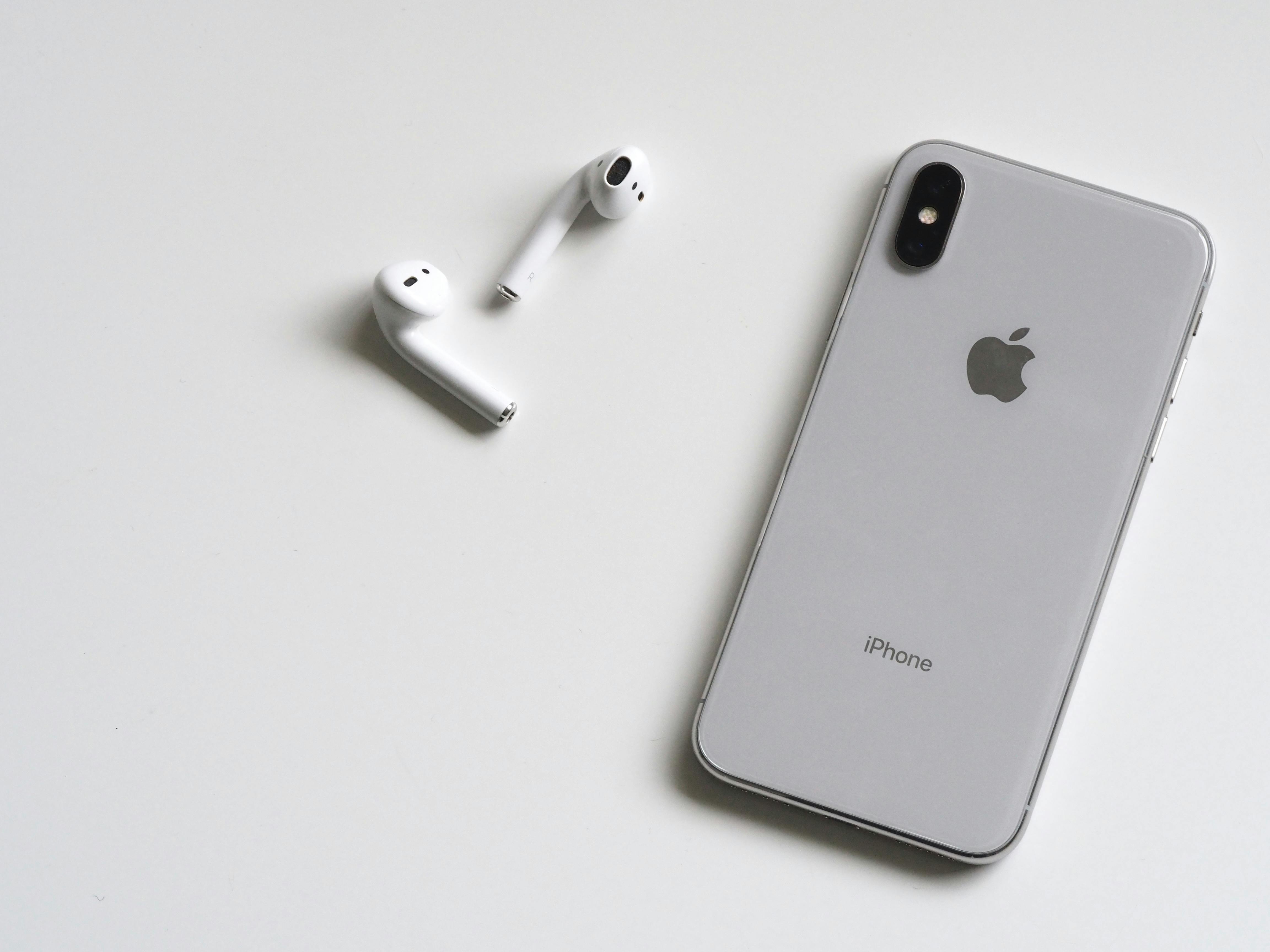
As Apple, Google, and others race to embed generative models into everyday devices, the smartphone is no longer just a thin client to the cloud—it is becoming a portable, privacy-aware compute hub for personal data.
Mission Overview: Apple’s Vision for ‘Private AI’
Apple’s mission with on-device AI is clear: deliver generative intelligence that feels personal, instantaneous, and private by default. Rather than framing AI as an abstract cloud service, Apple presents it as a tightly integrated capability of the iPhone, iPad, and Mac.
In Apple’s framing, “private AI” has three core pillars:
- Local processing first: Whenever possible, models run directly on the device, keeping raw data—photos, messages, sensor streams—out of remote servers.
- Hybrid when needed: For complex tasks that exceed on-device capacity, Apple quietly escalates to the cloud, often using encrypted and ephemeral processing.
- Tight OS integration: AI features are embedded into system apps—Photos, Messages, Mail, Xcode, and more—rather than exposed as a separate chatbot or app.
“Our goal is to make AI feel like a natural extension of your device—powerful, helpful, and built on a foundation of privacy.”
This narrative stands in deliberate contrast to cloud-first strategies from OpenAI, Microsoft, and Google, which emphasize massive centralized models and cross-platform APIs.
Technology: Custom Silicon and Neural Processing Units
At the heart of Apple’s on-device AI strategy are its custom A‑series (iPhone, iPad) and M‑series (Mac, iPad Pro) chips, each with dedicated Neural Engines—Apple’s term for integrated neural processing units (NPUs).
The Role of the Neural Engine
NPUs are specialized for matrix multiplications and tensor operations that dominate deep learning workloads. Apple’s latest Neural Engines are capable of tens of trillions of operations per second (TOPS) while staying within strict mobile power and thermal budgets.
- High throughput, low power: NPUs offload convolution, attention, and projection layers from CPUs/GPUs, improving performance-per-watt.
- Mixed-precision arithmetic: Support for INT8, INT4, and sometimes lower-bit formats allows aggressively quantized models to run efficiently.
- Secure execution paths: On some devices, sensitive model operations and data can leverage secure enclaves and memory isolation techniques.
These features parallel moves from Qualcomm’s Snapdragon NPUs, Intel Core Ultra NPUs, and AMD Ryzen AI, reinforcing that the AI battleground is increasingly shifting to the silicon layer.
Model Optimization for Devices
To make generative models fit on mobile-class hardware, Apple and third-party developers rely on an array of optimization techniques:
- Quantization: Converting 16‑bit or 32‑bit floating point weights into 8‑bit or lower integer formats to shrink model size and boost throughput.
- Pruning: Removing redundant or low-importance weights and neurons, often guided by sparsity-aware algorithms.
- Distillation: Training smaller “student” models to mimic larger “teacher” models, preserving quality at a fraction of the cost.
- Operator fusion: Combining multiple operations into single kernels to minimize memory transfers.
The result: small and medium-sized transformer-based models that can handle tasks like:
- Text summarization and rewriting of emails or notes
- On-device translation and transcription
- Context-aware suggestions in messaging and productivity apps
- Image manipulation and generative photo effects
Technology: Hybrid AI Architectures
Contrary to some marketing gloss, the future is not purely “on-device” or purely “in the cloud.” Apple, like its rivals, is betting on a hybrid architecture in which local and remote models cooperate.

When AI Runs Locally vs. in the Cloud
Apple and other platforms generally adopt a decision framework based on:
- Complexity of the task: Lightweight tasks (autocorrect, short-form suggestions, simple summarization) run locally; heavy-duty multi-modal reasoning may use the cloud.
- Data sensitivity: Highly personal context (health metrics, private photos, messages) is biased toward on-device processing.
- Latency constraints: Real-time interactions like voice assistants increasingly use on-device models for snappy responses.
- Connectivity: Offline or poor networks push more functionality toward local models, making the device more autonomous.
“Hybrid is the pragmatic future of AI deployment. The challenge is not whether to use the cloud, but when—and how transparently.”
For developers, this raises practical questions: Which pieces of an experience must be ultra-fast and private, and which can justifiably make a round-trip to the cloud for higher-quality or more capable models?
Scientific and Policy Significance: Privacy, Security, and Regulation
The rise of “private AI” is not only a story about chips and models; it is a response to regulatory and societal scrutiny of data practices.
Regulatory Pressure
In the EU, the AI Act and GDPR impose strict rules on how personal data can be collected, processed, and used for model training and inference. In the US, the FTC and state-level privacy laws increasingly target opaque data pipelines and dark patterns in consent flows.
- Data minimization: Regulators favor architectures that limit the scope and duration of data collection.
- Purpose limitation: Data used for on-device personalization should not easily flow into broad, open-ended training corpora.
- Transparency and explainability: Organizations must communicate how AI features operate and what data they rely on.
Apple’s claim that sensitive context never leaves the device—combined with technical measures like on-device encryption and differential privacy—aligns neatly with these priorities and strengthens its competitive positioning.
Security and Attack Surface
From a security research perspective, on-device AI changes the attack surface:
- Reduced central honeypots: Less personal data in centralized data centers means fewer jackpot targets for attackers.
- New local vulnerabilities: Models and prompts stored locally can be targets for extraction, tampering, or side-channel attacks.
- Model inversion risks: Even on-device models may inadvertently memorize sensitive information if not trained and audited correctly.
“Moving computation to the edge can mitigate some systemic risks, but it doesn’t magically make security problems disappear—it just redistributes them.”
Security-oriented outlets like Wired Security and Hacker News frequently debate whether Apple’s “private AI” is substantively more secure or simply more marketable than cloud-first approaches.
Developer Ecosystem: Building on On‑Device AI
For developers, Apple’s on-device AI stack presents both opportunities and constraints. Apple exposes its neural capabilities through frameworks such as:
- Core ML: For deploying trained models on iOS, iPadOS, macOS, and watchOS.
- Metal Performance Shaders (MPS): For lower-level GPU and NPU acceleration.
- Natural Language and Vision frameworks: For common tasks like classification, tagging, and entity extraction.
On communities like Hacker News and The Next Web, developers are actively debating:
- How small can a useful LLM be on a phone (e.g., 1–7B parameters after quantization)?
- When is it better to call external APIs like OpenAI’s GPT or Google’s Gemini?
- How to design apps so that features degrade gracefully when offline or underpowered.
- How to manage updates when models are bundled with apps versus streamed or downloaded on demand.
Recommended Learning Resources
For engineers looking to get hands-on with on-device models, resources like Hugging Face’s GGUF and quantization docs and Apple’s Machine Learning developer portal are essential reading.
A practical reference device for experimentation is a recent Mac with an M‑series chip and at least 16 GB of unified memory. Popular among developers is the 14‑inch MacBook Pro with M3 Pro, which offers strong NPU and GPU performance for local model inference and fine‑tuning experiments.
Milestones: Performance, Battery, and Thermal Trade‑offs
Tech outlets such as The Verge, TechRadar, and Engadget are tracking how well on-device AI performs in real-world scenarios. Their hands-on tests reveal a complex set of trade-offs.
Key Observed Milestones
- Sub‑second local inference: Small text models can now generate tokens fast enough for interactive typing and real-time suggestions.
- On-device photo and video workflows: Features like semantic search, background removal, and smart albums increasingly run locally in seconds.
- Thermal constraints on phones: Long-running generative tasks can still trigger thermal throttling on phones, though less so on M‑series Macs and high-end tablets.
Independent benchmarks comparing Apple silicon to Qualcomm, Intel, and AMD NPUs show that Apple remains highly competitive, especially in performance-per-watt—a crucial metric for sustained on-device AI and battery life.
Challenges: Limits, Trade‑offs, and Open Questions
Despite rapid progress, Apple’s on-device AI vision faces significant challenges and open research questions.
Model Size vs. Capability
There is an inherent physics and information trade-off: smaller models run faster and consume less energy, but they often underperform massive cloud-scale models on complex reasoning, open-ended dialogue, and advanced coding tasks.
- Reasoning depth: Compact models may struggle with multi-step reasoning and subtle logical inference.
- Knowledge breadth: Limited parameter counts constrain how much world knowledge a model can embed.
- Multimodal complexity: Combining high-resolution vision, audio, and language pushes computational limits on mobile devices.
User Trust and Transparency
Users increasingly ask:
- When exactly does my data stay on-device versus go to the cloud?
- Are my on-device interactions ever used to train future models?
- Can I easily understand and control these behaviors?
“Privacy is not just a property of the system; it’s also a property of the user’s mental model of that system.”
Ecosystem Lock-In
Apple’s tight integration can feel like a double-edged sword. AI features that deeply integrate with iCloud, iMessage, Photos, and HealthKit are seamless—but they also make it harder to switch ecosystems.
This dynamic fuels debates on competition policy and platform power, echoing earlier controversies over the App Store, default browsers, and messaging interoperability.
Practical Implications: What It Means for Everyday Users
For most users, the impact of on-device AI will be felt less in the branding and more in everyday tasks quietly getting smoother.
Everyday Scenarios
- Smarter messaging: Context-aware suggestions, tone adjustments, and automatic summarization of long threads.
- Photos and media: Local generative edits, object removal, semantic search (“show me photos from my last trip with mountains and sunsets”).
- Productivity: On-device transcript clean-up, meeting summaries, and offline note analysis.
- Accessibility: Real-time captioning, screen reading enhancements, and personalized assistive features tuned to the individual.
Devices with robust NPUs and memory are ideal for these workflows. For users wanting a portable machine optimized for AI features, the 2024 MacBook Air with M3 is a well-reviewed option that balances power, battery life, and cost.
Industry Landscape: Apple vs. OpenAI, Google, and Microsoft
Apple’s on-device AI focus stands in contrast—but not in outright opposition—to the strategies of OpenAI, Google, and Microsoft.
Cloud‑First Rivals
- OpenAI & Microsoft: Emphasize powerful, centralized models (GPT‑4-class and successors) exposed via APIs and tightly integrated with Microsoft 365, Windows, and Azure.
- Google: Develops Gemini family models, pairing them with Android and ChromeOS while also pushing Web-based AI experiences and tools like Vertex AI and Gemini on the web.
Both camps are converging toward hybrid solutions, but Apple leans hardest on the privacy narrative and deep OS-level integration, while others emphasize raw capability, developer tools, and cross-platform reach.

Analysts on platforms like YouTube tech channels and LinkedIn are closely tracking whether users and enterprises ultimately prioritize:
- Maximum intelligence and flexibility (cloud-first), or
- Maximum privacy, responsiveness, and device autonomy (on-device-first).
Conclusion: Are We Entering the Age of ‘Private AI’?
Apple’s on-device AI push crystallizes a broader question that will define the next decade of computing: Where should intelligence live? In massive data centers optimized for scale, or in pocketable devices optimized for privacy and personal context?
In practice, the answer is “both,” but the balance point matters. Apple is betting that a privacy-first, device-centric approach will resonate with users and regulators—and that its silicon and OS integration will provide a durable competitive edge.
Whether this strategy wins out will depend on:
- How quickly on-device models close the gap with cloud giants on quality and capability.
- How regulators treat data collection, model training, and cross-border data flows.
- How much users value privacy and responsiveness versus maximal intelligence and flexibility.
For now, one thing is clear: the smartphone has become the front line of the AI revolution, and “private AI” is no longer just a slogan—it is a design principle shaping hardware, software, and policy across the entire industry.
Additional Resources and Next Steps
To dive deeper into Apple’s on-device AI and the broader “private AI” movement, explore the following:
- Apple WWDC sessions on machine learning and on-device AI
- Ars Technica’s coverage of machine learning and hardware acceleration
- The Verge – Artificial Intelligence section
- Wired – AI and policy reporting
- YouTube technical talks on ML systems and on-device inference
For those building products, a practical roadmap is:
- Prototype with large cloud models to validate UX and features.
- Profile usage to determine which interactions demand low latency and high privacy.
- Gradually migrate those parts to on-device models using Core ML or similar stacks.
- Continuously benchmark quality vs. speed and iterate model size, quantization, and caching strategies.
References / Sources
The discussion in this article is informed by a range of reputable sources, including:
- https://www.apple.com/newsroom/
- https://developer.apple.com/machine-learning/
- https://arstechnica.com
- https://www.theverge.com
- https://www.techradar.com
- https://www.engadget.com
- https://www.wired.com
- https://ai.googleblog.com
- https://platform.openai.com/docs
- https://huggingface.co/docs
These links provide up-to-date analyses of on-device AI trends, benchmarks, and regulatory developments as of late 2025.
