
Why Apple, Google, and Microsoft Are Racing to Put AI Inside Your Next PC
The concept of the “AI PC” has crystallized into a major industry narrative: personal computers and mobile devices architected from the ground up to execute AI workloads locally. This shift is being driven simultaneously by chip vendors (Intel, AMD, Qualcomm, Apple), platform owners (Microsoft, Google, Apple), and device OEMs, and it is now a central topic across outlets like The Verge, Engadget, and Ars Technica.
At the heart of this movement are NPUs—specialized accelerators that deliver tens or even hundreds of trillions of operations per second (TOPS) for machine learning. Combined with OS‑level copilots and AI features, they enable experiences such as real‑time transcription, background object removal in video calls, and offline code assistants without constantly shipping data to the cloud.
Yet the ecosystem is young. Software support is uneven, benchmarking methodologies are evolving, and reviewers are still debating how much these capabilities truly matter today. Nonetheless, most experts agree that AI PCs are following a trajectory similar to the early days of GPUs: the hardware arrives first, then a wave of new applications turns it into a necessity.
Mission Overview: What Is an AI PC?
In industry terms, an “AI PC” is not just a marketing label; it usually means:
- A CPU or system‑on‑chip (SoC) with a dedicated NPU capable of at least tens of TOPS of AI compute.
- Tight hardware–software integration so the OS and applications can schedule AI workloads efficiently.
- Support for modern AI frameworks (ONNX, TensorFlow, PyTorch, Core ML, etc.) with optimized runtimes.
- Built‑in AI experiences: copilots, live transcription, image enhancement, and security analytics.
“We believe the AI PC will become as indispensable as the GPU‑accelerated PC did for graphics and gaming.”
In parallel, smartphones and tablets are quietly becoming “AI devices” as well. Apple’s iPhone and iPad, Google Pixel phones, and high‑end Android devices already run sophisticated on‑device ML for photos, language, and security—blurring the line between AI PCs and AI phones.
Technology: The Hardware Arms Race
The hardware story behind AI PCs revolves around specialized accelerators and tight integration with CPUs and GPUs. Major players are racing to ship SoCs with competitive NPU TOPS and power efficiency.

Apple: Custom Silicon and On‑Device ML
Apple’s M‑series chips—beginning with the M1 and evolving through M2 and M3—integrate powerful neural engines, reaching tens of TOPS dedicated to ML. Apple leverages these through:
- On‑device dictation and translation with low latency.
- Advanced photo and video processing like subject isolation and background blur.
- Personalization in apps like Photos, Music, and Spotlight without exporting your data to the cloud.
Apple’s Machine Learning Research and Core ML developer tools signal a roadmap where increasingly capable models—from small language models to multimodal assistants—run locally on Macs, iPads, and iPhones.
Microsoft + Qualcomm, Intel, and AMD: Windows AI PCs
Microsoft is championing the “AI PC” category through Windows, emphasizing hardware that passes specific NPU performance thresholds. Key hardware trends include:
- Qualcomm Snapdragon X‑series Windows laptops with efficient ARM‑based NPUs designed for always‑on, always‑connected experiences.
- Intel Core Ultra (Meteor Lake and beyond) with integrated NPUs targeting AI workloads alongside traditional CPU/GPU tasks.
- AMD Ryzen AI chips, which combine strong integrated graphics with NPUs optimized for inference at the edge.
These platforms are being designed to run Windows Copilot experiences, local transcription, and AI‑powered video features in Microsoft Teams, all while staying within laptop power budgets.
Google: Tensor and AI‑First Mobile & ChromeOS
Google’s Pixel phones and some ChromeOS devices use custom Tensor chips with NPUs focused on:
- Real‑time image processing (HDR+, Magic Eraser, Best Take).
- Speech‑to‑text and live translate on device.
- On‑device safety and spam detection for calls and messages.
Google’s stated goal is to shift more of Gemini and other AI capabilities to the edge whenever latency, cost, and privacy justify it, while keeping cloud models for the heaviest workloads.
Technology: Software Stacks and On‑Device Intelligence
Hardware alone does not make an AI PC; the differentiator is the software stack that efficiently orchestrates AI workloads across CPU, GPU, and NPU.
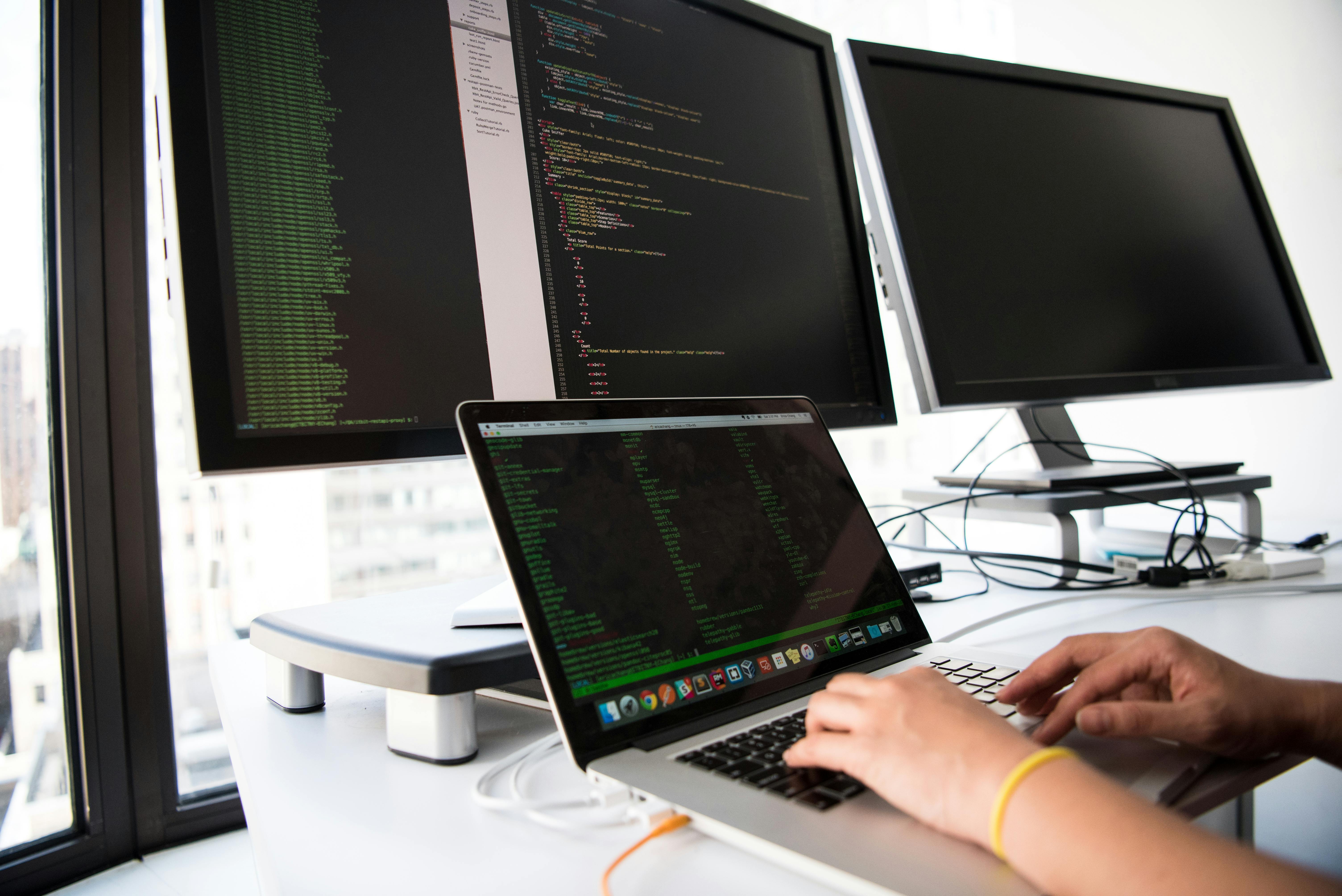
AI Assistants Deeply Integrated into Operating Systems
- Microsoft Windows: Windows Copilot is being embedded as a unified interface for searching files, summarizing content, manipulating settings, and interacting with applications. Some capabilities run locally, others in the cloud, with Microsoft gradually offloading tasks to local NPUs as they mature.
- Apple Platforms: Siri and system‑level ML are expanding toward more contextual assistance. Features like on‑device dictation, photo search by content, and personalized recommendations already avoid full cloud dependency.
- Google Android and ChromeOS: Google Assistant, Pixel‑exclusive AI camera features, and new Gemini integrations are increasingly tuned to take advantage of device‑side inference where feasible.
Frameworks and Runtimes Enabling Local Models
Modern AI PCs rely on an ecosystem of runtimes that can schedule models onto NPUs automatically:
- ONNX Runtime with NPU execution providers.
- Apple Core ML optimized for Neural Engine.
- Google’s TensorFlow Lite and MediaPipe for mobile and edge ML.
- Vendor‑specific SDKs (Intel OpenVINO, Qualcomm AI Engine, AMD ROCm libraries).
Developers can now ship compact large language models (e.g., 3–7B parameters with quantization) that run entirely offline, enabling use cases such as:
- Local code completion and refactoring in IDEs.
- Privacy‑preserving note‑taking and meeting summarization.
- AI‑augmented creative tools for image, audio, and video editing.
Scientific Significance: Edge Intelligence at Scale
From a research and systems‑engineering perspective, AI PCs are a large‑scale deployment of edge AI—moving intelligence from centralized data centers to billions of endpoints. This shift has deep implications for performance, privacy, and energy use.
“We’re going to see a spectrum of intelligence, from massive frontier models in the cloud to highly specialized, smaller models running on personal devices.”
Latency and User Experience
Local inference eliminates round‑trip latency to remote servers, enabling:
- Real‑time translation and captioning during calls.
- Instant code suggestions as you type in an IDE.
- Smooth, low‑latency AR/VR experiences without visible lag.
This is especially critical for applications in creative production, gaming, and assistive technologies for users with disabilities.
Privacy and Regulatory Compliance
Keeping sensitive data on device addresses increasing privacy requirements under regulations like GDPR and various state‑level privacy laws. AI PCs can:
- Process emails, documents, and call transcripts without uploading raw content.
- Generate summaries or features locally and only send anonymized, aggregated data for improvement.
- Reduce exposure to cross‑tenant data leaks in multi‑user cloud environments.
Enterprises see this as a way to benefit from AI while maintaining strict data‑sovereignty policies.
Energy and Cost Efficiency
Cloud AI scales poorly if every keystroke in an IDE or every frame of a video stream requires GPU inference. Offloading manageable workloads to NPUs:
- Lowers operating costs by reducing cloud GPU hours.
- Spreads energy consumption across devices, often at higher efficiency for modest models.
- Enables AI features even when network access is constrained or expensive.
Milestones: From Concept to Shipping Products
Over the past few years, the AI PC narrative has gone from speculative to tangible, driven by several concrete milestones.

Key Industry Milestones
- Apple’s M1 (2020) proved that integrated NPUs and unified memory architectures could deliver laptop‑class performance and battery life with strong on‑device ML.
- Intel, AMD, and Qualcomm NPU Roadmaps (2022–2024) formalized AI TOPS as a headline spec, similar to GPU FLOPS in prior eras.
- Windows Copilot and AI‑centric Windows releases tied OS upgrades to AI PC capabilities, signaling a generational platform shift.
- Google’s Tensor‑based Pixels normalized advanced AI camera and speech features running on the phone itself.
Media and Community Validation
Hardware reviewers at TechRadar, Notebookcheck, and YouTube channels like Linus Tech Tips and MKBHD are publishing NPU benchmarks and real‑world tests, comparing:
- Local LLM inference speed (tokens per second).
- Battery impact of always‑on AI assistants.
- Video call enhancements and background tasks offloaded to NPUs.
These reviews often echo the sentiment that, while some current AI features could run in the cloud, the hardware shift lays a foundation for applications that do require low‑latency, privacy‑preserving local inference.
Challenges: Hype, Fragmentation, and Real‑World Value
Despite the excitement, AI PCs face several headwinds that technologists, enterprises, and regulators must navigate.
1. Separating Hype from Practical Value
Reviewers and IT leaders are asking tough questions:
- Do everyday users truly benefit from local AI, or is this mainly a marketing story today?
- Which workflows—coding, video editing, design, research—see meaningful gains from NPUs?
- How do we measure the ROI of AI PCs versus cheaper, non‑AI hardware using cloud services?
Some early coverage is skeptical, noting that many AI features (document summarization, image generation) can run acceptably in the cloud, especially on fast connections.
2. Platform and API Fragmentation
Developers must deal with:
- Different NPU capabilities and instruction sets across Apple, Intel, AMD, Qualcomm, and others.
- Vendor‑specific SDKs and drivers that can be brittle or inconsistent.
- Rapidly changing best practices for model size, quantization, and deployment formats.
Cross‑platform abstractions like ONNX help, but robust, portable AI applications still require substantial engineering effort.
3. Security and Model Integrity
Putting capable models on device raises new security concerns:
- Attackers may attempt to tamper with models or prompts stored locally.
- Malware could abuse NPUs to run hidden inference workloads.
- Defending against adversarial inputs becomes an endpoint problem, not just a cloud problem.
Vendors are responding with secure enclaves, signed model packages, and OS‑level protections, but these patterns are still evolving.
4. Accessibility and Inclusive Design
AI PCs offer transformative opportunities for accessibility—real‑time captioning, language simplification, image description—but they must comply with standards such as WCAG 2.2 to be inclusive. Challenges include:
- Ensuring AI‑generated UI changes remain keyboard and screen‑reader friendly.
- Providing consistent alt text and captions for AI‑produced media.
- Designing AI assistants that respect cognitive load and user consent.
Enterprise and Developer Perspectives
On LinkedIn, X (Twitter), and specialized forums, enterprise IT leaders are debating how AI PCs change device strategy, security, and cloud architectures.
Fleet Management and Governance
Key questions include:
- Should AI PCs be standard for all employees or only for power users (developers, analysts, creatives)?
- How do we manage and audit which models are allowed to run locally?
- What telemetry—if any—can be collected while respecting privacy laws?
Many organizations are piloting AI PC deployments with small groups, often in conjunction with cloud copilots like Microsoft 365 Copilot or GitHub Copilot.
Developer Tooling and Local AI Workflows
Developers are already embracing AI PCs for:
- Local LLM sandboxes for experimentation without sending proprietary code to third‑party servers.
- On‑device fine‑tuning of small models on domain‑specific data.
- CI‑like validation of AI behaviors directly on target hardware.
Popular YouTube creators like Two Minute Papers and AI‑focused channels regularly showcase workflows where AI PCs handle coding assistance, dataset curation, and local inference experiments.
Consumer Choices and Recommended AI‑Ready Devices
For individuals considering an upgrade, the AI PC narrative can be confusing. Not every user needs an NPU‑heavy machine today, but certain profiles benefit substantially.
Who Benefits Most Right Now?
- Developers experimenting with local LLMs, code copilots, and AI research.
- Content creators doing heavy video editing, upscaling, denoising, and real‑time effects.
- Professionals who handle sensitive data (legal, healthcare, finance) and want AI assistance without sending raw content to the cloud.
Example AI‑Ready Laptops (USA Market)
The following popular models illustrate how AI PCs are entering mainstream retail channels. Always verify current specs, as vendors frequently refresh configurations:
- Apple MacBook Air 15‑inch (M3) — Efficient Apple Silicon with a strong Neural Engine for on‑device ML and excellent battery life. Available on Amazon: Apple MacBook Air 15‑inch with M3 .
- Microsoft Surface Laptop (latest AI‑optimized generation) — Deep Windows Copilot integration and NPU‑accelerated experiences tuned for productivity. See a representative configuration on Amazon: Microsoft Surface Laptop with Copilot support .
- Lenovo Yoga & ThinkPad lines with Intel Core Ultra or AMD Ryzen AI — Business‑class AI PCs with strong keyboards and enterprise management options. Example: Lenovo ThinkPad T14 Gen with Intel Core Ultra .
When evaluating options, look beyond generic “AI‑ready” labels and check:
- NPU TOPS rating and energy efficiency.
- RAM (16 GB is a practical baseline for serious AI work).
- Local storage capacity, especially if you plan to host models (512 GB or more is advisable).
The Road Ahead: Hybrid AI Between Cloud and Edge
Looking forward, AI PCs are likely to participate in a hybrid model where intelligence is split between device and cloud:
- On device: Smaller, optimized models handle quick, personalized tasks and sensitive data.
- In the cloud: Large, multimodal frontier models tackle complex reasoning, massive context windows, and heavy media generation.
This hybrid pattern is already visible in products like:
- Microsoft 365 Copilot, which mixes local context with cloud‑hosted LLMs.
- GitHub Copilot, combining editor‑side intelligence with server‑side models.
- Google Gemini and Apple’s upcoming AI features, which selectively offload workloads depending on privacy and complexity thresholds.
Over time, expect more user‑controllable settings that let you choose when to prioritize privacy and locality versus raw capability in the cloud.
Conclusion
AI PCs mark a fundamental rethinking of personal computing. Rather than thin clients for cloud AI, your laptop and phone are becoming intelligent endpoints with dedicated neural hardware, specialized software stacks, and assistants woven throughout the user experience.
The ecosystem is still maturing: not every feature justifies the AI PC label, and standards for benchmarking, security, and accessibility are still converging. But the parallels with the early GPU era are striking. As developers exploit NPUs for new classes of applications—from local copilots to privacy‑preserving analytics—the advantages of AI PCs will become increasingly tangible.
For now, the most pragmatic approach for individuals and organizations is to:
- Identify workflows where low latency and privacy matter most.
- Pilot AI PCs with those teams or use cases first.
- Monitor the evolving hardware and OS roadmaps from Apple, Google, Microsoft, and chip vendors.
As edge and cloud intelligence converge, the line between “regular” and “AI” computers will blur—until, eventually, every PC is an AI PC by default.
Additional Resources and Learning Paths
To stay current with AI PC developments and deepen your understanding, consider:
- Following researchers and practitioners on LinkedIn and X, such as Andrej Karpathy and Yann LeCun.
- Watching conference talks on YouTube from events like Microsoft Build, Google I/O, and Apple WWDC that focus on on‑device AI and NPUs.
- Experimenting with small local models using frameworks like llama.cpp or Ollama on compatible hardware.
For a gentle but thorough introduction to practical machine learning and on‑device inference, university lectures and MOOC courses on edge AI and embedded ML (for example, those shared by Pete Warden) can provide a solid technical foundation.
References / Sources
- Ars Technica – Gadgets & AI PC Coverage
- The Verge – AI PC and NPU Articles
- Engadget – AI PC Tag
- Qualcomm – Snapdragon Platforms for PCs
- Intel – Core Ultra with Integrated NPU
- AMD – Ryzen AI Overview
- Apple Newsroom – M‑Series and On‑Device ML Announcements
- Google AI Blog – On‑Device and Edge AI Posts
- Microsoft – Windows AI Documentation
- W3C – WCAG 2.2 Accessibility Guidelines
