
Why AI PCs With Powerful NPUs Are About To Change Your Laptop Forever
In this article, we unpack what “AI PCs” really are, how Microsoft Copilot+ PCs, Apple’s M‑series Macs, and Qualcomm’s Snapdragon X Elite devices compare, and what this shift means for creators, developers, businesses, and your next laptop upgrade.
Over late 2024 and into 2025, “AI PC” has become the dominant storyline in consumer computing. The core idea is simple but profound: instead of sending everything to the cloud, your laptop or desktop runs large language models (LLMs), image generators, and other generative AI workloads directly on-device thanks to a dedicated neural processing unit (NPU). This is changing how platforms are designed, how apps are built, and how we think about privacy and performance.
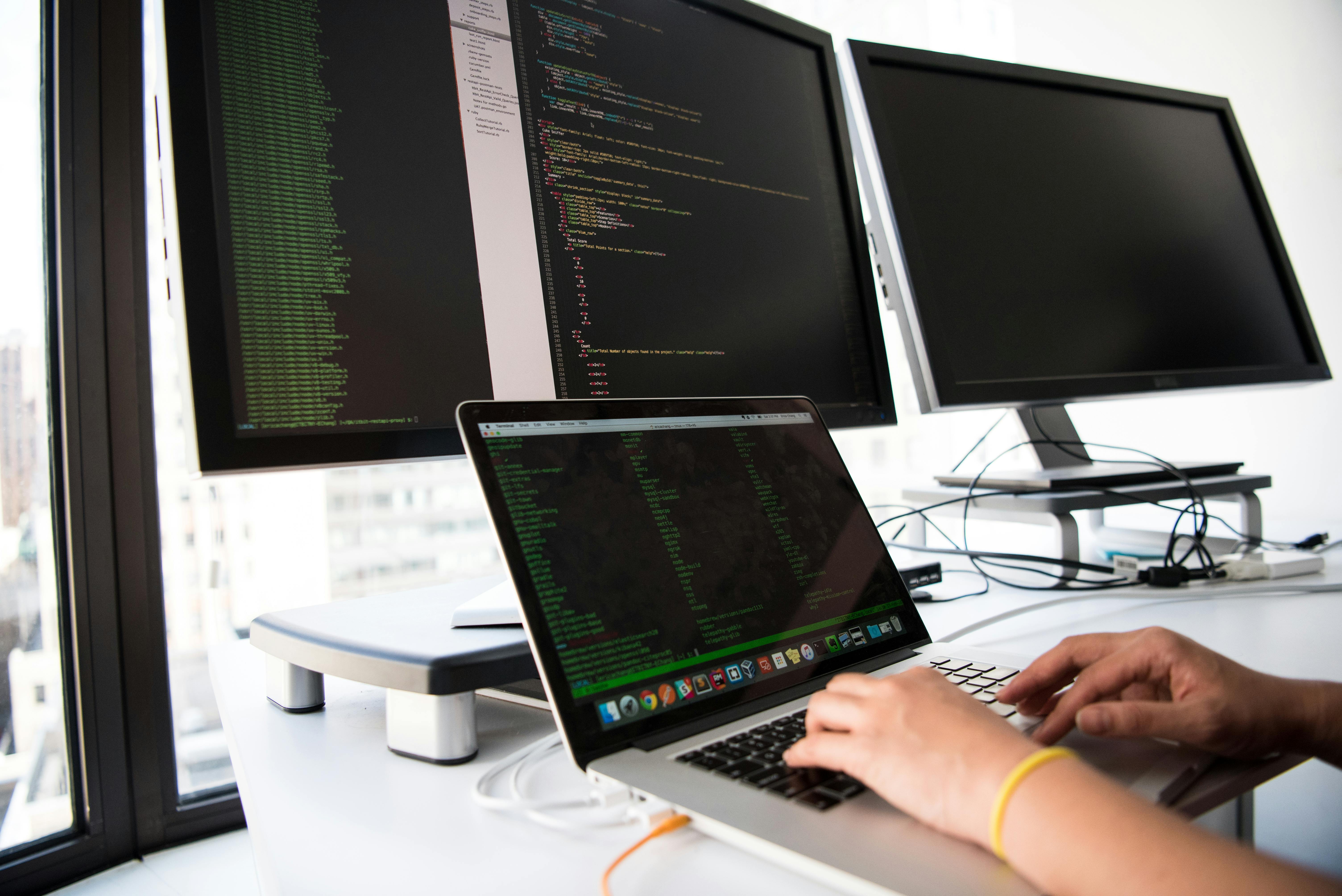
Behind the marketing, however, there are crucial differences among Microsoft’s Copilot+ PCs, Apple’s M‑series Macs with Apple Intelligence, and new ARM‑based Windows machines powered by Qualcomm’s Snapdragon X Elite and X Plus. Intel’s Core Ultra and AMD’s Ryzen AI platforms add yet another competitive layer. Understanding these architectures, capabilities, and trade-offs is essential for anyone considering a new workstation or planning AI‑powered software.
Mission Overview: What Is an AI PC?
At its core, an AI PC is a personal computer equipped with a sufficiently powerful NPU, deeply integrated into the operating system, to run AI workloads locally. While CPUs and GPUs can already run AI models, NPUs are optimized for the matrix multiplications and tensor operations common in neural networks, enabling:
- Higher inference throughput per watt than CPU or GPU alone
- Lower latency for interactive assistants and real‑time effects
- Reduced cloud dependency for privacy‑sensitive tasks
Microsoft, Intel, Qualcomm, Apple, and AMD converge on a similar mission: make AI a first‑class local capability, not just a cloud add‑on. In 2024–2025, this mission crystallized into specific product lines and minimum performance thresholds.
“We’re moving from PCs that access AI in the cloud to PCs that are AI devices in their own right.”
— Satya Nadella, CEO of Microsoft, in discussions about Copilot+ PCs
From an end‑user perspective, the mission translates into concrete promises:
- Smarter, context‑aware assistance embedded across apps
- Faster, more private generative AI (text, audio, images) on-device
- All‑day battery life even under AI‑heavy workloads
- Seamless handoff between local and cloud models when needed
Technology: NPUs, Architectures, and Platform Strategies
Although manufacturers all use the “AI PC” narrative, their technical implementations differ significantly. This section looks at Microsoft Copilot+ PCs, Qualcomm’s Snapdragon X Elite and X Plus, Intel and AMD’s x86 approaches, and Apple’s M‑series Macs.
Microsoft Copilot+ PCs and the Windows AI Stack
Microsoft’s Copilot+ branding is essentially a certification program layered on Windows 11 (and onward). To qualify as a Copilot+ PC, a device must meet:
- A minimum NPU performance target (measured in TOPS – tera operations per second)
- Modern CPU and GPU requirements
- Firmware and security features compatible with advanced Windows AI capabilities
Windows exposes these capabilities through APIs such as Windows Studio Effects (for background blur, eye contact, noise suppression), on-device language models for Copilot features, and hardware‑accelerated computer vision. While early marketing emphasized features like Recall, public backlash over privacy led Microsoft to dramatically revise and delay some of these experiences.
Qualcomm Snapdragon X Elite & X Plus: ARM at the Center of AI PCs
Qualcomm’s Snapdragon X Elite and X Plus chips are among the most important drivers of the 2024–2025 AI PC wave. Built on ARM architecture, they promise:
- High NPU throughput for generative AI tasks
- Competitive CPU performance in everyday workloads
- Strong energy efficiency, often translating to full‑workday battery life
These chips place the NPU on equal footing with CPU and GPU. On supported Windows on ARM laptops, tasks like live transcription, AI‑enhanced video calls, and local text generation can run almost entirely on the NPU, freeing the CPU and GPU for other work.
Intel Core Ultra and AMD Ryzen AI: x86 Fights Back
Intel and AMD cannot ignore the NPU trend. Their latest mobile platforms – Intel Core Ultra (including Lunar Lake generation) and AMD Ryzen AI – integrate NPUs directly into the SoC, in addition to heterogeneous CPU cores and modern integrated GPUs.
On paper, x86 AI laptops now offer:
- Respectable NPU performance suitable for local copilots and effects
- Compatibility with existing Windows software without emulation
- Choice across a broad ecosystem of OEM designs and price points
Reviewers at outlets like Ars Technica and The Verge focus on comparing NPU throughput, real‑world battery life, and compatibility between these x86 systems and the Snapdragon X‑based Copilot+ PCs.

Apple M‑Series and Apple Intelligence: The Quiet AI PC
Apple does not use the “AI PC” label, but its M‑series Macs are arguably the most mature example of on‑device AI. The M1, M2, M3, and newer M4 families all include a Neural Engine designed for machine‑learning acceleration. In 2024–2025, Apple began explicitly surfacing these capabilities under the umbrella of Apple Intelligence in macOS and iOS:
- On‑device text summarization and rewriting
- Notification triage and context‑aware assistance
- Local image generation and photo editing suggestions
- Smarter Siri with hybrid local + cloud inference
Apple leans heavily on secure enclaves and privacy “fences” around user data, insisting that sensitive context is processed locally whenever feasible, and that cloud‑side models operate on data stripped of identifying details.
“AI should know you, not own you. The device is the natural home for your most personal intelligence.”
— Paraphrased from Apple’s public positioning on Apple Intelligence and on-device processing
Scientific Significance: Why On‑Device Generative AI Matters
The shift to on‑device AI is not just a marketing cycle; it reflects deeper trends in AI research and systems engineering. Several scientific and technical factors drive this transition.
Edge AI and the Scaling of Small Models
AI researchers are increasingly exploring smaller models that can run efficiently on consumer hardware. Techniques such as:
- Quantization (e.g., 8‑bit, 4‑bit weights)
- Knowledge distillation from large foundation models into compact student models
- Sparse architectures and low‑rank adaptation (LoRA)
enable surprisingly capable LLMs and vision models to fit within the constraints of laptop NPUs and unified memory. The AI PC wave gives these edge‑optimized techniques a huge deployment surface.
Latency, Privacy, and Bandwidth
Running models locally offers tangible advantages:
- Latency: Eliminates round‑trip network delays for interactive tasks such as coding copilots, voice assistants, and real‑time translation.
- Privacy: Sensitive data (emails, documents, camera feed) never leaves the device when processed entirely on the NPU.
- Bandwidth: Reduces dependence on high‑throughput internet connections, useful for travel and constrained environments.
Especially in enterprise and governmental settings, these aspects are not optional extras – they are core requirements.
Platform Economics and Developer Ecosystems
AI PCs also reshape platform economics. OS vendors now compete on:
- Quality and efficiency of on‑device AI runtimes (e.g., DirectML, Core ML, ONNX Runtime)
- APIs granting apps safe access to NPUs and user context
- Dev tools for packaging and deploying local models
The result is a new “AI middleware” stack that sits between raw models and end‑user applications, influencing how innovations from AI research labs reach millions of users.

Milestones: Key Developments in the AI PC Era
From 2023 through 2025, several milestones mark the rise of AI PCs and on‑device generative AI:
- First NPU‑equipped consumer laptops: Early Intel and AMD platforms showed proof‑of‑concept AI acceleration, mainly for background blur and noise reduction.
- Launch of Copilot+ PCs: Microsoft’s branding formalized NPU performance requirements and integrated features like Studio Effects and on‑device copilots.
- Qualcomm Snapdragon X Elite devices: Delivered competitive ARM laptops emphasizing AI throughput and battery life.
- Apple Intelligence announcement: Apple publicly framed its M‑series Neural Engine as the backbone of system‑wide generative AI across macOS, iOS, and iPadOS.
- Privacy backlash to Windows Recall: Heightened awareness of the risks of continuous local data capture and indexing, resulting in postponed and redesigned functionality.
At the same time, YouTube channels and review outlets began standardizing benchmarks for:
- Tokens per second for on‑device LLM inference
- Frames per second for generative video filters using NPUs
- Battery drain during continuous AI workloads vs. office tasks
These metrics now influence purchasing decisions as much as traditional CPU and GPU benchmarks did in previous eras.
Challenges: Hype, Compatibility, and Privacy Risks
Despite the excitement, AI PCs face several real challenges that matter to both enthusiasts and mainstream users.
Do NPUs Deliver Real‑World Benefits?
Many buyers ask whether an NPU will genuinely change their workflow. In practice, NPU advantages are most visible in:
- Developers using local coding copilots and test‑bed models
- Video editors applying AI‑accelerated filters and speech‑to‑text
- Power users summarizing long documents, meeting transcripts, and emails
- Remote workers relying on high‑quality video conferencing enhancements
For light office work or web browsing, NPUs may feel more like “future‑proofing” than an immediate game changer.
Windows on ARM vs. x86 Compatibility
Qualcomm‑based Copilot+ PCs run Windows on ARM, which relies on emulation for many legacy x86 apps. While performance and compatibility have improved, reviewers still highlight:
- Occasional compatibility gaps with niche or older software
- Performance variability in emulated workloads
- Need for developers to ship native ARM64 builds to fully exploit the hardware
For some enterprises, these constraints slow adoption despite attractive AI capabilities.
Security and Privacy: Lessons from Windows Recall
Perhaps the most sensitive challenge is maintaining user trust. Windows Recall – a feature intended to capture and index periodic snapshots of screen activity for later retrieval by AI – triggered strong criticism from privacy advocates and security researchers.
“If malware gets access to your Recall index, it does not need to exfiltrate your whole drive — it gets a curated digest of your digital life.”
— Security researcher commentary on the risks of unguarded on-device indexing
As a result, Microsoft scaled back and re‑architected the feature, highlighting the delicate balance between “helpful memory” and “permanent surveillance.” Apple, for its part, emphasizes that most Apple Intelligence features are opt‑in, with transparent controls and on‑device processing by default.
Sustainability and Upgrade Cycles
Another concern is whether AI PCs accelerate hardware churn. If major AI features require NPUs above a certain TOPS threshold, older but still functional machines may feel artificially obsolete. Policymakers and environmental advocates are increasingly attentive to e‑waste and the energy footprint of both cloud and local AI workloads.
Practical Uses: How AI PCs Change Everyday Workflows
To evaluate whether an AI PC is worthwhile, it helps to look at concrete use cases that benefit from on‑device generative AI.
Creators: Video, Audio, and Design
Content creators are among the earliest beneficiaries of NPUs:
- Real‑time background removal and relighting in video editors
- Local transcription and translation for podcasts and interviews
- Fast generation of storyboards, thumbnails, and draft visuals
- Noise reduction and auto‑levelling in audio post‑production
On-device acceleration reduces round‑trips to cloud services during tight production schedules and weak network conditions.
Developers and Data Scientists
Developers often push hardware harder than typical office users. AI PCs allow:
- Running local coding copilots with low latency
- Prototyping and fine‑tuning small models without a dedicated GPU rig
- Testing on‑device inference paths for mobile and embedded deployments
- Working securely with sensitive codebases that cannot leave the device
For local experimentation, tools like llama.cpp or Ollama can take direct advantage of NPUs when supported by platform runtimes.
Knowledge Workers and Students
For office users and students, the biggest gains come from AI as a “second brain”:
- Summarizing PDFs, research papers, and long email threads locally
- Drafting responses and documents with context‑aware copilots
- Generating slide decks, outlines, and study notes
- Transcribing and highlighting live lectures and meetings
Combined with tighter OS‑level integration, these features could make AI PCs feel less like “just another app” and more like a pervasive part of the computing experience.

Buying Guide: Choosing an AI PC in 2025
If you plan to buy an AI‑ready laptop or desktop in 2025, a few technical criteria will help you navigate beyond the marketing.
Key Specs to Watch
- NPU Performance: Check benchmarks in tokens per second or TOPS for your workloads (text generation, vision, etc.).
- Memory: 16 GB is a practical minimum for smooth multitasking with local models; 32 GB is advisable for heavy creators and developers.
- Storage: 1 TB SSD or higher if you plan to store multiple local models and datasets.
- Battery Life: Look for independent tests of AI workloads, not just video playback numbers.
- Thermals and Noise: AI inference can run continuously; effective cooling and quiet fans matter.
Platform Choices: Windows AI PC vs. Mac vs. Linux
Your choice of platform influences long‑term AI capabilities:
- Windows AI PCs: Best if you rely on Microsoft 365, enterprise tooling, or Windows‑specific software. Copilot+ integrations will be deepest here.
- Apple M‑series Macs: Strong for creative work, software development, and hybrid AI workflows via Apple Intelligence. Excellent power efficiency and integration.
- Linux on AI laptops: Increasingly viable for developers, though NPU support varies and may lag vendor‑supplied Windows/macOS runtimes.
Popular AI‑Ready Laptops (Affiliate Examples)
For readers in the US, here are some widely discussed AI‑capable machines suitable for different use cases:
- Microsoft Surface Laptop (Copilot+ PC, Snapdragon X Elite) – A flagship Windows on ARM laptop that showcases Microsoft’s Copilot+ features and Qualcomm’s NPU capabilities.
- Apple MacBook Air 13‑inch with M3 – Extremely efficient M‑series Mac optimized for Apple Intelligence features and everyday AI‑assisted workflows.
- ASUS Zenbook 14 OLED (Intel Core Ultra) – A well‑reviewed Intel Core Ultra laptop with integrated NPU and strong display quality, suitable for mixed productivity and light creation.
Always verify current configurations and reviews, as vendors frequently refresh these lines with updated NPUs, CPUs, and displays.
Developer Angle: Building for NPUs and On‑Device AI
For software developers, AI PCs introduce a new optimization target: NPUs. Instead of assuming cloud GPUs, you can design apps that:
- Download and manage compact local models per user
- Use OS‑specific runtimes (e.g., DirectML, Core ML, NNAPI) for acceleration
- Respect device‑level privacy and consent prompts
- Fallback to cloud models only when necessary for quality
This hybrid approach – sometimes called “local‑first AI” – minimizes latency and cloud costs while aligning with emerging data governance requirements. Microsoft, Apple, and others are publishing detailed developer guides and sessions (e.g., WWDC talks, Microsoft Build keynotes) to encourage these patterns.
The Future: Beyond Laptops to Ambient AI
AI PCs are likely just the first stop on a broader journey toward ambient, distributed intelligence across devices. The same edge‑AI techniques and NPU architectures will appear in:
- Tablets and foldables
- AR/VR headsets
- Home hubs and smart speakers
- Automotive infotainment systems
In that world, your laptop becomes one node in a mesh of AI‑capable devices that share context securely but execute many tasks locally. Standards for secure model sharing, federated learning, and cross‑device orchestration will become increasingly important research topics.
Conclusion: How to Think Critically About AI PCs
AI PCs and on‑device generative AI are more than a buzzword, but also more nuanced than the hype suggests. NPUs undeniably boost efficiency for specific workloads, and platform vendors are racing to integrate those capabilities deeply into their operating systems. At the same time, issues of privacy, security, software compatibility, and sustainability remain unresolved and demand ongoing scrutiny.
When considering your next computer, focus less on the AI logo on the box and more on:
- Whether your everyday tasks truly benefit from on‑device AI
- Whether the platform’s privacy controls align with your comfort level
- How robust the software ecosystem is for the apps you rely on
- How the device will perform over the next 3–5 years, not just at launch
For many users, the best AI PC is simply the best PC that also happens to have a competent NPU. Over time, as models and OS integrations mature, these capabilities will feel less like exotic add‑ons and more like table stakes – quietly reshaping personal computing beneath the surface.
Additional Resources and Further Reading
To stay up to date on AI PCs, on‑device AI research, and practical tips, consider:
- Following hardware reviewers on YouTube who test NPU performance in real workloads.
- Exploring open‑source projects like ONNX Runtime and Apple’s ML repositories.
- Reading platform‑specific developer documentation (Windows, macOS, Linux) on NPU and edge‑AI APIs.
As the field evolves, keeping a critical, technically informed perspective will help you separate meaningful advances from mere branding – and make the most of the powerful AI already sitting on your desk or in your backpack.
References / Sources
Selected reputable sources for deeper reading:
