
Trump’s War of Words With Late Director Rob Reiner: Politics, Hollywood, and the Cost of Criticism
In the wake of the death of Hollywood director Rob Reiner, US President Donald Trump has doubled down on his criticism of the filmmaker, reigniting an old feud between the White House and a prominent liberal voice in the entertainment industry. The clash highlights the increasingly blurred lines between politics, celebrity activism, and media discourse in modern American culture.
Hollywood, the White House, and a Feud That Didn’t End With Death
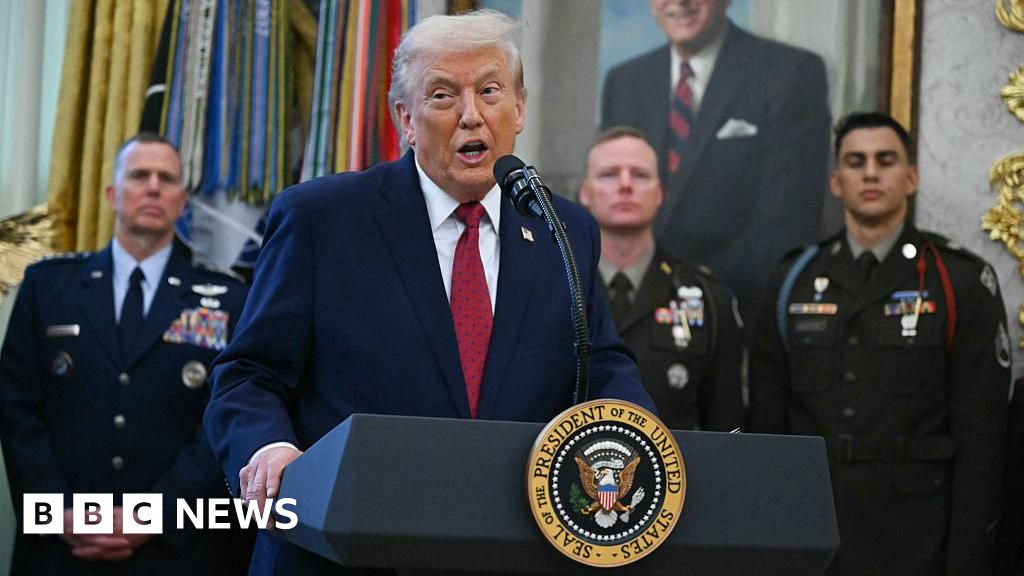
The BBC report by Bernd Debusmann Jr., filed from the White House, describes how Trump publicly defended and repeated his attacks on Rob Reiner, even after the acclaimed director’s death. Reiner had long been a vocal Democrat, a liberal activist, and one of Trump’s most persistent critics, regularly using his platform to call out what he saw as democratic backsliding and toxic political rhetoric.
Who Was Rob Reiner? From Sitcom Son to Liberal Lightning Rod
Before he was a political antagonist for Trump, Rob Reiner was TV royalty. As the earnest, left-leaning son-in-law “Meathead” on Norman Lear’s groundbreaking All in the Family, Reiner’s character literally embodied the generational fights over Vietnam, civil rights, and the future of America. That role would become a kind of template for his public persona: blunt, progressive, and unafraid of conflict.
Behind the camera, Reiner built one of the most quietly influential directing résumés in Hollywood:
- This Is Spinal Tap (1984) – a cult mockumentary that rewrote the rules for satirical filmmaking.
- Stand by Me (1986) – a tender coming-of-age drama based on a Stephen King novella.
- When Harry Met Sally… (1989) – arguably the modern archetype of the romantic comedy.
- Misery (1990) – a sharp, claustrophobic thriller that won Kathy Bates an Oscar.
- A Few Good Men (1992) – a courtroom drama that gave us “You can’t handle the truth!”.
“I’ve always believed that if you have a platform, you have a responsibility to use it. For me, that’s meant telling stories on film and speaking up about what I think democracy should look like.”
In later years, Reiner channeled that sense of responsibility into unmistakably partisan activism: supporting Democratic candidates, campaigning on voting rights, and using social media to critique Trump-era politics in unapologetically direct terms.
Trump vs. Reiner: A Long-Running Culture War Subplot
By the time Trump reached the White House, the split between him and Hollywood’s liberal establishment was already entrenched. Reiner was one of the faces of that opposition, frequently describing Trump in scathing terms and framing his presidency as a test of American democracy.
According to the BBC coverage, Trump did not soften his tone after Reiner’s death. Instead, he defended earlier criticisms, framing them as fair responses to what he saw as one-sided, hostile attacks from Hollywood. This is classic Trump rhetoric: recasting his own escalation as self-defense against “the elites.”
The tension here goes beyond two men trading barbs. Reiner represented a certain Hollywood liberalism: earnest, institutional, deeply tied to the Democratic Party. Trump, meanwhile, has built much of his political identity on antagonizing that world, casting it as out of touch with “real America.”
- For his supporters, Trump’s refusal to pull punches, even posthumously, reads as authenticity and a rejection of “fake niceties.”
- For his critics, it feels like a breach of basic decency, another sign that the norms of respectful disagreement have eroded.
The result is less a disagreement about policy than a symbolic fight over who gets to define American values: coastal creatives or populist politics.
The BBC Angle: Reporting from Inside the Political Theater
Bernd Debusmann Jr.’s report for the BBC fits squarely into modern political journalism’s role: not just relaying the quote, but placing it in a narrative of ongoing confrontation. Filed from the White House, the piece underscores how even reactions to the death of a cultural figure are now read as political signals.
Coverage like this often has to walk a tightrope:
- Contextualize the long history of Reiner’s outspoken criticism of Trump.
- Clarify the president’s stance without simply amplifying provocation.
- Highlight what this says about broader US culture, not just one feud.
The BBC’s choice to frame Reiner as “a longtime Democrat, liberal activist and outspoken opponent of the US president” anchors him politically as much as artistically. It’s a reminder that in 2020s media ecosystems, no major obituary for a politically active artist is purely about the art.
Hollywood vs. the Presidency: A Familiar Script, New Stakes
Feuds between presidents and entertainers are nothing new. From Frank Sinatra and JFK to the Reagan-era PMRC hearings about music lyrics, American politics has always had a culture-war subplot. The Trump–Reiner dynamic, though, feels different in scale and temperature.
Trump is himself a product of entertainment culture—reality TV, tabloid headlines, wrestling cameos—so his clashes with Hollywood aren’t cross-industry so much as intra-industry. It’s show business arguing with show business over who really speaks for the public.

Reiner’s activism—including projects on voting rights and documentary work on democracy—put him at the center of that fight. His criticism of Trump wasn’t just a celebrity airing grievances; it was part of a larger liberal narrative about institutions under strain.
- Cultural influence: Reiner’s films are part of the American canon, which gives his political statements more reach.
- Partisan framing: Trump’s comments turn a cultural figure into a political foil, energizing his base.
- Audience fragmentation: Different media ecosystems—cable news, social media, international outlets like the BBC—repackage the feud for their own publics.
In that sense, this isn’t only about whether Trump should or shouldn’t have criticized a dead director. It’s about whether American public life still has zones of truce, or if every moment is potential content for the next culture-war headline.
Decency, Legacy, and the Question of Timing
There’s also a basic ethical question: what are the unwritten rules when political enemies die? Historically, US political culture allowed for a temporary ceasefire—think of cross-party praise at state funerals or the convention of “speaking no ill of the dead,” however loosely observed.
Trump’s decision to reiterate his criticism, rather than soften or sidestep, reflects a broader shift:
- Norm erosion: The expectation of ritual civility around death has weakened in the face of always-on conflict.
- Base signaling: Doubling down sends a message to supporters that he won’t “cave” to media pressure or elite expectations.
- Legacy battles: The fight over how Reiner is remembered—artist, activist, partisan—is part of a larger struggle over the story of the Trump era.

None of this negates Reiner’s own sharp rhetoric; he was not a neutral observer. But the asymmetry of speaking about someone who can no longer respond adds a layer of discomfort that many observers—in the US and abroad—read as emblematic of a coarser political age.
Rob Reiner’s Cultural Footprint: More Than a Trump Foil
One of the risks of this moment is that Reiner’s name becomes a shorthand for “Trump critic” rather than “major American filmmaker.” That’s a distortion of scale. For many viewers, his work defined what emotionally intelligent mainstream cinema could look like from the 1980s through the 1990s.

His influence shows up in:
- The structure of modern rom-coms, which still borrow beats from When Harry Met Sally….
- The blend of earnestness and humor in coming-of-age stories that echo Stand by Me.
- The way courtroom dramas lean on moral clarity and big, quotable speeches à la A Few Good Men.
Whatever one thinks of his politics—or Trump’s—the more interesting long-term question is which of these legacies will matter more: the films that quietly shape how we tell stories, or the tweets and sound bites that briefly dominate the news cycle.
Where the Story Goes Next: Memory, Media, and the Next Flashpoint
Trump’s renewed criticism of Rob Reiner after the director’s death is more than a stray quote; it’s a snapshot of how American public life now works. Legacies are contested in real time. Feuds can outlive the people in them. And the line between entertainment news and political analysis keeps getting blurrier.

For viewers and voters, the challenge is to hold multiple truths at once: to recognize the real political stakes of culture-war skirmishes, without letting them completely crowd out the slower, quieter legacies of artists like Reiner. The next controversy will arrive soon enough. What lasts is the work—and how we choose to remember it.
