
Tiny Rooms, Big Personality: Smart Small-Space Living Room & Bedroom Tricks That Do the Most
When Your Living Room Has a Side Hustle
Urban rents are up, floor plans are down, and suddenly your living room has three jobs and no benefits. The bedroom isn’t just where you sleep anymore; it’s your office, yoga studio, guest suite, and possibly the place where unopened Amazon boxes go to “think about what they’ve done.”
The big trend right now? Smart, multi‑functional small‑space living rooms and bedrooms that work harder than a coffee-fueled intern but look as calm and curated as a high-end boutique hotel. We’re talking Murphy beds, lift-top coffee tables, sneaky storage, brilliant zoning, and minimalist decor that makes tiny spaces feel surprisingly big and seriously chic.
If your home is more “cozy shoebox” than “sprawling estate,” you’re exactly the audience designers, DIYers, and creators are obsessing over. Let’s turn your small space into a multitasking superstar—without sacrificing style or your sanity.
Why Small-Space Superpowers Are Trending
The internet is currently in a committed relationship with #smallapartmenthacks, #minimalisthomedecor, and “How I turned my 1-bedroom into 3 zones without crying” videos—and for good reason:
- More people work and study from home: Bedrooms and living rooms now have to house desks, laptops, ring lights, and a questionable number of chargers.
- Downsizing is in: Smaller, smarter homes are popular, whether by necessity or by choice.
- Minimalism meets reality: People want calmer, clutter-free spaces that still feel personal and warm.
- Transformation content wins: Social platforms love a dramatic “before & after,” and nothing glows up like a cramped studio turned chic multi-use haven.
The goal: make one room do many things—sleep, work, host, relax—without looking like a storage unit that swallowed a furniture store.
1. Multi‑Functional Furniture: The Overachievers of Your Home
In a small space, every piece of furniture needs to ask itself: “What else can I do?” If the answer is “absolutely nothing,” it may not make the cut.
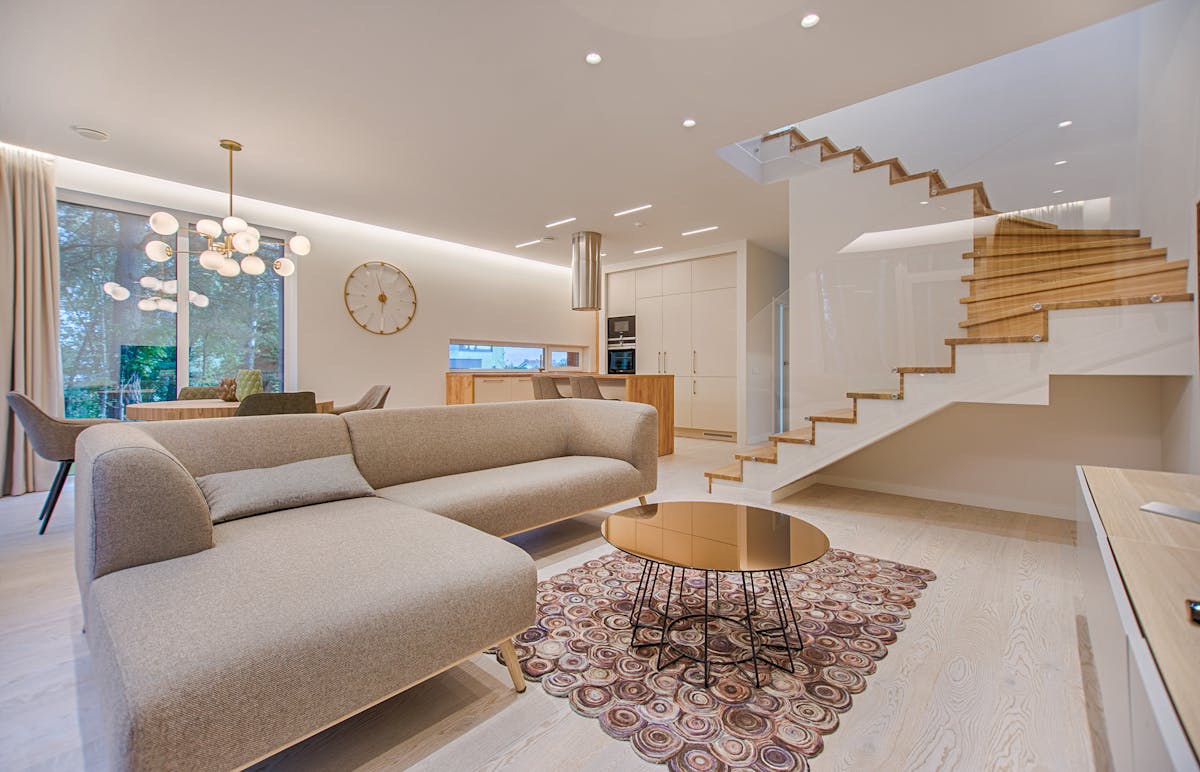
Trending heroes right now:
- Sofa beds & daybeds
Your living room by day, guest room by night. Opt for clean lines and a neutral fabric, then add personality with throw pillows and blankets you can swap out seasonally. - Storage ottomans & lift‑top coffee tables
These are the Swiss Army knives of tiny homes. They store blankets, games, or tech clutter and double as extra seating or a laptop desk. - Murphy beds & wall beds
Especially hot in studio apartments and small bedrooms, they give you an entire “day mode” and “night mode.” Style the wall as a feature: add art, sconces, or shelving. - Modular sectionals
Reconfigure for movie night, overnight guests, or extra floor space. Look for low-profile designs to avoid overwhelming the room.
Tiny-space rule: If it can’t multitask, it needs to be very, very good‑looking—or it doesn’t live here.
Pro tip: When shopping, literally ask, “Where will I store things in or under this?” If the answer is “nowhere,” swipe left.
2. Use Your Walls Like They Pay Rent
Floor space in a small room is like prime beachfront property. Guard it. Instead, send your storage up.
- Floating shelves around TVs and beds
Frame your TV or headboard with shelves for books, plants, and baskets. You get a built‑in look without a contractor (or contractor pricing). - Wall‑mounted desks & fold‑down tables
These are booming right now, especially in bedrooms-turned-offices. When work is over, fold it away and reclaim your peace. - Pegboard walls
Once reserved for garages, pegboards are now living-room chic. Paint them to match your wall and hang mini shelves, hooks, plants, and framed art. - Ceiling‑high wardrobes & over‑door storage
Take cabinets and closets all the way up. Use closed storage up high for less-used or less-pretty items and keep eye-level lighter and more minimal.
Think of your walls as the “cloud storage” of your home—most of your stuff should live there, not clogging up precious floor space.
3. Zoning: One Room, Many Lives
Open-plan and studio spaces are trending, but without smart zoning, they can feel like all your life activities are yelling over each other. The trick is to divide the room visually, not structurally.
- Rugs as quiet bouncers
Use different area rugs to signal different zones: one for “living,” one for “working,” maybe a small one by the bed. Suddenly your studio feels like three rooms that get along. - Curtains & sliding panels
Ceiling‑mounted tracks are trending because they’re renter‑friendly and flexible. Close off your desk during “off hours” so your brain stops drafting emails while you’re trying to sleep. - Lighting layers
Task lamps for your desk, warm diffused lighting for relaxing, and accent lighting (like LED strips behind shelves or headboards) for mood and depth.
A tiny room feels bigger when it knows what it’s supposed to be doing. So does your brain.
4. Minimalist… But Make It Cozy
Minimalism in small spaces isn’t about living with one spoon and a mattress on the floor. It’s about intentional choices so your decor looks curated, not chaotic.
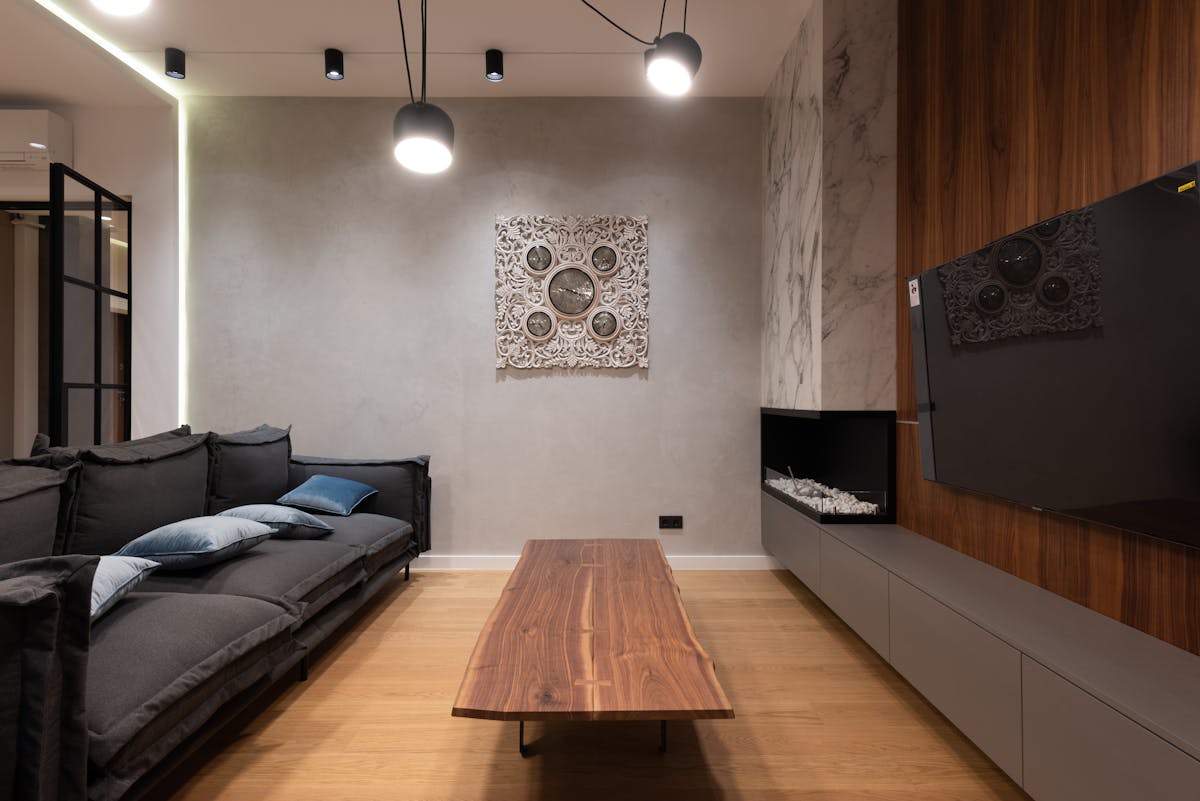
- Start with a neutral base
Whites, beiges, greige, soft taupes, and light woods make small rooms feel airy. Add 1–2 accent colors through pillows, throws, art, or a single statement chair. - Give decor a job
Choose pieces that are both pretty and practical: lidded baskets, decorative boxes, trays for remotes and chargers, attractive bins for under coffee tables or beds. - Use mirrors and glass
Mirrors bounce light and visually expand the room. Glass or acrylic coffee tables and side tables keep sightlines open, making everything feel lighter. - Curate, don’t hoard
Rotate decor seasonally rather than displaying everything at once. Your shelves will thank you, and so will your dust cloth.
Tiny-space test: If an item isn’t meaningful, beautiful, or functional, it might just be… in your way.
5. DIY Upgrades That Make Your Space Work Harder
DIY content is exploding around one theme: built‑in looks without built‑in budgets. These ideas are trending because they’re weekend‑friendly and landlord‑approved (or at least easily reversible).
- Platform beds with storage
Build (or buy) a platform base with drawers or cubbies. It’s like adding a dresser under your mattress. Great for off‑season clothes, spare linens, or your secret snack stash. - Wall‑to‑wall wardrobes
Use IKEA-style systems or modular wardrobes to create a full storage wall around your bed or sofa. Add molding or paint to give it a custom built‑in vibe. - Ceiling curtain tracks
Install tracks to divide a studio into “bedroom” and “everything else,” or to hide a clutter‑prone closet. Choose thicker curtains to really separate zones. - Plug‑in lighting
Sconces with cords, plug‑in track lighting, and clamp lamps are huge right now. They free up floor space, brighten corners, and can move with you when you do.
If you can hang it, plug it in, or assemble it with an Allen key and mild cursing, it’s probably on-trend.
6. Layout Tricks for Living Rooms & Bedrooms That Do It All
The way you place furniture can be the difference between “charming jewel box” and “I live in a hallway.” A few layout rules that are performing well in current makeovers:
- Pull furniture off the walls
In a tiny living room, floating the sofa slightly off the wall with a slim console behind it can create the illusion of more depth. - Think corners first
Put desks, reading nooks, or small dressers into corners to leave the center open. Corners are like the back rows of a classroom—underused but full of potential. - Use symmetry where you can
Matching lamps on either side of a bed or sofa calm the eye and make spaces look more intentional and expensive, even if everything was on sale. - Scale matters
One larger comfy sofa often works better than three tiny, awkward chairs. Choose fewer, right‑sized pieces instead of lots of small, nervous furniture.
Before you buy anything new, try a “furniture shuffle” day. Rearrange, take photos of different options, and live with the new layout for a week. No purchases, just free serotonin.
7. The Small-Space Mindset: Design Like a Director
Think of your home as a movie set and you as the director. Every prop (hi, ottoman), every light, every backdrop (hello, curtain room dividers) should help tell the story of how you live now.
To keep your small-space story cohesive:
- Choose a simple color palette and repeat it in both living room and bedroom if they’re connected—this visually enlarges the space.
- Repeat materials like light wood, black metal, or woven baskets to tie different zones together.
- Set house rules for clutter—for example, “All surfaces must have at least 30% empty space” or “One in, one out” for decor items.
Your home doesn’t need to be big to feel generous; it just needs to be thoughtfully edited and smartly staged.
Small Space, Big Mood
Rising housing costs and shrinking floor plans aren’t going away anytime soon—but that doesn’t mean your style has to shrink with them. With multi‑functional furniture, clever vertical storage, decor zoning, and a minimalist‑but‑cozy approach, your small living room or bedroom can feel like it’s secretly a much bigger place.
Let your rooms have their little side hustles—office, guest space, hobby corner—but give them the smart layout and chic tools they need to pull it off gracefully. Your home may be compact, but its personality? Absolutely not.
Now go look at your coffee table and ask it, kindly but firmly: “What else can you do?”
