
The One Daily Mobility Move That Can Help Slow Down Ageing (In Just 3 Minutes)
The Simple Daily Movement That Supports Healthy Ageing
Imagine a single movement you could do in a few minutes a day that keeps your hips supple, your back happier, and your balance more reliable as you age. That’s the idea behind the Malasana squat into forward fold with an overhead stretch – a flowing, bodyweight sequence popularised by mobility coaches, including mobility and stretching coach @stretchy.bendy and recently highlighted by Women’s Health.
While no exercise can literally stop the clock, this daily movement pattern can help you maintain joint stability, mobility, and functional movement – all key ingredients in “ageing well.” You don’t need equipment, a gym, or even much time. Just a bit of space and your own bodyweight.

“The goal of ageing well isn’t perfection; it’s preserving the ability to do the things that matter to you – to squat, bend, reach, and get back up again.”
Why Mobility Matters More as You Age
As we get older, it’s common to feel “stiffer” or less confident getting down to (and up from) the floor. Research consistently shows that:
- Joint range of motion tends to decline with age if it’s not regularly challenged.
- Muscle strength and power decrease, affecting how easily we stand, climb stairs, or carry groceries.
- Balance and coordination weaken, increasing fall risk – a major driver of injury in older adults.
The good news: studies in healthy older adults show that regular mobility and strength exercises can improve balance, joint range of motion, and confidence in daily tasks. You don’t need heavy weights to get started – you just need consistent movement that mimics real life.
What Is the Malasana Squat–Forward Fold–Overhead Stretch Sequence?
This sequence blends three movements into one smooth flow:
- Malasana-inspired deep squat (sometimes called a “yogi squat”) to open hips and ankles and strengthen your lower body.
- Standing forward fold to lengthen the back of your legs and gently decompress your spine.
- Overhead stretch to open the chest and shoulders and reconnect to a tall, aligned posture.
Done together, they form a functional mobility circuit that takes your body from low to high, front to back, and compressed to extended – all motions you use every day when you sit, stand, lift, and reach.
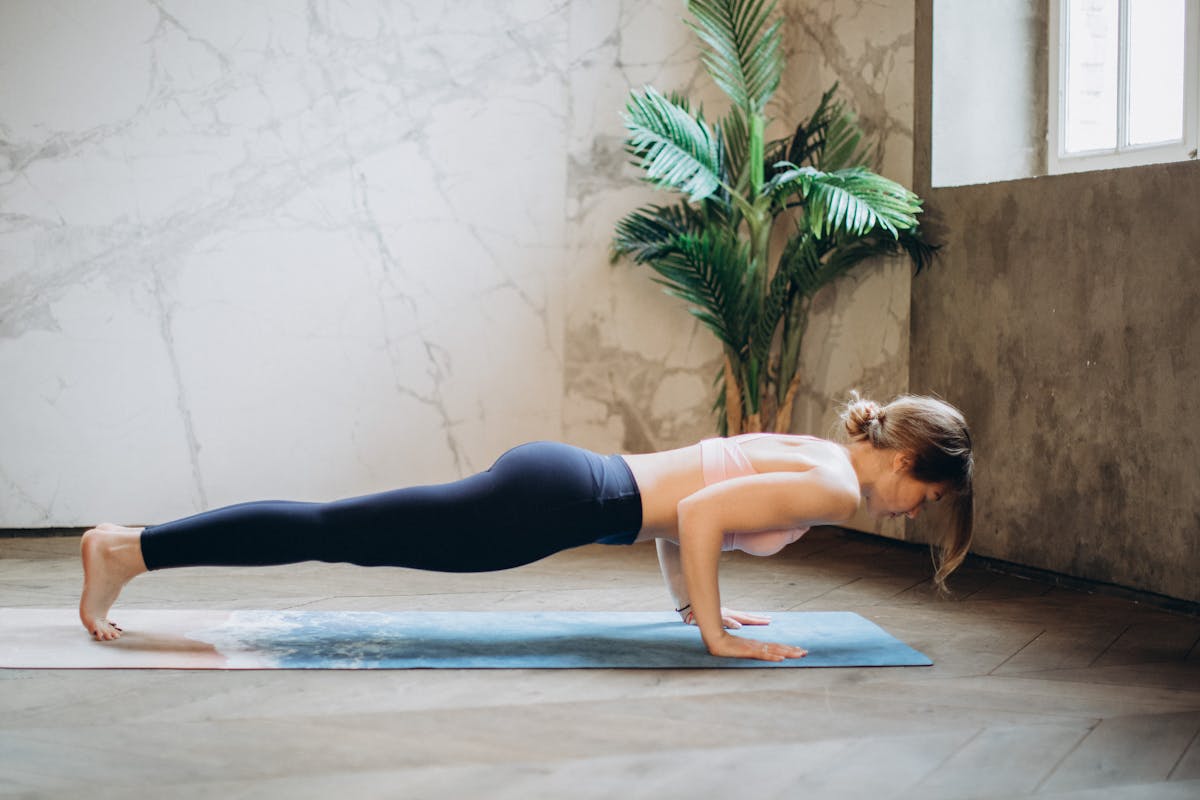
How to Do the Malasana Squat into Forward Fold + Overhead Stretch
Start with 3–5 slow, controlled repetitions. Focus more on comfort and control than on depth. If you have any current pain or medical concerns, speak with a qualified health professional before trying new movements.
Step 1: Set Up Your Stance
- Stand tall with your feet slightly wider than hip-width apart.
- Turn your toes out gently (about 10–30 degrees) so your knees can track comfortably over your toes.
- Engage your core lightly and relax your shoulders.
Step 2: Move into a Malasana-Style Squat
- Inhale and lift your chest.
- Exhale as you bend your knees and sit your hips down toward the floor.
- Keep your heels as grounded as possible; if they lift a little, that’s fine.
- Bring your hands together at your chest or rest them on a chair or blocks for support.
- Gently press your knees out with your elbows (if comfortable) to open your hips.
Step 3: Transition to a Forward Fold
- From the squat, place your hands on the floor, a block, or your thighs.
- Lift your hips up as you straighten your legs to a comfortable degree.
- Let your head and neck relax toward the floor, keeping a soft bend in the knees if your hamstrings feel tight.
- Breathe slowly for 2–3 cycles.
Step 4: Rise into an Overhead Stretch
- From the fold, bend your knees slightly and roll up slowly to standing, one vertebra at a time.
- As you reach standing, sweep your arms out to the sides and overhead.
- Stretch tall through your fingertips, keeping your ribs soft and your lower back comfortable.
- Option: interlace your fingers and press your palms to the sky for extra length.
That’s one repetition. Move back down into your squat and repeat the sequence, moving with your breath.
How This Daily Exercise Supports “Slower” Ageing
Ageing is complex – genes, lifestyle, sleep, stress, and environment all play a role. No movement can reverse your biological age. But this daily sequence can support several ageing-related systems at once:
- Joint health: Regular, controlled squatting and folding moves your ankles, knees, hips, and spine through their ranges, which can help maintain cartilage nutrition and joint lubrication.
- Muscle strength and power: Getting down and up under control trains your quads, glutes, calves, and core – muscles strongly linked to healthy ageing and independence.
- Balance and coordination: Transitioning between low and high positions challenges your balance, which may lower fall risk over time when practiced safely.
- Posture and breathing: The overhead stretch encourages an open chest and fuller breath, counteracting the rounded posture many of us develop from sitting.
- Circulation and stiffness: Moving from compressed to lengthened postures helps you feel less “stuck” and can improve circulation and body awareness.
“Mobility training is a form of insurance. You’re not just training muscles – you’re training options. The more options your body has, the more resilient you are as you age.”
What Does the Science Say About Mobility and Ageing?
The exact Malasana–forward fold–overhead stretch sequence hasn’t been studied in a large clinical trial. However, its components are backed by strong evidence:
- Regular strength and mobility work in older adults improves function, balance, and quality of life (British Journal of Sports Medicine).
- Squatting and sit-to-stand patterns are strongly tied to real-world independence, such as getting off the toilet or out of a chair without assistance.
- Flexibility plus strength training appears more effective for overall function than flexibility alone, according to systematic reviews of exercise in older adults.
So when headlines say this move can “slow down ageing,” a more accurate interpretation is: it supports the physical capacities that usually decline with age – especially if you practice consistently and combine it with other healthy habits (sleep, nutrition, walking, resistance training).
Gentle Modifications if You’re Stiff, In Pain, or New to Exercise
If a deep squat feels impossible right now, you’re not alone. Many people struggle with ankle or hip mobility, knee discomfort, or fear of falling. You can still access the benefits of the pattern with these variations:
Option 1: Supported Chair Squat Flow
- Sit on the edge of a sturdy chair with feet flat and slightly wide.
- Lean your chest slightly forward, keeping your spine long.
- Stand up using your legs, then reach your arms overhead.
- Hinge from your hips into a gentle forward fold, with hands on thighs.
- Return to sitting. Repeat.
Option 2: Heels-Elevated Malasana
- Place a folded towel or yoga wedge under your heels.
- Hold a countertop, doorframe, or heavy table for balance.
- Squat only as low as feels safe, then return to standing and reach overhead.

How to Build This Sequence into Your Daily Routine
Consistency matters far more than intensity. Aim for a small, sustainable habit:
- Choose a trigger: attach the movement to something you already do daily, such as:
- After brushing your teeth in the morning
- During a mid-afternoon screen break
- Right before your evening shower
- Start tiny: do just 2–3 slow repetitions on day one. You can add more later.
- Track your progress: note in a journal or app how the movement feels. Many people report that within a few weeks they can squat more comfortably and stand up with more ease.
- Pair it with walking or strength work: think of this as your “movement primer” rather than your entire exercise plan.

Common Obstacles (and Kind, Realistic Solutions)
If you’ve tried to add movement habits before and struggled, you’re in good company. Here are a few frequent challenges and ways to navigate them:
- “I’m too stiff to squat that low.”
Use a chair, blocks, or higher range. Depth isn’t the goal – progress is. - “My knees feel cranky.”
Shorten your range, slow down, and avoid collapsing your knees inward. If discomfort persists, consult a professional. - “I keep forgetting to do it.”
Set a gentle phone reminder or place a sticky note near your kettle, bathroom mirror, or computer. - “I worry it’s not enough to ‘count’ as exercise.”
This sequence is a meaningful piece of the puzzle. Combine it with walking, strength training 2–3 times per week, and activities you enjoy.
Bringing It All Together: A Daily Ritual for a More Mobile Future
The Malasana squat into forward fold with an overhead stretch isn’t a miracle cure for ageing – and it doesn’t need to be. Practiced daily, it’s a powerful, realistic ritual that trains the fundamentals of staying mobile: strong legs, open hips, a supple spine, and the ability to move confidently from low to high.
You deserve to feel capable in your own body at every age. If this sequence speaks to you, consider committing to a 10-day experiment:
- Pick your trigger (e.g. “after I brush my teeth”).
- Do 3 slow repetitions, with whatever modification feels safe.
- Notice – without judgment – how your body responds over time.
If you’d like to go deeper, pair this ritual with regular walks and two short strength sessions per week, and consider checking in with a physiotherapist or mobility coach for personalised guidance.
Your future self won’t remember the one workout you skipped – but it will thank you for all the small, consistent choices you made to keep moving.
