
The Blueprint: Inside Josh Allen’s Unprecedented Rise From Raw Prospect to Elite NFL Quarterback
Josh Allen’s journey from a wildly inconsistent Wyoming passer to one of the NFL’s most feared quarterbacks is arguably the greatest QB transformation the league has ever seen—a complete rewiring of mechanics, decision-making, and offensive structure that has reshaped how teams think about “raw” quarterback prospects.
When the Buffalo Bills traded up to draft Allen with the No. 7 pick in the 2018 NFL Draft, they weren’t just betting on a big arm. They were betting that with the right blueprint—coaching, scheme, data, and patience—a 56% college passer could become an MVP-level franchise cornerstone. As of the 2025 season, that bet looks smarter every Sunday.
This is the blueprint: how Allen went from “toolsy but risky” to the prototype for the modern dual‑threat quarterback.
The Moment the Blueprint Became Real
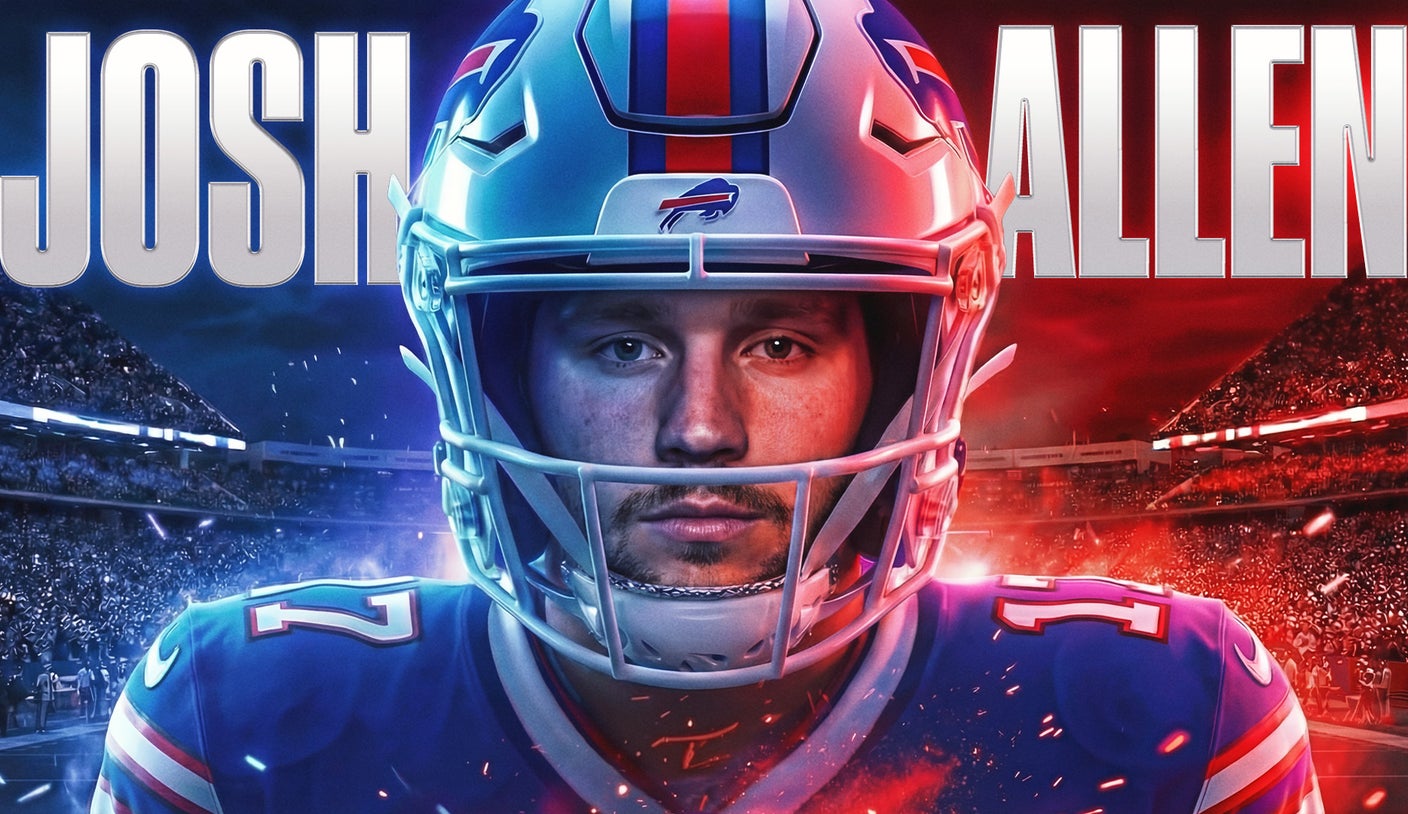
In his first NFL start, Allen did what he’d done at Wyoming: drifted in the pocket, felt pressure early, and tried to play hero ball. The flashes were there, but so were the wild misses. What has followed since is a case study in how to develop a quarterback in the modern NFL—step by step, season by season.
From Wyoming Wildcard to NFL Outlier: Setting the Context
Coming out of Wyoming, Allen was an analytics red flag. His completion percentage never topped 56.3%. His footwork was inconsistent, his accuracy scattershot, and his decision-making streaky. By every historical metric, he did not profile as a safe first‑round franchise quarterback.
And yet, the Bills front office and coaching staff saw traits they believed they could unlock:
- Elite arm strength capable of attacking every blade of grass
- Rare size and power as a runner, creating a true dual‑threat profile
- Competitive toughness and leadership that resonated with teammates
- Coachability and willingness to tear down and rebuild his mechanics
In an era where teams fear missing out on the next hybrid superstar, Buffalo’s gamble on Allen has become the league’s most striking proof that development, not just scouting, can flip a prospect’s destiny.
The Statistical Transformation: From Project to Perennial MVP Candidate
To appreciate how dramatic Allen’s growth has been, you have to look at the numbers side‑by‑side. Few quarterbacks in NFL history have rewritten their own scouting report this completely.
| Season | Cmp% | Pass Yds | Pass TD | INT | Rush Yds | Rush TD |
|---|---|---|---|---|---|---|
| 2018 (Rookie) | 52.8% | 2,074 | 10 | 12 | 631 | 8 |
| 2019 | 58.8% | 3,089 | 20 | 9 | 510 | 9 |
| 2020 (Breakout) | 69.2% | 4,544 | 37 | 10 | 421 | 8 |
| 2021 | 63.3% | 4,407 | 36 | 15 | 763 | 6 |
| 2022 | 63.3% | 4,283 | 35 | 14 | 762 | 7 |
| 2023 | 66.5% | 4,306 | 29 | 18 | 524 | 15 |
| 2024* | ~65–67% | Elite-tier pace | MVP-caliber pace | Down slightly | High-impact | High red-zone usage |
*2024 figures described directionally based on season-to-date performance as of December 2024. For full up-to-date stats, see the NFL’s official Josh Allen stats page.
Allen’s leap from sub‑60% passer to flirting with 70% accuracy in 2020 wasn’t incremental improvement—it was a demolition of expectations. That season, he finished second in MVP voting and turned the Bills into a Super Bowl threat.
Rewriting the Mechanics: Footwork, Base, and Release
The foundation of Allen’s rise was mechanical. The Bills and Allen effectively rebuilt his throwing motion without sacrificing the velocity that made him special.
- Narrowing the base: At Wyoming, Allen’s stance often got too wide, making it harder to transfer weight and control ball placement. Buffalo emphasized a more consistent base, so every dropback looked the same.
- Calmer feet in the pocket: Early Allen was “busy” with his feet—hopping, drifting, and creating his own pressure. Film from 2020 onward shows a quieter lower body, allowing his upper body to repeat the same motion.
- Streamlined release: The big windups became more compact. He still generates elite torque, but the ball now comes out faster and on time, especially on in‑breaking routes and quick game concepts.
“He was willing to be coached hard. We asked him to change things that made him Josh Allen in college, and he bought in completely.”
— Bills quarterbacks coach, on Allen’s early development
This mechanical overhaul turned “wow throws” into routine completions and reduced the wild misses that once riddled his tape.
The Perfect Match: Scheme Design Meets Superstar Skill Set
Development didn’t stop at Allen’s throwing motion. Offensive coordinators Brian Daboll and later Ken Dorsey (followed by Joe Brady) built a system around what Allen does best, not what a playbook says quarterbacks “should” do.
- Spread formations and isolation routes: Buffalo frequently spreads the field, isolating Stefon Diggs and other receivers in favorable matchups and giving Allen clear leverage reads.
- Layered vertical concepts: Deep crossers, slot fades, and post‑dig combinations weaponize his arm strength and punish single‑high safety looks.
- Designed QB runs: Power reads, counters, and draw concepts turn Allen into a plus‑one in the run game, particularly in the red zone and short yardage.
- RPOs and quick game: Run‑pass options and simplified quick reads give him high‑percentage throws early in games, helping him settle into rhythm.

The result is an offense that feels like an extension of Allen himself—aggressive, multiple, and relentlessly attacking all levels of the field.
Surrounding Cast: The Stefon Diggs Inflection Point and Beyond
Every great quarterback leap comes with better weapons. For Allen, the defining moment was the Bills’ trade for wide receiver Stefon Diggs before the 2020 season.
Allen’s numbers with and without Diggs tell the story:
| Split | Cmp% | Yards/Game | TD/Game |
|---|---|---|---|
| Pre‑Diggs (2018–2019) | 55.2% | 207.1 | 1.1 |
| With Diggs (2020–2023) | 65%+ | 270+ | 1.9 |
Approximate figures compiled from publicly available data via Pro‑Football‑Reference.
As the roster evolved—adding and reshuffling pieces at receiver, tight end, and along the offensive line—Allen adapted, proving his success wasn’t tied to a single star but to a complete mastery of the offense.
The Mental Leap: Processing, Poise, and Risk Management
Physical traits opened the door; mental evolution made Allen unguardable for stretches. The biggest steps came in three areas:
- Pre‑snap control: More responsibility at the line of scrimmage—protection calls, audibles, and alerts—allowed Allen to get into favorable looks instead of trying to “fix” bad plays after the snap.
- Full‑field reads: Earlier in his career, he frequently locked onto his first read. Over time, film shows consistent backside progression work and a better understanding of coverage rotations.
- Calculated aggression: Allen will always be a gunslinger, but he’s become more selective about when to attack, especially in high‑leverage moments and late‑game situations.
“We never wanted to coach the fear out of his game. We just wanted to add wisdom to it.”
— Offensive assistant, on embracing Allen’s aggressive mentality
The occasional turnover‑heavy stretch still surfaces, but that volatility now comes wrapped inside one of the league’s most consistently dominant offensive engines.
Is This the Greatest QB Development Blueprint Ever?
When analysts call Allen the most improved quarterback prospect in modern NFL history, it’s not just narrative. Historically, quarterbacks with his college profile almost never become elite.
Compare Allen’s path to other notable development stories:
- Drew Brees: Refined accuracy and thrived in Sean Payton’s system but entered the league as a decorated, efficient college passer.
- Tom Brady: Drastically outperformed draft expectations but was always regarded as accurate and mentally sharp, if limited athletically.
- Jalen Hurts: Significant growth as a passer, but with a stronger college production baseline and a different offensive style.
None combined Allen’s early‑career volatility with his eventual ceiling. That’s what makes his arc unique: he shattered the historical precedent that low‑accuracy, traits‑based prospects rarely become true top‑tier passers.
Human Element: Confidence, Chemistry, and the Buffalo Fit
Beyond film rooms and practice fields, Allen’s rise is about fit—between a city, a locker room, and a quarterback who leans into all of it. Buffalo embraced him, flaws and all, and he returned that belief.
Teammates consistently rave about his competitive edge and approachability. From jumping into celebrations with linemen to playing through injuries in critical games, Allen’s presence sets the emotional tone.
“He’s not just our quarterback. He’s our heartbeat.”
— Veteran Bills offensive lineman, on Allen’s leadership

That bond matters when mistakes happen. Rather than flinch after an interception or fumble, the Bills offense often responds with aggressive play‑calling and visible support, reinforcing the fearless style that makes Allen so dangerous.
Visualizing the Leap: Efficiency vs. Usage
One way to appreciate Allen’s value is to plot his efficiency against his workload. He’s consistently near the top of the league in:
- Combined passing + rushing touchdowns
- Total EPA (Expected Points Added)
- High‑leverage plays in late‑game situations
Imagine a scatter plot of NFL quarterbacks with:
- X‑axis: Total plays (pass attempts + rushes)
- Y‑axis: EPA per play
- Bubble size: Total touchdowns produced
In 2020–2024, Allen sits in the rare quadrant of high volume and high efficiency, with one of the largest “bubbles” on the chart—evidence that the Bills not only lean on him heavily, but that he delivers at an elite rate.
For advanced metrics on Allen and his peers, visit ESPN’s Total QBR and Pro‑Football‑Reference advanced passing.
The Remaining Critiques: Turnovers, Hits, and Sustainability
The blueprint isn’t flawless. Two recurring concerns continue to shadow Allen’s greatness:
- Turnover streaks: Aggression sometimes tips into recklessness. Multi‑turnover games and tight‑window throws into bracket coverage have sparked debates about his decision‑making, especially against top defenses.
- Physical toll: His punishing run style leads to unnecessary hits. As he moves deeper into his career, the Bills have to balance using him as a battering ram with preserving his long‑term health.
From an objective standpoint, these critiques don’t erase the transformation. They simply frame the next evolution of his game: becoming more efficient without losing the edge that terrifies defensive coordinators.
What Josh Allen’s Blueprint Means for the Next Generation
Allen’s story will echo through future drafts. General managers and coaches now have a living example that:
- Elite traits plus the right development plan can beat historical trends
- Patience and continuity matter as much as raw talent
- Scheme must bend toward the quarterback, not the other way around

For young quarterbacks with similar profiles—big arms, inconsistent tape, elite athleticism—Allen’s trajectory offers both hope and a warning. The right situation can unlock a superstar. The wrong one can bury those same traits.
Looking Ahead: Can the Blueprint Deliver a Lombardi?
As the 2025 postseason picture looms, the question around Buffalo is no longer whether Josh Allen is “for real.” It’s whether this carefully crafted blueprint can finally deliver a Lombardi Trophy to Western New York.
From a pure development standpoint, Allen has already beaten the odds. But legacies in this league are ultimately written in January and February. If he adds a Super Bowl run—or multiple—to the resume, the discussion may shift from “most improved prospect ever” to “one of the defining quarterbacks of his era.”
For now, his story is a reminder to every front office, coach, and fan: quarterback development is not destiny—it’s design. And in Buffalo, that design turned a raw Wyoming wildcard into the NFL’s most compelling blueprint for building a superstar.
