
Textured Wall Magic: DIY Accent Walls That Turn Plain Rooms Into Main Characters
DIY textured wall panels, slat walls, and fluted accents are having a major main-character moment. Plain drywall is officially that one side character whose name you can’t remember, while your accent wall is out here winning Best in Show on TikTok.
If you’ve been doom-scrolling through #walldecor and wondering how everyone suddenly has architect-level walls on a ramen-noodle budget, welcome. Today we’re diving into the latest obsession: textured wall panels and DIY accent walls—the trend that makes boring builder-grade boxes look like bespoke boutique hotels.
We’ll talk:
- What’s trending (slats! flutes! geometric grids!)
- How to choose the right style for your space
- Beginner-friendly steps (including renter hacks)
- Color ideas that feel 2025, not 2005
- And how these pretty walls secretly improve your acoustics
Consider this your funny, slightly bossy friend telling you: yes, you can absolutely do this, and no, you do not need a full workshop in your garage.

Why Textured Walls Are Blowing Up Right Now
Textured wall treatments are the perfect storm of everything the internet loves:
- High impact – One wall, whole new room.
- Budget‑friendly – MDF, pine, and pole wrap are the new designer wallpaper.
- DIY‑able – No full renovation, just a weekend, a plan, and probably a podcast.
- Extremely photogenic – Slat shadows + soft lighting = instant scroll-stopper.
Think of a textured accent wall as contouring for your room: a little dimension in the right place, and suddenly everything looks sharper and more expensive.
On TikTok and YouTube, the big hits are:
- Vertical wood slat walls behind TVs or sofas
- Half-height board‑and‑batten in bedrooms and hallways
- Fluted details using MDF strips or pole wrap
- Geometric panel walls painted in one chic color
And the best part? These projects slot neatly between “quick dopamine hit” and “actually worth the effort.” A few hundred dollars in materials, a weekend, and your wall goes from rental basic to custom built-in energy.
Choose Your Wall’s Main Character Arc
Before you start gluing things to your home, let’s decide what story your wall wants to tell.
1. Vertical Wood Slat Wall – The Cool Minimalist
Ideal for: living rooms behind TVs, entry halls, and bedrooms where you want a focal point without visual chaos.
- Vibe: Modern, Scandinavian, boutique hotel.
- Pro tip: Keep spacing consistent (use spacers or coins) so it looks intentional, not like your wall zig-zagged during a coffee rush.
- Bonus: Helps with sound by breaking up echoes—great if your living room doubles as a home theater.
2. Half-Height Board‑and‑Batten – The Cozy Classic
Ideal for: bedrooms, nurseries, dining rooms, and long hallways that feel like tunnels.
- Vibe: Modern farmhouse meets “I read real books.”
- Design tip: Standard height is 36–48 inches, but let furniture guide you—aim to hit roughly 1/3 to 2/5 of the wall height.
- Paint trick: Try darker below, lighter above to ground the room and fake higher ceilings.
3. Fluted & Ribbed Details – The Soft Glam Friend
Ideal for: behind headboards, around fireplaces, or as a narrow panel behind a console table.
- Vibe: Chic, slightly retro, very “I know what bouclé is.”
- How it’s done: MDF strips, flexible pole wrap, or pre-made fluted panels glued and nailed in place.
- Style note: Looks gorgeous painted in earthy tones like mushroom, taupe, or smoky sage.
4. Geometric Panel Wall – The Statement Maker
Ideal for: home offices, Zoom backdrops, and that one wall that insists on being dramatic.
- Vibe: Bold, graphic, just shy of “I live in an art gallery.”
- Tip: Lay out your pattern with painter’s tape first. If it looks like a conspiracy board, simplify.
- Color move: One solid color over everything keeps it striking but not chaotic.
Measure Twice, Cry Zero: Planning Like a Pro
The difference between “Wow, did you hire a designer?” and “So you just...started nailing stuff?” is planning. Here’s your game plan:
- Measure your wall – Width, height, and note any outlets, switches, or vents.
Write it down. On actual paper. Future you will forget. - Sketch your design – Nothing fancy, just a quick front view with rough spacing.
Use a free app or old-school grid paper if that soothes your inner perfectionist. - Calculate materials – For slats, divide wall width by (slat width + gap). Round up and add 10–15% extra for cuts and oops moments.
- Check your wall type – Drywall is easiest. Concrete or brick? You’ll need masonry anchors or a furring strip base.
- Gather tools – Typical kit:
- Miter or hand saw
- Construction adhesive
- Brad nailer (or a good old hammer and nails)
- Level, measuring tape, pencil, caulk, and wood filler
Renter or power-tool-phobic? Look for:
- Lightweight foam or PU panels with removable adhesive strips
- Very thin MDF slats attached with Command-style strips (test on a small patch first)
- Freestanding textured screens behind furniture instead of attaching to the wall
Weekend Project: Simple Vertical Slat Wall
Here’s a streamlined walkthrough for a classic vertical slat wall behind your TV or sofa.
- Prep the wall
Fill major holes, sand any weird bumps, and give it a quick clean. If your wall’s wearing glossy paint, scuff-sand so adhesive sticks. - Decide: paint first or after?
For beginners, painting the wall and slats before installation is easier. Touch up nail holes at the end. - Cut your slats
Use pre-cut strips or rip down sheets of MDF/plywood. Aim for consistent width—1 to 1.5 inches is currently very in. - Mark a level starting line
Use a level and a pencil so your slats don’t slowly lean like they’re in a rom-com poster. - Install the first slat
Apply adhesive on the back, press to the wall, then secure with a couple of brad nails at the top and bottom. - Use spacers for gaps
Coins, tile spacers, or scrap wood make great consistent gaps. Work across the wall: slat, spacer, slat, repeat. - Trim around outlets
Cut slats carefully so outlet covers sit on top. It looks cleaner and still code-friendly. - Fill, sand, and paint touch-ups
Fill nail holes, caulk edges where slats meet the wall, then do a final coat of paint if needed.
Step back, take a dramatic sip of your coffee, and admire the “new” room you secretly built for under the cost of a fancy rug.
Color Crush: What to Paint Your Accent Wall in 2025
Textured walls really shine when the color is just as considered as the pattern. A few trending moves:
- Soft Neutral Slats – Mushroom, warm greige, or oat milk beige.
Pairs with: black accents, linen, light wood floors. - Moody Bedrooms – Deep ink blue, smoky charcoal, or forest green on board‑and‑batten.
Instant cocoon. Just add a candle and a book you’ll pretend not to fall asleep reading. - Earthy Fluted Panels – Clay, terracotta, and camel tones.
Works beautifully with arches, rounded furniture, and soft lighting. - Single-Color Geometrics – One saturated shade over both wall and trim.
High drama, low chaos—the pattern comes from shadow, not ten different hues.
If commitment issues are real, start with a warm neutral and let your art, pillows, and throws bring the trendier colors.
Form Meets Function: Pretty Walls That Work Hard
Textured walls aren’t just cute; they’re overachievers:
- Acoustics: Slats and panels help break up sound reflections. Translation: your movie night sounds better, and your neighbor hears slightly less of your karaoke era.
- Durability: Board‑and‑batten in hallways protects walls from rogue backpacks and overenthusiastic pets.
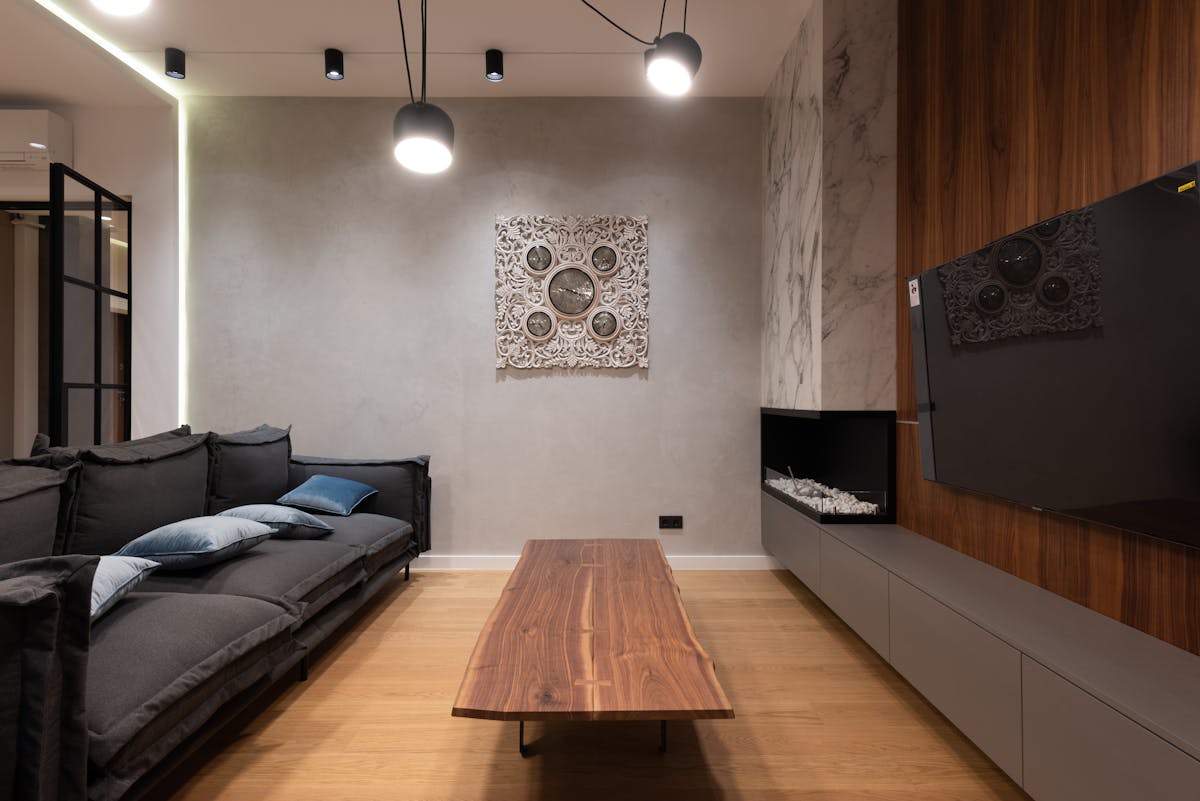
- Visual zoning: One accent wall behind your sofa or bed instantly defines the “main zone” in open-concept spaces.
- Resale friendliness: Done in neutral tones and clean lines, these projects tend to read as “custom upgrade,” not “weird DIY experiment.”
The secret is moderation. If every wall has a different personality, your home starts to feel like a reality show cast. Aim for one major accent per room and supporting roles elsewhere.
Renter-Friendly & Safety Notes (AKA: Don’t Fight Your Landlord)
If your lease is stricter than your high school math teacher, you’ve still got options.
- Removable panels: Lightweight foam or PU wall tiles attached with removable strips. Great for headboard-style panels behind the bed.
- False wall hack: Build a thin plywood panel with slats, then lean or lightly secure it using a couple of small brackets into existing studs.
- Stick-on “battens”: Use thin, pre-painted strips connected with non-permanent adhesive on small accent areas, like “frames” behind nightstands.
And a quick safety checklist:
- Know where your electrical lines are before going wild with nails or screws.
- Use proper anchors if mounting anything heavy over beds or sofas.
- Ventilate if you’re using strong adhesives or oil-based paints.
Style It Like You Meant It
Once the wall is done, don’t leave it standing there like it forgot the choreography. Dress it up:
- Living room slat wall: Float a slim console or media unit, keep decor simple—think one big vase, a stack of books, and hidden storage to avoid visual chaos.
- Bedroom panel wall: Coordinate bedding with the wall color family. If the wall is dark, lighten up with creamy bedding and a textured throw.
- Office geometric wall: Keep shelves and art minimal so your Zoom background looks curated, not cluttered.
Remember: the wall is the star. Everything else? Supporting cast.
Your Drywall’s Glow-Up Era Starts Now
You don’t need a renovation budget or a construction crew to make your home look custom. A few MDF strips, a level, and a weekend can turn “builder basic” into “designer who?” territory.
Whether you go for sleek slats, cozy board‑and‑batten, soft flutes, or bold geometric grids, textured wall panels are one of the easiest ways to upgrade your space in 2025. And the best part? Every time you walk past that wall, you’ll get to think: “I did that.”
So pick a wall, grab some paint, queue up a good playlist, and give your home the glow-up it’s been politely hinting about for years.
