
Taylor Swift’s ‘End of an Era’ Premiere: A Joyous Tour Chronicle Turns Chilling in a Heartbeat
Taylor Swift’s new Disney+ docuseries “The End of an Era” opens as a love letter to her record-breaking Eras Tour, but the first episode quickly darkens as she tearfully revisits the thwarted attack that nearly shattered the fantasy. Blending stadium-sized spectacle with stark vulnerability, the premiere offers a revealing look at the emotional cost of being the world’s biggest pop star in an age of ever-present security threats.

From Record-Breaking Eras Tour to Disney+ Docuseries
By the time “The End of an Era” hits Disney+, the Eras Tour has already become pop-music folklore: an economic event, a social ritual, and a three-hour crash course in twenty-first century fandom. The docuseries arrives less as a victory lap and more as a historical document, preserving how this cultural moment looked and felt from the inside.
The first of six episodes functions as a dual origin story. On one level, it traces how the tour evolved from a pandemic-era “what if” into a globe-spanning juggernaut. On another, it maps Swift’s own shifting relationship to fame, safety, and control as she moves from country ingénue to architect of a multimedia empire.
Episode 1: A Celebration That Turns Uneasy
Structurally, Episode 1 plays like a backstage pass stitched together with a therapy session. The early minutes are high-gloss and celebratory—rehearsal footage, on-the-road banter, and wide shots of crowds that look almost surreal in their scale.

Then the mood shifts. The episode moves into Swift’s recollection of a thwarted attack—a security threat that, while publicly reported, had never been fully unpacked by Swift herself. The docuseries gives her space to process it on camera, and the result is disarmingly raw.
“I kept thinking, this is supposed to be a safe place. People saved up for months to be here. And suddenly I’m wondering if I brought them into danger.”
That conflict—between fantasy and fear, spectacle and safety—defines the emotional core of the premiere. It’s not just about a single incident; it’s about how modern pop stardom is built on the illusion of intimacy in environments that are, by definition, impossible to fully control.
Fame, Security, and the Cost of Being Seen
One of the most striking choices the episode makes is to linger on process: the checklists, the security briefings, the quiet huddles with staff. The camera doesn’t just capture Swift; it tracks the ecosystem that exists to keep Taylor Swift, the brand and the person, physically safe.
In an era where parasocial relationships are normalized and online threats can escalate offline, the series doesn’t sensationalize the danger but refuses to pretend it’s incidental. Swift’s anxiety is not framed as a diva’s paranoia; it’s a rational response to a career lived under surveillance—by fans, press, and bad actors alike.

There’s an unspoken commentary here on the state of live entertainment more broadly. Every major tour now operates under heightened security protocols, and artists from Ariana Grande to Billie Eilish have been open about how safety concerns shape their connection with audiences.
Direction, Editing, and How the Story Is Told
Visually, Episode 1 sits somewhere between concert film and prestige documentary. The Eras Tour footage is crisp and kinetic, but the most interesting choices happen in the quieter scenes: long, unbroken takes of Swift talking through her fears; cutaways to crew members whose job descriptions suddenly feel heavier.

The sound design leans on contrast. Crowd roars are often dropped out entirely when Swift is recounting the attack, leaving only her voice and a faint room tone. It’s a subtle but effective way of centering her interiority in a story defined by exterior noise.
“For an artist whose image is so tightly managed, these are some of the loosest, most unsettled moments she’s ever allowed on camera.”
There’s still polish, of course—this is Disney+, not guerilla filmmaking—but the episode feels invested in letting silence and hesitation stay in the cut, which gives the anxiety room to breathe.
Swifties, Community, and the Illusion of Safety
Any serious look at the Eras Tour has to reckon with Swift’s fanbase, and Episode 1 treats Swifties with a largely admiring eye. We see friendship bracelet exchanges, elaborate outfits, and the low-level mania of people who’ve spent months preparing for a single night.
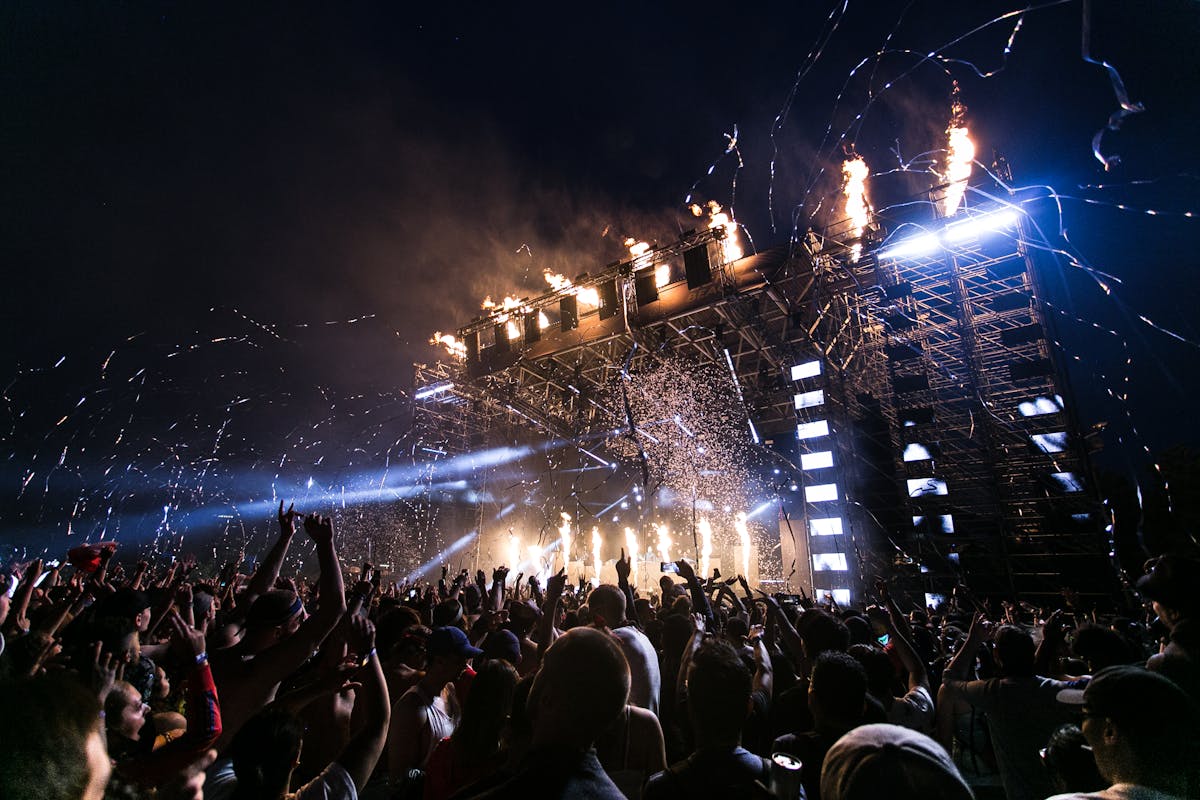
What’s new is how the series juxtaposes that warmth with the realities of security. The same openness that makes the tour feel like a mass sleepover—public meetups, fan-made signs, predictable routines—also creates vulnerabilities. The episode doesn’t blame fandom for that tension, but it does quietly suggest that the modern pop concert is built on a delicate trust that nothing will go wrong.
For long-time followers, this is an extension of themes from “Miss Americana” and the Eras Tour concert film: Swift’s awareness that she is both a person and a projection, and that the safety of one is inextricable from the safety of the other.
Where Episode 1 Shines—and Where It Holds Back
As a piece of entertainment, the premiere works. It’s paced, emotionally legible, and filled with enough behind-the-scenes texture to satisfy casual viewers and die-hards alike. Still, it’s worth parsing what the episode does and doesn’t do.
- Strengths:
- A rare, sustained focus on an artist’s fear rather than their triumphs.
- Thoughtful blending of concert spectacle and documentary candor.
- Clear sense of the tour as a logistical and emotional operation.
- Weaknesses:
- Some viewers may wish for more concrete detail about the thwarted attack itself.
- The series, inevitably, still feels like it’s operating within the bounds of brand management.
- Broader industry perspectives—other artists, security experts—are mostly implied rather than interviewed.
None of these limitations are surprising; Swift remains one of the savviest image curators in pop. But they do shape the docuseries less as investigative journalism and more as an authorized autobiography with moments of genuine vulnerability.
Cultural Context: Why This Story Lands Now
The timing of “The End of an Era” matters. It arrives after years in which Swift has become not just a musician but a geopolitical talking point: boosting local economies, influencing streaming platforms, and sparking city-wide “Taylor Swift weekends.” In that context, showing her shaken by a security threat reads as both personal and political.

There’s also a generational angle. For many younger fans, the Eras Tour was their first major live event post-lockdowns—a symbolic return to crowded spaces. To place a potential act of violence in that setting is, intentionally or not, a commentary on how even our most joyful collective rituals now carry a background hum of risk.
The episode becomes, in its own way, a document of what it means to seek joy in public in the 2020s.
Where to Watch and What’s Next
“Taylor Swift: The End of an Era” streams exclusively on Disney+, with Episode 1 setting up five more installments that promise to delve into different phases of the tour and Swift’s career. Expect future episodes to expand on creative decisions, setlist debates, and the shifting tone of the fandom as the tour reshaped cities and social feeds in real time.
For additional context on Swift’s screen projects and tour milestones, official resources and databases like IMDb, Disney+’s official pages, and established entertainment outlets such as Variety and Billboard remain essential reference points.
Final Verdict: A Pop Supernova Caught in a Moment of Fear
Episode 1 of “The End of an Era” is less interested in rehashing the tour’s triumphs—which are already well documented—than in freezing a single, unnerving question in time: what happens when the dream of the Eras Tour collides with the reality of modern security threats?
The answer, at least here, is messy but compelling. Swift allows enough uncertainty and emotion into the frame that the episode feels genuinely revealing, even if the edges are still sanded down by corporate polish. It’s a portrait of an artist at the height of her power, suddenly reminded of her vulnerability, and trying to decide how much of that to share.
As the docuseries continues, the question won’t just be how Taylor Swift tells this story, but how it reframes the way fans remember a tour that already felt too big for a single narrative. If Episode 1 is any indication, “The End of an Era” is willing to complicate the myth, even as it helps cement it.
