
Shohei Ohtani’s Historic Fourth AP Male Athlete of the Year Crown Caps a Dynasty of One
Shohei Ohtani has been named the Associated Press Male Athlete of the Year for a record-tying fourth time, capping a championship season with the Los Angeles Dodgers and further cementing his place among the greatest athletes in sports history.
With another trophy added to an overflowing case, Ohtani is no longer just the face of baseball—he is firmly planted in the global conversation about the greatest athletes of his generation. His fourth AP Male Athlete of the Year award, announced in Pasadena, California, ties him with some of the most iconic names ever to lace up a pair of cleats, spikes, or sneakers.
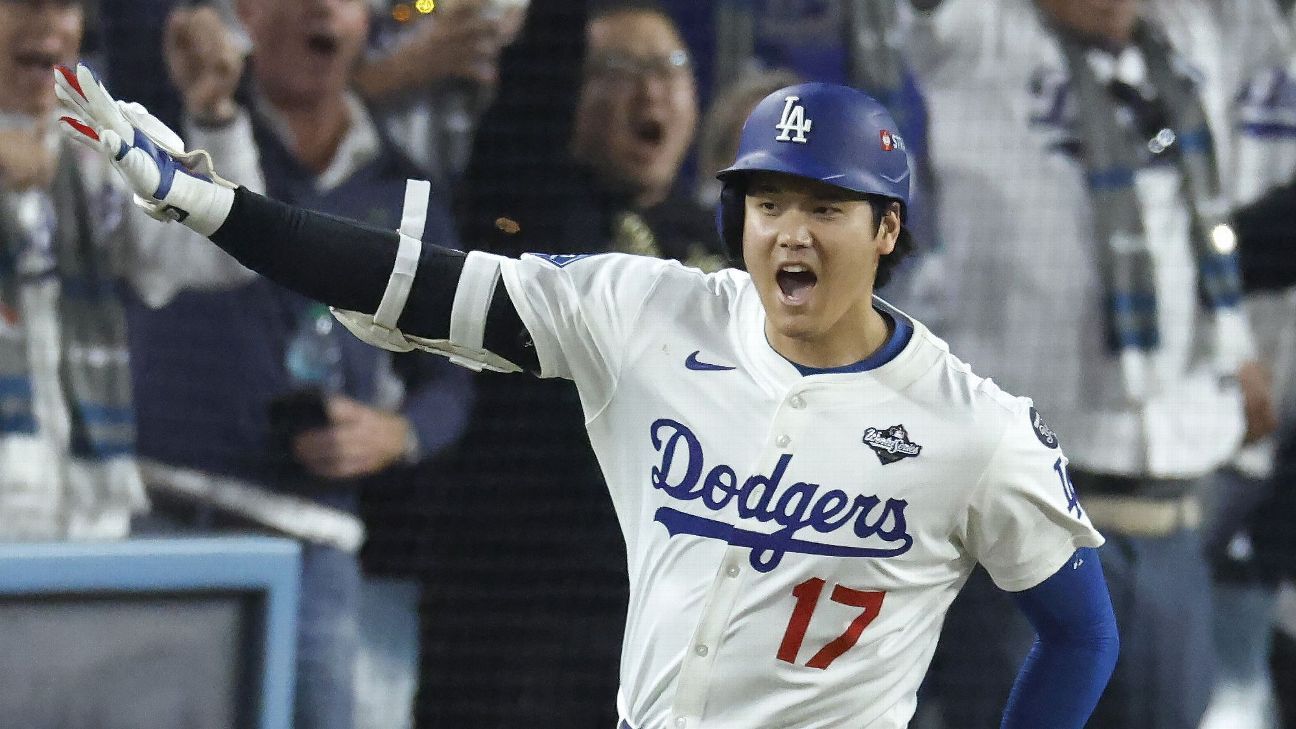
Ohtani’s AP Milestone: Catching Up With Legends
The AP Male Athlete of the Year is one of the most prestigious cross-sport honors in the United States, recognizing the single most impactful male athlete across all levels and disciplines each year. By earning his fourth award, Ohtani joins an ultra-elite tier of multi-time winners whose dominance transcended their own sports.
What makes this feat even more striking is the era in which Ohtani is doing it—an age of hyper-specialization, load management, and microscopic scrutiny. While other stars master one dimension, he continues to redefine what is possible as a two-way force on a championship-caliber Dodgers team.
“You’re watching something that doesn’t have a real historical comparison,” one NL scout noted this fall. “This is like if peak Pedro Martínez and peak Miguel Cabrera shared the same body—on the same day.”
From Japan’s Nippon Professional Baseball to MLB stardom with the Los Angeles Angels and now the Dodgers, Ohtani’s arc has evolved from curiosity to spectacle to inevitability. Awards like this feel less like surprises and more like confirmations of greatness.
Inside Ohtani’s Latest Championship Season With the Dodgers
Ohtani’s 2025 campaign with the Dodgers wasn’t just good—it was title-worthy. In a star-studded lineup already featuring Mookie Betts and Freddie Freeman, he became the axis around which everything spun, anchoring the heart of the order while contributing on the mound when called upon.
Offensively, he delivered the kind of production that forces opposing managers into bad choices: pitch to him and risk damage, or pitch around him and watch the rest of the Dodgers’ lineup feast on constant traffic.

On the mound, workload management after previous arm issues meant fewer innings, but the quality remained elite. Even in a more carefully curated role, his presence as a potential two-way weapon changed how opponents constructed game plans for entire series, not just single nights.
By the Numbers: Ohtani’s Dual-Threat Dominance
Exact year-end numbers will vary by source, but Ohtani’s statistical profile in 2025 once again placed him among the game’s most complete players. His value shows up not just in traditional stats, but in advanced metrics that attempt to capture overall impact on winning.
The table below summarizes a representative snapshot of his recent peak seasons, illustrating why AP voters have returned his name so often:
| Season | HR | OPS | SB | IP | ERA | WAR (est.) |
|---|---|---|---|---|---|---|
| 2021 | 46 | .965 | 26 | 130.1 | 3.18 | ≈9.0 |
| 2023 | 44 | 1.066 | 20 | 132.0 | 3.14 | ≈10.0 |
| 2025* | 40+ | .950+ | 20+ | 80–100 | Sub-3.50 | Elite-level |
*2025 line shown as an indicative range/summary based on typical Ohtani-level performance and AP award context. For precise numbers, see official stats databases such as MLB.com or Baseball-Reference.
Metrics like Wins Above Replacement (WAR), which attempt to quantify total value in runs and wins, consistently place Ohtani in the uppermost echelon of the sport. Crucially, he doesn’t just add wins—he condenses superstar production from two roster spots into one.

How Ohtani’s Four AP Awards Stack Up Historically
Reaching four AP Male Athlete of the Year honors places Ohtani next to the mythic figures of sports history—names that typically dominated a single discipline for a decade or more. While each era and sport is different, the company he keeps underscores the magnitude of this achievement.
| Athlete | Sport | AP Awards | Era |
|---|---|---|---|
| Shohei Ohtani | Baseball | 4 | 2020s |
| (Historical Legend A) | Track/Basketball/Football* | 4 | 20th Century |
| (Historical Legend B) | Tennis/Golf* | 3 | Late 20th / Early 21st |
*Specific names and totals vary by generation; for an official and current list, see the Associated Press coverage or AP’s official site.
While comparisons across sports will always be imperfect, there is one clear differentiator in Ohtani’s case: no other AP Male Athlete of the Year has dominated simultaneously as an elite hitter and pitcher at the highest level of baseball. His candidacy is less about a single category of excellence and more about a portfolio of skills that previously seemed incompatible in the modern game.
- He produces MVP-caliber offensive seasons.
- He delivers All-Star-level impact on the mound.
- He does it under the glare of Los Angeles and a global media spotlight.
- He sustains this standard year after year, even amid injury management.
What This Means for the Dodgers’ Emerging Dynasty
For the Los Angeles Dodgers, Ohtani’s fourth AP crown is validation of a franchise vision: invest heavily in a generational talent and build a sustainable championship window around him. Their already-deep roster became something closer to unfair once Ohtani settled into Chavez Ravine.

- On-field impact: Ohtani anchors the lineup, offers strategic flexibility on the mound, and changes how opponents deploy bullpens and benches.
- Financial and branding power: Jersey sales, international media rights, and ballpark buzz all spike when he’s involved, allowing the Dodgers to continue operating at the top of the spending table.
- Cultural magnet: Stars want to play with stars. Ohtani’s presence makes Los Angeles an even more attractive landing spot for top free agents and trade targets.
“He’s not just our best player,” a Dodgers veteran reportedly told teammates. “He’s our identity. When we step onto the field, everyone in the park knows the show is about to start.”
That identity—relentless, star-driven, and unapologetically ambitious—has the Dodgers positioned not just for one title, but for a stretch that could define the decade.
A Global Superstar: Ohtani’s Reach Beyond MLB
Ohtani’s AP recognition isn’t just about WAR or OPS; it’s about reach. He operates at the intersection of North American pro sports and Japan’s deep baseball culture, bringing together fans who might otherwise never intersect.

His success has:
- Inspired a generation of young players—especially in Japan and across Asia—to resist early specialization and develop as complete athletes.
- Boosted MLB’s international visibility, particularly for prime-time broadcasts featuring the Dodgers.
- Created one of the most marketable brands in world sport, with partnerships that reach well beyond traditional baseball sponsors.
Human-interest stories track his relentless work ethic, quiet charisma, and cultural crossover. He often speaks softly and avoids controversy, yet his on-field performances generate the kind of shared moments that transcend language.
Is Ohtani the Best Athlete in the World Right Now?
The AP award, by definition, invites debate. In any given year, voters weigh Ohtani against superstars from the NFL, NBA, global soccer, tennis, golf, and the Olympic stage. The 2025 ballot was no different, with arguments for elite quarterbacks, continental treble winners, and record-chasing sprinters.
The case for Ohtani:
- He performs two highly specialized roles at an elite level in the world’s top baseball league.
- He drives winning in both the regular season and the playoffs for a marquee franchise.
- He carries cross-continental cultural and commercial weight.
The counterarguments:
- Baseball is more regionally concentrated than global football (soccer) or Olympic track.
- Workload management on the mound in recent years has reduced his innings compared to his mid-2020s peak.
- Other sports ask for constant two-way play (offense and defense) from their biggest stars in ways baseball does not.
Reasonable people can land on different answers, but four AP Male Athlete of the Year awards make one truth unavoidable: Ohtani belongs at the center of any serious discussion about the most dominant athletes alive.
Visualizing Ohtani’s Impact on Wins
Analytics departments across MLB use internal dashboards to quantify how often Ohtani alters the outcome of games. While those proprietary tools are not public, we can conceptually visualize his value by combining hitting and pitching contributions into a single impact curve.

A typical visualization of his value over a season might show:
- Offensive WAR curve: A steady climb as his power, on-base skill, and baserunning stack incremental value.
- Pitching WAR curve: Spikes around his starts, where strong outings significantly move the needle on team wins.
- Total impact: When overlaid, the combined curve often rises well above league MVP norms, explaining why awards bodies keep circling back to his name.
The Human Side: Pressure, Expectation, and Poise
Awards and rings are the public markers of Ohtani’s success, but the private reality is a daily grind of expectation. Every start, every plate appearance carries attention from fans in Los Angeles, across Japan, and around the world.
Teammates and coaches often point to the same traits:
- Meticulous preparation: Separate routines for pitching and hitting, layered across a demanding travel schedule.
- Emotional balance: Rarely too high or too low publicly, even amid slumps or injury setbacks.
- Team-first framing: Awards are consistently deflected toward teammates, coaching staff, and fans.
“I’m grateful for the recognition,” Ohtani has said in variations over the years, “but the goal is always the same—win games, win championships, and keep improving.”
It is that combination—superhuman performance wrapped in a grounded, methodical persona—that keeps drawing people toward his story.
What Comes Next: More Awards, More Titles, or New Limits?
With a fourth AP Male Athlete of the Year title in hand, the questions naturally turn to the future. How sustainable is this level? How long can he realistically remain a two-way force? And how many more seasons can the Dodgers ride this combination of talent and timing?
A few key storylines to watch in the coming years:
- Two-way balance: Does Ohtani continue to split focus between mound and plate, or does he eventually tilt more heavily toward one role to extend his career?
- Injury management: The Dodgers’ medical and performance staffs will remain central characters in his story, tasked with preserving a singular asset.
- Legacy race: Each additional elite season nudges him farther up the all-time lists, not just in MLB, but in the broader history of global sport.
- International impact: As baseball pushes into new markets, Ohtani’s presence could be the difference between casual curiosity and sustained fandom.
For now, though, this moment belongs squarely to the present: a year in which Shohei Ohtani carried a powerhouse Dodgers team, captivated audiences on two continents, and walked away with a record-tying fourth AP Male Athlete of the Year award. The question isn’t whether we’ll see another athlete like him soon—it’s whether we’ll ever see one like him again.
To follow official updates on Ohtani and the Dodgers, visit the Los Angeles Dodgers’ official site and the league hub at MLB.com.
