
Shocking Liverpool Title Parade Crash: What the Paul Doyle Sentence Means for Fan Safety
The sentencing of driver Paul Doyle to 21 years and six months in jail for using his car as a weapon during Liverpool’s Premier League title parade has sent shockwaves through English football, raising urgent questions about fan safety, policing, and how clubs protect their supporters on the biggest days of celebration.
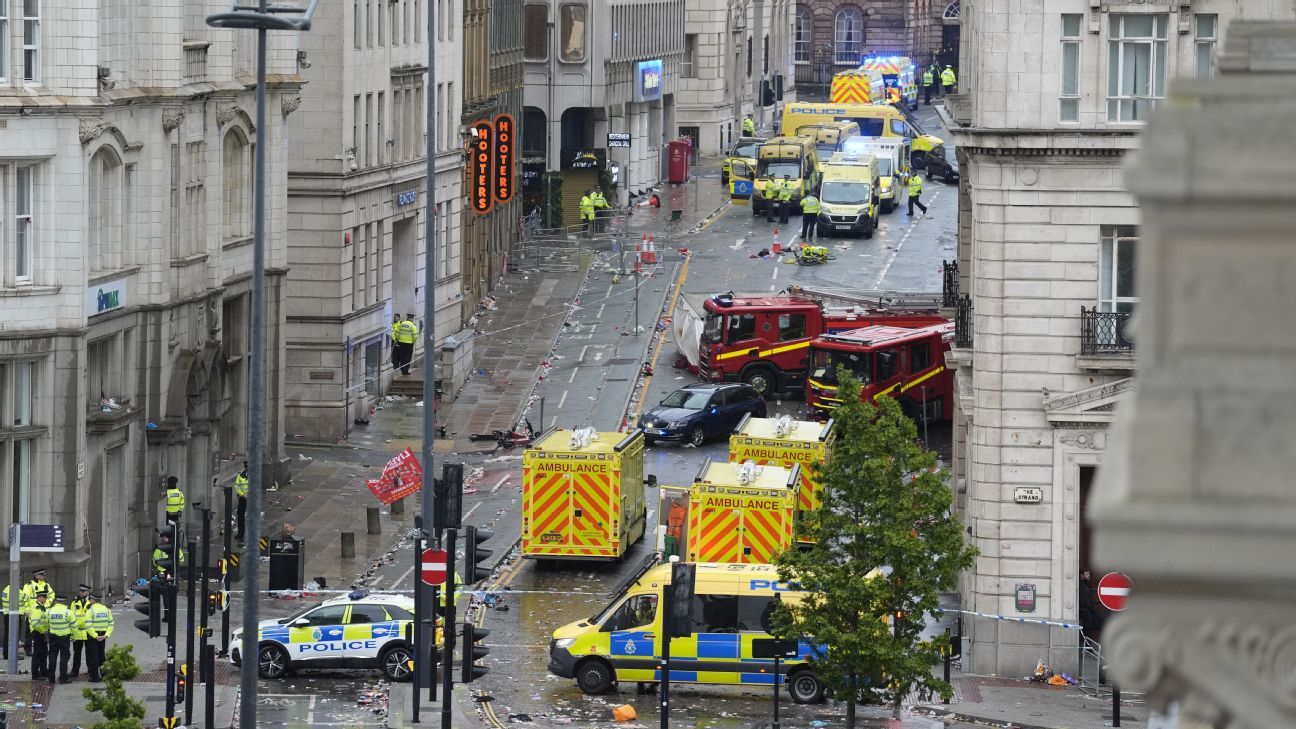
On a day that was supposed to be about Liverpool’s long-awaited Premier League triumph, the city instead witnessed one of the most disturbing off-field incidents in recent English football history. As more than 100 supporters filled the streets in celebration, Doyle drove through the crowd, turning a moment of joy into a scene of chaos and fear.
From Premier League Glory to Tragedy: Context Behind the Liverpool Parade Crash
Liverpool’s Premier League title win had been decades in the making. For supporters, the parade was more than a trophy celebration; it was a release of years of near-misses, heartbreak, and relentless chasing of Manchester City and other rivals at the top of English football. The streets around Anfield and the city centre were packed with families, lifelong fans, and a new generation of supporters raised on the intensity of Jürgen Klopp’s high-pressing, all-action Liverpool sides.
According to reports, Doyle drove his car into those crowds, treating his vehicle as a “weapon” and leaving a trail of injuries and trauma in his wake. While no league points, goals, or trophies were at stake, the incident instantly became part of the club’s modern history—one where the passion of football collided head-on with a calculated act of violence.
- Event: Liverpool Premier League title parade
- Location: Central Liverpool, near key parade routes
- Crowd: Over 100 people directly affected in the path of the vehicle
- Outcome: Multiple injuries and lasting psychological impact on supporters
“This was supposed to be the best day of our lives following Liverpool, and in a few seconds it turned into something we’ll never forget for all the wrong reasons.”
— Supporter who attended the parade, speaking after the incident
The Paul Doyle Sentence: 21 Years and Six Months for Using a Car as a Weapon
At sentencing, the court handed Paul Doyle a prison term of 21 years and six months, reflecting the severity of using a vehicle to drive through a dense crowd of Liverpool supporters. Prosecutors characterised the act as a deliberate attack on unprotected civilians in a confined parade area, echoing language often reserved for the most serious violent offences.
While the judiciary does not operate on league tables or scoreboards, the length of the sentence is notable when set against other high-profile sports-related incidents in the UK and Europe, marking this case as one of the most heavily punished non-terror incidents connected to a football event in recent memory.
| Item | Detail |
|---|---|
| Defendant | Paul Doyle |
| Sentence Length | 21 years and 6 months in jail |
| Primary Offence | Using a vehicle as a weapon to drive through a crowd |
| People Directly Impacted | More than 100 Liverpool supporters |
“This sentence sends a clear message: football celebrations must never be turned into scenes of fear and violence. Those who weaponise a vehicle against crowds will face the full force of the law.”
— Legal analyst speaking on the case
The Human Cost: Liverpool Supporters, Families, and a City in Shock
Behind every legal statistic and headline are the people who went to celebrate a Premier League title and instead left with injuries, trauma, or the memory of narrowly avoiding disaster. Many of those present at the Liverpool parade were families—parents hoisting children onto their shoulders to see the open-top bus, grandparents who had waited their entire lives for a league title, and groups of friends who follow the club home and away.
Support services in Liverpool reported a spike in requests for counselling and psychological support following the parade crash. For a club whose identity is deeply tied to collective experience—anthem, flags, banners, and shared emotion—the impact went far beyond physical injury.
- Immediate physical injuries from the vehicle impact and the ensuing chaos.
- Psychological trauma and anxiety around large crowds or future football events.
- Long-term distrust regarding safety at major sporting celebrations.
“I don’t know when I’ll feel comfortable taking my kids to a big celebration again. Football is supposed to be where we feel part of something bigger, not where we’re looking over our shoulders.”
— Liverpool fan and parent who attended the parade
Fan Safety Under the Spotlight: Lessons for Liverpool, the Premier League, and UEFA
Major football events—from Premier League title parades to Champions League finals—are already complex security operations. This incident forces stakeholders to revisit how they secure open, urban spaces where vehicles and crowds intersect. Unlike stadiums, streets are harder to lock down completely, and the balance between accessibility and security becomes even more delicate.
In the wake of the Liverpool parade crash, safety planners across the Premier League and Europe will study vehicle barriers, route design, emergency access lanes, and real-time communication with supporters. Liverpool FC, local authorities, and league officials are all under pressure to demonstrate that lessons have been learned.
- Stronger physical barriers separating vehicle routes from fan areas.
- Earlier and clearer communication to supporters about safe zones.
- Closer coordination between clubs, city councils, and police.
- Scenario training for rare but high-impact threats involving vehicles.

While no security system can eliminate every risk, the expectation from supporters is clear: the game-day and celebration experience around clubs like Liverpool, Manchester City, Arsenal, and others must feel safe, not just inside the stadium but in every official club-organised environment.
How This Case Compares: Football Crowds, Public Events, and Vehicle Attacks
Sadly, the use of vehicles in crowded public spaces is not new, and authorities responsible for major football fixtures have had to adjust in recent years. From fan zones at international tournaments to domestic title parades, any congregation of supporters is now examined through a dual lens: atmosphere and vulnerability.
While each incident has its own legal classification and context, the sentencing of Paul Doyle will likely be viewed alongside other high-profile cases that reshaped how cities think about public gatherings. For football, that means more data-driven planning and a willingness to invest heavily in infrastructure and stewarding.
| Risk Area | Details |
|---|---|
| Open Street Routes | Harder to control access; multiple vehicle entry points. |
| Mixed Crowds | Families, children, elderly fans increase vulnerability. |
| Limited Escape Paths | Narrow streets and barriers can trap crowds in emergencies. |
| Vehicle Access | Insufficient pre-event road closures or physical blockers. |
The takeaway for governing bodies such as the Premier League, The FA, and UEFA is that public celebrations now require the same level of strategic planning as showpiece finals and derby fixtures. The data points from this incident—crowd density, route mapping, response times—will be poured over by safety experts for seasons to come.
Liverpool FC’s Next Steps: Balancing Passion, Tradition, and Protection
Liverpool’s matchday identity is built on intensity: high-energy pressing on the pitch, deafening noise in the stands, and a sense that every major win belongs as much to the city as to the players. That culture won’t and shouldn’t disappear because of one horrific incident, but the club will need to show leadership in how it adapts.

Future Premier League titles, domestic cups, or European triumphs for Liverpool will still demand a stage. The question now is how the club, in tandem with the city, redesigns that stage so that the soundtrack is songs and cheers, not sirens.
- Stronger pre-event communication about parade routes and safety zones.
- Visible but fan-friendly security measures that don’t kill the atmosphere.
- Close consultation with supporter groups and accessibility advocates.
“We can’t lose who we are as a football city, but we must be smarter. Our people deserve celebrations that are unforgettable for the right reasons.”
— Local community representative in Liverpool
Visual Snapshot: Crowd Scale and Risk at Major Football Events
To understand the scale of planning required for events like Liverpool’s title parade, it helps to visualise the relationship between crowd size and safety risk. While the exact figures around this incident remain subject to official reports, the pattern is clear: as attendance rises, the margin for error shrinks.

In internal reviews, clubs and leagues often use heat maps and flow diagrams to analyse where supporters gather most densely, how they move along streets and concourses, and where choke points might form. Expect Liverpool’s parade routes, and those of other big Premier League clubs, to be re-drawn with far more emphasis on vehicle exclusion and emergency access lanes.
What This Means for the Wider Game: Fans First, Every Time
Football’s power lies in shared experience: thousands of people pulled in the same emotional direction by 22 players and a ball. When that shared experience is threatened—whether by violence, poor organisation, or negligence—it strikes at the heart of what keeps fans coming back.

The Paul Doyle sentencing does not undo the damage done on Liverpool’s streets, but it does crystallise the stakes every time a club, league, or city organises a mass gathering for football. Titles, trophies, and open-top buses will always matter—but from here on, the first and non-negotiable metric for success must be that every supporter gets home safely.
As the football calendar delivers more high-stakes moments—from Premier League run-ins to international tournaments—the hard questions remain: how do clubs preserve the raw emotion of celebration while locking down obvious vulnerabilities? And when Liverpool next lifts a major trophy, what will a “safe” parade look and feel like in a city that knows both the magic and the risks of gathering in huge numbers for the club it loves?
However those questions are answered, one principle should unite clubs, leagues, and supporters across the game: football’s greatest victories should never be overshadowed by avoidable tragedy.
Further Information and Official Resources
For readers seeking official updates, safety guidance, or broader context on fan security around major matches and parades, the following resources provide reliable, regularly updated information:
- Liverpool FC Official Website – Club statements, community initiatives, and matchday guidance.
- Premier League – Competition information, club links, and governance.
- UK Government Guidance on Public Safety – Broader policy relating to public events and security.
- UEFA – European match organisation, stadium safety regulations, and fan information.
