
PFAS ‘Forever Chemicals’: How Green Chemistry Is Rewriting the Future of Clean Water
Per- and polyfluoroalkyl substances (PFAS) are a broad family of synthetic chemicals used for decades in non-stick coatings, stain-resistant fabrics, firefighting foams, food packaging, and countless industrial processes. Their hallmark is the carbon–fluorine (C–F) bond—one of the strongest in organic chemistry—which makes them both chemically useful and extraordinarily persistent.
By late 2025, PFAS are recognized as a global contamination issue. Traces are detected in surface water, groundwater, rain, soil, plants, animals, and human blood. In parallel, a surge of research in catalysis, electrochemistry, plasma technology, and synthetic biology is converging with green chemistry principles to eliminate legacy PFAS and design safer replacements.
Mission Overview: From “Forever Chemicals” to Fixable Chemicals
The overarching mission driving PFAS research and policy today can be summarized in three intertwined goals:
- Containment: Identify and monitor PFAS in water, soil, food, and products; prevent ongoing releases.
- Destruction: Develop practical, scalable technologies that irreversibly break down PFAS into harmless products.
- Redesign: Apply green chemistry to create PFAS-free or easily degradable alternatives that still perform in real-world applications.
“PFAS are a stress test for modern chemistry. If we can safely dismantle some of the most stable molecules we’ve ever made, and replace them with sustainable alternatives, we’ll have redefined what responsible innovation looks like.” — Paraphrased from discussions in recent National Academies workshops
PFAS Basics: Why These Molecules Persist Everywhere
PFAS share a common structural motif: chains or networks of carbon atoms saturated with fluorine. Classic examples include:
- PFOA (perfluorooctanoic acid), historically used in non-stick cookware manufacturing.
- PFOS (perfluorooctanesulfonic acid), widely used in firefighting foams and stain repellents.
- GenX and other “short-chain” PFAS, newer products often marketed as replacements for legacy PFAS.
The C–F bond has a bond dissociation energy around 485 kJ/mol—far higher than most C–H or C–C bonds. As a result, PFAS:
- Resist thermal decomposition under typical environmental conditions.
- Do not readily biodegrade, because few natural enzymes have evolved to attack C–F bonds.
- Are often water- and grease-repellent, enabling them to move through environmental compartments while avoiding breakdown.
“PFAS push the limits of environmental persistence. Once they’re out there, they don’t just go away on human timescales.” — Dr. Elsie Sunderland, environmental chemist, via interviews and publications from Harvard T.H. Chan School of Public Health
Health and Ecological Concerns
Toxicologists and epidemiologists have linked exposure to certain PFAS—especially PFOA and PFOS—to a spectrum of health outcomes. While not all PFAS behave identically, patterns of concern have emerged.
Key Human Health Signals
- Increased risk of some cancers (e.g., kidney and testicular cancers in certain exposed cohorts).
- Elevated cholesterol and altered liver enzymes.
- Immune system effects, such as reduced vaccine response in children.
- Potential developmental impacts and effects on thyroid hormones.
These findings underpinned the first-ever proposed U.S. EPA drinking water regulations for multiple PFAS in 2023–2024 and have driven even stricter action in the EU and some U.S. states.
Environmental and Wildlife Impacts
PFAS travel long distances via air and water, turning up in:
- Remote lakes and rivers far from industry.
- Marine mammals and birds, including polar bears and seabirds in the Arctic.
- Fish consumed by humans, raising dietary exposure questions.
“Finding PFAS in top predators at the poles underscores that this is not just a local contamination event; it’s a planetary-scale distribution problem.” — Summarized from Arctic monitoring reports by the Arctic Monitoring and Assessment Programme (AMAP)
Regulatory Crackdowns and Legal Milestones
Regulators and courts have significantly reshaped the PFAS landscape in the last few years. These milestones are a major reason PFAS stay in the news and shape research priorities.
Key Policy and Legal Trends
- U.S. EPA drinking water standards: By mid-2020s, the EPA moved to establish stringent maximum contaminant levels for several PFAS, driving utilities to adopt advanced treatment.
- EU “group-based” strategies: The EU is pursuing broad restrictions on whole PFAS classes rather than a chemical-by-chemical approach, under REACH and related frameworks.
- State-level actions: States like Maine, Minnesota, and California have pushed ahead with bans or phase-outs of PFAS in food packaging, textiles, and firefighting foams.
- Multibillion-dollar settlements: Major chemical manufacturers have entered large settlements with U.S. water utilities and communities, funding remediation and monitoring.
Each new regulation or lawsuit fuels fresh media coverage, social media discussion, and public demand for clear, science-based explanations of PFAS risks and solutions.
Technology: How Do You Destroy a “Forever Chemical”?
PFAS destruction is fundamentally a bond-breaking challenge. Any credible technology must cleave C–F bonds and convert PFAS into benign species without creating equally problematic byproducts like shorter-chain PFAS or toxic fluorinated fragments.
1. Low-Temperature Catalytic Degradation
One of the most exciting research directions uses catalysts—metal complexes, metal oxides, or advanced materials like doped carbons—to accelerate PFAS breakdown at moderate temperatures or under mild conditions.
- Nucleophilic attack strategies: Some systems activate the PFAS headgroup (e.g., carboxylate) in a polar solvent, enabling stepwise defluorination and breakdown to fluoride ions and small organic acids.
- Photocatalysis: Light-activated catalysts (e.g., TiO2 variants or tailored metal–organic frameworks) generate reactive species that can attack PFAS at the surface.
- Hydrogen-based reduction: In some lab-scale studies, PFAS are treated with reducing agents and catalysts that encourage C–F bond scission and replacement by hydrogen.
“The challenge isn’t just to break PFAS, but to do it at scale, in real water matrices, without consuming unreasonable energy or chemicals.” — Based on commentary from catalysis researchers in journals like Environmental Science & Technology
2. Electrochemical and Plasma Processes
Electrochemical oxidation and plasma technologies are particularly promising for wastewater treatment plants and contaminated groundwater.
- Electrochemical advanced oxidation processes (EAOPs): Special electrodes (e.g., boron-doped diamond, mixed metal oxides) generate highly reactive radicals and oxidizing species at the electrode surface that can attack PFAS molecules in water.
- Plasma reactors: High-voltage discharges in water or at the gas–water interface create a cocktail of reactive radicals, UV light, and transient species that fragment PFAS molecules.
- Hybrid systems: Some pilot plants combine adsorption (to concentrate PFAS) with plasma or electrochemical destruction to reduce energy use per unit mass of PFAS destroyed.
These systems are already in pilot or early commercial deployment for firefighting foam-contaminated groundwater and landfill leachate.
3. Biodegradation and Synthetic Biology
Historically, PFAS were thought to be almost completely recalcitrant to biodegradation. Recent work is challenging that assumption.
- Natural microbes: Environmental microbiologists are identifying bacteria and archaea that can slowly defluorinate certain PFAS or intermediates, especially under anaerobic conditions.
- Enzyme engineering: Using directed evolution and computational design, researchers aim to create enzymes capable of recognizing and attacking C–F bonds with greater efficiency.
- Synthetic biology approaches: Engineered microbial consortia may eventually couple PFAS degradation with other metabolic pathways, enhancing mineralization to CO2, fluoride, and benign salts.
Biology is unlikely to be a stand-alone fix for high-concentration PFAS waste streams in the near term, but it may be vital for polishing steps and low-level environmental cleanup.
4. Concentrate and Destroy: Process Trains
Practically, many treatment trains use a two-step strategy:
- Capture PFAS from large water volumes using adsorption (e.g., activated carbon, ion exchange resins, tailored adsorbent media) or membrane filtration.
- Destroy concentrated PFAS using thermal, catalytic, electrochemical, or plasma methods on the much smaller, enriched waste stream.
This approach aligns well with current infrastructure and is a focus of many commercial PFAS treatment offerings today.
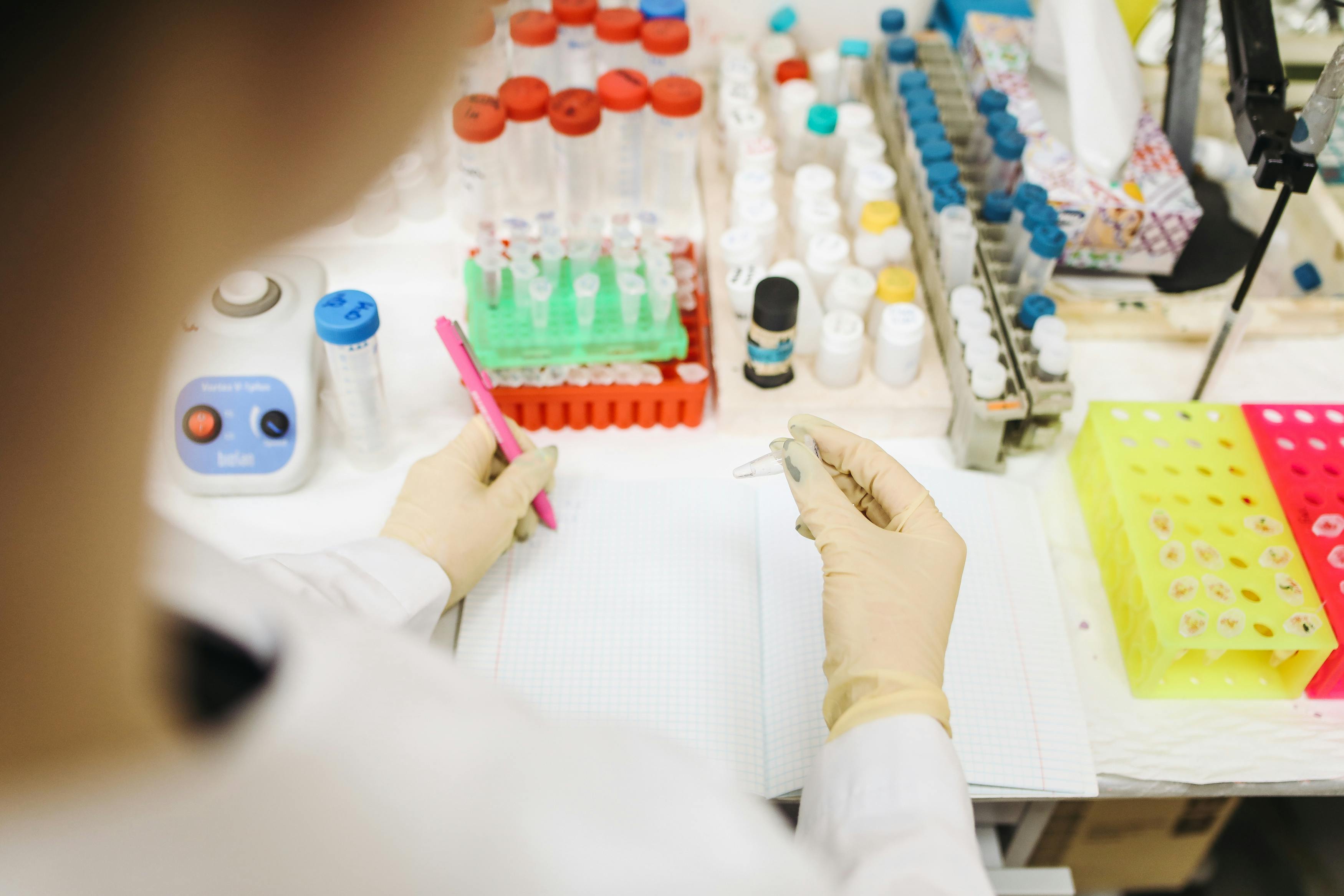
Visualizing PFAS and Green Chemistry in Action

Scientific Significance: PFAS as a Stress Test for Green Chemistry
PFAS are catalyzing a broader transformation in how chemists think about design, life cycle, and end-of-life management for synthetic molecules.
PFAS and the Principles of Green Chemistry
The 12 Principles of Green Chemistry—articulated by Paul Anastas and John Warner—provide a framework for designing safer chemicals and processes. PFAS research directly intersects with:
- Designing safer chemicals: New materials aim to deliver oil- and water-repellency without extreme persistence or bioaccumulation.
- Design for degradation: Fluorine-free alternatives are being engineered so that they break down into non-hazardous products in realistic environmental conditions.
- Pollution prevention: Process redesign and material substitution seek to avoid PFAS release at the source rather than relying on end-of-pipe treatment.
“The green chemistry lens forces us to ask: If we can’t cleanly close the loop on a molecule, should we be using it at all?” — Inspired by talks and writings from Dr. Paul Anastas (LinkedIn)
PFAS as a Model for Emerging Contaminants
The scientific toolkit being built for PFAS—advanced analytics, treatment trains, regulatory frameworks, and public engagement—will likely be reused for other persistent or poorly understood contaminants, such as:
- Microplastics and nanoplastics.
- Pharmaceuticals and endocrine-disrupting compounds in wastewater.
- Novel fluorinated or silicon-based performance chemicals.
In this sense, PFAS research is not a niche problem; it is a template for managing the chemical dimension of the Anthropocene.
Key Milestones in PFAS Research and Green Technology
Progress on PFAS is incremental but accelerating. Milestones across science, technology, and policy highlight the trajectory.
Selected Scientific and Technical Milestones
- High-resolution PFAS analytics: Expansion of LC–MS/MS and high-resolution mass spectrometry has enabled detection of hundreds of PFAS and transformation products at parts-per-trillion levels.
- First credible low-temperature degradation pathways: Publications demonstrating PFAS breakdown at relatively mild temperatures in tailored solvent–catalyst systems, converting PFAS to fluoride and benign organics.
- Pilot-scale electrochemical and plasma reactors: Field demonstrations at contaminated military bases and landfills are validating lab discoveries under real-world conditions, including variable water chemistry and flow rates.
- Early biological pathways: Identification of microbial communities capable of partial defluorination, mapping new metabolic routes that were once considered implausible.
Policy and Market Milestones
- Major brands committing to phase out PFAS in textiles, cookware, and packaging within defined timelines.
- Certification schemes (e.g., “PFAS-free” labels) helping consumers identify alternative products.
- Growth of specialized PFAS treatment companies offering turnkey systems to municipalities and industry.
Collectively, these milestones indicate a shift from discovery and alarm toward engineering solutions and systemic redesign.
Challenges on the Road to PFAS-Free Futures
Despite rapid advances, significant scientific, technical, and societal challenges remain before we can fully manage PFAS legacies.
1. Sheer Diversity of PFAS
There are thousands of distinct PFAS structures. Most toxicological and degradation data focus on a small subset, leaving many compounds with limited characterization.
- Regulating one PFAS at a time risks “regrettable substitution,” where one problematic chemical is replaced with another similar, poorly studied compound.
- Group-based regulation and read-across models help but require robust structure–activity relationships.
2. Measuring Ultra-Low Concentrations
Health-based guidelines for PFAS are often in the single-digit parts-per-trillion range. Measuring such low levels reliably is non-trivial:
- Trace contamination can arise from labware, air, or sampling equipment.
- Standardized methods are still evolving for emerging PFAS and transformation products.
3. Scaling Destruction Technologies
Many promising technologies work well in controlled lab settings but face hurdles when scaled:
- Energy demand: Electrochemical and plasma systems can be energy-intensive if not carefully optimized.
- Co-contaminants: Real waters contain organics, salts, and suspended solids that may interfere with catalysts or electrodes.
- Cost and maintenance: Utilities require robust, low-maintenance systems that operate reliably for years.
4. Equity and Environmental Justice
PFAS burdens are not evenly distributed. Communities near manufacturing facilities, airports, and military bases disproportionately experience contamination.
- Funding and technical assistance for affected communities remain uneven.
- Public trust depends on transparent risk communication and community participation in decision-making.
“PFAS are as much an environmental justice story as they are a chemistry story. Solutions must be accessible to the communities most affected.” — Reflecting themes highlighted by environmental justice advocates and researchers in PFAS town halls and hearings
Practical Steps: Reducing Personal and Community Exposure
While systemic solutions require regulation and industrial change, individuals and local governments can take interim steps to reduce exposure.
Home Water Filtration
Point-of-use filters certified for PFAS reduction—typically using activated carbon and/or reverse osmosis—can significantly lower PFAS levels in drinking water when maintained properly.
- Look for filters tested under NSF/ANSI standards for PFAS.
- Replace cartridges on schedule to avoid breakthrough.
For example, under-sink reverse-osmosis systems and whole-house activated carbon units have been independently tested for PFAS removal. When evaluating options, consult credible certifications and performance data, and consider reading reviews on specialized retailer sites or product pages.
Consumer Choices
You can also reduce PFAS inputs to your home and local environment by:
- Choosing PFAS-free cookware (e.g., high-quality stainless steel or cast iron) instead of certain non-stick coatings.
- Selecting PFAS-free water- and stain-repellent textiles when possible.
- Avoiding unnecessary use of long-lasting water-repellent sprays for indoor items.
Community-Level Actions
- Supporting local testing of municipal water and private wells.
- Engaging with utilities and regulators about PFAS monitoring and treatment plans.
- Encouraging adoption of PFAS-free firefighting foams at airports and fire training facilities.
PFAS in Media and Social Networks
PFAS have become a prominent topic across science communication channels, from specialist conferences to TikTok explainers.
Storylines that Resonate Online
- Human stories: Communities discovering PFAS in their wells, followed by long campaigns for cleanup and compensation.
- Lab breakthroughs: Viral posts about “bacteria that eat PFAS” or “new catalysts that destroy PFAS at room temperature.”
- Policy battles: Debates around how strict regulations should be and who pays for cleanup.
Science communicators on platforms like YouTube often break down PFAS chemistry, environmental fate, and treatment options. For example, channels focusing on environmental chemistry and engineering have videos explaining how advanced oxidation processes work or what “parts per trillion” really means in intuitive terms.
Professional networks such as LinkedIn host active discussions among environmental engineers, policy analysts, and chemists, sharing:
- Case studies of treatment installations.
- New peer-reviewed research on degradation pathways.
- Job postings and funding opportunities in PFAS-related projects.
Conclusion: PFAS and the Next Generation of Green Chemistry
PFAS “forever chemicals” crystallize many of the central challenges of our chemical age: powerful materials designed without clear end-of-life pathways, global dispersion of pollutants, and uneven exposure across communities.
The response, however, is equally instructive. By uniting catalysis, electrochemistry, plasma science, synthetic biology, environmental monitoring, and systems-level green chemistry design, researchers and engineers are building a comprehensive playbook for dealing with persistent contaminants.
The long-term success of PFAS management will be measured not only by how many molecules we can destroy, but by whether we embed prevention, safety-by-design, and equity into the next generation of chemistry and materials. As public awareness and regulatory pressure continue to mount through the late 2020s, PFAS will remain a focal point—and a catalyst—for a more sustainable, responsible chemical future.
Additional Resources and Learning Paths
For readers wanting to go deeper into PFAS chemistry and green technology, consider the following learning paths:
1. Follow Authoritative Reviews and Reports
- Look for review articles in journals such as Environmental Science & Technology, Water Research, and Chemical Reviews.
- Explore science-based guidance documents from organizations like the U.S. EPA PFAS hub and the ATSDR PFAS portal.
2. Online Courses and Lectures
- University open courses on environmental chemistry, water treatment, or green chemistry often include PFAS case studies.
- Conference recordings from groups like the American Chemical Society (ACS) or the Society of Environmental Toxicology and Chemistry (SETAC) regularly feature PFAS sessions.
3. Staying Current
PFAS science and regulation are moving quickly. Setting alerts on scholarly platforms, following key researchers on professional networks, and tracking updates from your local water utility can help you stay informed as new data and technologies emerge.
References / Sources
The following sources provide reliable, up-to-date information about PFAS, health impacts, regulations, and treatment technologies:
- U.S. Environmental Protection Agency – PFAS Explained
- Agency for Toxic Substances and Disease Registry – PFAS and Your Health
- National Institute of Environmental Health Sciences – Perfluorinated Chemicals (PFCs/PFAS)
- AMAP Assessment 2016 – Chemicals of Emerging Arctic Concern
- Review articles on PFAS occurrence and treatment in Environmental Science & Technology
- Background on Green Chemistry Principles (various educational resources)
