
LIV Golf’s OWGR Push: Inside the Battle for World Ranking Recognition by 2026
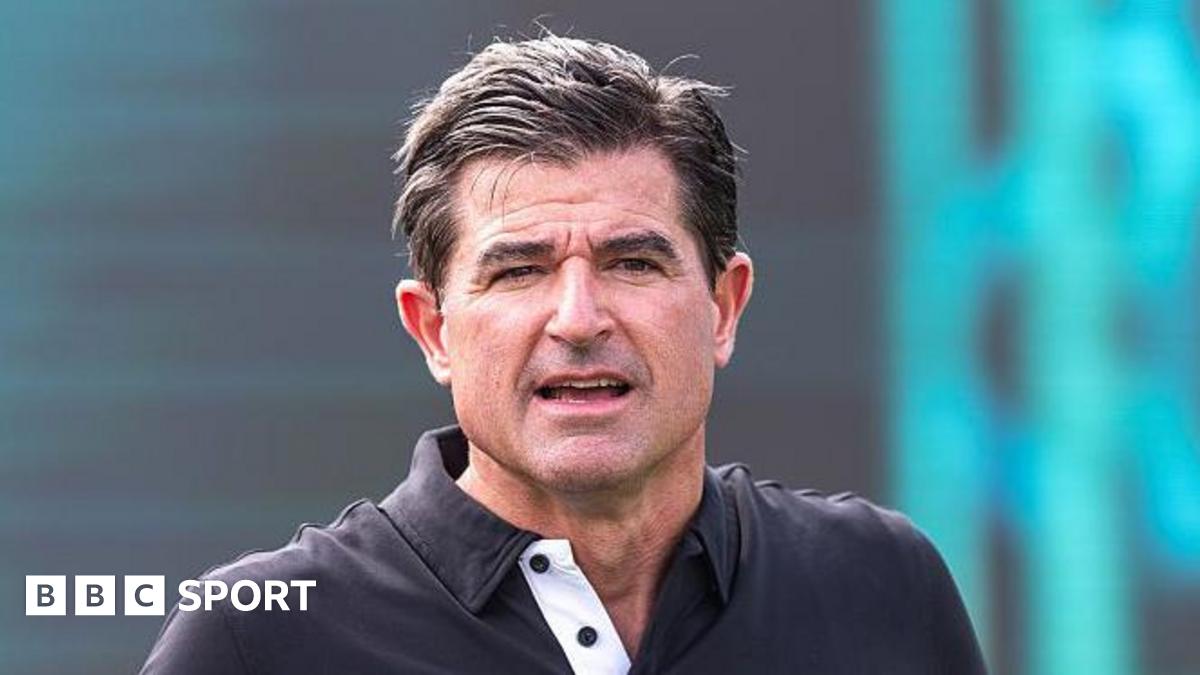
LIV Golf chief executive Scott O'Neil says the breakaway league is “optimistic” it will secure Official World Golf Ranking (OWGR) points by the 2026 season, a potential turning point in the sport’s civil war that could redefine who gets into golf’s majors and how the world’s best are measured. With Rory McIlroy openly questioning LIV’s “irrational spending” and casting doubt on any swift merger with the PGA Tour, professional golf is staring at a defining two-year window that will shape its competitive and financial landscape for the next decade.
LIV Golf’s Fight for Legitimacy Through World Ranking Points
Since launching in 2022 with team formats, 54-hole events, and massive guaranteed contracts, LIV Golf has operated outside the traditional ecosystem dominated by the PGA Tour and DP World Tour. The tour’s biggest structural handicap has been its exclusion from the Official World Golf Ranking, the system that underpins qualification pathways for majors like The Masters, the U.S. Open, The Open Championship, and the PGA Championship.
Without OWGR points, many LIV players have seen their rankings plummet, regardless of performance on LIV’s circuit. That has made it harder for them to gain entry into majors, World Golf Championships (where they still exist), and some elite invitationals.
Scott O’Neil, who took over as LIV’s chief executive, has now publicly anchored expectations around 2026, signaling a belief that either structural changes to LIV events, shifts in OWGR criteria, or a broader agreement with golf’s traditional power brokers could unlock recognition.
“We’re working towards a solution that ensures our players are ranked fairly by 2026. The best golfers in the world deserve to be measured on the same scale.” — Scott O’Neil, LIV Golf CEO
Rory McIlroy’s Criticism: ‘Irrational Spending’ and a Complicated Merger Picture
While LIV looks to secure OWGR recognition, one of golf’s biggest voices, Rory McIlroy, has not softened his stance on the Saudi-backed league. The five-time major champion, who has at times called for compromise in men’s professional golf, recently reignited criticism around LIV’s spending and long-term sustainability.
“It’s very hard to talk about a merger when one side is engaging in what I’d call irrational spending. It makes a unified product incredibly difficult to build.” — Rory McIlroy
McIlroy’s comments cut to the core of the standoff: LIV’s deep pockets, driven by Saudi Arabia’s Public Investment Fund (PIF), have shifted the economics of professional golf. Huge signing bonuses and multi-year guarantees have lured stars, but they’ve also fueled skepticism about competitive integrity, return on investment, and the willingness of established tours to share power.
- McIlroy believes unchecked spending widens the gap between LIV and traditional tours.
- He argues it complicates negotiations on a unified global schedule.
- His stance resonates with segments of fans, sponsors, and traditionalists concerned about golf’s identity.
How OWGR Works—and Why LIV Has Been Kept Out
The Official World Golf Ranking is a complex, points-based system evaluating players’ performance over a rolling two-year period across approved tours. Events earn strength-of-field ratings, and players accumulate points based on finish position.
LIV’s application for OWGR status has previously been rejected, with the OWGR board citing:
- Limited 48-player fields with no open qualifying.
- 54-hole events without a cut, differing from standard 72-hole, cut-based formats.
- Team and individual hybrid format complicating comparative scoring.
- Concerns about promotion/relegation and access for non-contracted players.
For OWGR, comparability is everything: it must be able to say a win in a LIV event is fairly comparable to a win on the PGA Tour or DP World Tour. Until LIV’s structure aligns more closely with established tours—or OWGR significantly evolves its criteria—approval remains a moving target.
LIV Stars vs OWGR Reality: The Numbers Behind the Debate
Several of LIV’s marquee names remain among the sport’s most compelling talents, but their world rankings have been sliding due to inactivity on OWGR-recognized tours. The disconnect between perceived ability and official ranking has been one of LIV’s strongest talking points.

| Player (Example) | Approx. Peak OWGR Rank | Recent LIV Wins* | Current OWGR Trend |
|---|---|---|---|
| Brooks Koepka | No. 1 | Multiple | Falling due to limited OWGR events |
| Cameron Smith | Top 3 | Multiple | Sliding despite strong LIV play |
| Dustin Johnson | No. 1 | Multiple | Outside elite tiers in ranking terms |
*Table is illustrative and based on known LIV results and general OWGR trends; exact numbers fluctuate weekly.
The gap between on-course performance in LIV’s closed ecosystem and official OWGR status fuels frustration among players and fans who see major champions producing high-quality golf but losing access to ranking-dependent events.
Data Snapshot: What OWGR Access Could Mean by 2026
To understand why 2026 matters, consider a simplified scenario: a top LIV player stays exclusively on LIV from now until the end of the 2025 season. Without OWGR points, that player’s ranking could fall outside the top 100, or even top 200, despite regularly contending in 54-hole events with elite competition.
| Scenario (Hypothetical Player) | End of 2025 OWGR Rank | Major Starts (2026) |
|---|---|---|
| No OWGR access on LIV | Outside Top 150 | Relies on exemptions, qualifiers only |
| Full OWGR access with LIV format unchanged | Top 30–50 | 3–4 majors with ranking-based entry |
| OWGR access + occasional PGA/DP World starts | Top 25 | All 4 majors likely |
Projections are hypothetical but consistent with historical ranking trajectories of elite players.
This is the sporting core of LIV’s OWGR campaign: without recognition, the league risks being perceived as a high-paying exhibition circuit rather than part of golf’s competitive apex.
Behind the Numbers: Careers, Families, and Legacy on the Line
For players, the OWGR debate isn’t just about status; it’s about career arcs and family decisions. Multi-year guarantees have given some veterans financial security but have also forced them to weigh:
- The chance to chase majors versus locked-in contracts.
- Travel demands of a global schedule against time at home.
- Short-term financial windfalls against long-term legacy questions.

Younger players face an even sharper dilemma: join LIV early for guaranteed earnings and risk limited paths to majors, or grind on traditional tours with less security but a clearer route to historic titles.
“At the end of the day, you want to know your kids can see you play in majors and know you competed against everyone, not just half the field.” — Anonymous tour pro, speaking to multiple media outlets about the split era
Multiple Perspectives: Fair Play or Special Treatment?
The debate over LIV’s OWGR future is sharply polarized. Different stakeholders see the issue through very different lenses:
- LIV’s stance: Talent is talent—if elite fields compete, those events should earn points. They argue that excluding LIV players punishes athletes and undervalues fans who follow their product.
- Traditional tours’ argument: To be ranked on the same scale, tours must meet established standards for access, competitive structure, and pathway opportunities. LIV, they say, should not receive special treatment.
- OWGR’s position: The ranking must remain credible and comparable. Any accommodation for LIV must not compromise that core mission.
- Fans’ mixed view: Some want every top player in majors, regardless of tour politics. Others feel LIV knowingly stepped outside the system and should adapt if it wants back in.

Any OWGR compromise will need to thread this needle, preserving integrity while acknowledging that LIV is not going away quietly.
What Has to Change for a 2026 OWGR ‘Solution’?
If Scott O’Neil’s 2026 optimism is to be realized, several potential pathways are on the table. None are simple, and each would reshape the way LIV operates.
- Format Tweaks: LIV could consider:
- Adding 72-hole events to its schedule.
- Introducing cuts to some tournaments.
- Establishing clearer open qualifying routes for non-signed players.
- Hybrid Sanctioned Events: Co-sanctioned tournaments with the PGA Tour or DP World Tour could allow LIV players to earn OWGR points without granting full tour status to the entire LIV schedule.
- OWGR Criteria Evolution: The ranking body could develop a specific framework for team-based or 54-hole tours, though this risks complicating its model and perception of neutrality.
- Broader Commercial Settlement: A larger agreement involving the PGA Tour, DP World Tour, and PIF could bundle media rights, schedule coordination, and ranking access into one grand bargain.
O’Neil’s timeline hints that any such changes are unlikely to be cosmetic. If OWGR recognition does come, it will probably follow structural shifts that move LIV at least partway toward traditional tour standards—or redefine those standards themselves.
What 2026 Could Mean for Majors—and for Golf’s Future
Looking ahead to 2026, the stakes are enormous. OWGR access for LIV would:
- Re-open a ranking-based pathway to majors for dozens of LIV players.
- Increase the likelihood that every major championship features the strongest possible combined field.
- Force traditional tours to recalibrate their competitive and commercial positioning.
- Test whether fans will embrace a truly multi-tour era or demand a unified global circuit.

From an analyst’s perspective, a pragmatic settlement—LIV adapting some format elements, OWGR evolving criteria modestly, and the majors prioritizing full-strength fields—feels more likely than a complete stalemate through 2026. But McIlroy’s warnings about “irrational spending” highlight that money alone can’t buy trust or unity.
As the clock ticks toward 2026, the key questions for fans and stakeholders are clear:
- Will LIV be willing to sacrifice some of its uniqueness to gain OWGR legitimacy?
- Can golf’s power brokers design a ranking system that is both fair and flexible?
- And when the first major of 2026 tees off, will the leaderboard finally feature every star the modern game has to offer?
The next two seasons will provide the answers—and could define professional golf’s shape for a generation.
