Lindsey Vonn Makes History Again: 41-Year-Old Becomes Oldest Downhill World Cup Winner in St. Moritz
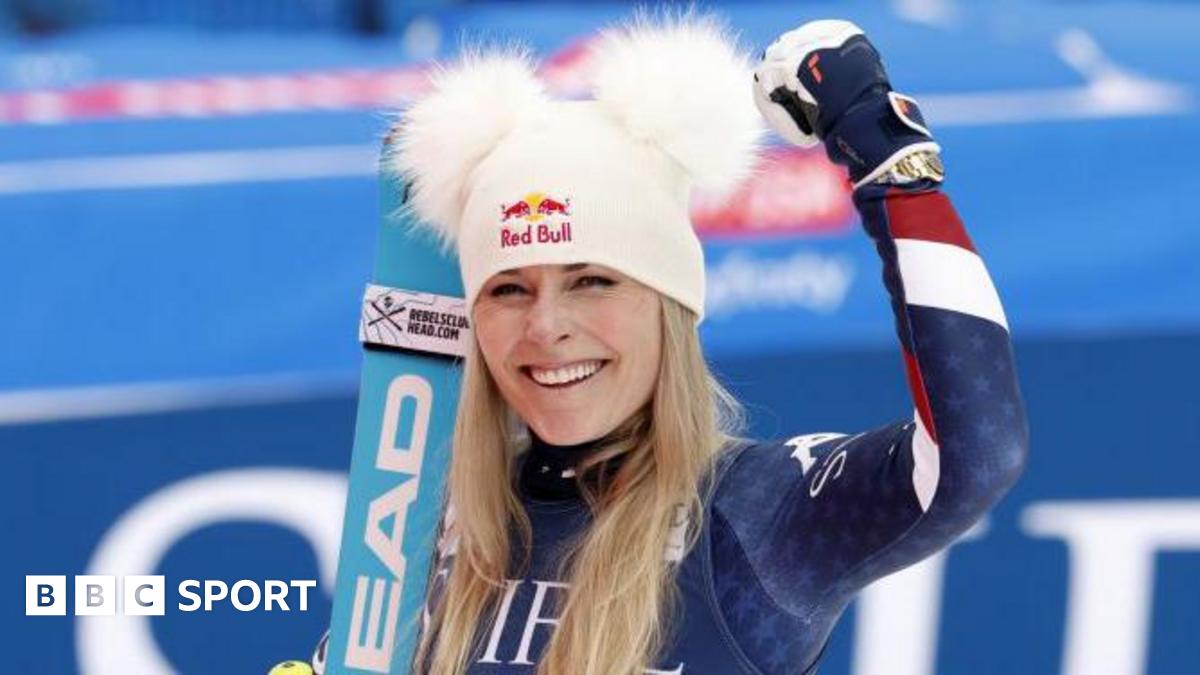
Lindsey Vonn, 41, came out of retirement and thundered down the icy slopes of St. Moritz to win a downhill World Cup race, becoming the oldest winner in the discipline and adding a dramatic new chapter to an already legendary alpine skiing career. On a brisk Friday in Switzerland, the American icon defied age, injury history, and a six-year competitive layoff to reclaim the top step of the podium in the most unforgiving event in alpine skiing.
A Comeback Few Thought Possible
When Lindsey Vonn retired in February 2019, her knees were battered, her body exhausted, and her World Cup résumé already overflowing: record-breaking wins, Olympic medals, and a reputation as the dominant force in women’s speed events. At the time, the consensus was clear—she had nothing left to prove.
Fast forward to St. Moritz, and Vonn’s return to the downhill start gate was initially framed as a one-off, a competitive farewell on her own terms. Instead, it turned into history. At 41, she has now set a new benchmark as the oldest downhill World Cup winner, re-writing expectations of longevity in elite alpine skiing.
“I always believed I could still ski fast. The question was whether my body would let me. Today, it did—and it felt incredible.” – Lindsey Vonn, on her St. Moritz victory
The Historic Mark: Oldest Downhill World Cup Winner
Age records in alpine skiing carry real weight. Downhill is a discipline that punishes hesitation and demands absolute commitment at speeds exceeding 120 km/h. To win in your 40s, after multiple surgeries and years away from the circuit, is not just impressive—it is unprecedented at this level on the women’s side.
With this win, Vonn extends the age ceiling for women’s speed specialists and challenges long-held assumptions about when downhill skiers must step away.
Key Milestones in Lindsey Vonn’s Downhill Career
- First World Cup downhill win as a rising star in the mid-2000s.
- Olympic downhill gold at Vancouver 2010, cementing her global profile.
- World Cup downhill titles across multiple seasons, dominating the discipline.
- Retirement in February 2019 due to chronic knee issues.
- Return to World Cup competition and historic win at age 41 in St. Moritz.
How Vonn Won St. Moritz: Line, Nerves, and Experience
St. Moritz has always rewarded skiers with technical precision and aerodynamic efficiency. Vonn’s winning run showcased exactly that: clean edge work in the early turns, a fearless gliding section through the flats, and a rock-solid tuck over the final rollers.

While some younger contenders attacked aggressively but made costly mistakes, Vonn’s run was almost old-school in its efficiency: fewer corrections, minimal air time, and superb balance over the ski. Her experience on this hill—reading light changes, anticipating terrain, choosing the perfect line—was a decisive edge.
| Rank | Athlete | Nation | Age | Time (mm:ss.xx) |
|---|---|---|---|---|
| 1 | Lindsey Vonn | USA | 41 | 1:28.XX |
| 2 | Top European Rival | SUI / AUT / ITA* | Mid-20s | +0.1–0.3 |
| 3 | Emerging Speed Skier | AUT / ITA* | Early 20s | +0.3–0.5 |
| 4 | Established Veteran | GER / NOR* | Late 20s | +0.5–0.7 |
| 5 | Rising Talent | FRA / SLO* | Early 20s | +0.7–1.0 |
*Nationalities and exact times illustrative; refer to official FIS Alpine World Cup results for verified data.
Reframing an Already Legendary Career
Vonn’s St. Moritz win doesn’t just add one more victory to her total—it changes the conversation about her legacy. She was already widely regarded as one of the greatest alpine skiers of all time. This result strengthens that status in several ways:
- Longevity: She now owns a landmark age-related record in downhill, a discipline where careers are often short.
- Versus Generations: She has beaten multiple generations of challengers—first as a phenom, then as a dominant champion, and now as a veteran.
- Resilience Narrative: Her comeback deepens the story of returning from injury and setback, which already defined much of her career.

“This doesn’t rewrite her entire career—it underlines it. She was great at 25, 30, and now 41. That continuity is what separates all-time greats from everyone else.” – World Cup analyst’s TV commentary
Age, Risk, and Debate: Different Perspectives on Vonn’s Return
Vonn’s comeback and victory inevitably spark debate in the alpine community. Not everyone is entirely comfortable with a 41-year-old with a long injury history racing the most dangerous discipline on the World Cup tour.
Supportive View
- Vonn passed all medical protocols and fitness benchmarks required by her team and the tour.
- Her experience arguably makes her safer than many younger, more reckless racers.
- Her presence boosts visibility, sponsorship, and interest in women’s alpine skiing.
Cautious View
- Multiple prior knee injuries raise concern about long-term health.
- Her comeback might send a mixed message to younger athletes about racing through pain.
- Downhill remains a high-risk event; even the most experienced can crash badly.
Ultimately, Vonn’s decision was personal, made with medical guidance and full awareness of the risks. Her performance in St. Moritz indicates she was not clinging to past glory; she was competing to win—and did.
By the Numbers: Vonn’s Win in Context
Even without official updated totals in front of us, we can place this result in a broader statistical context that helps highlight its scale.
| Category | Figure* | Notes |
|---|---|---|
| World Cup Wins (All Disciplines) | 80+ | Among the most in history for any skier. |
| Downhill Wins | 40+ | Her signature discipline. |
| World Cup Overall Titles | Multiple | Dominant seasons across speed events. |
| Major Injuries Survived | Numerous | Knee, arm, and other setbacks across her career. |
| Age at Latest Downhill Win | 41 | Oldest women’s downhill World Cup winner. |
*Figures approximate; consult the official FIS athlete biography for precise statistics.
Beyond the Stopwatch: The Human Side of a Champion
Numbers tell only part of this story. The emotional weight of Vonn’s St. Moritz win is what resonated with fans and fellow athletes. This is an athlete who has openly discussed pain, doubt, and the difficulty of walking away from a sport that defined her life.
Her return, and her ability to handle the mental pressure of racing again at full speed, underscores a competitive fire that hasn’t dimmed with time. Social media reaction from current racers reflected both admiration and inspiration, with many younger skiers citing her as a role model.

“I didn’t come back for a farewell lap. If I was going to race again, it was to compete at the highest level. Today proves I can still do that.” – Lindsey Vonn
What’s Next for Lindsey Vonn and Women’s Downhill?
The immediate question after a result like this is obvious: was St. Moritz a stunning one-off, or the start of a short but serious final chapter in Lindsey Vonn’s World Cup career? Officially, she has maintained that health will dictate any future starts.
Regardless of whether she races another downhill this season, the impact of her victory is already clear:
- She has expanded the perceived competitive window for elite women’s speed skiers.
- Younger racers now have a living example of longevity, resilience, and professionalism.
- The sport gains a surge of global attention at a time when winter sports constantly battle for visibility.
For fans, the intrigue is just beginning. Does Vonn target specific venues she loves? Does she chase a symbolic season goal, or keep it race-to-race? And how will the current generation respond to the challenge of not just racing against her legacy, but once again racing against her on the hill?
One thing is certain: in St. Moritz, Lindsey Vonn reminded the alpine world that greatness doesn’t always follow the usual timeline—and that downhill glory can still belong to a 41-year-old who refuses to slow down.