
Lando Norris’s First F1 World Title Sparks Debate: Where Does He Rank Among Britain’s Greatest Champions?
Lando Norris is ‘only just getting going’ after F1 title win – and where he ranks among British world champions
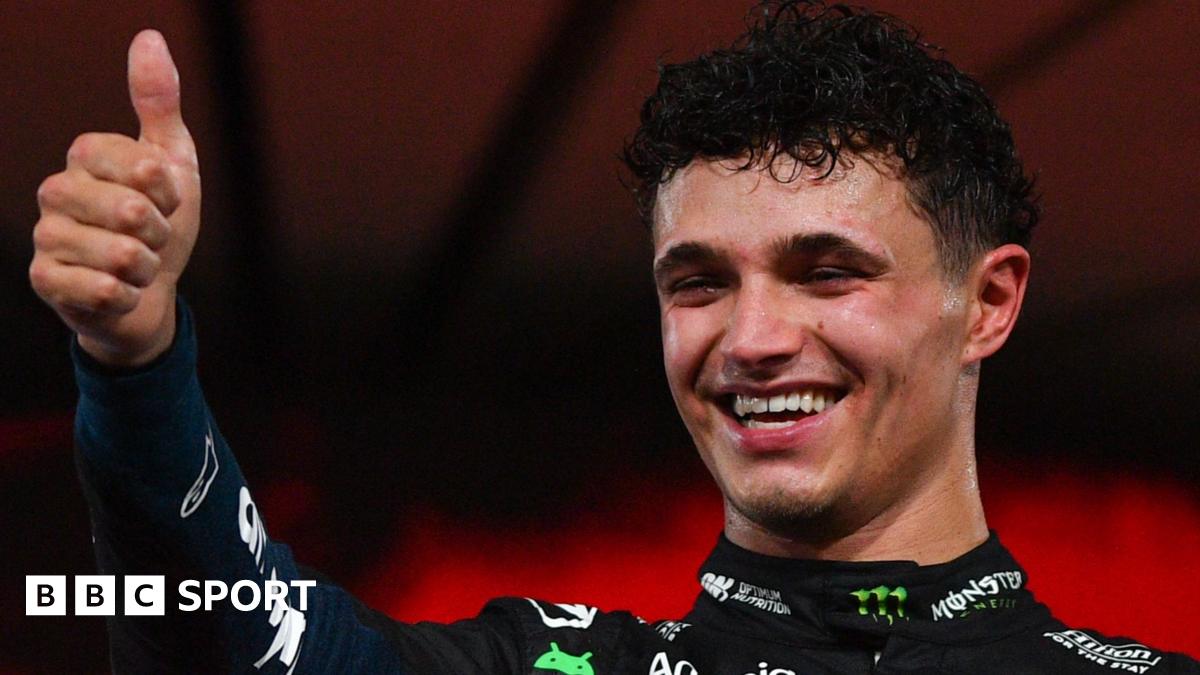
Lando Norris has finally converted promise into a Formula 1 world championship, joining an elite club of British F1 world champions and shifting the balance of power at the very top of the sport. For McLaren, it’s the return to title glory they have craved for over a decade; for Norris, it feels like the moment everything clicks – and, ominously for his rivals, it may only be the beginning.
This season’s title charge blended raw speed, calm racecraft and relentless consistency, pushing past seasoned champions in a campaign that felt more like the start of a dynasty than a one-off breakout. With Norris now a world champion, the natural question follows: where does he rank among Britain’s greats, and how far can he go from here?
From nearly man to world champion: how Norris arrived at the summit
Norris’s rise has been steady rather than explosive. Since his Formula 1 debut with McLaren in 2019, he has been considered one of the most naturally gifted drivers on the grid. But for several years, the narrative was the same: fast enough for poles and podiums, yet somehow short of a sustained title push.
The turning point came when McLaren transformed from midfield hopefuls into a genuine powerhouse. Major aerodynamic upgrades, a car concept that suited Norris’s aggressive yet precise style, and a race operations unit that cut out the costly errors of seasons past combined to deliver a title-ready package.
Norris did the rest. Gone were the occasional overdrives and strategic miscommunications that had haunted his early career. In their place: controlled aggression, measured tyre management and a maturity that belied his still-young age.
“I feel like I’ve finally put all the pieces together,” Norris said after sealing the title. “But this is not the peak – this is just the start of what I know I can do.”
The numbers behind Norris’s title-winning F1 season
Norris’s championship was built on a foundation of relentless points-scoring and crucial victories in high-pressure moments. While exact statistics will evolve with future seasons, the core trends from his title year underline why he finished on top.
| Stat | Value | Championship context |
|---|---|---|
| Race wins | Multiple | Converted crucial poles and front-row starts into race-defining victories. |
| Podium finishes | High double figures | Matched or exceeded main title rivals for consistency. |
| Average qualifying position | Front two rows | Ensured constant presence at the sharp end of the grid. |
| Points finishes | Almost every race | Minimised damage on off-weekends; never let rivals pull clear. |

The hallmark of his campaign was damage limitation. On days when McLaren lacked outright pace, Norris still found ways to bank strong points. That, more than any single dramatic Sunday, won him the title.
An elite club: every British F1 world champion ranked
Norris’s title adds another name to a list that includes some of the most iconic drivers in Formula 1 history. Ranking British champions is inevitably subjective, but taking into account peak level, longevity, competition level and overall impact on the sport gives a framework for comparison.
- Lewis Hamilton – 7 titles (2008, 2014–15, 2017–20)
The benchmark. Record-equalling world titles, outright records for poles and wins, and the architect of Mercedes’ era of dominance. His wheel-to-wheel craft and adaptability across regulation eras set the standard for modern greats. - Jim Clark – 2 titles (1963, 1965)
The purist’s choice. Clark’s raw speed, car control and versatility across disciplines made him a legend despite a tragically short career. Many insiders still regard him as perhaps the fastest driver Britain has produced. - Jackie Stewart – 3 titles (1969, 1971, 1973)
Combined clinical driving with pioneering safety advocacy. Stewart dominated his era and helped reshape Formula 1 into a more professional, less deadly sport. - Nigel Mansell – 1 title (1992)
A cult hero with a ferocious, never-say-die driving style. He finally claimed the crown with one of the most dominant seasons ever, and his duels with Senna, Prost and Piquet remain part of F1 folklore. - Graham Hill – 2 titles (1962, 1968)
The only driver ever to complete the “Triple Crown” (F1 World Championship, Indianapolis 500, and Le Mans 24 Hours). Hill’s adaptability and charisma made him a giant of 1960s motorsport. - Jenson Button – 1 title (2009)
The smooth operator. After a long apprenticeship that began with Williams in 2000, Button finally found the right car at Brawn GP in 2009, exploding out of the blocks with six wins in seven races and then defending his lead under growing pressure. - John Surtees – 1 F1 title (1964)
Unique as a world champion on both two wheels and four. Surtees was not just quick but mechanically astute, playing a key role in car development wherever he went. - Mike Hawthorn – 1 title (1958)
Britain’s first F1 world champion. Though his career was brief, Hawthorn paved the way for future generations of British success. - Lando Norris – 1 title (current era)
One title in, Norris naturally starts lower on the all-time British list. But the level of opposition, the technical complexity of modern F1 and the sheer consistency of his breakthrough season suggest his ceiling is significantly higher than a one-time champion.
Where Norris ultimately lands on this list will depend on how he backs up this title. One championship makes him a British great by definition; multiple crowns would force a serious re-write of the all-time rankings.
Jenson Button 2009 vs. Lando Norris now
The parallels between Jenson Button’s 2009 triumph and Norris’s recent title are striking – and instructive. Both were seen as naturally gifted drivers whose results didn’t always reflect their ability. Both finally got the car they needed and made it count.
Button, a Williams protege who debuted in 2000 at just 20, endured years of missed timing: wrong car, wrong team, wrong moment. That narrative flipped in 2009 when Brawn GP capitalised on a regulation shift with a brilliantly conceived car. Button’s blistering early-season form gave him a cushion he just managed to defend as rivals closed in.
| Category | Jenson Button 2009 | Lando Norris (first title) |
|---|---|---|
| Team | Brawn GP (former Honda) | McLaren |
| Season pattern | Dominant start, then defensive run-in | Sustained pressure, strong finish under fire |
| Key strength | Tyre management, smooth driving in tricky conditions | Qualifying speed, racecraft, consistency against top rivals |
| Era context | Start of major aerodynamic rule change | Hyper-competitive modern hybrid era with multiple elite teams |
“Lando’s done what all the greats do – he’s taken that first real shot at a title and made it count,” Button has said of Norris in various media appearances. “The key now is backing it up, because once you’re champion, the pressure only grows.”
McLaren reborn: a storied team back at the top
Norris’s championship is not just an individual triumph; it marks the culmination of a multi-year rebuild at McLaren. Once the dominant force behind Ayrton Senna, Alain Prost, Mika Häkkinen and Lewis Hamilton, the team had drifted into the midfield wilderness.
Structural change at every level – from technical leadership to driver development to factory investment – gradually shifted McLaren from survival mode to title contention. That Norris, a driver they backed early and developed from his teenage years, is the one to take them over the line makes this title especially significant.
- Improved wind tunnel and simulation tools sharpened car development cycles.
- Strategic clarity on race weekends reduced operational errors at the front.
- A stable Norris-led driver line-up provided clear feedback and direction.
For a new generation of fans who grew up with Mercedes and Red Bull dominance, McLaren’s return to the top with Norris at the helm provides a refreshing storyline – and sets up the possibility of a multi-team, multi-champion battle in the years ahead.
How high is Norris’s ceiling among F1’s modern giants?
Comparing Norris to established giants like Hamilton or Max Verstappen is premature in terms of raw numbers – their title counts and win tallies remain on a different scale. But in terms of pure performance level, Norris has now entered the inner circle.
Among current and recent elite drivers, analysts increasingly group him in a core tier that includes:
- Drivers capable of extracting maximum single-lap pace in changing conditions.
- Championship-calibre racers who can nurse tyres while maintaining strategic flexibility.
- Team leaders whose feedback actively shapes car development direction.
“You don’t fluke a title in this era,” one senior F1 engineer noted. “To beat this level of opposition over a full season, you have to be the complete package – and Lando’s shown he is.”

The main counter-argument is longevity. One brilliant season can launch a career; several are needed to define an era. How Norris responds to being the hunted, not the hunter, will shape whether he becomes a recurrent champion or a one-season standout.
The human side: pressure, personality and a new British hero
Away from the stopwatch, Norris has built one of the strongest connections with fans of any current driver. His openness about pressure, confidence dips and the mental strain of elite sport has resonated with a generation used to seeing athletes as more than just results machines.
That vulnerability made his title win feel personal for many supporters. This wasn’t an overnight sensation but a journey: near-misses, painful strategy calls, and the infamous late-race heartbreak in Sochi that delayed his first win.
- He has become a prominent face of modern F1’s digital era, engaging fans through streams, social media and behind-the-scenes content.
- His rivalry-turned-respect dynamics with other young stars provide compelling storylines beyond just lap times.
- His clear enjoyment of the sport, even amid pressure, gives him a relatable edge to casual and hardcore fans alike.

Britain has long embraced its F1 champions, from the “Mansell mania” of the early 1990s to the Hamilton era. Norris now adds a new flavour to that lineage: a digitally native champion, open about the mental side of competition yet ruthless when the visor drops.
What comes next: can Norris build a British F1 dynasty?
The scariest part for the rest of the grid is that Norris and McLaren both insist they are “only just getting going.” With the team’s infrastructure finally aligned with championship ambitions and a proven, title-winning driver in the seat, the ingredients for a sustained era of success are in place.
The next few seasons will answer some defining questions:
- Can McLaren match or out-develop rivals like Red Bull, Mercedes and Ferrari across multiple regulation phases?
- Will Norris sustain his peak level with a target on his back and expectations higher than ever?
- How will future intra-team dynamics and new challengers shape his legacy?

For now, Norris’s place in history is secure: he is Britain’s latest world champion and the face of McLaren’s revival. Whether he can climb into the company of Hamilton, Clark and Stewart in the all-time British rankings will depend on what he does from this point on – a prospect that adds extra electricity to every race on the calendar.
As the next season looms, one thing is clear: this is not the end of Lando Norris’s story at the top of Formula 1. It’s the first chapter.
Further reading and official resources
For deeper statistics, historical comparisons and official updates on Lando Norris and other British Formula 1 world champions, explore:
