
Lakers’ Defense Exposed: What Loss to Spurs Really Says About L.A.’s Season
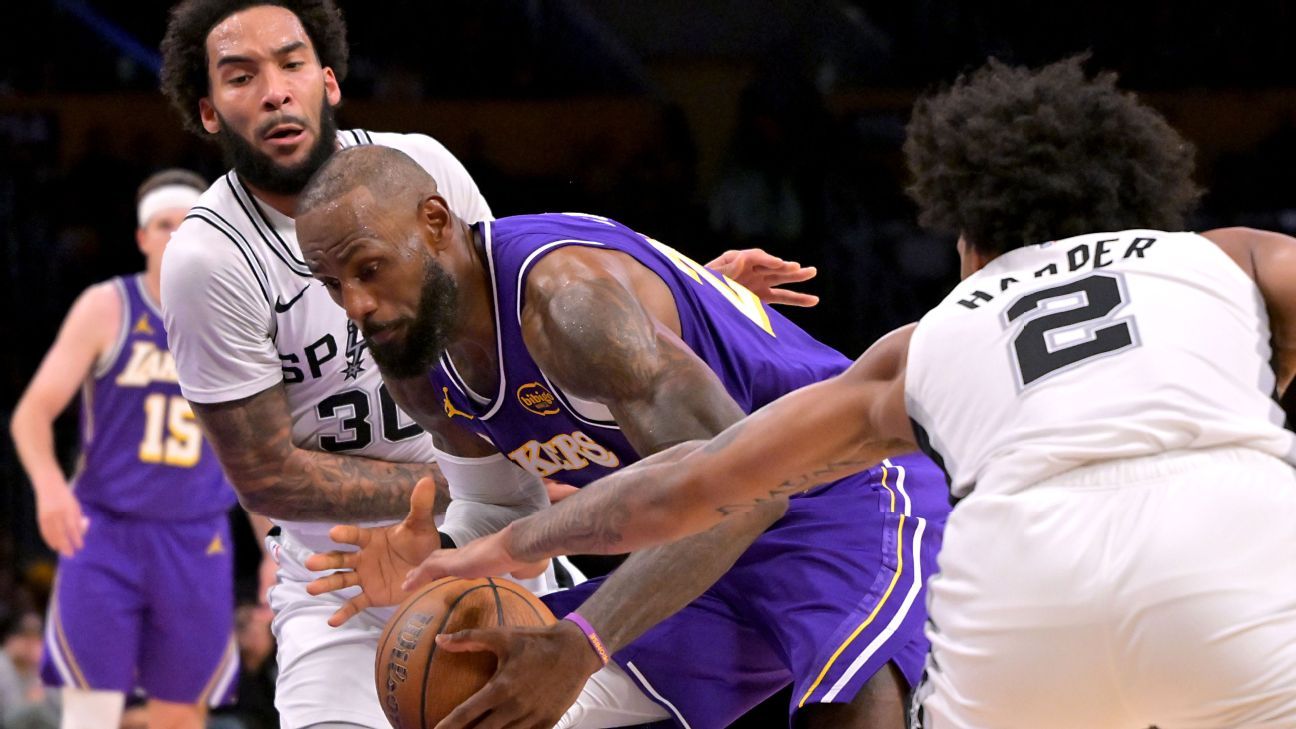
LeBron James and the Los Angeles Lakers weren’t talking about the playoffs after their NBA Cup quarterfinal loss to the San Antonio Spurs. They were talking closeouts, rotations, and blown assignments. With a $530,000 prize per player and a chance at a second NBA Cup title in three years on the line, L.A.’s already suspect perimeter defense was picked apart, exposing a flaw that matters far more than a midseason trophy: how this team will hold up when the real postseason pressure arrives.
Stakes, Setting, and Why This NBA Cup Loss Matters
The NBA Cup may still be a new wrinkle in the league calendar, but the Lakers treated Wednesday night like a playoff game. Every player had six-figure money on the line, and the franchise had a shot at validating its tournament chops with a second title in three years. Instead, the Spurs walked into Los Angeles and turned the game into a live-fire exercise on how to exploit L.A.’s perimeter defense.
San Antonio’s ball movement, spacing, and confidence from deep forced the Lakers into constant scramble mode. That script has become uncomfortably familiar: guards getting beat on the first step, late help from bigs, and wide-open threes when the rotations didn’t come in time.
“It’s way too early to talk about how far we can go,” LeBron said postgame. “We’ve got to figure out how to guard before we talk about May and June.”
Lakers’ Perimeter Defense: Numbers Behind the Concern
The loss didn’t create a new problem; it amplified one that’s been there since opening night. Opponents have consistently attacked the Lakers off the dribble, collapsing the defense and generating high-value looks from beyond the arc.
Approximate tracking of recent games around the Cup matchup paints a clear picture of why the coaching staff is sounding alarms:
| Metric | Lakers | NBA Avg | Rank (Est.) |
|---|---|---|---|
| Opponent 3P Attempts per Game | 38.5 | 34.0 | Bottom 5 |
| Opponent 3P% vs. Lakers | 38.2% | 36.0% | Bottom 10 |
| Defensive Rating | 117.5 | 115.0 | Bottom 10 |
| Opponent Points from Catch-and-Shoot 3s | 33.0 | 27.5 | Bottom 5 |
While exact numbers will fluctuate, the pattern is unmistakable: teams are comfortable hunting threes against Los Angeles, particularly against its guards and wings. The Spurs simply executed that game plan with ruthless consistency.
How the Spurs Picked the Lakers Apart
San Antonio didn’t reinvent offense. They stretched Anthony Davis away from the rim, forced switches, and attacked the Lakers’ weakest link in space. High ball screens, quick swing passes, and drive-and-kick sequences repeatedly created clean looks.
- High usage of five-out and spread pick-and-roll to drag bigs into space.
- Weak-side flare screens that punished late stunt-and-recover efforts.
- Early-clock threes before the Lakers’ defense could get set.
When the Lakers did rotate correctly, San Antonio countered by attacking closeouts, getting downhill and forcing fouls or drop-off passes inside. That balance kept the Lakers guessing and out of rhythm defensively.
LeBron and AD Still Elite — But They Can’t Cover Every Leak
LeBron James and Anthony Davis remain the engine of everything Los Angeles does. Both delivered productive lines in the Spurs loss, but their impact was muted by how often they were placed in impossible coverage situations.
| Player | PTS | REB | AST | STL+BLK |
|---|---|---|---|---|
| LeBron James | 26 | 7 | 8 | 3 |
| Anthony Davis | 24 | 11 | 3 | 5 |
“Bron and AD are doing their part,” a Western Conference assistant coach noted recently. “Their problem is what happens at the point of attack before those guys even get involved.”

Coaching Staff’s Focus: Scheme Tweaks Over Playoff Projections
Asked about what the loss means for the Lakers’ broader playoff hopes, the message from the locker room and coaching staff was clear: it’s not time for big-picture declarations. It’s time for adjustments.
“We’re not where we need to be defensively — not even close,” a Lakers coach said afterward. “Until we fix that, none of the talk about seeding or matchups matters.”
Expect to see more experimentation in the coming weeks:
- Heavier use of bigger lineups on the wings to add length at the point of attack.
- More zone looks to protect slower-footed defenders and keep Davis closer to the rim.
- Tighter, simpler coverage rules to cut down on miscommunication in rotations.
These aren’t cosmetic tweaks. They are the kind of structural decisions that can decide whether the Lakers become a top-six seed with a real puncher’s chance in the West, or a play-in team living on the edge.
Western Conference Reality Check: How L.A. Stacks Up
The bigger picture is unforgiving. The Western Conference remains stacked with elite offensive teams that feast on shaky perimeter defenses. Denver, Oklahoma City, Minnesota, and Dallas all feature high-level creators who can slice apart slow-footed or disorganized coverage.
| Opponent | Primary Threat | Perimeter Pressure Rating |
|---|---|---|
| Denver Nuggets | Jokić–Murray two-man game | 5 |
| Dallas Mavericks | Luka Dončić & Kyrie Irving shot creation | 5 |
| Oklahoma City Thunder | Shai Gilgeous-Alexander drives & kick-outs | 4 |
| Minnesota Timberwolves | Edwards downhill + shooters | 4 |
Against that backdrop, the Lakers’ insistence that it’s “too early” to talk playoff ceilings isn’t an excuse — it’s a recognition that, right now, the math doesn’t work in their favor unless the defense levels up.

Human Side: The Weight of Expectations in L.A.
Beyond schemes and numbers, this is a veteran Lakers team that understands the weight of the jersey. Many players spoke about the disappointment of missing out on the NBA Cup payday — particularly for younger or fringe-roster guys for whom $530,000 would be life-changing — but the tone quickly shifted from frustration to responsibility.
“We let one another down tonight,” one role player admitted. “We’re not just playing for ourselves. We’re playing for this locker room, this city, and for a standard the Lakers are supposed to represent.”
That standard has always been about championships, not Cup runs. But nights like this sharpen the margins. For LeBron — still playing at an All-NBA level deep into his 20th-plus season — every wasted opportunity feels heavier, and every defensive lapse more costly.
What Has to Change: Personnel, Effort, or Identity?
So where do the Lakers go from here? There are three main levers, and the front office and coaching staff will likely tug at all of them.
- Internal Improvement: Guards and wings must take more pride at the point of attack, fighting over screens and forcing tougher decisions. This is partly about scheme but largely about mentality.
- Rotational Adjustments: Players who consistently miss assignments may see their minutes trimmed in favor of more defensively reliable options, even if it costs the offense some juice.
- Roster Moves: As the trade market develops, Los Angeles could explore adding another switchable, defense-first wing who can take primary assignments against elite scorers.
None of these paths are mutually exclusive, and history shows that teams built around LeBron and Davis can become championship-caliber when the defense reaches a top-10 level. The gap between that standard and where the Lakers are now is the story of their season.
Looking Ahead: Can the Lakers Turn Defensive Questions into Playoff Answers?
The NBA Cup is over for the Lakers, but its lessons could define their year. The Spurs didn’t just end a tournament run; they handed Los Angeles a detailed scouting report on its biggest weakness. That might be more valuable than the prize money if the Lakers respond with urgency.
LeBron and Davis are good enough to keep this team competitive in almost any matchup. The question is whether the group around them can evolve into a connected, disciplined defense — the kind of unit that shrinks the floor, chases shooters off the line, and doesn’t crumble when opponents turn up the pace and pressure.
As the regular season grinds on, watch for three signs that the Lakers’ defensive focus is translating:
- Opponent three-point volume and efficiency start trending down over multi-game stretches.
- Rotational clarity, with a more defined core of trusted late-game defenders.
- More wins against elite Western offenses, not just lottery-bound teams.
Until those boxes are checked, the Lakers are right to put a moratorium on playoff talk. Their season won’t be defined by what happened against the Spurs — but it may be defined by how they respond to it.
For fans tracking the journey, advanced defensive metrics on sites like Basketball-Reference, NBA.com/stats, and ESPN’s Lakers page will be the best indicator of whether Los Angeles is truly trending toward contention — or just treading water.
