
JWST’s Alien Skies: How Webb Is Reading Exoplanet Atmospheres for Signs of Life
From ultra‑hot Jupiters to possibly temperate rocky planets around red dwarfs, JWST’s early results are igniting debates about clouds, hazes, exotic chemistry, and whether any of these alien skies might carry the fingerprints of life.
Since achieving full science operations, the James Webb Space Telescope (JWST) has opened an era in which the atmospheres of distant exoplanets can be studied with a level of detail once reserved for planets in our own Solar System. Its infrared vision allows astronomers to dissect the light filtering through or emitted by alien worlds, revealing the presence of molecules such as water vapor (H₂O), carbon dioxide (CO₂), methane (CH₄), carbon monoxide (CO), and a growing list of more complex species. Just as importantly, JWST is beginning to test frameworks for detecting biosignatures—chemical combinations that, in the right planetary context, could hint at biological activity.
On social media platforms, each new JWST spectrum rapidly becomes a viral infographic, while preprints about potential biosignature gases spark intense commentary from astronomers and astrobiologists. Behind the headlines lies a careful, methodical scientific enterprise, where every claimed molecule must survive layers of statistical scrutiny, instrumental calibration, and theoretical modeling.
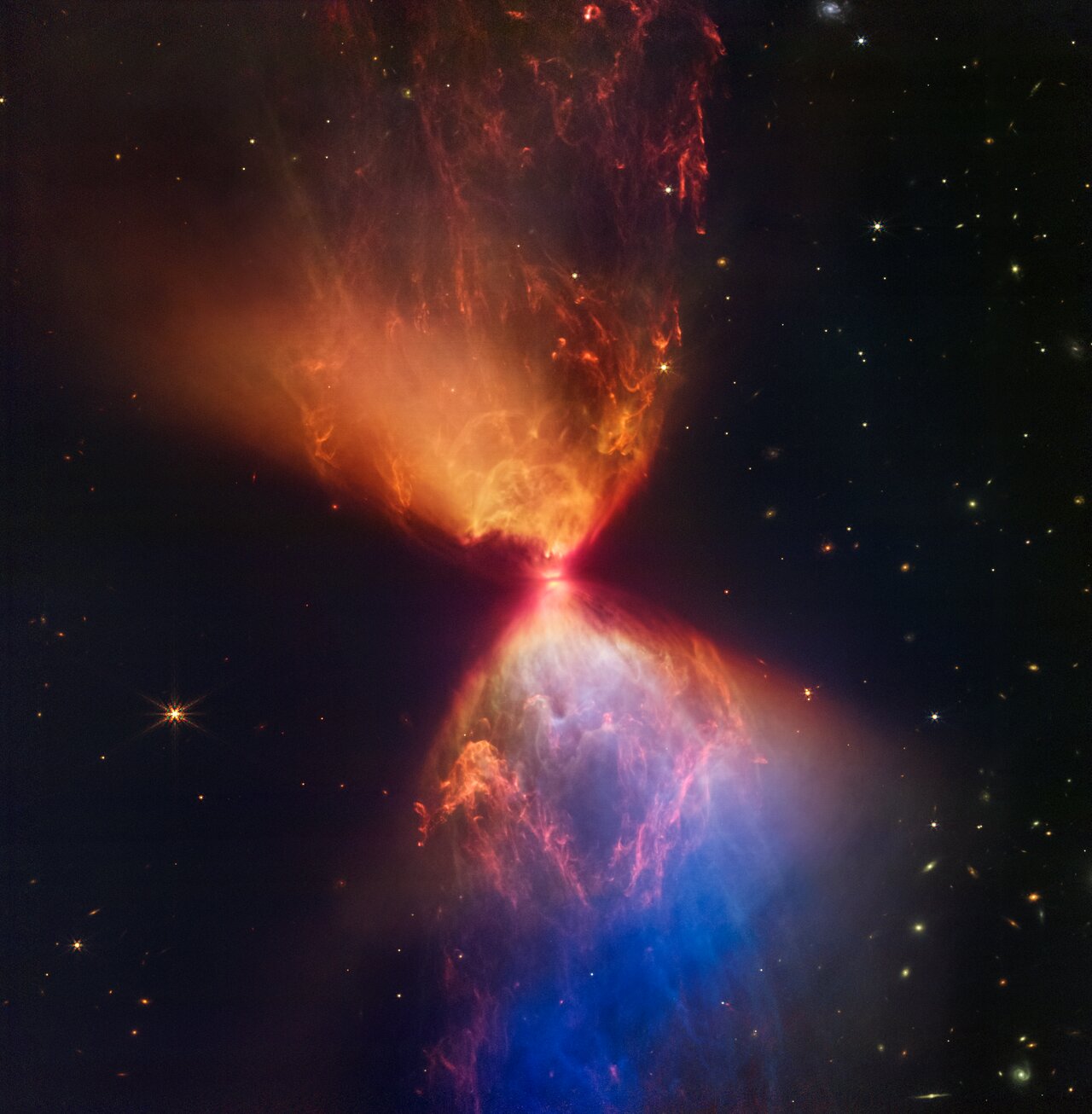
Mission Overview: JWST as an Exoplanet Atmosphere Observatory
JWST was designed as a general‑purpose astrophysics mission, but its architecture is nearly perfect for exoplanet spectroscopy. Its 6.5‑meter segmented mirror and cryogenically cooled instruments offer high sensitivity in the near‑ and mid‑infrared, where many atmospheric molecules exhibit strong spectral features. The observatory orbits around the Sun–Earth L2 point, keeping Earth and the Sun behind a massive sunshield that allows exquisitely stable and cold observing conditions.
Exoplanet studies are now one of JWST’s scientific pillars. Major Guaranteed Time Observation (GTO) teams and competitive General Observer (GO) programs focus heavily on:
- Characterizing atmospheres of hot Jupiters and warm Neptunes.
- Probing potentially rocky, temperate planets around red dwarfs (M dwarfs).
- Comparing atmospheric composition with host‑star properties to test planet formation models.
- Searching for chemical disequilibria that might, in some contexts, hint at biological processes.
“Webb is allowing us to read the atmospheres of planets dozens or hundreds of light‑years away as if they were right next door.” — Dr. Knicole Colón, NASA JWST Deputy Project Scientist for Exoplanet Science
Technology and Methods: How JWST Reads Alien Skies
JWST’s power for exoplanet science lies not only in its aperture but also in the specialized instruments and observing techniques used. The core methodologies are transit spectroscopy, eclipse (emission) spectroscopy, and in some cases, phase‑curve observations.
Transit Spectroscopy
During a transit, a planet passes in front of its star and a tiny fraction of the starlight filters through the planet’s atmospheric limb. At wavelengths where atmospheric molecules absorb light, the planet appears slightly larger. By comparing the star’s spectrum in and out of transit, JWST can infer the planet’s transmission spectrum.
- Observe the star continuously before, during, and after the transit.
- Measure the wavelength‑dependent transit depth, ΔF(λ).
- Subtract stellar and instrumental systematics using calibration stars and sophisticated detrending algorithms.
- Fit atmospheric models to infer composition, temperature, and cloud properties.
Eclipse and Emission Spectroscopy
In a secondary eclipse, the planet passes behind the star. Comparing the star+planet signal just before eclipse with the star alone during eclipse isolates the planet’s own thermal emission and reflected light.
- Thermal emission probes the dayside temperature structure and molecular emission features.
- Reflected light can reveal cloud decks, albedo, and sometimes scattering hazes.
Key JWST Instruments for Exoplanets
Different instruments target complementary wavelength ranges:
- NIRISS (Near‑Infrared Imager and Slitless Spectrograph) — excellent for transmission spectroscopy of transiting exoplanets.
- NIRSpec — high sensitivity with multiple modes (including bright‑object time‑series), ideal for water, CO₂, CO, and CH₄ in the 0.6–5 μm range.
- NIRCam — imaging and some spectroscopic capability, useful for phase curves and certain transit modes.
- MIRI (Mid‑Infrared Instrument) — extends coverage to 5–28 μm, probing CO₂, O₃ (in some scenarios), and continuum emission from warm atmospheres.
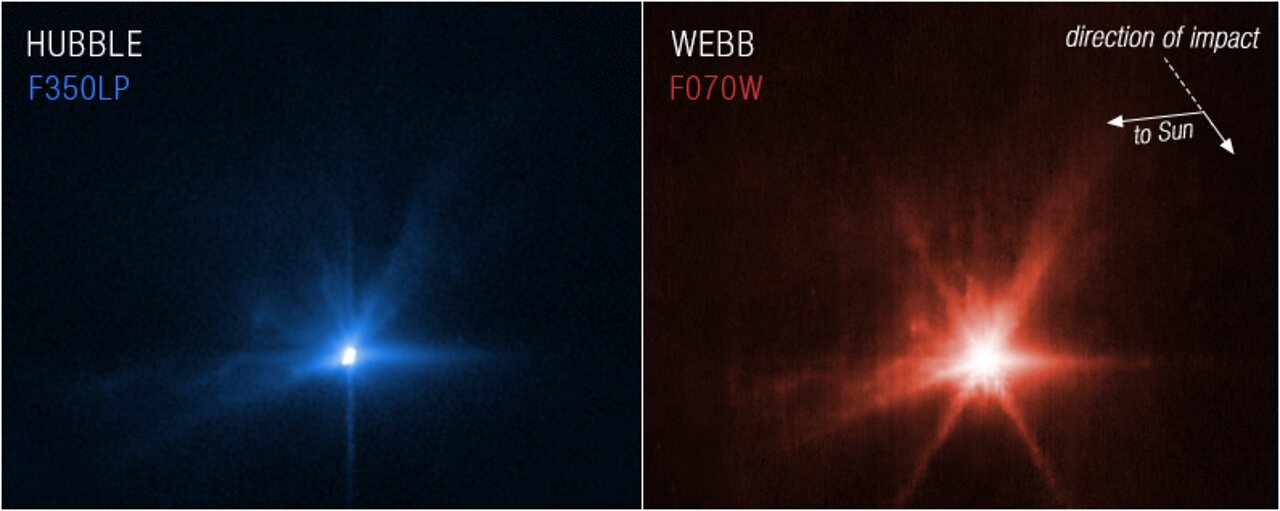
What JWST’s Spectra Reveal: Molecules, Clouds, and Tentative Biosignatures
By late 2025, JWST has delivered a growing catalog of high‑precision atmospheric spectra across a diversity of worlds. Each spectrum is a complex interplay of molecular absorption, scattering, and thermal emission. Interpreting them requires sophisticated retrieval algorithms—often Bayesian frameworks that explore high‑dimensional parameter spaces.
Detected and Constrained Molecules
Repeatedly reported species in JWST exoplanet spectra include:
- H₂O (water vapor) — ubiquitous in many hot and warm planets; strong features in near‑IR.
- CO₂ — clearly detected in several hot Jupiters and sub‑Neptunes, especially via MIRI.
- CO — probes deeper, hotter atmospheric layers and C/O ratios.
- CH₄ — more abundant in cooler atmospheres; interesting for carbon chemistry and potential disequilibrium.
- SO₂ and photochemical products — signatures of atmospheric chemistry driven by stellar UV.
Clouds, Hazes, and Muted Features
Many exoplanets observed by JWST show muted or flattened spectral features, indicating:
- High‑altitude condensate clouds (e.g., silicates, metal oxides) on hot Jupiters.
- Photochemical hazes reminiscent of Titan’s orange smog, produced by UV‑driven reactions.
- Patchy cloud coverage leading to wavelength‑dependent masking of absorption bands.
“Clouds are not just a nuisance; they are telling us about vertical mixing, condensation physics, and the climate of these worlds.” — Dr. Laura Kreidberg, Max Planck Institute for Astronomy
Tentative Biosignature Discussions
A handful of high‑profile JWST studies and preprints have discussed possible biosignature‑related molecules, often with great caution. Candidates have included:
- Certain organosulfur compounds (e.g., dimethyl sulfide, DMS) in the context of sub‑Neptune atmospheres.
- Combinations of gases (e.g., CH₄ + CO₂ without CO) that could be difficult to sustain in equilibrium without substantial fluxes from the surface or interior.
In nearly every case, subsequent analyses emphasize that:
- The candidate signal is low‑significance and sensitive to data reduction choices.
- Abiotic pathways (geochemistry, photochemistry, outgassing) must be exhaustively explored.
- Robust claims require multi‑wavelength confirmation and consistent atmospheric context.
Astrobiologists are converging on the idea that no single molecule will ever constitute a “smoking gun.” Instead, biosignature assessment involves:
- Global disequilibrium metrics (e.g., excess CH₄ and O₂ together).
- Understanding stellar irradiation, age, and activity.
- Planetary bulk composition, surface conditions, and geological cycles.
Diversity of Worlds: From Ultra‑Hot Jupiters to Potentially Habitable Planets
JWST’s target list captures an extraordinary variety of exoplanet types. This diversity is central to understanding how planetary systems form and evolve, and which environments might support life.
Ultra‑Hot and Hot Jupiters
Ultra‑hot Jupiters (dayside temperatures > 2000 K) provide bright, high signal‑to‑noise spectra. JWST has observed:
- Thermal inversions driven by strong absorbers like TiO/VO or metal hydrides.
- Evidence of day‑night heat redistribution and strong winds from phase‑curve data.
- Atmospheric metallicities and C/O ratios that sometimes diverge from host‑star values, hinting at formation beyond specific ice lines before migration.
Warm Neptunes and Sub‑Neptunes
Planets between Earth and Neptune size—often absent in the Solar System—are a major JWST focus:
- Some exhibit H₂‑rich envelopes with water, CO₂, and other volatiles.
- Others may have high‑metallicity atmospheres or be enshrouded in thick hazes.
- Whether these planets are “mini‑Neptunes” with deep gas layers or “water worlds” with high‑pressure oceans remains an open question.
Super‑Earths and Rocky, Temperate Worlds
JWST is only beginning to push into the more difficult regime of rocky planets in or near the habitable zone, especially around M dwarfs where transits are deeper and more frequent. For such planets, the main questions are:
- Do they retain atmospheres under strong stellar winds and flares?
- Are those atmospheres thin, tenuous, or Venus‑like and dense?
- Is there any sign of liquid‑water‑compatible conditions on the surface?
Even null detections—ruling out thick atmospheres on particular planets—provide crucial constraints on the long‑term habitability of worlds around active red dwarfs.

Scientific Significance: Planet Formation, Climate Physics, and the Path to Life Detection
JWST’s exoplanet spectroscopy is not just a cataloging exercise. It directly informs several fundamental questions in planetary science and astrobiology.
Planet Formation and Migration
By comparing atmospheric composition with host‑star chemistry, JWST can test where planets likely formed within the protoplanetary disk:
- Planets forming beyond the water ice line should accrete more oxygen‑rich material, affecting C/O ratios.
- High metallicity atmospheres may indicate substantial solid accretion after gas‑disk dispersal.
- Signatures of refractory elements or unusual C/O values may hint at exotic migration histories.
Atmospheric Dynamics and Climate Physics
JWST phase‑curve and eclipse observations yield:
- Longitudinal temperature maps that test 3D general circulation models (GCMs).
- Evidence for supersonic equatorial jets and asymmetric cloud coverage.
- Constraints on heat redistribution efficiency between day and night sides.
Biosignature Frameworks and “False Positives”
The quest for biosignatures is fundamentally about discriminating biological from abiotic processes. JWST’s contribution is twofold:
- Providing high‑precision spectra of planets where pre‑JWST data were ambiguous.
- Constraining abiotic baselines—the range of atmospheric states that can arise without life.
Frameworks developed by teams such as NASA’s NExSS (Nexus for Exoplanet System Science) emphasize:
- Multi‑gas, context‑rich interpretations over single‑molecule claims.
- Robust modeling of stellar activity, atmospheric escape, and photochemistry.
- Use of Bayesian model comparison to weigh biotic vs. abiotic hypotheses.
“Life detection is a problem in systems science. You cannot interpret a gas in isolation; you must interpret a planet.” — Dr. Victoria Meadows, University of Washington / Virtual Planetary Laboratory
Key Milestones in JWST Exoplanet Atmosphere Science (Through 2025)
While individual results continue to emerge, several types of milestones have already shaped the field and public conversation:
First Definitive CO₂ Detections on Exoplanets
Early JWST observations of hot Jupiters yielded high‑confidence CO₂ detections, validating the observatory’s predictive performance and calibration. These spectra showed the characteristic 4.3 μm CO₂ feature with unprecedented clarity, opening the door to detailed carbon and oxygen budget studies.
High‑Precision Phase Curves
Full‑orbit phase curve programs have mapped temperature distributions across tidally locked planets, constraining models of:
- Atmospheric drag and magnetic effects.
- Cloud formation at terminators and nightsides.
- Energy transport in highly irradiated regimes far from Solar System analogs.
First Constraints on Atmospheres of Small, Cool Planets
JWST has begun delivering transit spectra for sub‑Earth‑to‑super‑Earth‑size planets around nearby M dwarfs. Even when features are absent or subtle, these data can rule out:
- Very thick, hydrogen‑rich envelopes.
- Certain high‑opacity scenarios inconsistent with observed transit depths.
These constraints inform whether such planets are more likely to be bare rocks, Venus analogs, or potentially habitable worlds.
Public Engagement Milestones
Milestones are not only scientific but cultural:
- Spectra of exoplanet atmospheres frequently appear in NASA/ESA press releases, generating millions of impressions on platforms like X, TikTok, and YouTube.
- Educators and science communicators create visual explainers that show how individual spectral lines map to molecular fingerprints, helping the public understand what “detection” really means.
Challenges, Controversies, and Limitations
Despite its remarkable capabilities, JWST faces important technical and conceptual challenges that shape how exoplanet results—especially potential biosignatures—must be interpreted.
Instrument Systematics and Calibration
High‑precision exoplanet spectroscopy pushes JWST instruments to their limits. Researchers must contend with:
- Detector non‑linearity and persistence effects for bright stars.
- Intra‑pixel sensitivity variations and pointing jitter.
- Time‑dependent instrumental drifts over multi‑hour or multi‑visit observations.
Independent teams often re‑reduce the same datasets with different pipelines, occasionally reaching different conclusions about marginal features. This is healthy scientific practice but can lead to confusing public narratives when early claims are revised.
Degeneracies in Atmospheric Retrievals
Converting spectra into atmospheric parameters is an inverse problem. Different combinations of composition, temperature structure, and clouds can produce similar spectra, leading to:
- Degeneracies between, for example, high metallicity and thick clouds.
- Sensitivity to assumed priors and model complexity.
- Potential for over‑interpretation when spectral coverage is limited.
Biosignature “Hype” vs. Scientific Caution
Any mention of possible biosignatures rapidly captures public imagination. Yet:
- Most signals are below the standard 5‑sigma threshold for discovery.
- Complex organosulfur or organic molecules often lie near the limits of JWST sensitivity and are prone to false positives from noise or systematics.
- Astrobiologists emphasize the need for multi‑mission confirmation, including future observatories like the Habitable Worlds Observatory (HWO) and large ground‑based extremely large telescopes (ELTs).
“Extraordinary claims about life require extraordinary evidence — and right now, we are still building the toolkit to even define what that evidence should look like.” — Dr. Natalie Batalha, UC Santa Cruz
Tools, Data, and How Enthusiasts Can Learn More
JWST’s exoplanet data are made publicly available through archives such as MAST (Mikulski Archive for Space Telescopes). This openness has enabled rapid community engagement, independent re‑analysis, and educational projects.
Open Data and Community Software
- MAST Archive — official source for JWST calibrated and raw datasets.
- ExoTiC, Eureka!, FIREFLy and similar pipelines — community‑developed tools for time‑series exoplanet spectroscopy.
- Atmospheric retrieval codes like TauREx, CHIMERA, PLATON, and petitRADTRANS used to interpret spectra.
For Students and Educated Non‑Specialists
If you want to understand JWST exoplanet results more deeply, you might:
- Follow expert communicators such as PBS Space Time and Dr Becky on YouTube for spectral explainers.
- Read popular‑level books on exoplanets and life such as “Exoplanets: Diamond Worlds, Super Earths, Pulsar Planets, and the New Search for Life Beyond Our Solar System”.
- Explore NASA’s Exoplanet Exploration portal and ESA’s Webb science pages.
For hands‑on learners, consumer‑grade telescopes will not detect exoplanets directly, but they are excellent gateways into observational astronomy. Products like the Celestron Inspire 100AZ Refractor Telescope let you practice sky navigation, imaging, and photometry techniques that underpin professional exoplanet research.
Future Outlook: Beyond JWST and Toward Definitive Biosignatures
JWST is a pathfinder for the next generation of life‑detection missions. Over the rest of the 2020s and into the 2030s, its results will guide:
- Target selection for the proposed Habitable Worlds Observatory, optimized for directly imaging Earth‑like planets around Sun‑like stars.
- Instrument and survey strategies for extremely large ground‑based telescopes such as the ELT, TMT, and GMT.
- Design of astrobiology‑focused missions that may combine transit, direct imaging, and even starshade concepts.
JWST will likely not produce a universally accepted detection of extraterrestrial life on its own. Instead, it is:
- Mapping the chemical diversity of exoplanet atmospheres.
- Testing and refining biosignature frameworks on real data.
- Identifying the most promising candidate worlds—“high‑priority targets”—for deeper characterization by future observatories.

The synergy between cosmology and exoplanet science—using the same telescope to study both the first galaxies and alien skies—makes JWST uniquely influential in shaping how we view our place in the universe.
Conclusion: Reading the Chemical Stories of Alien Worlds
JWST’s exoplanet program is revealing that planetary atmospheres are incredibly diverse and often surprising. Some giant planets appear metal‑rich and cloud‑enshrouded; others show clear skies that expose deep atmospheric layers. Smaller worlds hover at the boundary between gaseous and rocky, challenging our categories of “super‑Earths” and “mini‑Neptunes.”
For the search for life, JWST’s greatest contribution may be its discipline: the insistence on statistical rigor, multi‑wavelength confirmation, and a systems‑level view of each planet. It is teaching astronomers how to responsibly interpret subtle chemical clues in environments far more exotic than Earth, preparing the field for the day when a truly compelling biosignature emerges.
As data accumulate through 2025 and beyond, JWST will continue to dominate conversations across astronomy, astrobiology, and public science media. Even if it never finds unambiguous evidence for life, it is already reshaping the scientific foundations needed to recognize such evidence when it finally appears.
Additional Resources and Further Reading
To explore JWST’s exoplanet atmosphere science and biosignature frameworks in more depth, consider the following resources:
- JWST Science Results – Official Webb Telescope Site
- NASA Exoplanet Archive with up‑to‑date planet parameters and literature
- NASA Astrobiology Program for biosignature frameworks and white papers
- ESA Webb: Exoplanet Science Highlights
- Exoplanet atmosphere papers by Laura Kreidberg on arXiv
Staying current with preprints on arXiv’s Exoplanets section (astro‑ph.EP) and following researchers on professional networks like LinkedIn or on X can provide near‑real‑time insights into how the community evaluates new JWST claims.
