
John Cena’s Emotional Final Match in D.C.: How WWE Fans Said Goodbye to a Legend
In Washington, D.C.’s Capital One Arena, John Cena wrestled what’s being billed as his final match at WWE’s Saturday Night’s Main Event, turning the show into a citywide goodbye party for one of pro wrestling’s most enduring icons. Fans didn’t just come to see whether Cena would win or lose; they came to be part of the moment, a celebration of a career that has bridged the ruthless aggression era, the PG boom, and WWE’s modern global expansion.
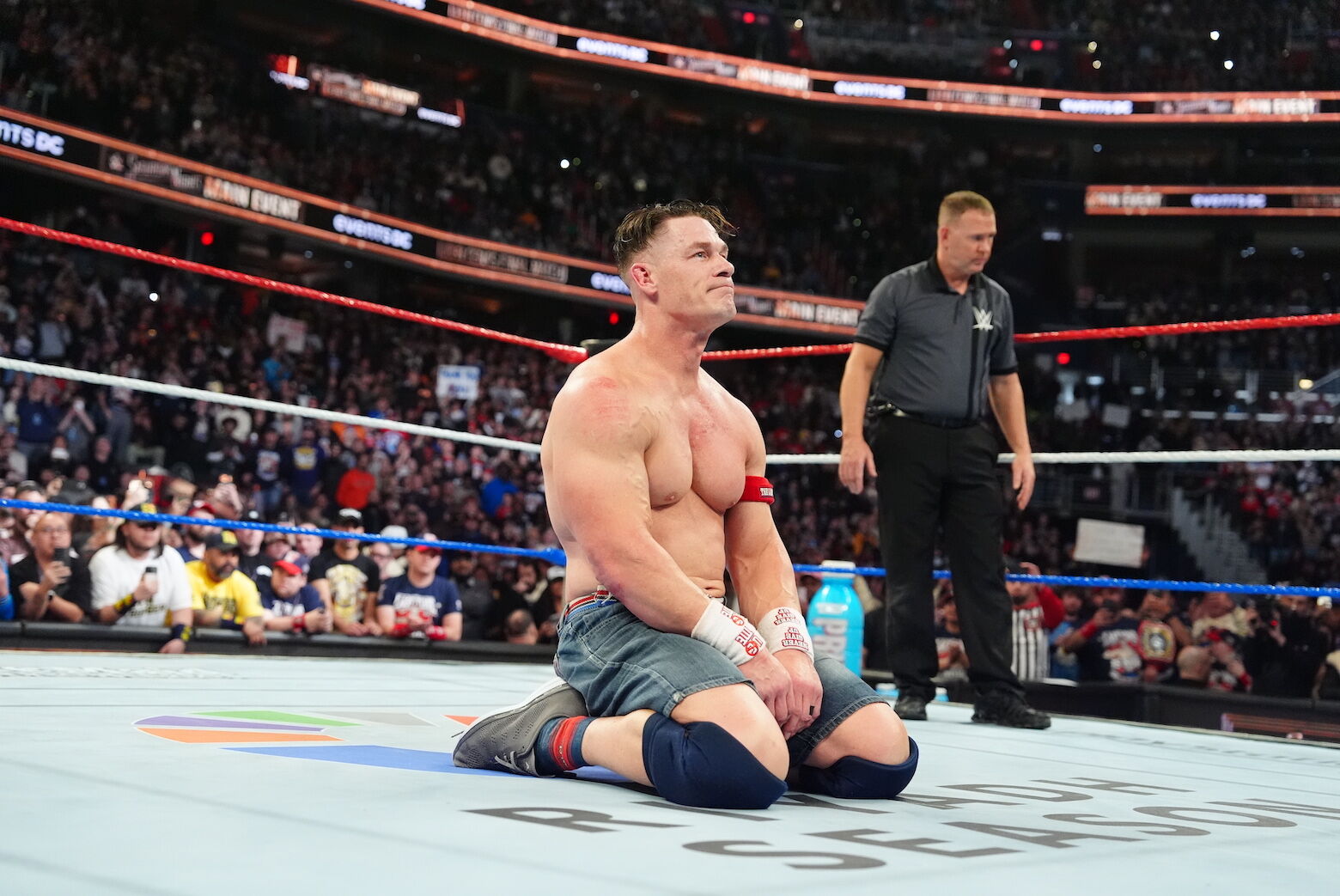
For a generation of fans who grew up chanting “You can’t see me” in school hallways and customizing their MySpace pages with the Time Is Now theme, this wasn’t just another house show. It was the closing chapter of a two-decade run that helped shape WWE into the crossover entertainment machine it is today.
John Cena’s Final Match in D.C.: Setting the Stage
WWE’s Saturday Night’s Main Event stop in Washington, D.C., wasn’t promoted like a standard non-televised live event. Once word spread that Capital One Arena would host John Cena’s final match, the card took on the feel of a hybrid: part farewell tour, part nostalgia fest, and part stress test of WWE’s next generation.
Cena’s opponent, Gunther, wasn’t a sentimental choice. He’s the kind of modern “final boss” WWE likes to build: towering, methodical, and rooted in European strong-style wrestling. Matching Cena with Gunther in D.C. was a message in itself—this wasn’t just about nostalgia; it was about handing the spotlight to a new anchor for WWE’s future.
The D.C. crowd responded accordingly. From early reports and fan clips circulating on social media, the night felt closer to a WrestleMania sendoff than a routine stop on the live-event circuit, with Cena jerseys and “Never Give Up” towels turning the arena into a sea of neon nostalgia.
Inside the Match: Gunther vs. John Cena and the Art of Saying Goodbye
The match itself reportedly leaned into what Cena does best in big moments: simple, high-impact storytelling built around resilience, timing, and crowd interaction. If you’ve watched his classics with CM Punk, AJ Styles, or even The Rock, you know the formula: slow build, dramatic near-falls, and an almost theatrical sense of pacing.

Gunther, known for his bruising offense and credibility with hardcore fans, played the merciless spoiler. One widely shared fan reaction summed it up as “an old-school territory-style farewell”—the aging hero, the ruthless conqueror, and a finish that felt both inevitable and oddly comforting.
“Win or lose, it didn’t matter. We just wanted to be here when Cena walked that aisle one last time.”
— Fan outside Capital One Arena, via WTOP
That attitude underlined the entire match. Fans weren’t grading workrate; they were grading feelings. The final bell and post-match ovation functioned less as an ending and more as communal closure for a fanbase that watched Cena evolve from polarizing “Super Cena” to cherished elder statesman.
“Win or Lose, It Didn’t Matter”: How Fans in D.C. Processed Cena’s Farewell
If you scroll through X, TikTok, or fan forums after the D.C. show, a pattern emerges: people aren’t obsessing over the result; they’re sharing memories. Screenshots of old title wins, photos with Cena from autograph signings, and grainy clips of kids doing the “You can’t see me” taunt in living rooms are everywhere.

- Nostalgia first: Many fans talked about growing up during Cena’s long run as “the guy,” making this feel like the end of their own wrestling childhood.
- Respect over backlash: The “Cena sucks” chants of the late 2000s have largely faded; in D.C., it was almost all love and appreciation.
- Gratitude to WWE: Even habitual critics of WWE creative gave credit for giving Cena a meaningful, big-arena goodbye.
There’s also a subtle generational layer here. Kids who once booed Cena in favor of antiheroes like CM Punk or Daniel Bryan are now adults bringing their own children to see him one last time—demonstrating just how cyclical wrestling fandom really is.
Cena’s Legacy: From Polarizing Champion to Cross-Platform Icon
John Cena’s D.C. farewell is also a convenient checkpoint to reassess his larger legacy. By 2025, he isn’t just a 16-time world champion; he’s a Hollywood actor, late-night regular, meme legend, and walking Make-A-Wish statistic. His crossover appeal rivals the likes of Dwayne “The Rock” Johnson, even if his filmography is still catching up in scale.
Within wrestling, his in-ring legacy has been reappraised over the last decade. The once-common critique that he had “five moves of doom” looks quaint in hindsight, given the list of modern classics on his resume:
- Cena vs. CM Punk – Money in the Bank 2011
- Cena vs. Daniel Bryan – SummerSlam 2013
- Cena vs. AJ Styles – Royal Rumble 2017
- Cena’s U.S. Open Challenge run in 2015, elevating names like Kevin Owens and Sami Zayn
“Love him or hate him, Cena was the engine that kept WWE moving for over a decade — on TV, in merchandise, and in the broader cultural imagination.”
— Industry analyst, paraphrased from multiple WWE retrospectives
The D.C. retirement match essentially adds one more chapter to that story: the veteran willing to stand opposite a rising monster like Gunther to make sure the next era has a proper foundation.
Why This Final Match Matters for WWE’s Future
Wrestling retirements are famously elastic. But even if this isn’t the absolute final bell for Cena, WWE clearly treated the D.C. show as a symbolic passing of the torch. In industry terms, it checks several important boxes.

- Elevating Gunther: Being framed as the man who wrestled Cena’s final match—especially in front of a hot East Coast crowd—cements Gunther as a long-term main-event player.
- Reinforcing live events: Turning a non-televised show into must-see canon encourages fans to treat house shows as destinations, not just off-brand TV.
- Strategic nostalgia: WWE continues to balance Attitude/Ruthless Aggression Era nostalgia with fresh faces, a formula that’s kept the product sticky on Peacock and social platforms.
The risk, of course, is over-relying on legends. But in this case, using Cena to spotlight Gunther feels less like a nostalgia crutch and more like a calibrated investment in WWE’s next decade.
Strengths, Weaknesses, and What Could Have Been Different
As a pure wrestling moment, Cena’s D.C. farewell hits the right emotional notes. Still, there are fair critiques about how WWE framed and distributed it.
- Strength – Emotional clarity: The stakes were clear: this is Cena’s last match. That simplicity allowed fans to invest without overthinking storylines.
- Strength – Opponent choice: Choosing Gunther gave hardcore fans something substantial beyond nostalgia, turning the match into a legitimate “dream pairing.”
- Weakness – Limited broadcast visibility: Because Saturday Night’s Main Event in D.C. functioned like a live event, many fans had to rely on secondhand reports and clips rather than an official broadcast presentation.
- Weakness – Ambiguous finality: Wrestling retirements are rarely permanent, and some fans expressed mild skepticism about whether this really is Cena’s last match.

That said, there’s a certain old-school charm to the way it went down: one arena, one crowd, one night that you “just had to be at.” In an age of constant streaming and overexposure, a major moment that lives more in memory than in screenshots almost feels rebellious.
Final Verdict: A Fitting, If Imperfect, Farewell
Judged purely as an in-arena experience, John Cena’s final match in Washington, D.C., lands exactly where it needed to: heartfelt, crowd-pleasing, and anchored by a worthy opponent in Gunther. As a piece of wrestling history, it feels like the right ending for a performer whose greatest skill has always been connecting with live audiences in real time.
From a broader entertainment and industry perspective, it’s also a marker of transition. Cena steps more fully into Hollywood and mainstream media, while WWE doubles down on elevating names who didn’t grow up on the road with him. The D.C. crowd, chanting “Thank you, Cena,” essentially signed off on that trade.
Will this truly be the last John Cena match? History says probably not. But as far as final chapters go, a packed Capital One Arena, a formidable opponent, and a fanbase that decided “win or lose, it didn’t matter” feels about as on-brand as it gets.
Watch, Revisit, and Relive: Cena Highlights Worth Your Time
If D.C. has you in a John Cena mood, there’s no shortage of essential matches and media to revisit while WWE and fans alike adjust to a post-Cena regular schedule.
- Cena vs. CM Punk, Money in the Bank 2011 – The modern template for crowd-driven storytelling.
- Cena vs. AJ Styles, Royal Rumble 2017 – Two eras colliding at peak form.
- U.S. Open Challenge (2015) – Weekly TV masterclass in how to make midcard titles feel vital.
- Peacemaker (HBO/Max) – Cena at his funniest and most self-aware on screen.

However WWE ultimately packages and revisits the D.C. farewell, it’s already done its job: giving fans one last live “John Cena moment” to hold onto, long after the merch fades and the entrance music stops echoing through Capital One Arena.
