Japandi Glow-Up: How Scandinavian Minimalism and Zen Calm Turn Small Spaces into Big Moods
So Your Stuff Owns You: Enter Japandi & Scandinavian Minimalism
If your home currently looks like “maximum chaos with a sprinkle of vibes,” Japandi and Scandinavian minimalist decor have entered the chat to stage a gentle, stylish intervention. Think of them as the friends who help you clean your room and make it Instagrammable—without forcing you to live in a white box with one lonely chair.
Japandi—today’s star of minimalist home decor—is the love child of Japanese wabi-sabi (quiet, imperfect beauty) and Scandinavian hygge (cozy, functional comfort). Together, they’re dominating searches for minimalist home decor, small-space design, and calm, clutter-free living. Meanwhile, classic Scandinavian minimalism is still that reliable cousin who always knows the best light bulbs, storage hacks, and neutral paint colors.
The mission: turn your home from “Where did I put my soul under all this clutter?” into “I can breathe again” without sacrificing personality, warmth, or the joy of a really good blanket.
What Exactly Is Japandi (And Why Is Everyone Obsessed)?
Japandi decor merges the Japanese philosophy of wabi-sabi—simplicity, natural materials, and the beauty of imperfection—with Scandinavian hygge, which is all about light, warmth, and functional comfort. The result: a warm, minimalist aesthetic that feels calm but never cold, and curated but never try-hard.
- Clean, low-profile furniture: Sofas and beds sit low and simple, like they’re meditating.
- Neutral, earthy color palettes: Off-white, sand, beige, mushroom, clay, and soft charcoal instead of aggressive greys.
- Natural materials: Light woods (oak, ash, birch), bamboo, linen, cotton, wool, ceramics, and paper lamps.
- Very limited decor objects: Every piece either does something or looks sculptural enough to justify its rent.
Think of Japandi as minimalist decor that finally had a snack and a nap—calm, nourished, and emotionally stable.
It’s trending hard because more people are in small homes or apartments, looking for designs that feel open, airy, and organized. Add a global craving for mindfulness and slower living, and you have a style that looks good, feels good, and photographs like a dream on social media.
Why Japandi & Scandinavian Minimalism Are Everywhere Right Now
Scroll YouTube or TikTok and you’ll see it: “Japandi apartment tour,” “Scandinavian minimalist bedroom,” and “living room makeover” videos pulling in views like a sale on houseplants.
Here’s why these styles are winning the algorithm—and real life:
- Small space friendly: Clean lines and low furniture visually stretch a room, making studios and compact apartments feel bigger.
- Clutter therapy: The “less but better” mindset makes tidying easier and your brain less fried.
- Mindful living: Spaces are designed intentionally, so you’re not constantly wrestling with stuff you don’t use.
- Camera-ready: Neutral palettes + soft lighting + clear surfaces = instant content background.
Brands are leaning into keywords like homedecor, furniture, livingroomdecor, bedroomdecor, minimalisthomedecor, and homedecorideas, while creators are thriving with “Japandi on a budget” and “Starter Japandi furniture checklist” content.
Your Living Room, But Make It Zen (and Netflix-Friendly)
The Japandi living room is where calm meets “I still binge-watch shows here.” It’s not a showroom; it’s a sanctuary with decent snacks.
Start with these anchors:
- Low, simple sofa: Go for straight lines and neutral upholstery (stone, beige, warm grey). If your current sofa is loud, use a large neutral throw to quiet it down.
- Light-wood or black coffee table: Rounded edges are softer on both shins and eyeballs. Bonus points if it has hidden storage.
- Textured rug: A wool or jute rug in a soft, solid tone grounds the room and adds subtle interest without visual noise.
- One or two star pieces: A sculptural ceramic vase, paper lantern floor lamp, or a single large abstract art print.
Decor rule of thumb: if every surface is shouting, nothing is heard. Let one or two objects be the lead singers, and let the rest be backup vocals.
Try this quick styling formula for your coffee table:
- A low tray in wood or matte ceramic.
- One stack of 1–3 neutral coffee table books.
- One sculptural object (vase, bowl, candleholder).
- Optional: a small branch or single stem, not a chaotic bouquet.
That’s it. Anything more and your table goes from “curated” to “yard sale.”
Scandinavian Minimalist Bedroom: Cozy, Not Boring
Your bedroom should not double as a storage unit with a side hustle as a laundry rack. Scandinavian minimalism and Japandi both treat bedrooms like mini retreats—simple, soft, and deeply functional.
- Low wood bed: Platform or low-profile, no bulky headboards pretending to be thrones.
- Crisp bedding in layers: White or stone sheets, a duvet in a similar tone, and one accent blanket in a muted hue (olive, rust, charcoal).
- Minimal wall decor: One large artwork or a simple shelf—no gallery wall anxiety above your forehead at 2 a.m.
- Smart storage: Under-bed bins, closed nightstands, and a “no chair for clothes” rule. (If it doesn’t have a home, it doesn’t get to stay.)
To keep things cozy, mix textures instead of colors: linen pillowcases, a chunky knit throw, a smooth cotton duvet, and maybe a wool rug underfoot. Your eyes rest, but your hands get to have fun.
Color, Texture, and the Art of “Quiet Drama”
Japandi and Scandi minimalism live and die by their neutrals, but they’re not about making everything the exact same shade of oatmeal. The trick is layering similar tones with different textures.
Try this palette:
- Walls: Warm white or soft beige—nothing blue-grey or cold.
- Large furniture: Light wood and stone, beige, or mushroom upholstery.
- Accents: Clay, soft black, muted charcoal, or a touch of earthy green.
Then layer textures:
- Linen curtains + cotton sofa + wool or jute rug.
- Smooth ceramic vase + ribbed glass candleholder + raw wood tray.
- Paper lanterns + matte metal floor lamp.
The goal is “quiet drama”: visually calm from a distance, interesting up close, like a person who doesn’t talk much but drops elite one-liners.
DIY Moves: Japandi on a Real-Person Budget
You don’t need to throw out everything and start fresh. (Your wallet just took a deep breath.) Try these incremental upgrades:
- Paint reset: Swap cool grey walls for warm white or soft beige. Suddenly your room looks less like an office and more like a spa.
- Unify the misfits: If your furniture is mismatched, paint or stain wood pieces in a similar tone. Even budget pieces look elevated when they match.
- Lighting glow-up: Add rice paper or fabric shades to harsh ceiling bulbs. Soft, diffused light is an instant “mood” filter for your home.
- Textile swap: If you can’t change the furniture, change what touches your skin: neutral curtains, a textured rug, and a simple duvet cover in a warm tone.
- Clutter amnesty: Fill one box or bag with decor items that don’t fit the new vibe (bright plastic, overly busy patterns, unused knick-knacks). Store it for a month. If you don’t miss it, donate it.
A little cohesion goes a long way. Even five small changes can make your space feel like it got promoted.
Declutter Like a Minimalist, Not Like a Villain
Japandi isn’t about living with three forks and a plant. It’s about editing. Your things should earn their keep—by being useful, beautiful, or ideally both.
Try this 5-step Japandi-style declutter in your living room:
- Clear the surfaces: Empty your coffee table, TV stand, console, and side tables completely.
- Group by type: Books with books, decor with decor, cables with cables (aka gremlins).
- Choose heroes: For each surface, pick 2–3 items max that either support daily life or look sculptural.
- Hide the rest: Use closed cabinets, boxes, baskets, and drawers. Hidden storage is Japandi’s secret sauce.
- Set a reset ritual: Every night, take 3 minutes to return surfaces to “calm mode.” Future-you will send thanks.
The goal isn’t perfection; it’s consistency. A mostly-tidy home that you can reset quickly beats a “perfect” home that exhausts you.
Micro-Trends Within the Japandi & Scandi Wave
Inside the broader Japandi and Scandinavian minimalist world, a few smaller trends are quietly flourishing:
- Paper lantern lighting: Oversized rice paper floor lamps are everywhere—soft, warm, and surprisingly affordable.
- Chunky ceramics: Matte vases and bowls with imperfect rims bring that wabi-sabi charm to shelves and consoles.
- Soft black accents: A black frame here, a black side table there—just enough contrast to keep all the beige from blending into oblivion.
- Floor seating moments: Low stools, cushions, and poufs nod to Japanese interiors and make small spaces more flexible.
The beauty of these micro-trends is that you can dip a toe in without committing to a full-room makeover.
Your 7-Step Japandi Starter Plan
Ready to give your home a calm glow-up without spiraling into a three-week renovation saga? Use this quick-start checklist:
- Pick one room to focus on (living room or bedroom is easiest).
- Choose a warm neutral wall color or confirm your existing walls can play nicely.
- Identify 2–3 big pieces to simplify: sofa, rug, bed, or curtains.
- Declutter surfaces and commit to hidden storage for the messy bits.
- Add one statement light (paper lantern, floor lamp, or sculptural table lamp).
- Layer in texture with textiles: rug + throw + cushions in related neutrals.
- Finish with 1–2 sculptural decor pieces that you genuinely love.
Minimalism, Japandi-style, isn’t about having less; it’s about having the right less. Your space should look like you, just with better boundaries and prettier lighting.
From Overwhelmed to Understated: Your Home, Upgraded
Japandi and Scandinavian minimalism are trending because they solve real-life problems: too much stuff, too little space, and a desperate need for calm. They give you permission to edit, soften, and simplify—without turning your home into a sterile museum.
Start small: a warmer wall color, a decluttered coffee table, or a softer lamp. Then watch how each change nudges the next. Before you know it, your home will feel like a deep breath—and your clutter won’t be running the show anymore.
And if anyone asks what your new style is, you can say, “Oh, this? Just a little Japandi-meets-Scandi situation. Very calm. Very intentional. Very ‘I have my life together (mostly).’”
Image Suggestions (for Editor Use)
Below are strictly relevant, royalty-free image suggestions that directly support the content above.
Image 1: Japandi Living Room Overview
Placement: Immediately after the paragraph ending with “Anything more and your table goes from ‘curated’ to ‘yard sale.’” in the “Your Living Room, But Make It Zen (and Netflix-Friendly)” section.
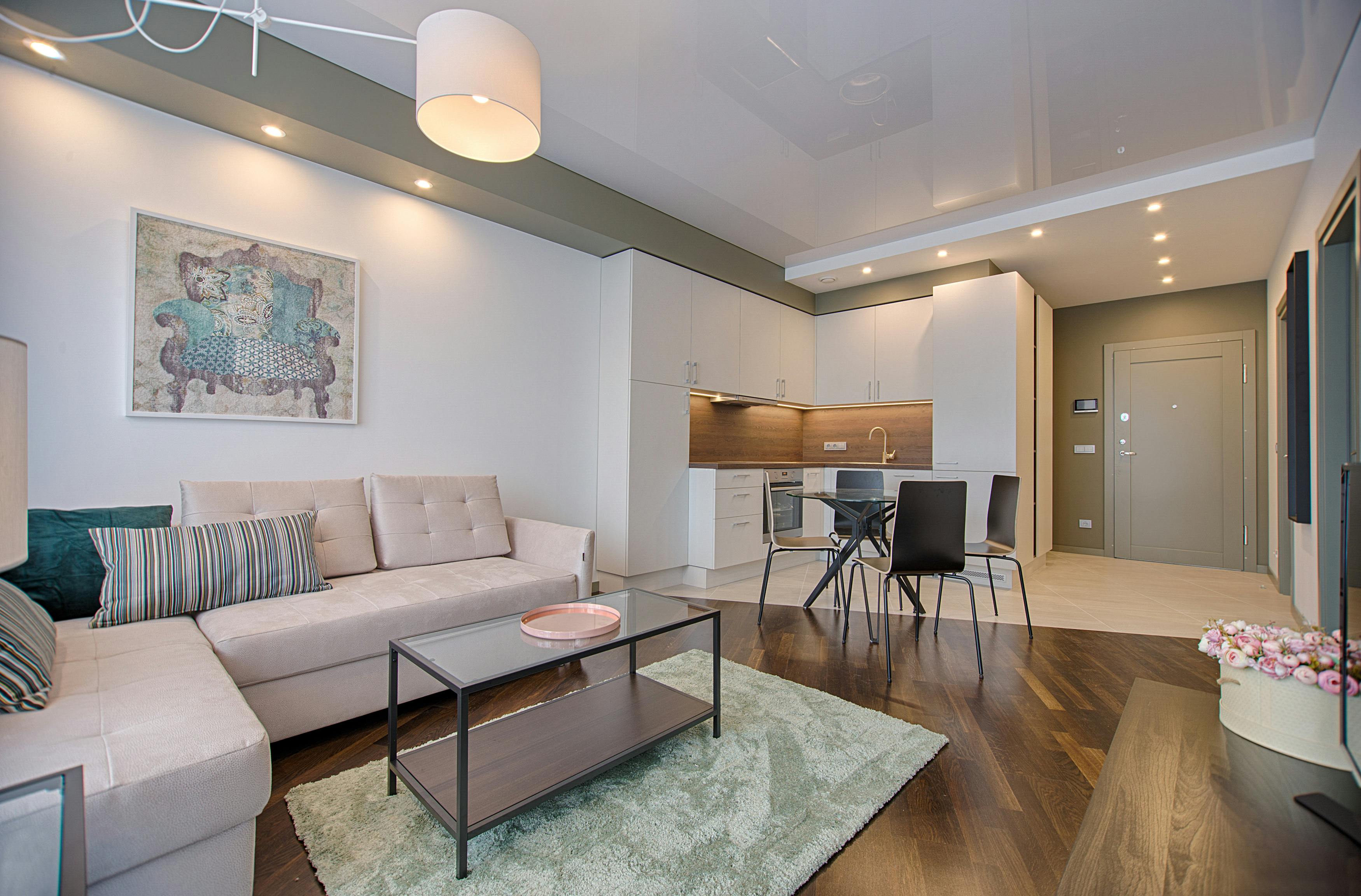
Image description: A realistic photo of a Japandi-style living room in a small apartment. Features a low, neutral sofa in beige or stone against a warm white wall, a light-wood coffee table with rounded edges styled with a small tray, one ceramic vase, and a couple of neutral books. A large textured rug in wool or jute anchors the seating area. There is a single oversized paper lantern floor lamp in one corner and one large abstract art print with simple brushstrokes on the wall. Clutter-free surfaces, plenty of natural light, and visible natural materials such as wood, linen curtains, and a ceramic bowl. No people present.
Supports sentence/keyword: “In living rooms, Japandi styling often includes: A low, simple sofa with straight lines and neutral upholstery… A large, textured rug in wool or jute… One or two statement pieces: a sculptural ceramic vase, a paper lantern floor lamp, or a single large art print with abstract brushstrokes.”
SEO-optimized alt text: “Japandi style living room with low beige sofa, rounded light wood coffee table, textured jute rug, and paper lantern floor lamp.”
Example source URL (verify 200 OK before use): https://images.pexels.com/photos/6585612/pexels-photo-6585612.jpeg
Image 2: Scandinavian Minimalist Bedroom
Placement: After the paragraph ending “Your eyes rest, but your hands get to have fun.” in the “Scandinavian Minimalist Bedroom: Cozy, Not Boring” section.
Image description: A realistic photo of a Scandinavian minimalist bedroom with a low, light-wood platform bed, no heavy headboard, and crisp white or stone bedding layered with a single muted accent blanket (e.g., olive or rust). Warm white walls, one large simple artwork or framed print above the bed, a small light-wood nightstand with a closed drawer, and a neutral rug partially under the bed. Soft natural light, linen curtains, and no visible clutter such as clothes or extra objects. No people present.
Supports sentence/keyword: “Platform or low wood beds without heavy headboards. Crisp bedding in white or stone with a single accent blanket. Minimal wall decor, often just one large piece or a simple shelf.”
SEO-optimized alt text: “Scandinavian minimalist bedroom with low wood platform bed, layered neutral bedding, and simple wall art.”
Example source URL (verify 200 OK before use): https://images.pexels.com/photos/1643383/pexels-photo-1643383.jpeg
Image 3 (Optional): Japandi Coffee Table Vignette
Placement: After the ordered list describing the coffee table styling formula in “Your Living Room, But Make It Zen (and Netflix-Friendly).”
Image description: A close-up realistic photo of a Japandi-style coffee table vignette on a rounded light-wood table. A low tray (wood or matte ceramic) holds a small stack of 1–3 neutral coffee table books, a single sculptural ceramic vase, and maybe a simple candleholder. The background shows a hint of a neutral sofa and textured rug, but the focus stays on the edited, minimalist tabletop styling. No bright colors or excess decor; no people present.
Supports sentence/keyword: “Try this quick styling formula for your coffee table: A low tray… one stack of 1–3 neutral coffee table books… one sculptural object (vase, bowl, candleholder).”
SEO-optimized alt text: “Japandi coffee table styled with wood tray, neutral books, and sculptural ceramic vase.”
Example source URL (verify 200 OK before use): https://images.pexels.com/photos/8580766/pexels-photo-8580766.jpeg