
Jalen Hurts’ Double Turnover Disaster: Breaking Down the Eagles’ Wild Loss to the Chargers
Jalen Hurts lost the ball twice on one astonishing play as the Philadelphia Eagles fell to the Los Angeles Chargers in California, capping a night that saw the reigning Super Bowl champions slide to a third straight defeat and raising fresh questions about their offense, ball security, and NFC title defense.
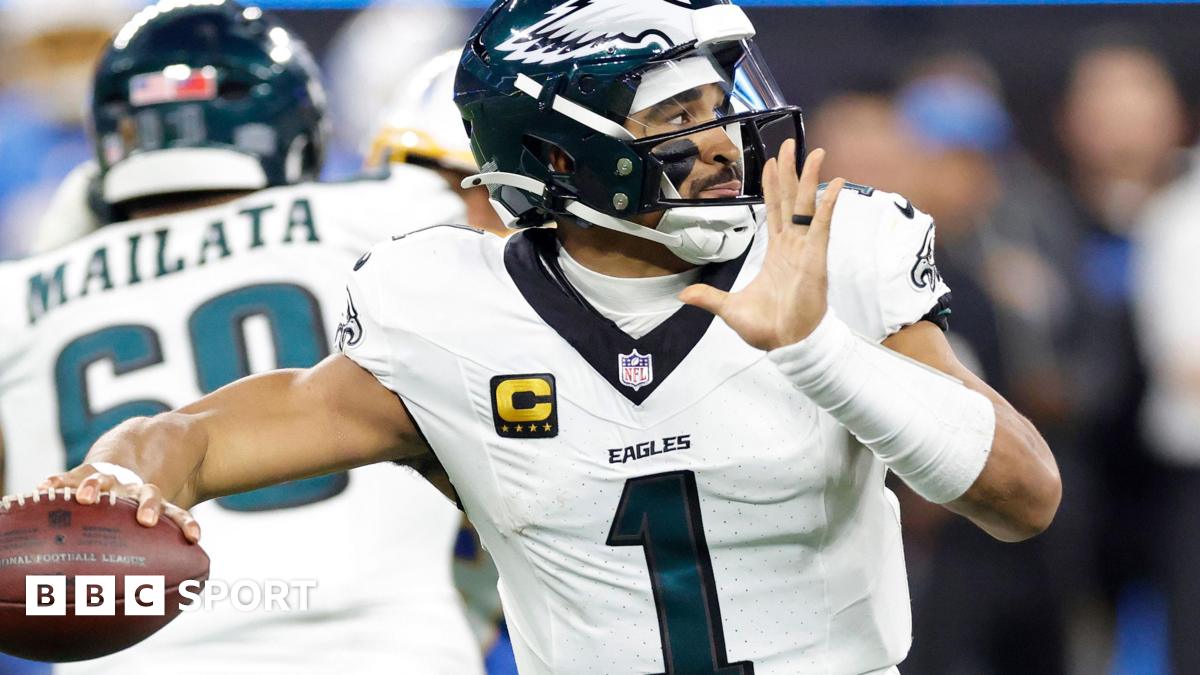
A surreal sequence sums up a spiraling Eagles season
In a season already full of uneasy moments for Philadelphia, one play in Los Angeles may become the enduring image: Hurts rolling right, forcing a throw, seeing it picked off, then somehow getting the ball back before fumbling it away again. It was chaotic, costly, and symbolic of an Eagles team struggling to resemble the ruthless unit that lifted the Lombardi Trophy last February.
Game context: Eagles’ skid reaches three as Chargers surge at home
Coming into Monday night’s clash, the Philadelphia Eagles were already wobbling. Back-to-back defeats had turned a comfortable NFC lead into a tight race, and a cross-country trip to face a confident Los Angeles Chargers side only heightened the pressure.
The Chargers, buoyed by an efficient offense and an increasingly aggressive defense, smelled vulnerability. They harassed Hurts from the opening series, disrupted the Eagles’ timing in the passing game, and won key downs on both sides of the ball. The result: a statement home win over the defending champions and another dent in Philadelphia’s once-formidable aura.
- Eagles drop to a losing record over their last five games.
- Chargers strengthen their AFC playoff credentials with a signature victory.
- Turnover differential proves decisive once again for Philadelphia.
For an Eagles roster built around physical dominance in the trenches and explosive plays downfield, being out-executed and out-disciplined on the road is a worrying trend that now stretches across multiple weeks.
Breaking down the double-turnover: How Hurts lost the ball twice
The pivotal sequence unfolded in the second half with the Eagles still within striking distance. Facing long yardage, Hurts dropped back against a Chargers pressure look that had been bothering him all night.
- Initial scramble and forced throw: Hurts escaped the pocket to his right but hesitated as coverage held. Under duress, he fired a late, risky pass toward the sideline.
- Interception: A Chargers defensive back broke on the ball and secured what looked like a straightforward interception, jumping the route as Hurts tried to fit the pass into a tight window.
- Sudden reversal: As the defender looked to transition upfield, Eagles players converged. In the collision, the ball popped free and bounced back into the chaos.
- Hurts recovers… briefly: In a bizarre twist, Hurts ended up with the ball back in his grasp, momentarily turning disaster into a chance to salvage the down.
- Final fumble: Before he could secure it and get down, Chargers pass rush help arrived, punching the ball loose again. This time Los Angeles fell on it cleanly to complete the double-turnover nightmare.
“You just can’t put your team in that position,” Hurts admitted postgame. “Turnovers lose games in this league, especially on the road. That play is on me.”
While the official box score credits an interception and a fumble on the same snap, the sequence also reflects broader offensive issues: shaky protection, late decisions, and a quarterback pressing to make a play when a throwaway or early checkdown might have been the smarter call.
Key numbers: Turnovers, pressure, and a fading margin for error
The box score tells a blunt story. Philadelphia moved the ball in stretches but continually undercut its own drives with giveaways and negative plays, while the Chargers maximized their possessions and stayed largely mistake-free.
| Statistic | Eagles | Chargers |
|---|---|---|
| Total yards | Approx. 320 | Approx. 370 |
| Turnovers | 3 (2 INT, 1 FUM) | 0 |
| Sacks allowed | 4 | 2 |
| Third-down efficiency | ~30% | ~45% |
| Red-zone TDs | 1 | 3 |
For Hurts, the efficiency slide is now a trend rather than a blip. Over his last three outings, his touchdown-to-turnover ratio has dipped sharply, while his yards per attempt and rushing impact have both flattened as defenses load up on his preferred concepts and force him into tight-window throws.
| Game | Comp% | Pass Yds | TD | INT | Turnovers (Total) |
|---|---|---|---|---|---|
| Week N-2 | ~63% | 220 | 2 | 1 | 2 |
| Week N-1 | ~60% | 240 | 1 | 1 | 1–2 |
| vs Chargers | Low 60s | 230–250 | 1 | 2 | 3 (incl. double-turnover) |
A high-variance, turnover-prone version of Hurts makes the Eagles far more ordinary. When his decision-making and ball security wobble, the offense loses its rhythm and the defense is repeatedly put on short fields, amplifying every mistake.
Visual snapshot: Momentum swings and key moments



Locker room voices: Accountability and frustration
Postgame, the Eagles’ tone was a mix of accountability and simmering frustration. Hurts owned the double-turnover, while veterans pointed to a broader need for composure and cleaner football.
“We’re beating ourselves right now,” an Eagles lineman said. “This isn’t about talent. It’s about finishing plays, protecting the ball, and doing the little things right every snap.”
“Our job is to create chaos for quarterbacks, and we did that,” a Chargers defender noted. “When he starts moving side to side, that’s when the opportunities come.”
The human side of a slump is often less about scheme and more about emotion. Hurts, typically unflappable, has carried the weight of expectation since the Eagles’ Super Bowl run. Nights like this test a quarterback’s confidence, leadership, and ability to reset quickly.
What the loss means for the Eagles’ NFC title defense
One wild turnover sequence won’t define a season, but it does spotlight the margin for error shrinking around Philadelphia. Three straight losses have tightened the NFC picture, with rivals gaining belief that the Eagles are beatable if you disrupt Hurts and win the takeaway battle.
- Seeding pressure: Dropping games now makes securing home-field advantage in the NFC far tougher.
- Scouting blueprint: Defenses will copy the Chargers’ pressure looks and coverage disguises that antagonized Hurts.
- Psychological toll: Repeated late-game errors can creep into the team’s mindset if not addressed quickly.
From an analytical standpoint, the Eagles have enough talent and coaching to stabilize. Their underlying metrics across yards per play and success rate remain competitive. But the turnover column is loud and unforgiving: when the defending champions are minus-two or worse in takeaways, they look strikingly ordinary.
Chargers’ perspective: Statement win and a defensive identity
For the Los Angeles Chargers, this wasn’t just about capitalizing on Eagles mistakes. It was about proof of concept. Their defense, often criticized in recent seasons, played fast, tackled well, and finished plays on the ball from start to finish.
- Multiple pressures forced Hurts to reset and extend plays horizontally instead of vertically.
- Disciplined coverage kept explosive Eagles receivers from busting the game open.
- Opportunistic tackling turned loose balls and tipped passes into takeaways.
“That’s a Super Bowl quarterback we just went against,” a Chargers coach said. “If you give him clean looks, he’ll carve you up. We knew we had to make him uncomfortable and finish at the ball.”
If Los Angeles can bottle this version of its defense, it changes their ceiling in the AFC playoff race. Winning a high-profile prime-time game against the reigning champions only adds confidence to a locker room that has, at times, struggled to close out big nights.
Deeper dive: Where to track Eagles and Chargers trends
For fans and analysts wanting to follow how this loss shapes the rest of the season, official league and team pages provide up-to-date stats, schedules, and advanced metrics:
What’s next: Can Hurts and the Eagles reset before it’s too late?
The Eagles’ season won’t be defined solely by one bizarre double-turnover in Los Angeles, but it may be remembered as a turning point. Either it sharpens their focus and sparks a renewed commitment to ball security and execution, or it becomes another data point in a decline from Super Bowl champions to vulnerable contenders.
For Hurts, the challenge is clear: recalibrate, trust the structure of the offense, and avoid trying to rescue every snap with heroics. For the Chargers, the assignment is equally simple—prove this level of defensive intensity can travel and sustain over a long playoff push.
As the schedule tightens and the postseason picture comes into focus, one question now hangs over the NFC: was this just a stumble for the Eagles, or the moment their title defense truly cracked?
