
Is OpenAI Losing Its AI Crown? How Rival Models Are Closing the Gap Faster Than Anyone Expected
A Turning Point in the AI Race
When ChatGPT launched in late 2022, it marked a watershed moment: generative AI became a mainstream product, not a distant research project. By 2025, OpenAI is valued around the half‑trillion‑dollar mark, deeply integrated with Microsoft’s ecosystem, and widely seen as the company that forced an entire industry to accelerate.
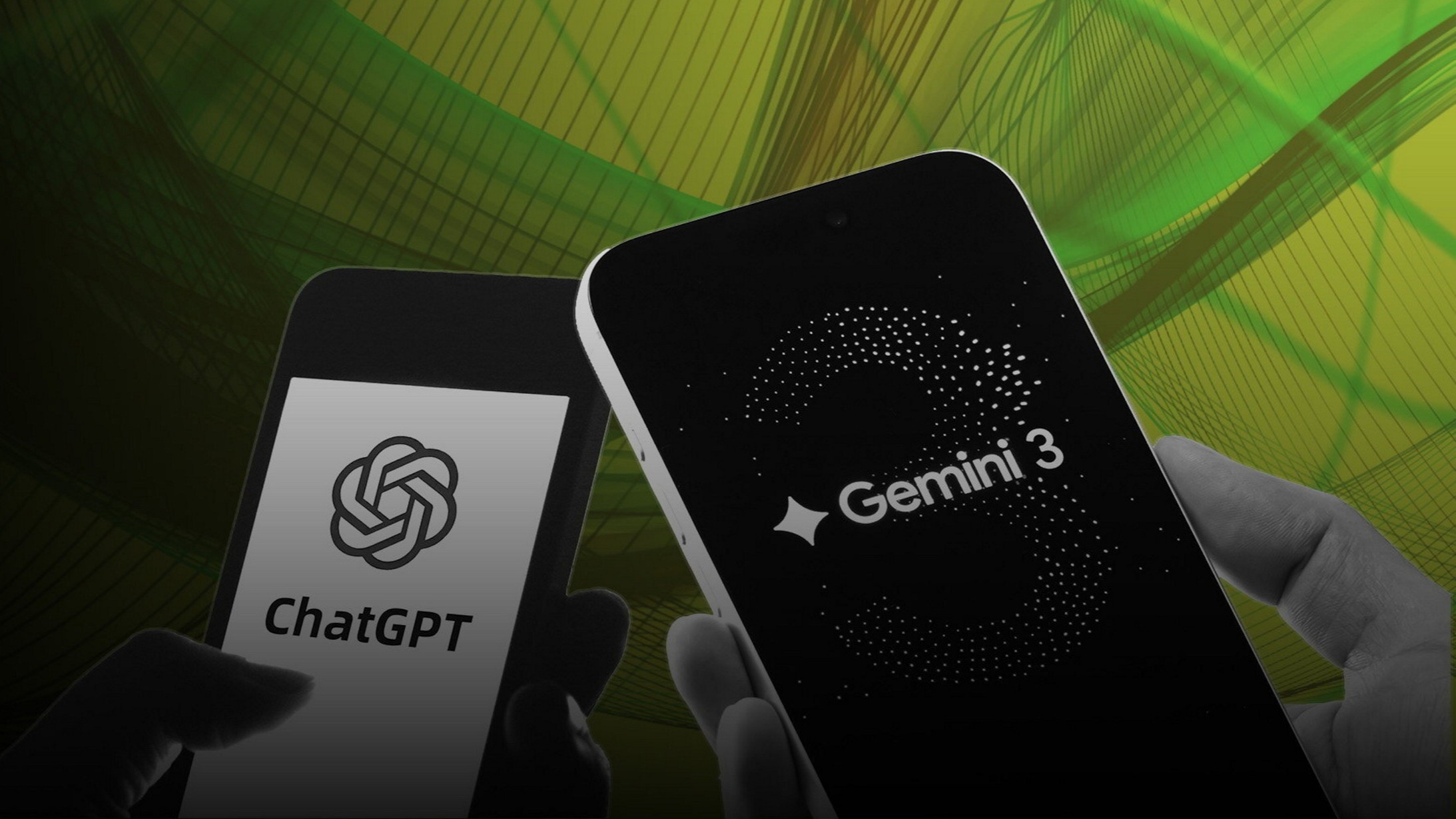
Yet that dominance is no longer unchallenged. Google, Anthropic, Meta, xAI, and a fast‑moving open‑source community are narrowing the performance gap with every new model release. Enterprises that once defaulted to “just use OpenAI” are now experimenting with multi‑model strategies, while regulators on both sides of the Atlantic scrutinize safety, competition, and data practices.
“We are in the very early innings of this AI age, but the starting gun has fired.”
— Satya Nadella, CEO of Microsoft
The question now is not whether OpenAI is still ahead, but whether its lead is structurally defensible in a world where foundation models are becoming faster, cheaper, and more commoditized.
How Rivals Are Rapidly Closing the Gap
Rival AI labs have shifted from playing catch‑up to competing head‑to‑head on benchmarks, features, and price. The cycle time between flagship releases has shortened dramatically, and 2024–2025 has seen a wave of models that challenge OpenAI across coding, reasoning, multimodal understanding, and enterprise deployment.
Google: From Slow Start to Gemini Everywhere
Google’s Gemini family of models now underpins Search, Workspace, Android, and YouTube. Early stumbles with factual accuracy and image generation have been partially offset by:
- Deep integration into products used by billions (Gmail, Docs, Sheets, Meet)
- Competitive pricing via Google Cloud, attractive to large enterprises already on GCP
- Strong multimodal capabilities across text, images, audio, and video
For many organizations, especially those already standardized on Google, Gemini can feel “good enough” relative to GPT‑4–class models, tilting the balance away from OpenAI as the sole choice.
Anthropic: Betting on Safety and Reliability
Anthropic’s Claude models, particularly Claude 3, have emerged as serious contenders in reasoning and long‑context tasks. Anthropic emphasizes constitutional AI and safety‑aligned behavior, a positioning that resonates with highly regulated sectors such as finance, healthcare, and government.
In many independent evaluations, Claude is praised for:
- Exceptionally long context windows for large documents and codebases
- Careful handling of sensitive topics and compliance needs
- Clear, structured responses suitable for decision‑support workflows
Meta and Open Source: The Wild Card
Meta’s open‑weight Llama models have catalyzed a powerful open‑source ecosystem. Startups and independent developers are now able to:
- Run capable models on‑premises or on affordable cloud infrastructure
- Fine‑tune for niche use cases without sending data to a third‑party API
- Experiment with cutting‑edge architectures at low marginal cost
For companies with strict data residency requirements or proprietary datasets, open‑source models increasingly offer a viable alternative to closed providers like OpenAI—especially when combined with retrieval‑augmented generation (RAG) and domain‑specific fine‑tuning.
OpenAI’s Strengths — And Emerging Vulnerabilities
OpenAI still enjoys a number of durable advantages: brand recognition, a vast developer base, Microsoft’s cloud and distribution support, and some of the most capable multimodal models on the market. But each of these strengths carries a corresponding vulnerability.
Technical Edge vs. Rapid Commoditization
Frontier models like GPT‑4 and its successors maintain a lead on many reasoning and coding benchmarks. However:
- Incremental gains are becoming more expensive in compute and data
- Users often prioritize latency, cost, and control over peak performance
- Specialized smaller models can outperform general‑purpose models on narrow tasks
This dynamic raises a strategic question: will the market pay a premium for the absolute best model, or will “good enough” plus better integration win?
Microsoft Alliance: Distribution and Dependency
The deep partnership with Microsoft—powering Copilot, Azure OpenAI Service, and Windows integrations—gives OpenAI a massive business funnel. But it also introduces:
- Revenue dependence on one dominant channel
- Strategic overlap, as Microsoft develops its own models and inference stack
- Regulatory scrutiny over competition and data sharing
For large enterprises, the close Microsoft tie‑in can be either a comfort—one trusted supplier—or a risk, driving some to diversify across clouds and model providers.
Trust, Safety, and Governance
OpenAI’s public reshuffling of its safety, governance, and “superalignment” efforts in 2024–2025 has fueled debate over how it balances rapid commercialization with long‑term risk mitigation. Meanwhile, governments and standards bodies are moving toward more formal oversight of frontier models.
“The pace of innovation in AI is extraordinary, but so is our responsibility to manage the risks.”
— Ursula von der Leyen, President of the European Commission (on AI regulation)
How OpenAI navigates upcoming EU AI Act enforcement, U.S. executive orders, and sector‑specific guidance will strongly influence its ability to sell into risk‑sensitive industries.
What This Means for Enterprises and Startups
For business leaders, the closing gap between OpenAI and its rivals transforms AI adoption from a single‑vendor story into a strategic portfolio decision. The core questions are no longer “Should we use AI?” but:
- Which models fit which use cases?
- How do we manage cost, latency, and accuracy across providers?
- How do we maintain flexibility as the technology evolves?
A Practical Multi‑Model Strategy
Many leading organizations are quietly adopting a multi‑model architecture:
- Tiered models by task – use premium models (often OpenAI) for complex reasoning, while routing routine tasks to cheaper or domain‑tuned models.
- Abstraction layers – build internal gateways or use orchestration tools that can swap model backends without rewriting business logic.
- Data‑centric tuning – invest in high‑quality proprietary datasets, RAG, and feedback loops, which often matter more than the base model choice.
Recommended Reading and Expert Analysis
For deeper strategic perspectives on this shift, consider:
Tools, Gear, and Resources for Working at the AI Frontier
As more professionals experiment with frontier models—whether from OpenAI or its rivals—the right hardware and tools can dramatically improve productivity, especially for developers, data scientists, and AI product teams.
Developer and Power‑User Essentials
- High‑performance laptops with strong GPUs are increasingly valuable for local experimentation and running lightweight models. Devices like the ASUS ROG Zephyrus M16 (Intel i9, RTX 4090) offer desktop‑class performance in a mobile form factor for heavy AI workloads and experimentation.
- Noise‑cancelling headsets can make long coding and research sessions more focused; options like the Sony WH‑1000XM5 are popular among remote developers and analysts.
- Mechanical keyboards are a favorite in engineering teams; models like the Keychron V3 balance comfort, programmability, and durability for intensive coding with AI frameworks.
Learning Resources and Thought Leaders
To follow the fast‑moving AI ecosystem and OpenAI’s shifting position within it, many practitioners track:
- OpenAI’s official updates on its blog
- Technical deep‑dives and evaluations from arXiv AI preprints
- Commentaries by independent researchers and builders on LinkedIn and on X accounts such as Andrej Karpathy and Yann LeCun
Key Trends That Will Shape OpenAI’s Next Chapter
The next 12–24 months are likely to be decisive for OpenAI’s long‑term position. Several macro‑trends will determine whether it solidifies its leadership or is forced into a more level playing field with competitors.
1. Cost and Efficiency of Frontier Models
Running frontier models at planet‑scale is enormously expensive. Advancements in model compression, inference optimization, and custom chips will influence whether OpenAI can keep prices competitive without sacrificing margins.
- Cheaper inference could favor OpenAI if it scales better than rivals
- Commodity hardware and open models could erode pricing power
- Specialized accelerators from cloud providers may re‑shape cost curves
2. Enterprise Trust and Compliance
In boardrooms, the winning provider will be the one that convincingly answers questions about:
- Data privacy and retention
- Model explainability and red‑teaming
- Regulatory alignment across jurisdictions
OpenAI’s ability to publish transparent documentation, third‑party audits, and robust incident‑response processes will be critical in sectors like banking, insurance, and healthcare.
3. Developer Mindshare and Ecosystems
The developer community that initially rallied around OpenAI now has multiple credible options. Long‑term leadership will depend on:
- Friendly pricing tiers and generous rate limits for builders
- Rich SDKs, tools, and reference architectures for production use
- Clear IP and usage policies for applications built on top of models
If developers feel locked‑in, constrained, or out‑priced, they will increasingly route around any single provider—no matter how advanced.
Additional Insights and Practical Takeaways
For readers following OpenAI’s evolving position in the AI market, several practical guidelines can help frame decisions:
- Treat models as interchangeable components rather than one‑time bets; design systems that can swap providers over time.
- Invest in your data and workflows; high‑quality proprietary data, evaluation pipelines, and human‑in‑the‑loop review often yield bigger gains than chasing the latest model upgrade.
- Monitor regulatory signals from the EU, U.S., and major industry regulators, as forthcoming rules may impact vendor choices, cross‑border data flows, and compliance budgets.
- Follow independent benchmarks and community evaluations instead of relying solely on vendor claims, especially for safety‑critical or high‑stakes use cases.
OpenAI remains one of the most influential actors in the AI ecosystem, but the era of a single, unchallenged leader is ending. For individuals and organizations willing to track the evolving landscape—and to experiment intelligently across multiple models—the closing gap between OpenAI and its rivals is less a threat and more an opportunity to build more resilient, cost‑effective, and innovative AI solutions.
