Inside the Miniature Brains Revealing the Hidden Biology of Schizophrenia and Bipolar Disorder
Imagine holding a pea-sized “mini brain” in a lab dish and using it to watch how psychiatric disorders unfold at the level of individual cells. That’s exactly what scientists are now doing with brain organoids, and it’s starting to change how we think about schizophrenia and bipolar disorder.
In this article, we’ll unpack new research highlighted by SciTechDaily showing that these conditions may arise not from obvious brain damage, but from subtle disruptions in how neurons communicate. We’ll explore what this means for diagnosis, treatment, and hope—without promising miracle cures.
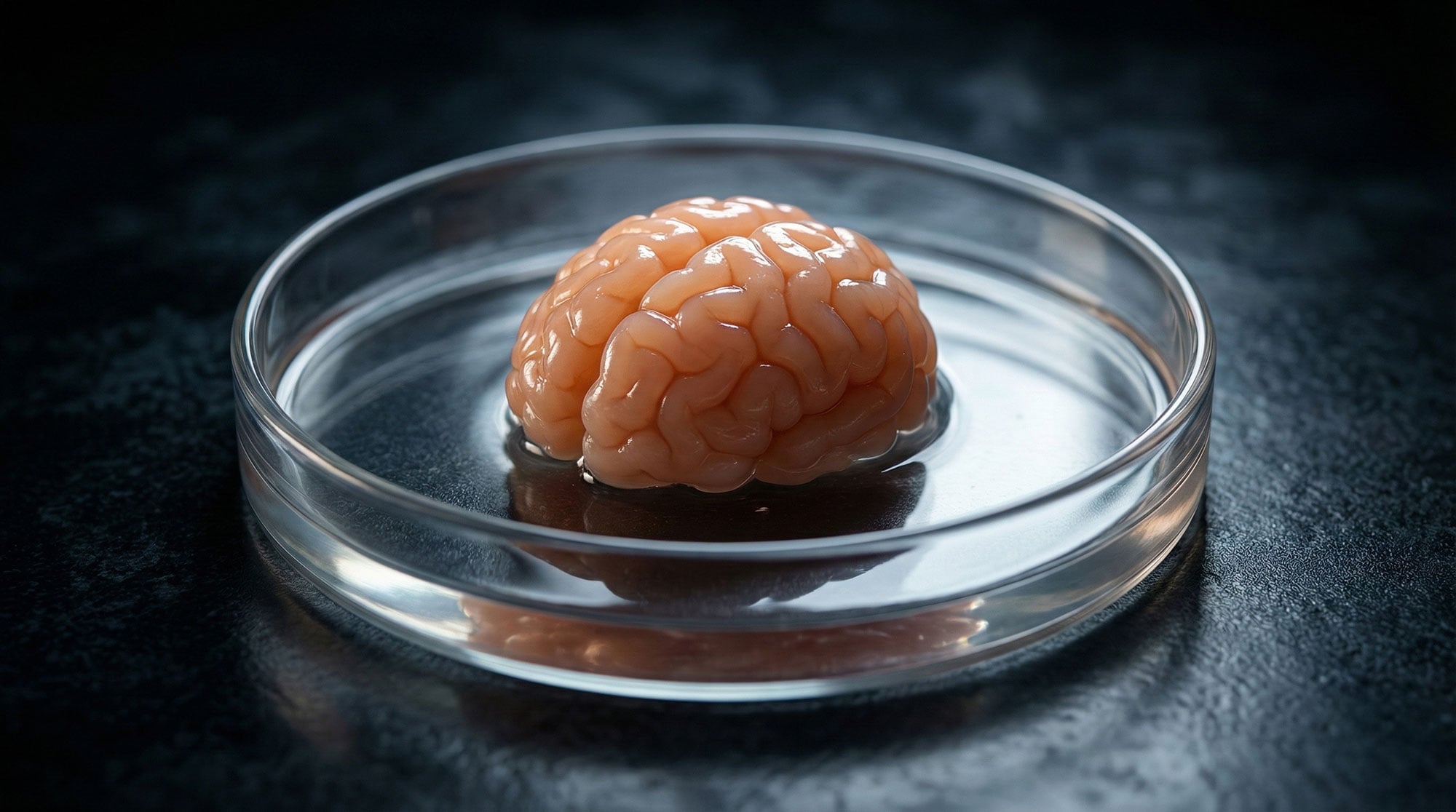
Brain organoids are 3D clusters of human brain cells grown from stem cells. They don’t think or feel, but they do mimic many features of the developing human brain, including how neurons form networks and send signals.
Researchers used these organoids to compare neural activity patterns between:
- Organoids derived from people without psychiatric diagnoses
- Organoids derived from people with schizophrenia or bipolar disorder (or with known genetic risk factors)
The striking finding: the overall structure of the tissue looked largely normal, but the patterns of neural signaling—the “conversations” between cells—were meaningfully different.
What Did the Scientists Actually Discover?
While each study has its own methods, the SciTechDaily report centers on three major themes emerging from organoid research:
- Altered neural firing patterns
Neurons in organoids linked to schizophrenia or bipolar disorder showed:- Different rhythms and timing of firing
- Less coordinated patterns across networks
- Unusual bursts or silences compared with “control” organoids
- Subtle network miswiring
Instead of dramatic structural defects, researchers saw modest but important changes in:- How strongly neurons connected to each other
- Which cells tended to form hubs in the network
- How information appeared to flow across the mini-brain
- Distinct “signatures” for different disorders
Schizophrenia and bipolar disorder did not look identical at the cellular level. Each showed its own pattern of network disruption, hinting at:- Different biological pathways driving each condition
- Potential for more personalized treatment approaches in the future
“Tiny engineered brain models reveal that psychiatric disorders may arise from distinctive disruptions in neural communication rather than obvious structural damage.” — Summary of findings reported by SciTechDaily
Why This Matters: Moving Beyond the “Invisible Illness” Myth
Many people with schizophrenia or bipolar disorder have been told, implicitly or explicitly, that their condition is “all in their head” in a dismissive way. Traditional brain scans often look normal, which can add to stigma and self-doubt.
This new work reinforces a different story:
- There are biological differences—just at a finer scale than typical MRI scans can detect.
- The issues lie in how neurons communicate, not necessarily in gross anatomy.
- Psychiatric disorders are real brain conditions with measurable, physical correlates.
For many patients, seeing this type of research can help reframe their experience: not as a personal failing, but as a health condition influenced by biology, environment, and life events.
How Brain Organoids Are Changing Psychiatric Research
Traditional psychiatric research has relied on:
- Animal models (which only approximate human brain function)
- Post-mortem brain tissue (which shows end-stage changes, not development)
- Brain imaging (which is powerful but relatively coarse-grained)
Brain organoids add a crucial new tool:
- They are derived from human cells.
- They can be grown from people with and without specific disorders.
- They reveal how neural circuits form and misfire over time.

Researchers can:
- Track development – watching how networks form and when they diverge from typical patterns.
- Test medications in the dish – seeing how existing or experimental drugs affect neural signaling.
- Study genetic risk – introducing or correcting gene variants to understand cause-and-effect relationships.
“Organoids don’t replace clinical research or imaging, but they let us run experiments we simply can’t do in living humans.” — Hypothetical summary from a neuropsychiatry researcher
From Lab to Life: What This Could Mean for Patients
These discoveries are exciting, but it’s important to be realistic about timelines. We are not yet at the point where organoids are used in everyday clinical care. However, several potential future applications are starting to take shape.
1. More Precise Diagnoses (Long Term)
Today, diagnoses like schizophrenia or bipolar disorder are based on:
- Symptoms
- Duration
- Impact on functioning
In the future, researchers hope to:
- Identify biological “signatures” of different subtypes of these disorders.
- Distinguish more clearly between conditions with overlapping symptoms.
- Spot high-risk individuals earlier, especially when combined with genetic and clinical data.
2. Better Medication Targeting
Many people cycle through several medications before finding one that helps. Organoid research may help:
- Reveal why certain medications help some people but not others.
- Guide the development of drugs that more precisely tune specific neural circuits.
- Reduce trial-and-error over the long term, though this is still a research goal, not a current reality.
3. Reduced Stigma
Even before new treatments arrive, this research can powerfully challenge stigma. It reinforces that:
- Psychiatric conditions have biological underpinnings.
- They are not caused by “weak character” or lack of effort.
- Recovery is about supporting the brain and the person, not blaming them.
A Case Study: When “Normal” Scans Aren’t the Full Story
Consider a composite example based on common clinical experiences:
“Sam,” age 22, develops intense paranoia, disorganized thinking, and auditory hallucinations during university. An MRI scan shows no obvious brain abnormalities. Blood work looks normal. After several weeks, Sam is diagnosed with first-episode psychosis, likely on the schizophrenia spectrum.
For Sam and their family, the “normal” scan can feel confusing—almost invalidating. If nothing looks wrong, why is life falling apart?
Research on brain organoids offers a different lens:
- It suggests that Sam’s brain circuits may be firing in subtly different patterns.
- It supports the idea that Sam’s condition is not “imaginary,” even if standard imaging misses it.
- It points to a future where we might identify such circuit-level differences earlier and treat them more precisely.
While this doesn’t solve Sam’s immediate challenges, it can reduce shame and open the door to more collaborative, science-informed care.
Common Questions About This Research
Are brain organoids conscious?
No. Current brain organoids:
- Lack the complexity and structure of a full brain
- Have no sensory input, body, or environment
- Show network activity, but not the integrated activity associated with consciousness
Can this research diagnose me right now?
Not at this time. Organoid research is still largely confined to specialized labs. Diagnoses are still based on:
- Clinical interviews
- Symptom history
- Functional impact
Over time, findings from organoids may inform biomarkers or tests that support diagnosis, but this is an evolving area, not a current standard tool.
Will this lead to a cure?
It’s too early to promise cures. What we can say is:
- Understanding the neural basis of these disorders is a critical step toward better treatments.
- Progress is often incremental—better medications, earlier support, and more personalized care.
- “Cure” may be less realistic than “much better long-term management and quality of life” for many people.
Practical Takeaways for Individuals and Families
While you can’t yet walk into a clinic and request organoid-based testing, there are meaningful ways to use this knowledge today.
- Use the science to fight self-blame
When symptoms flare, it’s easy to feel guilty or weak. Remember:- Your brain may be wired to process signals differently.
- That’s not your fault and not a reflection of your worth.
- Seeking help is a rational response to a complex brain condition.
- Advocate for comprehensive care
Ask your care team about:- Medication options and how they may target brain circuits
- Psychotherapy approaches (like CBT, family-focused therapy)
- Support with sleep, stress, and substance use—all of which affect brain signaling
- Stay informed—but filter hype
When you read headlines:- Look for details: Is this a mouse study? An organoid study? A clinical trial?
- Be cautious of words like “cure” or “breakthrough” without specifics.
- Use trusted sources (university sites, major medical centers, peer-reviewed journals).
- Support research ethically
If you’re interested and it feels safe, consider:- Participating in research studies through academic medical centers.
- Supporting organizations that fund ethical mental health research.
Ethical and Accessibility Considerations
As organoid technology advances, ethicists and researchers are actively debating:
- Limits on how complex organoids should become
- How to protect donor privacy when cells come from identifiable people
- How to ensure that future benefits are shared fairly, not limited to only the wealthiest patients
These conversations matter because they shape whether the science will translate into equitable, humane care.

Where to Learn More
For readers who want a deeper dive into the science behind schizophrenia, bipolar disorder, and brain organoids, consider:
- National Institute of Mental Health – Schizophrenia
- National Institute of Mental Health – Bipolar Disorder
- Nature – Research on cerebral organoids
When accessing scientific articles, keep in mind that they can be dense. It’s completely reasonable to:
- Skim the abstract and conclusion first
- Ask a clinician or researcher to help interpret the findings
- Use reputable science-communication sites (like SciTechDaily) as a bridge
Looking Ahead: Grounded Hope
Brain organoids are giving scientists a powerful new way to see the neural basis of schizophrenia and bipolar disorder—revealing that the roots of these conditions often lie in patterns of communication, not dramatic visible damage.
This doesn’t mean simple fixes are around the corner. But it does mean:
- The science is catching up with the lived reality of patients.
- There is serious, ongoing work to understand these conditions at the most fundamental levels.
- Future treatments are likely to become more precise, more personalized, and more biologically informed.
If you or someone you love is living with schizophrenia, bipolar disorder, or related symptoms, the most important action today is still grounded and practical:
- Seek professional help.
- Build a support network.
- Stay engaged with care, even when it’s hard.
Let this research be a reminder: you are not imagining it, you are not alone, and your experience aligns with a growing body of careful, compassionate science.