
Inside the Battle for the AI PC: How Apple, Google, and Microsoft Are Re‑Inventing Personal Computers with On‑Device AI
Tech media, hardware makers, and platform giants are all betting that the next big upgrade cycle will be driven by artificial intelligence built directly into devices. Under labels like “AI PC,” “AI‑first phone,” and “Copilot+,” companies are promising real‑time transcription, smarter photos and videos, privacy‑preserving assistants, and local copilots that run even when you are offline. Behind the marketing is a deeper technical and strategic battle: Apple, Google, and Microsoft each want their ecosystem to be where on‑device AI truly lives.
This article unpacks that battle. We will look at how neural processing units (NPUs) and other accelerators are reshaping laptop and smartphone design, how the major platforms differ in their AI architectures, why on‑device inference matters for privacy and performance, and what risks—lock‑in, security, and hype—are emerging alongside the opportunities.
Mission Overview: What Are “AI PCs” and Why Now?
“AI PC” is not a strict technical standard: it is a marketing label for PCs with hardware and software tuned for running AI workloads locally. In practice, an AI PC typically includes:
- An NPU or dedicated AI accelerator integrated into the SoC (system‑on‑chip).
- Firmware and OS support for routing AI tasks to that NPU efficiently.
- System‑level AI features—like Windows Copilot, macOS on‑device intelligence, or Android’s AI camera—that rely on local inference, sometimes combined with cloud models.
The timing is not accidental. Over the past five years:
- Generative AI models (for language, images, and audio) have exploded in capability and commercial importance.
- Process nodes (TSMC 3nm, 4nm, etc.) and advanced packaging have made it possible to integrate NPUs without overwhelming power budgets.
- Cloud costs have forced companies to offload some inference to user devices to keep services profitable and responsive.
“If we keep everything in the cloud, the economics simply don’t scale. Pushing AI inference to the edge—onto laptops, phones, and even wearables—is not just a performance win, it’s a business necessity.”
— Hypothetical summary of commentary often seen in Recode‑style and cloud economics analyses
Visualizing the AI Hardware Landscape
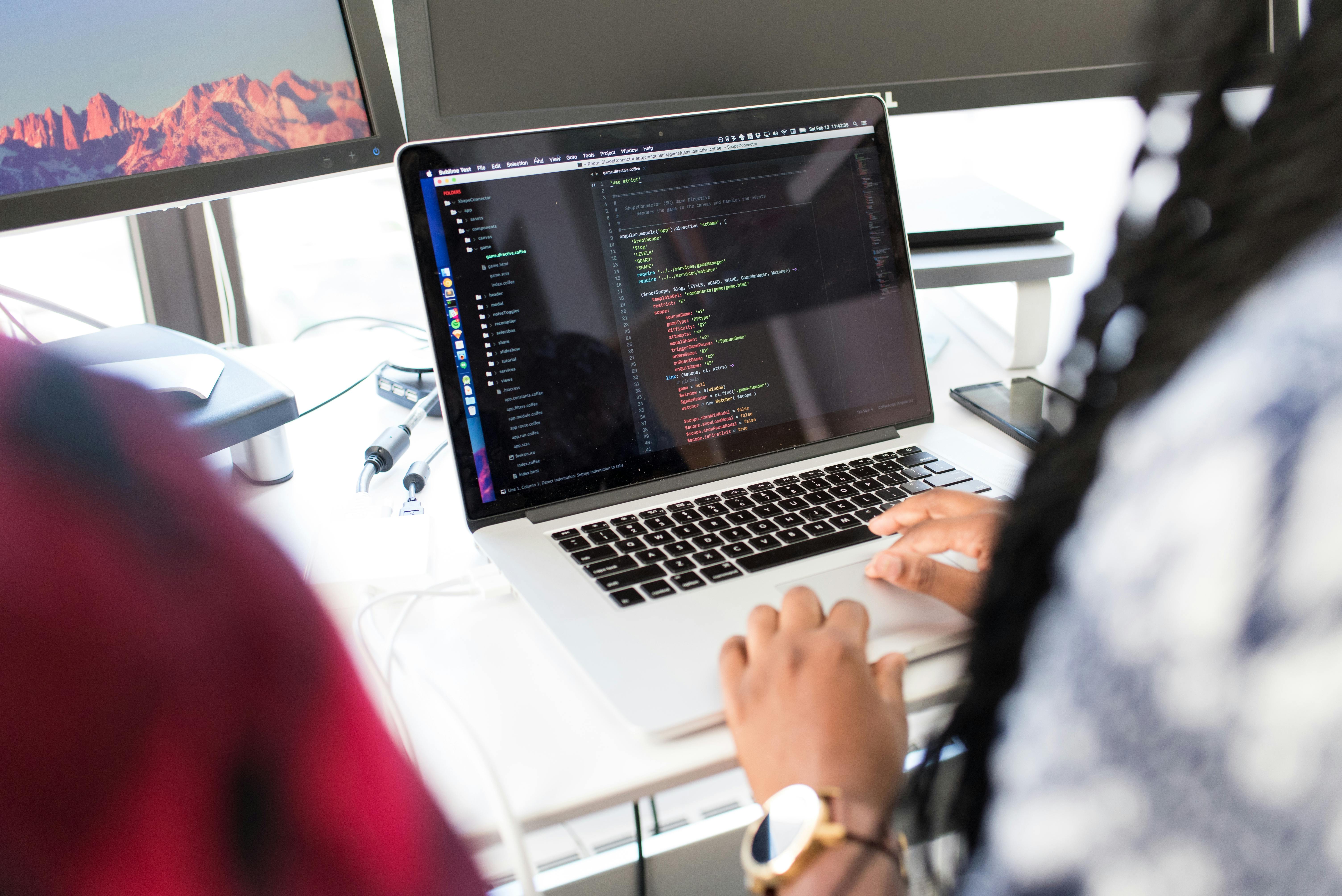
Technology: NPUs, On‑Device Models, and System Integration
Neural Processing Units: Specialized Silicon for AI Inference
NPUs are dedicated accelerators optimized for the dense linear algebra operations (matrix multiplies, convolutions) that underpin modern neural networks. Compared with CPUs and even GPUs, they aim for:
- Higher operations per watt (TOPS/W) for sustained AI workloads.
- Support for low‑precision formats (INT8, INT4, sometimes mixed precision FP16) to speed up inference.
- Tight integration with memory hierarchies to minimize data movement.
In Windows‑branded AI PCs, Microsoft and OEMs often quote NPU performance in TOPS (tera operations per second), with thresholds for branding like “Copilot+ PCs.” Apple, by contrast, typically highlights the “Neural Engine” performance as part of its M‑series chip presentations, emphasizing joint CPU‑GPU‑NPU orchestration.
On‑Device Models and Hybrid Inference
Most platform strategies today are hybrid:
- Small to medium models run directly on the device for low‑latency, privacy‑sensitive tasks (keyboard prediction, face ID, offline translation, on‑device summarization of notes or webpages).
- Larger foundation models still run in the cloud for complex reasoning, rich content generation, and cross‑device personalization.
This means system software must:
- Decide when to route a request to on‑device vs cloud models.
- Manage model updates and caching over sometimes‑constrained storage.
- Expose consistent APIs so apps can tap into AI without implementing everything from scratch.
Apple’s Integrated Stack: M‑Series Silicon and Private‑By‑Design AI
Apple’s transition to its own M‑series chips on Macs, and A‑series chips on iPhones and iPads, gives it an unusual degree of control over the AI stack: CPU, GPU, NPU (Neural Engine), operating system, and many first‑party apps. Ars Technica and Wired coverage often emphasizes how this vertical integration allows Apple to push more AI workloads on‑device without sacrificing battery life.
Key On‑Device AI Features in Apple Ecosystems
- Photo and video intelligence: Deep Fusion, Cinematic Mode, and advanced noise reduction run on the Neural Engine to improve imaging in real time.
- Speech and hearing: On‑device dictation, live captions, and personalized voice recognition reduce latency and protect user audio data.
- Natural language: Spotlight search, auto‑categorization in Photos, and on‑device summarization of messages and notes leverage compressed language models.
- Accessibility: Features like VoiceOver improvements and Background Sound aim inclusion at the OS level.
“The iPhone is increasingly an AI device, but Apple is careful not to brand it that way. They talk about photography, accessibility, and privacy. AI is the implementation detail.”
— Paraphrased from recurring analysis themes in publications such as Wired and Ars Technica
Privacy Positioning vs. Cloud Reality
Apple markets many of its features under a “privacy‑preserving” banner, stressing that data stays local whenever possible. The reality is nuanced:
- For small, repetitive tasks (keyboard prediction, on‑device Siri for basic commands), models run locally.
- For complex generative tasks or broader web access, Apple still leans on cloud‑based models and partner ecosystems.
This dual approach mirrors rivals, but Apple’s brand messaging makes privacy a primary differentiator, especially versus more ad‑driven platforms.
Microsoft and Windows: Copilot, NPUs, and the AI PC Label
Microsoft’s strategy centers on turning Windows into an “AI‑native” operating system. The company collaborates closely with chip vendors (Qualcomm, Intel, AMD) and PC OEMs (Dell, HP, Lenovo, Samsung, and others) to build laptops marketed as AI PCs or Copilot+ PCs, with NPUs that meet specific performance baselines.
Windows‑Level AI Experiences
Across recent Windows releases and feature updates, Microsoft is highlighting:
- Copilot in Windows: A system‑wide assistant that can search settings, summarize documents, and manipulate apps.
- Camera and audio enhancements: Background blur, eye‑contact correction, automatic framing, and noise suppression driven by NPU inference.
- Search and recall features: System‑wide indexing and AI‑assisted retrieval of documents, emails, and web content.
Many of these capabilities leverage a mix of local models (for perception tasks like audio and video) and cloud‑hosted large language models.
Economics and the Hardware Refresh Cycle
Recode‑style analysis and threads on communities like Hacker News often question whether AI PCs meaningfully improve productivity or simply rebrand incremental upgrades. From an economic viewpoint:
- If AI features save measurable time (fewer clicks, faster content creation), they can justify new hardware purchases.
- If they feel like gimmicks, the replacement cycle may not accelerate enough to satisfy OEM expectations.
- There are concerns about telemetry and lock‑in, where deeper system integration could lead to more data collection and reduced user control.
Google’s Android & ChromeOS Strategy: AI as a Platform Capability
Google is threading AI through Android, ChromeOS, and its services in a way that is both user‑facing and developer‑centric. The Next Web and TechCrunch frequently describe this as a battle for developer mindshare: if the OS provides strong AI primitives by default, third‑party apps can build richer features faster.
AI Features Across Google Platforms
- Android camera and photos: Features like Magic Eraser, Best Take, and advanced HDR blending rely heavily on on‑device inference, with optional cloud processing for more intensive edits.
- Live translation and captions: On‑device translation for chat, calls, and media improves accessibility and reduces reliance on the network.
- Context‑aware assistance: Suggestions in messaging, smart replies, and app‑specific recommendations powered by contextual models.
ChromeOS, meanwhile, is steadily gaining AI features like document summarization and enhanced search, particularly aimed at education and lightweight productivity.
Developer Ecosystem and API Control
For developers, Google’s approach has two sides:
- Benefits: Access to pretrained models via APIs, improved user experiences, and less need to ship massive models with each app. <2>Risks: Greater dependence on platform policies, potential changes in access terms, and limited visibility into model behavior.
“As AI features become OS defaults, many apps will differentiate less on core capabilities and more on UX, data, and niche workflows. The power shifts subtly toward the platform.”
— Typical framing in analyst commentary and developer conference panels
Scientific Significance: Edge AI, Human–Computer Interaction, and Privacy
Beyond marketing, the move to on‑device AI intersects with serious research in edge computing, machine learning, and human–computer interaction (HCI).
Edge AI and Efficient Model Design
Running models on constrained devices drives innovation in:
- Model compression: Quantization, pruning, and knowledge distillation to shrink models without catastrophic loss of accuracy.
- Neural architecture search (NAS): Automated methods to find architectures that are both accurate and efficient for NPUs.
- Federated and on‑device learning: Training or fine‑tuning models locally, then aggregating updates in the cloud without collecting raw data.
Human–Computer Interaction and Cognitive Load
AI PCs are effectively running continuous perception pipelines—observing text, images, audio, and behavior to anticipate what you need. HCI research is crucial to:
- Avoid over‑automation, where users feel disoriented or controlled by the system.
- Design transparent interfaces that explain why an AI suggestion appears.
- Ensure that accessibility gains are real and not offset by new forms of complexity.
Privacy and Security Trade‑Offs
On‑device AI reduces the need to send raw data to the cloud, which is a clear privacy win. However, researchers highlight emerging risks:
- Models stored locally could be reverse engineered or exfiltrated, exposing proprietary IP.
- Persistent AI processes may create new attack surfaces at the OS level.
- Users may misunderstand what is local vs cloud, leading to misplaced trust in some scenarios.
Milestones: From Neural Engines to AI‑Branded PCs
The current AI PC moment did not appear overnight. Several milestones set the stage:
- Early mobile NPUs: Smartphone SoCs integrated basic NPUs for camera and voice, proving the viability of edge inference.
- Apple’s M‑series transition: MacBooks gained mobile‑style SoCs with NPUs and unified memory, making AI workloads more power efficient.
- Windows on ARM and dedicated NPUs: Collaborations with Qualcomm and others brought specialized AI engines to laptops.
- Generative AI boom: Large language models and diffusion image generators created consumer‑visible demand for AI capabilities.
- AI PC branding: OEMs and Microsoft launched explicit “AI PC” categories to signal capability—though definitions vary.
Coverage by outlets such as TechRadar, Engadget, and The Verge’s hands‑on reviews further amplified these milestones, translating spec sheets into user‑oriented narratives and YouTube benchmarks.
Challenges: Hype, Lock‑In, and Real‑World Value
The cross‑industry rush toward AI PCs brings a mix of genuine innovation and marketing inflation. Key challenges include:
Hype vs. Measurable Productivity
Hacker News discussions often question whether AI‑labeled features justify a new laptop. Users and reviewers probe:
- Does real‑time transcription work reliably in noisy environments?
- Do AI editing tools meaningfully speed up video and photo workflows?
- Are “copilots” genuinely helpful, or do they add cognitive overhead?
Independent YouTubers and TikTok creators have become influential gatekeepers, stress‑testing AI promises with 4K video editing, local LLM benchmarks, and streaming setups.
Platform Lock‑In and Data Control
As AI gets woven into system services, switching platforms can mean losing:
- Personalized models tuned to your behavior.
- App integrations that rely on proprietary APIs.
- Workflow automations that do not port cleanly to other OSs.
This strengthens the incentives for Apple, Google, and Microsoft to invest aggressively, but it also reduces user agency over time.
Security and Model Integrity
New technical concerns include:
- Prompt injection and jailbreaks within system assistants.
- Adversarial inputs that exploit perception models for camera or microphone features.
- Model tampering, where attackers swap or corrupt local model binaries.
Practical Implications for Users and Developers
What Users Should Look For in an “AI PC”
If you are evaluating a new laptop or tablet marketed as an AI PC, consider:
- NPU performance and use cases: Is the NPU strong enough to support local transcription and AI video effects, or is the branding mostly cosmetic?
- Battery life under AI workloads: Review tests that stress AI features rather than only idle or web browsing benchmarks.
- Offline capability: Which AI features still work without an internet connection?
- Privacy controls: Does the OS let you manage what data feeds into AI services?
For a concrete productivity upgrade, some users pair AI PCs with peripherals like high‑refresh displays or ergonomic keyboards. For example, content creators may combine an AI‑capable laptop with a color‑accurate external monitor such as the LG 27UK850‑W 27" 4K monitor to better see the impact of AI‑driven photo and video enhancements.
Considerations for Developers
Developers building for AI PCs and mobile devices need to balance:
- OS‑integrated AI APIs (for speech, vision, summarization) vs. shipping their own models.
- Cross‑platform toolchains, such as ONNX Runtime, TensorFlow Lite, and vendor‑specific SDKs.
- Performance vs portability: Tuning models for Apple’s Neural Engine, Qualcomm’s Hexagon, or Intel/AMD NPUs can yield big wins but also fragmentation.
Up‑to‑date books and hardware can help developers experiment locally. For instance, a powerful yet portable machine—such as a modern laptop with strong GPU and NPU capabilities—paired with a reference text like “Hands‑On Machine Learning with Scikit‑Learn, Keras, and TensorFlow” can be a practical starting point for prototyping on‑device AI features.
Media Ecosystem: Reviews, Social Video, and Feedback Loops
TechRadar, Engadget, and The Verge play a central role in explaining AI PCs to mainstream audiences. Their reviews often:
- Benchmark NPU performance in real tasks (e.g., video upscaling, live filters).
- Compare AI implementations across brands (Dell vs HP vs Lenovo vs Samsung).
- Highlight usability differences in Windows, macOS, ChromeOS, and Android AI features.
At the same time, YouTube and TikTok creators stress‑test claims with:
- Editing 4K or 8K video using AI‑assisted timelines and color matching.
- Running local language models for coding or offline writing.
- Using AI‑enhanced webcams and microphones for streaming or remote work.
Their findings often feed back into the written coverage, creating a loop where real‑world testing influences what features matter in future hardware.
Conclusion: The Future of Personal Computing in an On‑Device AI World
Apple, Google, and Microsoft are converging on a shared vision: personal computers and phones that act as context‑aware, always‑available assistants powered by on‑device AI. Yet their strategies differ in emphasis—Apple leans on vertical integration and privacy, Microsoft on Windows‑wide copilots and partnerships with OEMs, and Google on developer‑friendly AI services woven through Android and ChromeOS.
In the near term, we can expect:
- More capable NPUs and accelerator blocks integrated into mainstream chips.
- Smaller, more efficient models designed specifically for on‑device inference.
- Tighter OS integration that blurs the line between apps and AI services.
- Regulatory and societal debates about privacy, competition, and algorithmic transparency.
The long‑term question is whether AI PCs will fulfill their promise of empowering users—helping people create, learn, and communicate more effectively—or whether they will primarily serve to deepen dependencies on a few dominant platforms. The answer will hinge on architectural choices being made today and on how actively users, developers, and policymakers shape the trajectory of on‑device AI.
Additional Resources and Further Reading
For readers who want to explore this topic more deeply, the following resources provide technical and strategic perspectives:
- Ars Technica – In‑depth coverage of Apple silicon, Windows AI features, and PC hardware
- The Verge – Reviews and explainers on AI‑branded laptops and phones
- TechRadar – Buyer’s guides and performance analyses for AI PCs and tablets
- Google AI – Research and product updates on on‑device and cloud AI
- Microsoft AI Blog – Official posts on Copilot and Windows AI integration
- Apple Machine Learning Research – Papers and articles on on‑device learning and privacy
- YouTube search: “AI PC review” – Real‑world benchmarks and creator perspectives
References / Sources
Selected sources and background reading on AI PCs and on‑device AI strategies:
- TechRadar – AI PC coverage: https://www.techradar.com/tag/ai
- Engadget – AI hardware and laptop reviews: https://www.engadget.com/tag/ai/
- The Verge – AI and computing: https://www.theverge.com/ai-artificial-intelligence
- Ars Technica – Apple silicon and ML coverage: https://arstechnica.com/gadgets/
- Wired – AI and platforms: https://www.wired.com/tag/artificial-intelligence/
- Google AI: https://ai.google
- Apple Machine Learning Research: https://machinelearning.apple.com
- Microsoft AI Blog: https://blogs.microsoft.com/ai/
