
Inside Apple’s On‑Device AI Revolution: How iPhone Is Becoming Your Most Private AI Assistant
Apple’s AI journey has quietly spanned more than a decade—from basic photo classification and Face ID to real‑time language translation and on‑device dictation. But with the announcement of its platform‑wide “Apple Intelligence” initiative and deep OS‑level integration in iOS, iPadOS, and macOS, the company has entered the generative AI race in a highly visible way. Rather than copying cloud‑first chatbot platforms, Apple is betting on private, low‑latency, on‑device models tightly coupled with its hardware and operating systems.
This strategy collides with several of the biggest themes in technology today: privacy‑preserving AI, the smartphone as the primary AI endpoint, and intensifying competition with OpenAI, Google, and Microsoft. With more than a billion active Apple devices, even incremental AI upgrades can have outsized impact—on users, developers, regulators, and rival chipmakers.
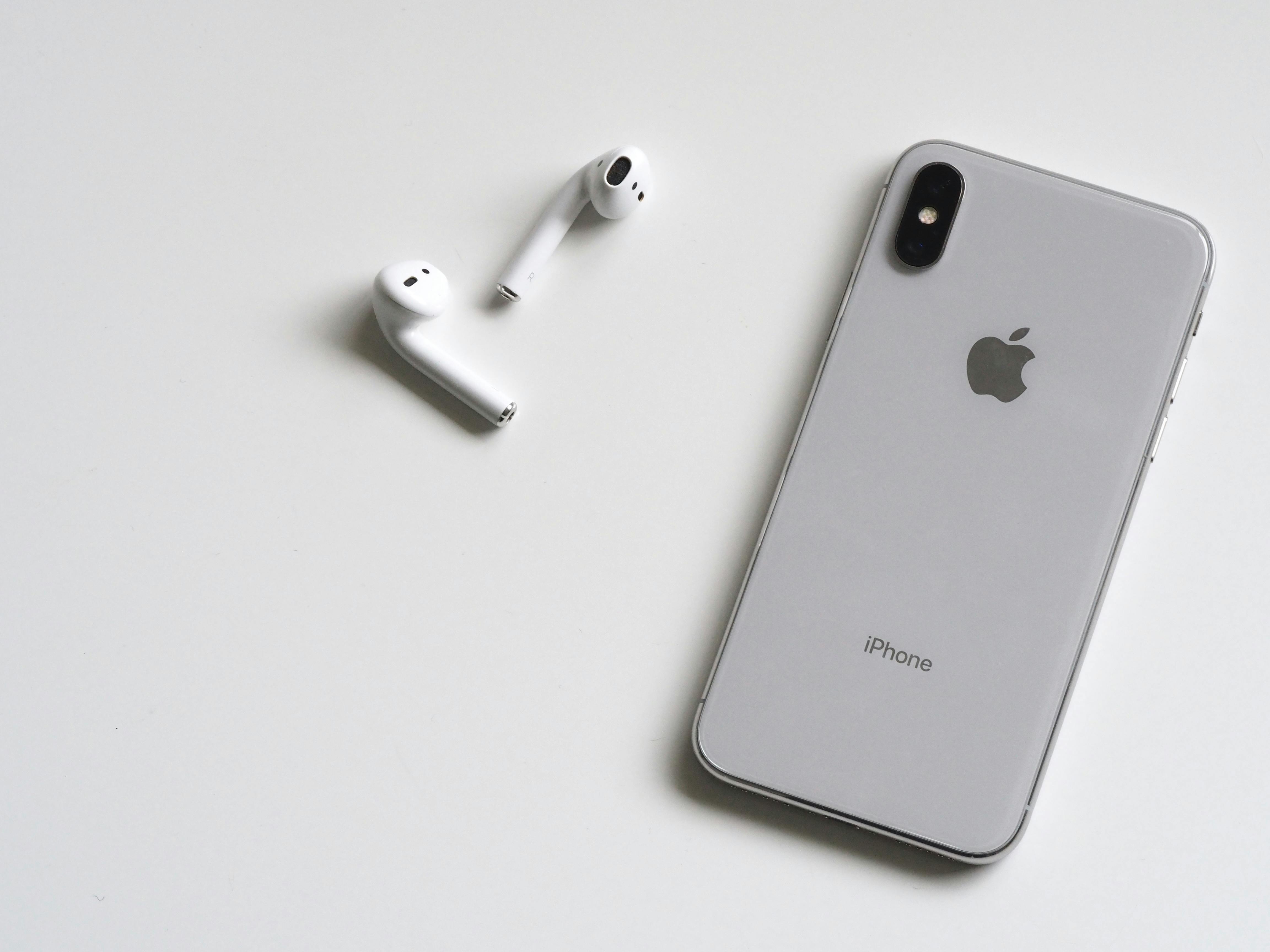
Apple’s emphasis on running models locally on A‑ and M‑series chips—with fallback to its own privacy‑focused cloud for heavier workloads—has triggered intense debate among hardware reviewers, security researchers, and developers. Can relatively small models still feel “smart enough”? Will Apple open the stack to third‑party and open‑source models? And how far can iPhone‑class silicon really be pushed before battery life and thermals become limiting factors?
Mission Overview: What Is Apple Trying to Achieve?
Apple’s AI mission in the iPhone era can be summarized in three pillars: privacy, usefulness, and platform control.
- Privacy‑first AI: Keep as much processing as possible on device, minimize server‑side logs, and avoid building ad‑driven profiles.
- Ambient usefulness: Make AI quietly improve everyday tasks—writing, summarizing, organizing, searching—without forcing users to “go to a chatbot.”
- Platform leverage: Deeply integrate AI into iOS, iPadOS, and macOS to differentiate Apple hardware and shape the app ecosystem.
“Our goal is to make AI feel like part of the fabric of your device—powerful when you need it, invisible when you don’t, and always respectful of your privacy.”
— Senior Apple executive, WWDC‑era commentary
This is a sharp contrast to browser‑centric or cloud‑centric AI experiences. Instead of positioning AI as a separate destination (like navigating to a chatbot website), Apple wants “Apple Intelligence” to quietly surface in Mail, Notes, Messages, Photos, Safari, and third‑party apps via system frameworks.
Technology: How Apple’s On‑Device and Hybrid AI Stack Works
Under the hood, Apple’s AI stack is a carefully layered combination of:
- Optimized on‑device language and vision models.
- Hardware acceleration via the Neural Engine and GPU on A‑ and M‑series chips.
- A privacy‑preserving, optional cloud back end for computationally heavy tasks.
- Developer‑facing frameworks like Core ML and new generative APIs.
On‑Device Models and Quantization
Apple relies on compact, heavily optimized models—often quantized to 4‑ or 8‑bit precision—to fit within the memory and thermal budgets of phones and laptops. These models are specialized for:
- Text tasks: Writing assistance, email replies, formatting help, code suggestions, and notification summaries.
- Vision tasks: On‑device object recognition, photo search, and visual understanding of screenshots and documents.
- Multimodal reasoning: Combining text and images, such as understanding a photo of a whiteboard or a document.
Techniques such as low‑rank adaptation (LoRA), pruning, and knowledge distillation are likely used to compress larger base models into smaller, device‑friendly variants while retaining strong performance on common tasks.
Neural Engine and Apple Silicon
Apple’s A‑series (iPhone/iPad) and M‑series (Mac) chips include a dedicated Neural Engine—a specialized block for matrix operations used in neural networks. Each new generation has increased:
- TOPS (trillions of operations per second) for AI workloads.
- Memory bandwidth available to the Neural Engine and GPU.
- Energy efficiency per inference step, critical to battery life.

This hardware baseline is what allows Apple to promise features like system‑wide summarization or image generation without instantly draining the battery or overheating the device.
Private Cloud Compute
For tasks that exceed what a local model can reasonably handle—large image generation, complex reasoning, or multimodal conversations—Apple uses a concept often described as Private Cloud Compute. The idea is:
- User data is minimized and, where possible, end‑to‑end encrypted or ephemeral.
- Requests are processed on Apple‑controlled servers with hardened security and audited software images.
- Long‑term profiling and third‑party ad targeting are explicitly avoided.
From a user‑experience perspective, this feels seamless: the system decides when to execute locally and when to escalate to the cloud based on model size, latency, and available resources.
Developer APIs and Core ML
Developers access these capabilities through:
- Core ML: Apple’s framework for running machine‑learning models on device, with tooling to convert PyTorch/TF models.
- Vision and Natural Language frameworks: High‑level APIs for classification, entity extraction, and other common tasks.
- New generative APIs: System‑mediated access to summarization, rewriting, and image generation inside third‑party apps.
Apple maintains strict control over model execution paths and UI surfaces, consistent with its long‑standing “walled garden” approach.
Scientific Significance: Why On‑Device AI Matters
On‑device generative AI is more than a marketing angle; it touches core research problems in model compression, privacy, and human–computer interaction.
Privacy and Data Minimization
Running models locally means:
- Fewer raw inputs—like messages, photos, and health data—ever leave the device.
- Personalization can happen directly on device with small, user‑specific adapters or embeddings.
- Regulators can more easily verify data‑minimization claims compared with opaque, ad‑funded cloud platforms.
“If we can push powerful models to the edge, we get a rare win‑win: better latency and a smaller privacy attack surface. The difficult part is doing it at scale on consumer hardware.”
— Bruce Schneier, security technologist, on the promise of edge AI
Latency and User Experience
Local inference removes round‑trip network delays and makes AI feel instant in UI:
- Typing suggestions and code completions can appear with sub‑100‑ms latency.
- Notification and email summaries can be generated offline, even in airplane mode.
- Accessibility features—like live captioning or screen‑content understanding—become more robust and reliable.
Research Impact: Smaller, Smarter Models
Apple’s emphasis on small and mid‑sized models pushes the field toward:
- More efficient architectures (e.g., Mixture‑of‑Experts, linear attention variants).
- Advanced quantization that preserves quality at 4‑ or even 2‑bit precision.
- Specialized models tuned for specific device‑level tasks instead of one giant general model.
This is complementary to the frontier model arms race (GPT‑4‑class systems) and broadens the research landscape beyond just “bigger is better.”
Ecosystem Impact: iPhone as the AI Endpoint
With over a billion active devices, Apple’s AI decisions rapidly shape user expectations and developer strategies.
System‑Level Features vs. Third‑Party Apps
Apple’s system‑level AI can:
- Summarize long notifications and message threads.
- Rewrite emails and documents in multiple tones.
- Generate images or illustrations for presentations.
- Offer richer, context‑aware Siri interactions.
For developers, this raises the “Sherlocking” question: if the OS can already summarize articles or auto‑edit photos, single‑purpose apps must differentiate via:
- Deeper domain expertise (e.g., legal, medical, engineering‑specific tools).
- Better workflows and collaboration features.
- Cross‑platform capabilities beyond Apple’s ecosystem.
Openness and Alternate Models
A central open question is whether Apple will:
- Allow open‑source or third‑party LLMs to integrate at the same OS depth as Apple’s own models.
- Permit users to select default AI providers for core tasks (e.g., Microsoft Copilot, Google Gemini, or open‑source models).
- Offer transparent indicators of when data is processed on‑device versus in the cloud.
The answers will influence developer innovation and antitrust scrutiny in the US and EU.
The Hardware Dimension: Apple Silicon vs. the World
Apple’s AI strategy is inseparable from its silicon roadmap. Each generation of A‑ and M‑series chips tightens the hardware–software loop for AI workloads.
Performance‑per‑Watt and Thermals
For sustained generative workloads, three constraints dominate:
- Thermal headroom: How long the device can run at full Neural Engine/GPU utilization before throttling.
- Battery impact: Whether frequent AI tasks meaningfully reduce all‑day battery claims.
- Form factor: How thin and fanless designs (especially on iPads and MacBook Air) balance power and cooling.

Tech reviewers continue to test whether intensive AI tasks—like multi‑minute image generation or document‑level summarization—remain comfortable and efficient across the product line.
Competitive Pressure on Qualcomm, Intel, and Others
Apple’s vertically integrated model increases pressure on:
- Qualcomm and MediaTek to deliver faster, more efficient smartphone NPUs.
- Intel and AMD to catch up on AI‑optimized client CPUs and integrated NPUs.
- PC OEMs to match Apple’s “it just works” AI UX on Windows and Android.
This has already triggered marketing around “AI PCs” and “AI smartphones,” with on‑device TOPS becoming a key spec alongside CPU and GPU.
Milestones: From Siri to Apple Intelligence
While Apple’s generative AI push feels sudden, it rests on years of incremental milestones:
- Early Siri (2011–2015): Cloud‑centric, rule‑heavy assistant with limited context.
- On‑device ML (2016–2020): Photos search, Face ID, and basic language tasks moved to the device.
- Neural Engine era (2017+): Each new chip added more TOPS; Core ML became a standard developer tool.
- Transformer adoption (2020+): Quiet internal shift toward transformer‑based architectures for language and vision.
- Apple Intelligence (mid‑2020s): Public, system‑wide generative features across iPhone, iPad, and Mac.
Throughout, Apple maintained a clear narrative: AI should enhance the personal computing experience while preserving user autonomy and privacy.
Challenges: Technical, Business, and Regulatory Risks
Apple’s on‑device AI strategy faces real headwinds. Key challenges include:
1. Model Quality vs. Size
Smaller on‑device models may:
- Produce less coherent long‑form content compared with cloud giants like GPT‑4‑class systems.
- Struggle with complex reasoning, coding, and niche knowledge domains.
- Require frequent updates to keep pace with rapidly improving frontier models.
Apple’s hybrid approach (on‑device for routine tasks, cloud for heavy lifting) is designed to mitigate this, but users will inevitably compare experiences across ecosystems.
2. Openness and Interoperability
Developers and regulators are asking:
- Will Apple’s AI stack be “open” enough to allow competing models with equal integration?
- Could restrictions on default AI providers attract antitrust scrutiny similar to past browser and search cases?
- How easily can enterprises plug in their own private models while maintaining Apple’s UX polish?
3. Transparency and User Trust
To satisfy both regulators and privacy‑conscious users, Apple must clearly communicate:
- When AI is running on device versus in the cloud.
- What data is retained, for how long, and for which purposes.
- How to disable or limit AI features without breaking core functionality.
“AI systems are only as trustworthy as the transparency around them. Users deserve to know not just what the model can do, but where and how it’s doing it.”
— Yann LeCun, Turing Award laureate, on building trustworthy AI
4. Developer Economics
If OS‑level AI absorbs a large share of simple tasks (summaries, rewrites, simple image edits), independent developers may see:
- Commoditization of basic AI features.
- Pressure to compete on workflow depth, data integrations, or enterprise features.
- Growing dependence on Apple’s in‑OS AI surfaces for distribution and discovery.
This echoes earlier shifts when Apple integrated features like screen recording or password management into the OS.
Tools, Learning, and Related Resources
For users and developers who want to explore Apple’s AI ecosystem more deeply, several practical resources and tools can help.
Hands‑On With On‑Device AI
- Apple Machine Learning & Core ML Developer Site — official docs, sample code, and WWDC sessions on deploying models to iPhone, iPad, and Mac.
- YouTube sessions on Apple Intelligence and on‑device AI — technical deep dives and demo walkthroughs.
- Papers With Code: On‑Device Learning — curated research papers and benchmarks related to edge AI.
Helpful Hardware and Reading
For power users and developers, the hardware you use to build, test, and understand these systems matters:
- MacBook Pro with M2 Pro / M3‑class chip — a popular development machine in the US for running Core ML workloads locally, with strong battery life and Neural Engine performance.
- Artificial Intelligence: A Modern Approach (4th Edition) — a canonical AI textbook that provides the conceptual grounding behind many modern techniques.
Following leading researchers on platforms like LinkedIn and X can also help you track where edge‑AI research is heading, including figures like Yoshua Bengio, Yann LeCun, and Apple’s own ML leadership.
Conclusion: The iPhone Era of AI Is Just Beginning
Apple’s late but forceful entry into generative AI reframes the conversation around how and where intelligent systems should run. By emphasizing on‑device models, tight OS integration, and privacy‑preserving cloud assistance, Apple is betting that the future of AI is not just in massive data centers but also in the smartphones, tablets, and laptops we carry every day.
The strategy is not without trade‑offs: smaller models face quality ceilings, platform control raises openness concerns, and rapid frontier‑model progress elsewhere keeps competitive pressure high. Yet if Apple can make AI feel seamless, trustworthy, and genuinely helpful in daily workflows, it could redefine expectations for personal computing in much the same way the original iPhone did.
Over the next few years, expect three trends to dominate:
- Rapid advances in efficient, edge‑friendly model architectures.
- Intensifying “AI silicon” competition across phones and PCs.
- Regulatory focus on privacy, defaults, and platform power in AI.
For users, the practical takeaway is simple: your iPhone, iPad, and Mac are evolving into powerful, personal AI companions. For developers and businesses, the challenge is to build on top of this new foundation in ways that add depth, trust, and differentiated value above what the OS provides by default.
Practical Tips: How to Prepare for Apple’s AI Future
Whether you are a user, developer, or technology leader, there are concrete steps you can take now.
For Everyday Users
- Review privacy settings around AI features and choose the balance of convenience vs. data sharing that you are comfortable with.
- Experiment with system‑level tools like text rewriting, summarization, and enhanced search to understand how they change your workflows.
- Stay informed via reputable outlets—The Verge, WIRED, and Apple’s own newsroom—about new AI capabilities and controls.
For Developers and Product Teams
- Audit your app or product: what AI features will soon be “built into the OS,” and where can you offer deeper or more specialized value?
- Learn Core ML and Apple’s generative APIs to integrate system intelligence without reinventing the wheel.
- Design for transparency: clearly explain when your app uses local vs. cloud models and why.
For Organizations and IT Leaders
- Update device and data‑governance policies to account for on‑device AI features and potential data flows to the cloud.
- Consider how Apple’s hybrid approach aligns with your regulatory obligations (HIPAA, GDPR, etc.).
- Evaluate training and change‑management needs as AI‑augmented tools roll out across your workforce.
Taking these steps now will make it easier to harness the benefits of Apple’s AI ecosystem while staying ahead of the risks and trade‑offs.
References / Sources
Further reading and primary sources for the topics discussed:
- Apple Newsroom – Official announcements on Apple Intelligence and Apple Silicon
- Apple Developer – Machine Learning & Core ML
- arXiv.org – Preprints on model compression, quantization, and on‑device learning
- The Verge – Coverage of Apple’s AI strategy and hardware reviews
- WIRED – Analysis of generative AI trends, privacy, and regulation
- Papers With Code – On‑Device Learning Task Page
