
Inside Apple’s On‑Device AI Revolution: How ‘Private AI’ Could Redefine Your iPhone
Apple’s first fully on-device AI rollout marks a pivotal change in how consumer devices handle intelligence: instead of sending your data to giant cloud models, more of the computation now happens locally on iPhones, iPads, and Macs powered by Apple Silicon. Branded as “private, on‑device AI,” this strategy sits at the intersection of privacy engineering, chip design, developer ecosystems, and tech policy—and it is already reshaping expectations for what a smartphone or laptop should be able to do offline.
Across outlets such as The Verge, Ars Technica, TechCrunch, and Wired, three themes dominate coverage:
- Privacy positioning: How “private” is on‑device AI in practice, and what still touches Apple’s servers?
- Silicon strategy: How Apple’s Neural Engine and unified memory architecture are tuned for large language models (LLMs) and diffusion models.
- Ecosystem control: Whether deep OS‑level AI will empower or sideline third‑party apps and alternative models.
This article explores the mission behind Apple’s on‑device AI, the technology stack that enables it, its scientific and societal significance, key milestones and challenges, and what it all means for users, developers, and regulators.
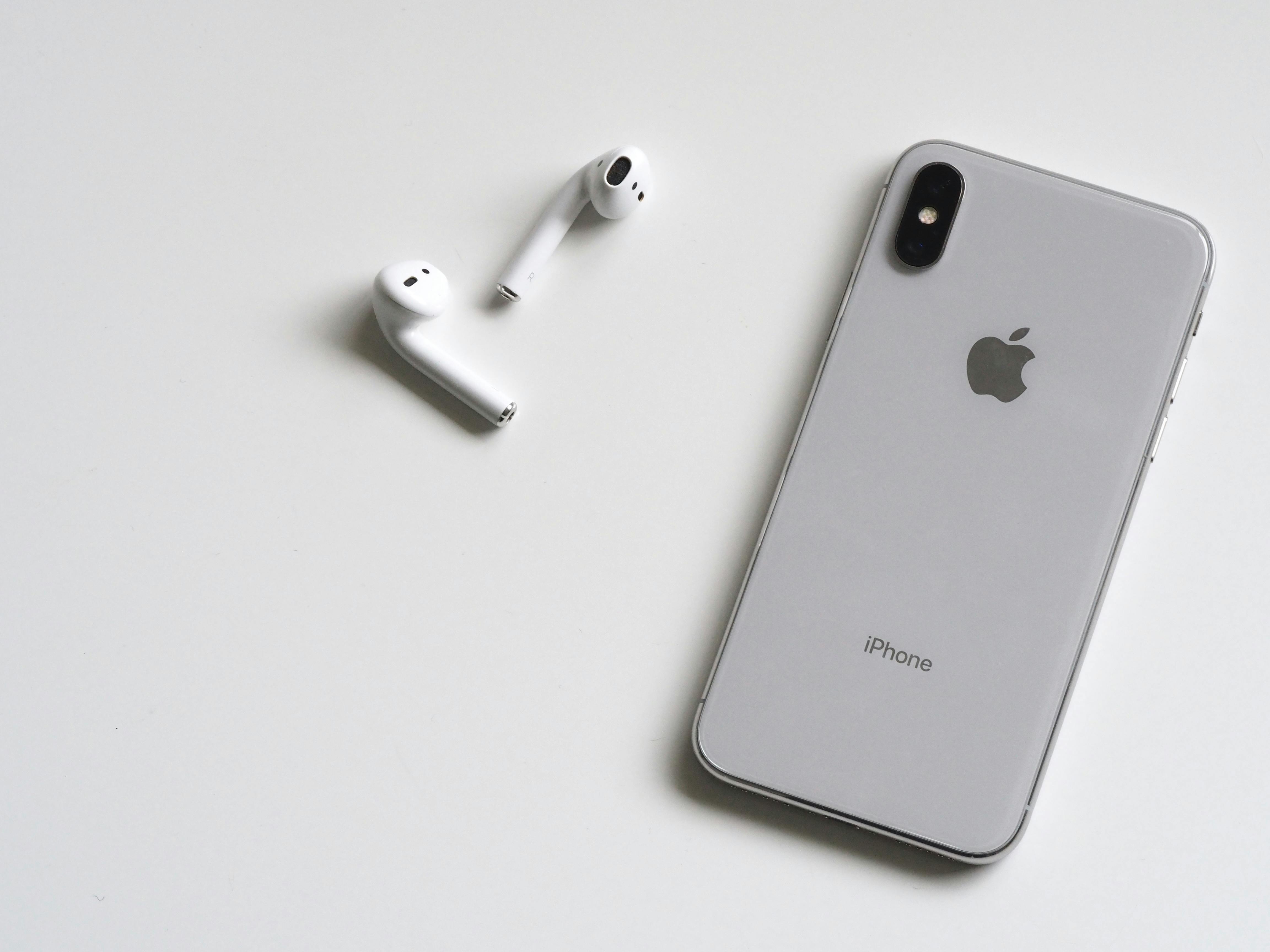
Mission Overview: What Apple Is Trying to Achieve
At a strategic level, Apple’s mission with on-device AI is to turn personal devices into context‑rich, privacy‑preserving assistants that can understand you and your data without constantly phoning home to the cloud. This aligns with Apple’s long‑standing positioning as the “privacy-first” consumer tech company, and leverages its control over hardware, operating systems, and frameworks.
From Apple’s public statements and developer documentation, the goals can be summarized as:
- Maximize privacy by default through local processing of sensitive content whenever feasible.
- Exploit Apple Silicon (CPU, GPU, and dedicated Neural Engine) to deliver low‑latency, energy‑efficient AI features.
- Deeply integrate AI into the OS so that summarization, generation, and recommendation capabilities are available across apps.
- Maintain ecosystem control by providing curated AI APIs and limiting uncontrolled access to system‑wide context.
“We believe AI is most powerful when it’s deeply integrated into the experience you already use every day—and when your personal data stays on the device in your control.”
While the marketing narrative focuses on privacy and magic‑like user experience, the underlying reality is a long‑planned convergence of chip design, OS architecture, and machine learning research.
Technology: How Apple’s On‑Device AI Actually Works
Apple’s on‑device AI strategy relies on a vertically integrated stack, from transistors up to user‑facing features. At its core are Apple Silicon SoCs (A‑series for iPhone/iPad and M‑series for Mac) and software frameworks like Core ML, Metal, and new OS‑level AI services.
Apple Silicon and the Neural Engine
Each generation of Apple Silicon has progressively increased the size and efficiency of the Neural Engine—the dedicated NPU (Neural Processing Unit) responsible for matrix operations common in deep learning. Modern chips deliver tens of trillions of operations per second (TOPS) at low power, enabling:
- Real‑time language model inference for typing suggestions, rewriting, and summarization.
- On‑device diffusion models for image generation and editing.
- Vision models for object detection, scene understanding, and AR.
Unified memory, high bandwidth, and tight coupling with the GPU and CPU allow Apple to schedule AI workloads efficiently, balancing responsiveness with battery life.
Core ML, Model Compression, and Runtime Optimizations
On the software side, Apple’s Core ML framework converts large models into optimized binaries suitable for the Neural Engine. Techniques include:
- Quantization: Reducing weights from 32‑bit floating point to 8‑bit or lower to shrink memory footprint and speed up inference.
- Pruning and distillation: Removing redundant parameters and training smaller “student” models that approximate larger “teacher” models.
- Operator fusion: Combining multiple neural operations into a single kernel to minimize memory transfers.
These optimizations are crucial: a server‑class LLM with hundreds of billions of parameters cannot run on a smartphone. Instead, Apple deploys smaller, highly optimized models that can run acceptably fast on‑device, sometimes backed by optional cloud “boosts” for more complex tasks.
System-Level Integration and APIs
Apple exposes AI capabilities through OS services and APIs:
- Natural language APIs for summarization, entity extraction, and semantic search.
- Vision APIs for object recognition, OCR, and scene analysis.
- Generative APIs for text rewriting, code assistance, and image creation.
Developers can call these services without handling raw models directly, but this also means Apple mediates what is possible, when, and under which policy constraints.

What Does “Private AI” Really Mean?
Apple’s marketing emphasizes that AI features run “on your device, not in the cloud.” In practice, privacy is a spectrum, and the reality is more nuanced than slogans suggest.
On‑Device vs. Cloud: A Hybrid Model
Technically, Apple uses a hybrid model:
- On‑device by default: Many everyday tasks—such as smart replies, short text rewrites, basic summaries, and photo categorization—run entirely locally.
- Optional cloud “enhancements”: More complex tasks may be offloaded to larger models hosted on Apple’s servers, sometimes with advanced privacy protections like data minimization and ephemeral storage.
- Telemetry and analytics: Aggregated, anonymized data may still be collected to improve models, subject to Apple’s privacy policies and opt‑out settings.
“On‑device AI is a meaningful privacy improvement, but it doesn’t magically eliminate all data flows or tracking incentives. You have to read the fine print.”
Threat Models and Real-World Privacy Gains
For many users, the main privacy risk is mass data collection in centralized clouds. Running models locally mitigates:
- The risk of large‑scale server breaches exposing personal data.
- Routine logging of content that would otherwise have to be transmitted.
- Jurisdictional issues where data stored abroad is subject to foreign laws.
However, on‑device AI does not automatically protect against:
- Malware or rogue apps on the device itself.
- Physical access attacks on lost or stolen devices (partially mitigated by secure enclaves and encryption).
- Optional cloud features that users may enable without fully understanding trade‑offs.
From a policy perspective, Apple’s privacy posture remains stronger than many competitors, but experts and watchdogs are scrutinizing how “private AI” is implemented at a technical and contract level, not just in keynote slides.
Scientific Significance: Edge AI at Consumer Scale
Apple’s on‑device AI push represents one of the largest deployed examples of edge AI—running non‑trivial ML models at the “edge” of the network, on personal devices rather than centralized servers. This has broad implications for machine learning research, networking, and human‑computer interaction.
Edge AI and Resource-Constrained Inference
Research areas energized by Apple’s strategy include:
- Model compression and distillation to squeeze high‑quality models into limited memory and power budgets.
- Federated and on‑device learning that adapt models to individuals without uploading raw data.
- Hardware‑aware training where models are co‑designed with specific NPUs and memory hierarchies in mind.
Papers from conferences like NeurIPS, ICML, and ICLR increasingly address these constraints, often citing real‑world deployment scenarios that look a lot like current Apple devices.
Human–Computer Interaction and Contextual Intelligence
On‑device AI enables a richer understanding of personal context:
- Emails, messages, and documents stored locally.
- Photos, location history, and usage patterns.
- Accessibility preferences and interaction styles.
By keeping this sensitive context on the device, Apple can deliver more personalized assistance—like proactive suggestions, context‑aware summaries, or tailored accessibility features—while reducing the need to upload raw data.
“The future of AI will be about making machines understand people and their environments in richer, more nuanced ways—safely and respectfully.”

Developer Ecosystem and App Economy Impact
Perhaps the most heated debates around Apple’s on‑device AI strategy center on developers. When the OS offers built‑in summarization, rewriting, transcription, and image generation, entire categories of standalone apps may face direct competition from system features.
Platform APIs: Empowerment and Gatekeeping
Apple provides ML and generative APIs that:
- Allow developers to add AI‑powered features without building or hosting their own models.
- Ensure consistent privacy defaults and performance profiles across the platform.
- Let Apple define policies around acceptable use, content filtering, and data access.
This dual role—as both infrastructure provider and app store gatekeeper—raises concerns reminiscent of earlier antitrust cases around browser bundling and search.
Competition with Third-Party Apps
Tech media and developers on forums like Hacker News are asking:
- If the OS can summarize any text, what is the unique value of a third‑party summarization app?
- Will Apple permit deep integration of alternative models (e.g., open‑source LLMs) with system‑wide context?
- How transparent will Apple be about priority, performance, and access tiers for its own features vs. third‑party ones?
The answers will shape the next wave of startup opportunities—and potentially, regulatory responses.
Tools and Learning Resources for Developers
Developers building for Apple’s ecosystem can explore:
- Apple’s Core ML documentation and sample code for on-device ML.
- Swift and Metal tutorials for GPU/NPU‑accelerated workloads.
- Open‑source model repos on GitHub adapted for Core ML conversion.
For those experimenting locally, popular hardware like the Apple MacBook Pro with M3 chip offers ample Neural Engine performance to prototype and test on‑device models with realistic constraints.
Milestones: How We Got to Apple’s On‑Device AI Moment
Apple’s current strategy did not appear overnight; it is the culmination of more than a decade of incremental, sometimes quiet, investments.
Key Historical Steps
- Early Siri integration: Introduced cloud‑based voice assistant features but highlighted latency and privacy limitations.
- Dedicated Neural Engine (A11 and beyond): Laid hardware foundations for local inference in Face ID, photo recognition, and AR.
- Core ML launch: Provided a standardized pipeline for bringing trained models onto Apple devices.
- Transition to Apple Silicon Macs: Unified architecture across phones, tablets, and laptops, simplifying deployment and optimization.
- System‑level generative features: The latest wave of updates extends AI from isolated apps into OS‑wide capabilities.
Each generation made local ML less of a novelty and more of a design assumption, paving the way for today’s fully on‑device branded initiatives.

Challenges: Technical, Ethical, and Regulatory
Despite its promise, Apple’s on‑device AI strategy faces serious obstacles, both technical and social.
Technical Constraints
Even with powerful NPUs, devices still have far less compute and memory than data‑center GPUs. This creates trade‑offs:
- Model size vs. quality: Smaller models may hallucinate more or understand less context than frontier cloud LLMs.
- Battery and thermals: Sustained AI workloads can drain batteries and heat up devices if not carefully tuned.
- Update cadence: Shipping new or improved models often requires OS updates, which are slower than server‑side deployments.
Ethics, Safety, and Content Controls
On‑device AI raises new safety questions:
- How to enforce content filters when inference happens locally?
- How to prevent disallowed uses (e.g., deepfake creation) without invasive monitoring?
- How to provide recourse or logging for harmful outputs if nothing is stored in the cloud?
Apple is likely to combine model‑level safety training with policy constraints in APIs, but details matter—and critics are watching closely.
Antitrust and Policy Scrutiny
As AI becomes an OS‑level feature, regulators in the US, EU, and elsewhere may ask if Apple is:
- Unfairly favoring its own AI services over third‑party competitors.
- Restricting user choice in selecting default models or assistants.
- Bundling AI in ways analogous to past browser or media player cases.
Policy‑focused coverage from outlets like Wired and legal scholars on platforms such as Lawfare suggest that “AI as infrastructure” will be a central theme in upcoming tech regulation debates.
Practical Guidance: How Users and Teams Can Approach On‑Device AI
For individuals and organizations deciding how to use Apple’s on‑device AI, a few practical steps can maximize benefits while managing risk.
For Everyday Users
- Review privacy settings: Explore Settings → Privacy & Security to understand which AI features send data to the cloud.
- Prefer on-device options: Where possible, choose features that explicitly indicate local processing.
- Stay updated: Security and model improvements often arrive via OS updates; keeping your device current is part of AI safety.
For Teams and Professionals
- Map data sensitivity: Identify what can safely be processed on‑device versus what is subject to stricter compliance rules.
- Pilot and benchmark: Compare on‑device features with trusted cloud tools for tasks like summarization, coding assistance, or translation.
- Document policies: Create internal usage guidelines that specify which AI features are approved for work data.
Professionals working extensively with local AI may benefit from higher‑end Apple hardware; for instance, the 15‑inch MacBook Pro with Apple Silicon provides additional GPU and Neural Engine headroom for heavier on‑device experiments.
Conclusion: The Future of ‘Private AI’ on Your Devices
Apple’s first fully on‑device AI push is more than a product launch; it is a bet on a particular future for computing—one where our devices are powerful, context‑aware assistants that know us intimately, but keep that knowledge mostly on the device instead of in corporate data centers.
Whether this vision succeeds depends on:
- How well Apple balances model quality with on‑device constraints.
- How transparent and fair it is toward developers and competing AI providers.
- How regulators interpret AI capabilities as part of core platform power.
- How much users value—and understand—privacy differences between local and cloud AI.
What is clear is that “on‑device AI” and “private AI” are not just buzzwords: they are becoming central design principles in the next generation of consumer technology, and Apple is determined to define what those terms mean in practice.
Additional Resources and Learning Paths
To dive deeper into on‑device and privacy‑preserving AI, consider:
- Apple Machine Learning Research – Official blog posts and papers from Apple’s ML teams.
- Google’s Federated Learning pages – A good conceptual introduction to on‑device and federated learning approaches.
- YouTube playlists on Apple Silicon and on‑device AI – Talks from WWDC and independent researchers.
- arXiv preprints on on‑device inference – Research papers on compression, quantization, and efficient ML.
For a broader understanding of AI’s societal impact, Fei‑Fei Li’s talks on human‑centered AI and Bruce Schneier’s writings on security and privacy are valuable complements to Apple’s own narratives.
References / Sources
Selected sources covering Apple’s on-device AI and related topics:
