
Inside the AI Copyright Wars: Who Owns the Training Data Fueling Generative Models?
As courts, creators, publishers, and AI companies clash over “fair use,” style mimicry, licensing, and transparency, the outcome of these AI copyright wars will determine not only who gets paid, but what kinds of models can exist and how open the future of the web will be.
Generative AI has turned the world’s digital culture—news articles, books, songs, code, artwork, social posts—into raw material for machine learning. Now, the people and organizations that created that culture are asking whether AI companies had the right to copy it, remix it, and monetize it in the first place. From blockbuster newsroom lawsuits to policy fights in Washington and Brussels, the dispute over training data has become one of the defining technology conflicts of the 2020s.
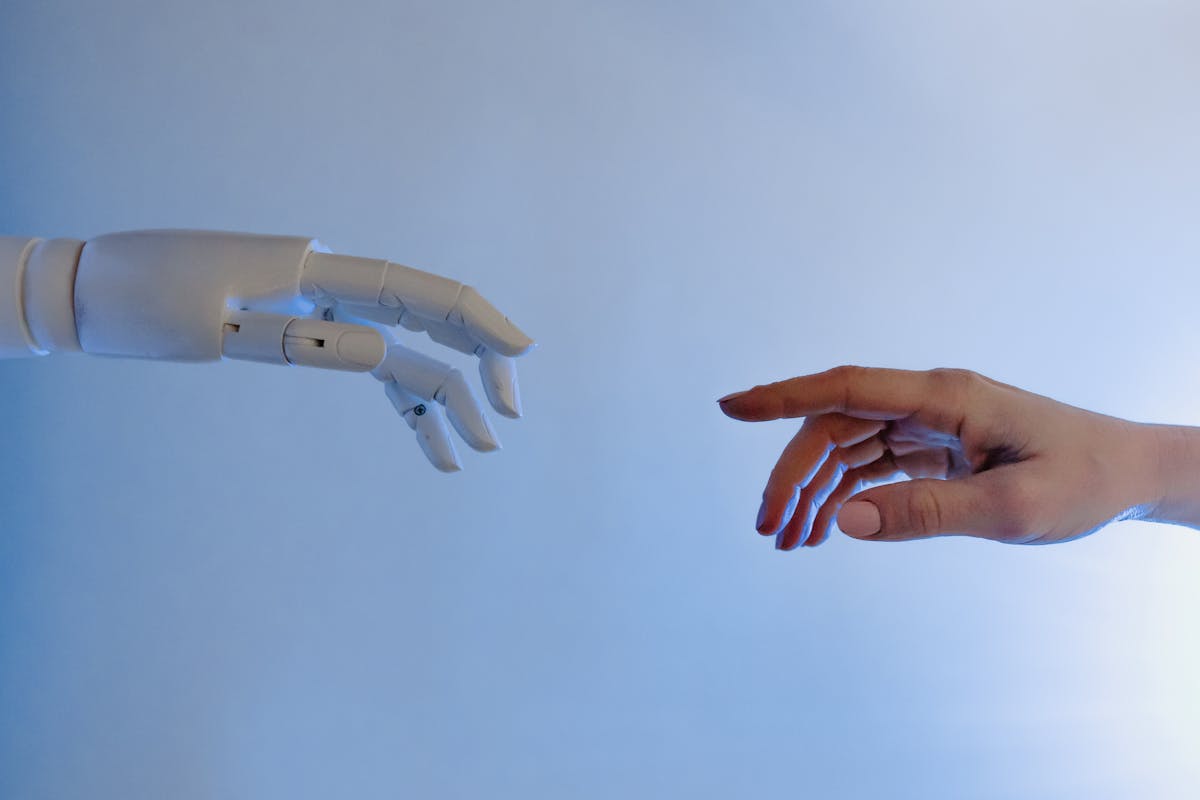
This article unpacks the current wave of lawsuits, the technical realities of training large models, how policymakers are responding, and what it all means for journalists, artists, developers, and everyday users of AI tools.
Mission Overview: What Are the AI Copyright Wars About?
At the center of today’s AI copyright battles is one deceptively simple question: when an AI system is trained on copyrighted material, is that training a lawful use or an infringement? From that question flow a series of disputes:
- Are AI companies engaged in protected “fair use” or similar exceptions when they copy works into training sets?
- Does generating content “in the style of” an artist or author violate their rights, even if the system never outputs an exact copy?
- Should creators have a right to consent, opt out, or receive payment when their work is used for training?
- How transparent must companies be about the origins of their training data?
These questions are now playing out in coordinated litigation and policy efforts worldwide, with tech and media outlets like The Verge, Wired, Ars Technica, and TechCrunch documenting each twist.
“We are witnessing a once‑in‑a‑generation collision between a new general‑purpose technology and an old but powerful legal framework.”
— Paraphrased perspective from copyright scholars following current U.S. Copyright Office inquiries
Publisher and Newsroom Lawsuits
Major news organizations and book publishers argue that AI companies have built products on the back of their journalism and literature without permission. Beginning in 2023 and accelerating through 2024 and 2025, newsroom and publisher lawsuits have become a central front in the AI copyright wars.
Key Cases and Allegations
- News organizations vs. AI labs: Coalitions of newspapers and digital outlets have sued major AI developers, alleging unauthorized copying of paywalled and subscriber‑only articles during training. Complaints often point to:
- Evidence that training datasets contained full‑text copies of subscription content.
- Chatbot outputs that closely paraphrase or summarize recent reporting without attribution or payment.
- Use of logos and trademarks in model responses, potentially triggering separate trademark claims.
- Book authors and publishers: Groups of authors claim that models were trained on full copies of their books—including bestselling fiction and nonfiction—sourced from large online book corpora.
- Stock‑image providers: Visual‑media companies allege that image‑generation models were trained on licensed photo libraries whose terms forbade such use, and that AI outputs sometimes reproduce distinctive watermarks or compositions.
Reporters at outlets like Wired and Ars Technica note that these lawsuits could clarify how traditional doctrines like fair use in the U.S. and text‑and‑data‑mining (TDM) exceptions in the EU and UK apply when copying occurs at the scale of entire internets.
Fair Use and Text‑and‑Data‑Mining in Dispute
- Purpose and character: AI developers argue that training is “transformative” because models learn statistical patterns rather than competing works. Plaintiffs counter that outputs can function as direct substitutes for original reporting, books, or images.
- Nature of the work: Many training inputs are highly creative, which traditionally weighs against fair use and in favor of copyright holders.
- Amount and substantiality: Models often ingest entire works, not short excerpts; courts must decide whether such wholesale copying can still be considered fair in a machine‑learning context.
- Market impact: Publishers argue that chatbots and AI‑enhanced search siphon traffic and revenue; AI firms argue that they drive new readership through citations, links, or licensing deals.
“What’s new is not that machines read copyrighted works—it’s that they now produce replacements for those works.”
— Argument frequently raised by media plaintiffs in ongoing litigation
Creators Versus AI Platforms: Style, Voice, and Livelihoods
Beyond institutional plaintiffs, individual creators—musicians, authors, illustrators, photographers, and influencers—are confronting AI platforms that can imitate their artistic signatures. Many acknowledge the creative potential of AI assistance, but object when models generate works that audiences perceive as theirs.
Style Imitation and Deepfakes
- Music and voice: Synthetic vocals can closely emulate famous singers, raising questions of “voice rights” and publicity rights. Platforms like Spotify and YouTube Music are experimenting with policies and tools to detect or manage AI‑generated tracks.
- Visual art: Image generators can produce illustrations “in the style of” specific artists. Some see this as akin to human influence; others argue it is tantamount to unauthorized commercial exploitation of a career’s worth of work.
- Authors and scriptwriters: Writers worry that models trained on their prose now allow others to churn out derivative novels, scripts, or marketing copy in their recognizable voice.

Emerging Creator Strategies
Creators are experimenting with mixed approaches:
- Opt‑out registries: Using tools from initiatives such as Spawning to signal “do not train” preferences.
- Personal models: Some writers, YouTubers, and podcasters train private models on their own archives to speed up scripting or editing, accepting AI as a collaborator rather than competitor.
- Collective bargaining: Unions and guilds negotiate AI clauses in contracts, setting boundaries on training and synthetic performance reuse.
“The issue is not whether AI exists; it’s who controls it and who gets compensated.”
— Paraphrased from public statements by creative guild representatives during recent contract negotiations
Technology: How Training Data Fuels Generative Models
To understand the legal battles, it helps to grasp how foundation models are actually trained. Modern large language models (LLMs) and diffusion‑based image generators rely on ingesting vast corpora of text, audio, video, and images.
Typical Training Pipeline
- Data collection: Companies crawl the public web, license datasets, or ingest user‑submitted content. Sources can include web pages, ebooks, code repositories, image libraries, and captioned videos.
- Pre‑processing: Content is tokenized, deduplicated, filtered for quality and safety, and sometimes annotated with labels or metadata.
- Pre‑training: Models learn to predict the next token (text, audio, pixels) across billions or trillions of examples, internalizing statistical patterns about language, imagery, and sound.
- Fine‑tuning and alignment: Developers refine base models using curated datasets, reinforcement learning from human feedback (RLHF), or task‑specific training.
From a copyright perspective, the critical step is the initial copying and storage of works into training sets. Even if the model later compresses these inputs into parameters, the act of copying may itself be infringing in some jurisdictions unless an exception or license applies.
Technical Mitigations Under Discussion
- “Clean‑room” datasets: Training solely on public‑domain, openly licensed, or explicitly licensed material.
- Output filters: Detecting and suppressing verbatim or near‑verbatim regurgitation of training data.
- Watermarking & provenance: Embedding signals in AI outputs or using standards like C2PA for content origin labels.
- Data auditing: Maintaining internal logs of dataset composition to respond to regulator or litigant inquiries.
Policy and Legislation: Governments Enter the Fray
Lawmakers worldwide are racing to adapt copyright and AI regulation to the realities of generative models. While details vary, several common themes emerge: transparency, consent, and accountability.
Europe: AI Act and TDM Exceptions
The European Union’s AI Act, complemented by existing copyright directives, is moving toward:
- Requiring training‑data transparency for high‑impact models, at least at the level of dataset categories or major sources.
- Reinforcing opt‑out rights for text‑and‑data‑mining, allowing rightholders to reserve their content from AI training.
- Encouraging risk management and documentation around AI systems that could affect fundamental rights.
Ars Technica and other outlets have analyzed how these rules may force AI providers serving the EU to disclose more about their data pipelines and to respect machine‑readable “do not crawl” or “do not train” signals.
United States: Fair Use and Sectoral Efforts
In the U.S., AI copyright issues are intersecting with broader tech policy initiatives:
- Ongoing U.S. Copyright Office studies on generative AI and copyright.
- State‑level bills on deepfakes, voice cloning, and publicity rights, especially affecting musicians and public figures.
- Congressional hearings probing whether new sui generis “data rights” or licensing regimes are needed.
“The law does not yet speak with one voice about whether large‑scale ingestion of copyrighted works for AI is permitted.”
— Paraphrased from international copyright‑policy discussions at WIPO
Asia, UK, and Beyond
The UK has debated and revised proposed TDM reforms; Japan currently allows broad training use under its flexible copyright exceptions, while South Korea and others are exploring AI‑specific rules. This patchwork means that the legality of training practices can differ dramatically depending on where training occurs and where models are deployed.
Tech Industry Responses: Licensing, Deals, and Defiance
Faced with legal uncertainty and reputational risk, many AI companies are shifting from “scrape first, ask later” toward explicit licensing—especially for high‑value, curated content like news, stock photos, and commercial music.
Licensing as a Strategic Asset
- News and data licensing: Some labs and platforms are signing multi‑year agreements with large publishers, blending:
- Cash payments or revenue‑sharing arrangements.
- Traffic referrals from AI summaries that link back to the original articles.
- Joint experiments on AI‑driven products for newsrooms and readers.
- Stock‑image and music catalogs: Partnerships with image agencies and labels offer comparatively clean, rights‑cleared datasets, often used to fine‑tune specialized media models.
- Enterprise data deals: Corporate customers are increasingly demanding transparent licensing for any third‑party data that might touch their workflows.
Arguments for Broad Training Rights
Even as some companies cut deals, many continue to argue publicly that:
- Large‑scale web scraping for training is a transformative, socially beneficial use.
- Restricting training data could entrench incumbents who already have large proprietary datasets.
- Excessively narrow interpretations of copyright would impede open research and innovation.
This debate often plays out on platforms like Hacker News and X (Twitter), where engineers, lawyers, and founders dissect new court filings and policy drafts in near real‑time.
Open‑Source and Model Governance
Open‑source AI communities face a unique dilemma: transparency is a core value, but detailed dataset disclosures can expose legal risk or privacy issues. As a result, some projects disclose only high‑level data descriptions, while others pursue explicitly licensed or public‑domain datasets.
Clean‑Room and Rights‑Respecting Efforts
- Public‑domain corpora: Models trained primarily on government documents, classic literature, and other works whose copyrights have expired.
- Explicitly licensed material: Training on Creative Commons‑licensed works where commercial use and modification are clearly permitted.
- Dataset documentation: Use of “datasheets for datasets” and model cards to describe composition, limitations, and known licensing constraints.
Critics warn that such constraints can reduce model capabilities relative to systems trained on the open web, potentially shifting power to large firms that can afford broad commercial licenses. Supporters respond that legal and ethical legitimacy will ultimately matter more than raw benchmark scores.
“Responsible AI is not just about model behavior at inference time—it’s about how you sourced and governed the data from day one.”
— Common refrain in responsible‑AI and data‑governance circles
Impact on Journalism and the Web
Newsrooms are simultaneously covering the AI boom and being disrupted by it. One of their biggest concerns is that AI assistants and search experiences will answer user questions directly, bypassing the original reporting that made those answers possible.
Traffic, Attribution, and Business Models
- Search‑to‑chat shift: As search engines integrate AI answers, users may read AI‑generated summaries instead of clicking through to articles.
- Thin attribution: Even when citations exist, they may be buried behind expandable menus or generic source lists, reducing click‑through rates.
- Paywall tensions: Publishers fear that models trained on paywalled content could reproduce its substance for free, undermining subscription models.
Recode (now under Vox’s tech vertical) and The Verge have chronicled experiments where chat‑style search responses drastically reduce traffic to certain categories of publishers, intensifying long‑running disputes about platforms’ responsibilities toward the news ecosystem.
Experiments in AI‑Assisted Journalism
Many newsrooms are also piloting AI internally:
- Drafting newsletter copy, headlines, and SEO descriptions.
- Summarizing long documents such as court filings or regulatory reports.
- Generating structured data from unstructured records.
These uses can improve productivity, but they also raise questions about editorial integrity, error propagation, and disclosure to readers when AI plays a role in content creation.
Scientific Significance and Broader Implications
Beyond commercial disputes, the AI copyright wars have implications for the future of scientific research and open knowledge.
Open Science vs. Closed Corpora
Historically, machine‑learning research has benefited from open datasets like ImageNet, COCO, and large text corpora. Tighter licensing and litigation risk may:
- Push frontier‑scale training into a small number of well‑funded labs.
- Limit the ability of academic researchers to reproduce or critique state‑of‑the‑art models.
- Encourage the creation of domain‑specific, rights‑cleared datasets for medicine, climate science, or education.
At the same time, more rigorous governance could improve data quality, reduce hidden biases, and protect privacy, leading to more reliable AI systems.
New Research Directions
- Data‑efficient learning: Building models that match current capabilities using far less (and cleaner) data.
- Federated and on‑device training: Reducing the need for centralized data hoards by training on user devices with strong privacy guarantees.
- Formalization of “style” and “influence”: Developing metrics to quantify how much a particular dataset or creator corpus shapes a model’s behavior.
Challenges: Technical, Legal, and Ethical
Aligning generative AI with copyright and creator rights presents intertwined technical and governance challenges.
Key Obstacles
- Attribution at scale: Models do not retain a simple index of which training sample led to which parameter. Tracing a specific output back to a specific source is an unsolved problem for large models.
- Global legal fragmentation: A model can be trained in one country under permissive rules and deployed in another with stricter requirements, complicating compliance.
- Creator awareness and consent: Many artists and small publishers still do not know whether, or how, their works were used in training.
- Economic displacement: Even if training is ultimately ruled legal, policymakers must consider how to address job and income shocks in creative industries.
Ethically, the central question is whether a technology built on unconsented mass copying can be reconciled with norms of respect, fairness, and shared benefit—and what mechanisms (licensing, revenue‑sharing, public funding) might make that possible.
Practical Guidance, Tools, and Useful Resources
For creators, publishers, and technologists navigating this landscape, several practical steps and tools can help.
For Creators and Small Publishers
- Review your site’s
robots.txtand HTTP headers to express crawl and training preferences where supported. - Consider adding clear AI use clauses to licensing agreements and contracts.
- Monitor developments from organizations such as the Copyright Alliance or your relevant guild or trade body.
For Developers and AI Practitioners
- Adopt dataset documentation and governance practices early in the development lifecycle.
- Explore rights‑respecting datasets and frameworks from open‑science communities.
- Stay current with guidance from standards and research bodies on AI transparency and provenance.
Helpful Reading and Viewing
- Policy deep dives on sites like Lawfare and Electronic Frontier Foundation (EFF).
- Explainer videos on YouTube from tech‑law channels (search for “AI copyright explained” from reputable legal educators).
- Commentary and case tracking by technology journalists on LinkedIn and X (Twitter).
For readers who want to dive even deeper into the technical and legal foundations, advanced texts on AI and copyright law can be useful. For example, a well‑regarded technical reference such as Artificial Intelligence: A Modern Approach (4th Edition) provides the underlying AI context that helps clarify what model training actually entails.
Conclusion: Toward a New Social Contract for AI and Creativity
The AI copyright wars are not a narrow legal skirmish; they are a negotiation over the future relationship between human creativity and machine intelligence. Courts will decide whether existing doctrines like fair use and TDM cover mass training. Legislatures will decide whether new rights to consent, attribution, or remuneration are needed. Companies will choose between short‑term data grabs and more sustainable, rights‑respecting strategies.
However the legal cases unfold, the long‑term equilibrium is likely to involve:
- Clearer transparency about where training data comes from.
- More structured licensing for high‑value datasets.
- Technical safeguards against regurgitation and impersonation.
- New business models that share some AI‑driven value back with creators and newsrooms.
For now, the best approach for organizations and individuals is to stay informed, experiment thoughtfully with AI tools, and participate in the public conversation that will shape the next generation of copyright and creativity.
Additional Considerations and Future Outlook
Looking ahead, several developments could significantly change the terrain:
- Precedent‑setting court decisions that offer the first authoritative rulings on whether model training is fair use or not.
- Standardized opt‑out mechanisms embedded in web protocols or content metadata, enabling machine‑readable consent management.
- Collective licensing frameworks—akin to performance‑rights organizations in music—that allow AI firms to clear rights at scale while paying into shared pools.
- Greater public literacy about how AI systems work, reducing misinformation and enabling more nuanced policy debates.
In the end, the goal is not to freeze technology or strip creators of influence, but to design a system in which AI amplifies human expression without erasing its value. Achieving that balance will require ongoing collaboration between technologists, lawmakers, creators, and the public.
References / Sources
Further reading and source material for the topics discussed above:
- The Verge – AI and policy coverage: https://www.theverge.com/artificial-intelligence
- Wired – Generative AI and copyright: https://www.wired.com/tag/artificial-intelligence/
- Ars Technica – Tech policy and AI: https://arstechnica.com/tag/artificial-intelligence/
- TechCrunch – AI business and startup coverage: https://techcrunch.com/tag/ai/
- European Commission – AI Act overview: https://digital-strategy.ec.europa.eu/en/policies/european-approach-artificial-intelligence
- U.S. Copyright Office – AI and copyright initiatives: https://www.copyright.gov/ai/
- World Intellectual Property Organization (WIPO) – AI and IP policy: https://www.wipo.int/about-ip/en/artificial_intelligence/
- Content Authenticity Initiative (C2PA / CAI): https://contentauthenticity.org
