
If You Can Master These 4 Standing Moves at 60, You’re Fitter Than Most 40-Year-Olds
Standing exercises become more important than ever after turning 60. If you can master four simple standing moves, you’ll build strength, balance, and mobility that rival – and often surpass – many people in their 40s, helping you stay independent, confident, and active in everyday life.
If you’re in your 60s, you might have noticed that getting off the couch, climbing stairs, or even putting on pants while standing feels a bit less automatic than it used to. That’s not a personal failure; it’s biology. Muscle mass, balance, and joint mobility naturally decline with age – unless we deliberately train them.
The good news is that you don’t need a gym membership, complicated equipment, or an hour-long routine. Four carefully chosen standing moves, done consistently, can keep you moving with the ease many 40-year-olds wish they had.
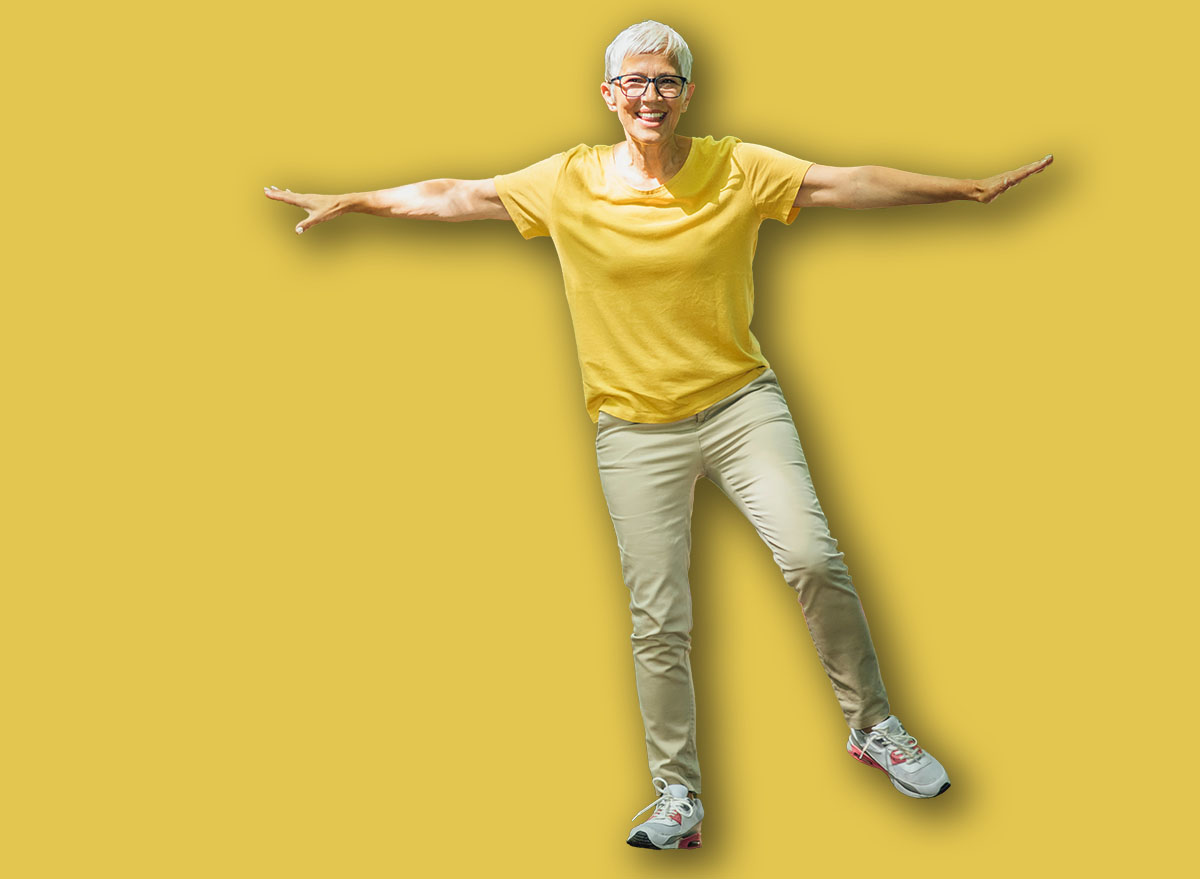
“If you can comfortably perform basic standing strength and balance drills in your 60s, your risk of falls, fractures, and mobility loss drops dramatically.”
— Dr. Stuart Phillips, PhD, Muscle & Aging Researcher (McMaster University)
In this guide, we’ll walk through four key standing exercises, how to do them safely, how to adjust them to your current fitness level, and how to put them together into a simple, sustainable routine.
Why Standing Moves Matter So Much After 60
The real goal after 60 isn’t six-pack abs; it’s functional fitness—being strong and steady enough to live life on your terms. Standing exercises are especially powerful because they:
- Mimic real life: getting up, reaching, stepping, turning, and stabilizing yourself.
- Train balance: your body constantly makes tiny adjustments to keep you upright.
- Build leg, hip, and core strength, which are crucial for independence.
- Load your bones, which may help maintain bone density and reduce fracture risk.
- Challenge your heart and lungs when done in a short sequence.
When you can confidently perform the four moves below, you’re demonstrating a combination of balance, leg strength, core control, and coordination that many 40-year-olds—especially those who sit all day—simply don’t have.
Move 1: Sit-to-Stand Squat – The “Independence” Exercise
If there’s one move that predicts independence, it’s the ability to rise from a chair without using your hands. This sit-to-stand squat trains your thighs, glutes, and core in the exact pattern you use dozens of times per day.
How to do it safely
- Sit on a sturdy chair with your feet flat on the floor, hip-width apart.
- Place your arms across your chest, or lightly reach them forward for balance.
- Lean your chest slightly forward, tighten your core, and press through your heels.
- Stand up fully, straightening your hips and knees, but don’t lock them hard.
- Slowly lower yourself back to the chair with control—no “plopping.”
Goal standard for being “fitter than most 40-year-olds”
- Baseline goal: 8–10 smooth sit-to-stands in a row without using your hands.
- Advanced goal: 12–15 reps, repeated for 2–3 sets with short rests.
In my coaching practice, I’ve seen clients in their late 60s go from needing to push off their thighs to standing up effortlessly after 6–8 weeks of consistent sit-to-stand training, just 3 times per week.
Move 2: Single-Leg Stand – Your Everyday Balance Test
Being able to balance on one leg relates strongly to fall risk and overall longevity. Standing on one leg trains your ankles, hips, core, and even your brain’s ability to process body position.
How to do it safely
- Stand tall beside a counter or sturdy chair, fingertips lightly resting on it.
- Shift your weight onto one leg, keeping a soft bend in the standing knee.
- Gently lift the opposite foot a few inches off the floor.
- Hold your chest up, look straight ahead, and keep breathing naturally.
- When you feel steady, reduce how much you use your hand for support.
Goal standard
- Baseline goal: Stand on each leg for 10–15 seconds with light fingertip support.
- Advanced goal: 20–30 seconds per leg without holding on, repeated 2–3 times.
Some studies have linked an inability to balance on one leg for 10 seconds with higher mortality risk, even after adjusting for age and health conditions. While it’s not a perfect test, it’s a strong reminder: balance is a vital sign, not just a party trick.
Move 3: Standing Hip Hinge – Protecting Your Back When You Bend
Think of every time you pick something up from the floor, load a dishwasher, or lean over a garden bed. That’s a hip hinge. Training this movement helps protect your lower back and strengthens your hamstrings and glutes.
How to do it safely
- Stand with feet about hip-width apart, knees slightly bent.
- Place your hands on your hips or slide them down your thighs.
- Keeping your back flat and chest open, push your hips back as if you’re closing a car door with your backside.
- Lower your torso until you feel a gentle stretch in the backs of your thighs—no pain.
- Press through your heels and squeeze your glutes to return to standing.
Goal standard
- Baseline goal: 8–10 smooth hip hinges with no back pain or discomfort.
- Advanced goal: 12–15 controlled reps, potentially holding a light weight (like a household object) if your back and hips tolerate it well.
Many clients with “mysterious” back aches discover their pain eases simply by learning to hinge from the hips instead of rounding the spine every time they bend.
Move 4: Standing March or Step-Through – Training Your Gait
Walking speed is one of the strongest predictors of healthy aging. A simple standing march or step-through drill improves coordination, core stability, and hip strength—all crucial for confident walking.

How to do it safely
- Stand tall near a counter or wall for support if needed.
- Lift one knee to a comfortable height (even a few inches is fine).
- Lower that foot and lift the other knee, as if marching in slow motion.
- Keep your torso upright and avoid leaning heavily from side to side.
- Once comfortable, swing the opposite arm naturally with each leg.
Goal standard
- Baseline goal: 30 seconds of continuous marching with light support if needed.
- Advanced goal: 60 seconds of steady, hands-free marching, repeated 2–3 times.
Improving control in this simple drill often translates into a more confident, quicker, and smoother walking pattern—one of the clearest signs of vitality in older adults.
How to Turn These 4 Moves Into a Simple Weekly Routine
You don’t need a long or complicated program. Here’s a practical way to use these moves 3 times per week in 15–20 minutes.
Sample “Fitter Than 40” standing routine
- Warm-up (3–5 minutes)
- Gentle marching in place.
- Shoulder rolls, ankle circles, and easy side-to-side weight shifts.
- Main circuit (10–15 minutes)
- 8–12 Sit-to-Stand Squats.
- 10–30 seconds Single-Leg Stand (each leg).
- 8–12 Standing Hip Hinges.
- 30–60 seconds Standing March.
Rest 30–60 seconds, then repeat the whole circuit 1–2 more times as tolerated.
- Cool-down (2–3 minutes)
- Gentle calf, thigh, and hip stretches while holding a chair.
- Slow, deep breathing until your heart rate settles.
Common Obstacles After 60—and How to Work Around Them
It’s completely normal to feel hesitant, especially if you’ve been inactive or have had injuries. Here are some of the most common challenges my older clients face—and realistic ways to navigate them.
1. “I’m afraid of falling or hurting myself.”
- Do all balance moves next to a counter, wall, or sturdy chair.
- Start with very small ranges of motion and short hold times.
- Only progress when the current level feels easy and controlled.
2. “My knees or back are stiff or sore.”
- Reduce the depth of your squat and hinge; pain-free range only.
- Include a few extra minutes of gentle warm-up before you start.
- If pain persists or worsens, consult a physical therapist or healthcare provider before pushing ahead.
3. “I feel too tired or overwhelmed.”
- Begin with a “micro-routine”: 1 set of each move, just 2–3 days per week.
- Remind yourself that consistency beats intensity—small doses add up.
- Track your progress in a notebook; seeing improvement is very motivating.
One of my 72-year-old clients started with just 5 minutes every other day because anything more felt intimidating. Six months later, she was hiking with her grandchildren—something she’d given up on years earlier.
What the Science Says About Staying Strong and Steady as You Age
Large studies on aging consistently highlight a few key themes:
- Muscle strength and walking speed are strongly linked to lower risk of disability and earlier death.
- Balance training reduces the likelihood of falls, which are a major cause of injury in older adults.
- Consistency—even at low to moderate intensity—matters more than occasional intense workouts.
Organizations such as the U.S. Centers for Disease Control and Prevention (CDC) and the World Health Organization (WHO) recommend that older adults include:
- At least 150 minutes per week of moderate activity (like brisk walking), and
- Muscle-strengthening and balance activities on 2 or more days per week.
The four standing moves in this article align well with those guidelines. They’re not a cure-all and can’t replace medical care, but as part of a healthy lifestyle, they can significantly improve how you feel and function day to day.
Start Where You Are—and Build a Fitter Future
Being over 60 does not mean you’re fragile. In many ways, it’s the perfect time to focus on quality of life—how easily you move, how confident you feel on your feet, and how fully you can participate in the moments that matter.
If you can gradually master these four standing exercises—sit-to-stand squats, single-leg stands, hip hinges, and standing marches—you’ll have a foundation of strength and balance that genuinely puts you ahead of many younger adults who haven’t trained these skills.
You don’t need to be perfect. You just need to be a little more consistent than yesterday.
With each small, steady session, you’re not just exercising—you’re investing in a future where you can keep doing the things and spending time with the people you love, on your own two feet.
