
How Prof. Yifat Merbl Turned Tragedy Into Discovery After an Iranian Missile Strike
When an Iranian missile strike destroyed her laboratory at Israel’s Weizmann Institute of Science, systems immunologist Prof. Yifat Merbl lost years of experiments in a single night. Yet by the end of the same year, she was honored by the prestigious journal Nature as one of the “10 who shaped science 2025,” a recognition that captured both her scientific impact and her extraordinary resilience under fire.
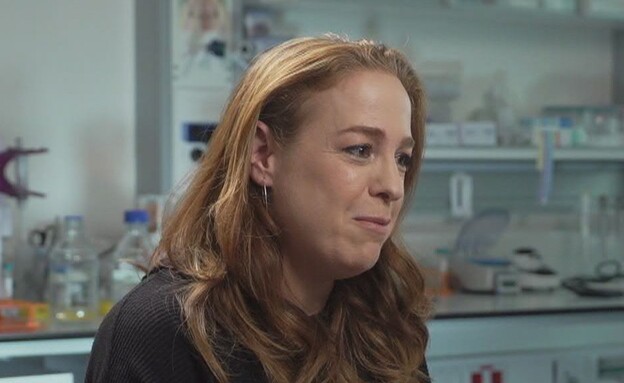
This article looks at what happened to Merbl’s lab, why Nature highlighted her in 2025, and what her story reveals about the modern face of science in times of conflict.
A Year of Unimaginable Loss—and Relentless Work
According to reporting from Israel’s Channel 12 and summarized by VINnews from Jerusalem, Prof. Yifat Merbl, 48, entered 2025 at the height of a demanding research career in the Department of Systems Immunology at the Weizmann Institute. Her group studies how the immune system is regulated at a systems level, often focusing on protein degradation and the ubiquitin–proteasome system—molecular processes that can influence cancer, autoimmunity, and responses to infection.
That work came under sudden, literal fire when an Iranian missile barrage targeted Israel. One of the missiles struck the Weizmann campus area, destroying Merbl’s lab and damaging sensitive equipment, samples, and experimental setups built over many years. While official damage assessments focused on infrastructure, the human cost—for students, postdocs, technicians, and Merbl herself—was enormous.
“You don’t just lose machines; you lose the stories your data were starting to tell,” one systems biologist not involved with Merbl’s work commented in media coverage of the attack on Israeli research infrastructure.
For a principal investigator, a lab is more than a room with instruments; it is a living ecosystem of ideas, routines, and people. Rebuilding that ecosystem is a slow, emotionally draining process, especially in the shadow of ongoing security concerns.
Why Nature Named Yifat Merbl Among the “10 Who Shaped Science 2025”
Each year, Nature publishes a list of “10 who shaped science,” highlighting individuals whose work or actions had outsized influence on global research that year. Being selected does not necessarily mean publishing the single most cited paper; it often reflects leadership, courage, and the ability to move science forward despite extraordinary circumstances.
By 2025, Merbl was already respected for her contributions to systems immunology and proteomics. The missile strike, however, placed her in a new and unwanted spotlight. Rather than stepping back, she worked with colleagues at Weizmann and abroad to:
- Relocate critical research activities into temporary facilities
- Salvage and back up data wherever possible
- Re-establish experimental pipelines using borrowed or replacement equipment
- Support students and postdocs whose projects had been interrupted or erased
Nature’s profile of Merbl emphasized not only the technical aspects of her work but also her role as a symbol of how science can persist under attack. Her story echoed that of researchers who have continued experiments during wars in Ukraine, Syria, and other conflict zones—reminders that global scientific progress often depends on people working in precarious, even dangerous, conditions.
From Protein Degradation to Immune Systems Under Stress
Merbl’s scientific work sits at the intersection of immunology, systems biology, and proteomics. While the VINnews report is a brief news piece, it aligns with publicly available descriptions of her research at the Weizmann Institute, which focus on:
- The ubiquitin–proteasome system (UPS):
This protein “recycling” machinery tags proteins for destruction and breaks them down. Disturbances in the UPS can contribute to cancer, neurodegeneration, and immune dysregulation. - Immune signaling in health and disease:
By tracking how immune cells process and present proteins, Merbl’s group helps clarify why some cells trigger strong responses (for example, against tumors or infections) while others remain silent or tolerant. - Systems-level mapping:
Using high-throughput and computational tools, her lab aims to see the immune system as an integrated network, not just a list of molecules.

While it would be misleading to attribute specific clinical breakthroughs directly to Merbl’s 2025 work without a full review of her publications, systems immunology of this kind underpins long-term advances in:
- Understanding how cancer cells evade immune detection
- Designing more precise immunotherapies
- Clarifying mechanisms of autoimmune and inflammatory diseases
In other words, the lab that was destroyed by a missile was not just a collection of machines—it was a hub for knowledge that could eventually inform new diagnostics or treatments. Rebuilding it is not simply institutional pride; it is a contribution to global medical science.
A Case Study in Scientific Resilience Under Attack
Stories like Merbl’s can feel distant if you’re not working in a conflict zone, but the emotional and professional challenges she faced are strikingly similar to what many researchers experience after disasters—whether from war, earthquakes, fires, or even major funding cuts.
In interviews compiled by Israeli media in 2025, researchers whose labs were damaged described initial reactions ranging from shock and grief to a fierce determination to “not let the work die here.” While VINnews’ brief article does not quote her directly, Merbl’s continued leadership and recognition suggest a comparable inner drive.
“Resilience in science is not about pretending you’re okay,” a senior Weizmann colleague was quoted saying in local coverage. “It’s about allowing yourself to feel the loss, then asking, ‘What can we still save, and what do we build next?’”
From an outsider’s perspective, several elements of Merbl’s response stand out as a template for scientific resilience:
- Protecting people first: Ensuring the physical safety and emotional support of students and staff.
- Stabilizing core data: Recovering what could be salvaged and documenting what was lost.
- Leveraging community: Collaborating with colleagues to share equipment, space, and expertise.
- Communicating clearly: Updating funders, institutional leaders, and international partners about the lab’s status.
These are not unique to war zones. Any research group facing a major setback—flood, fire, cyberattack, or sudden loss of funding—can learn from this approach.
Practical Lessons: How Labs Can Prepare for the Unthinkable
While no contingency plan can fully protect a lab from a missile strike, Merbl’s experience highlights practices that every research team—whether in Jerusalem, New York, or Nairobi—can adopt to reduce vulnerability and speed recovery.
1. Treat Data Resilience as a Core Part of Good Science
- Use automated, off-site backups for raw data and analysis pipelines.
- Maintain version-controlled repositories (e.g., Git) for code and protocols.
- Document experiments so that if a physical notebook is lost, key information survives.
2. Build Redundancy into Collaborations
Labs with strong external collaborations often recover faster after disasters because data and samples are already shared across borders.
- Share key reference samples with trusted partner labs.
- Co-develop methods so multiple sites can reproduce critical assays.
- Agree in advance on how to handle authorship and IP if disaster shifts where work can be done.
3. Protect People as the Primary Asset
Equipment can often be replaced; trained people and tacit knowledge cannot. Institutions that, like Weizmann, prioritize their staff after attacks or disasters help ensure continuity of knowledge.
- Offer mental health support and flexible timelines after traumatic events.
- Provide emergency fellowships or bridge funding for students whose work was lost.
- Encourage redistribution of people to host labs temporarily if facilities are unusable.
When Geopolitics Hits the Bench: Ethics and Global Responsibility
The destruction of Merbl’s lab was one episode in a broader escalation between Iran and Israel, but it also served as a stark reminder: research institutions are not always protected spaces. Targeting or collateral damage to universities has been documented in conflicts from the Middle East to Eastern Europe.

International organizations such as UNESCO and the International Science Council have repeatedly called for the protection of academic freedom and research infrastructure in times of war. While political solutions are beyond the scope of this article, ethically minded scientists and policymakers can:
- Advocate for explicit protections of universities and labs in international agreements.
- Support “scientists at risk” programs that relocate threatened researchers.
- Maintain academic collaborations across political divides where safely possible.
Merbl’s recognition by Nature underscores that the global scientific community is paying attention to these issues. Highlighting individuals whose work continues under threat is one way journals and institutions can keep the ethical dimensions in public view.
Before and After: A Lab Transformed, Not Erased
While detailed images of Merbl’s destroyed lab have not been widely published for security and privacy reasons, we can conceptually compare “before” and “after” states to understand the magnitude of what her team faced.

The key point is not that everything was restored exactly as it was—some experiments and materials are likely gone forever. Instead, Merbl’s story shows that a lab can be transformed by catastrophe and still continue to produce meaningful science, mentoring, and innovation.
Evidence, Sources, and What We Can—and Cannot—Claim
To avoid overstating what is known, it is important to distinguish between:
- Well-documented facts (for example, that an Iranian missile attack damaged the Weizmann Institute, that Merbl’s lab was among those affected, and that Nature named her in its 2025 “10 who shaped science” list).
- Reasonable inferences (for example, that her team had to relocate and rebuild key infrastructure).
- Speculation, which this article intentionally avoids (for example, claiming specific unpublished findings or security details).
Readers interested in deeper background on these topics can consult:
- Nature’s annual “10 who shaped science” list (search for the 2025 edition and Yifat Merbl’s profile).
- Weizmann Institute of Science news and features for official information about Merbl’s research group and projects.
- UNESCO science policy and academic freedom reports discussing protection of research in conflict zones.
Carrying the Torch of Science Through Crisis
Prof. Yifat Merbl’s journey from watching her lab destroyed by an Iranian missile to being named in Nature’s “10 who shaped science 2025” is not a simple feel‑good story. It is a story of loss, grief, persistence, and the slow, unglamorous work of rebuilding—in an environment where the next siren may sound at any time.

If you are a researcher, educator, or policymaker, her experience offers a clear invitation:
- Strengthen the resilience of your own lab or institution—technically, logistically, and emotionally.
- Support colleagues whose work is threatened by conflict or disaster.
- Advocate for the protection of scientific institutions as part of any serious conversation about security and peace.
And if you are simply a reader who cares about the future of science, Merbl’s story is a reminder that the knowledge we rely on is often built by people working under circumstances we rarely see. Their courage, amplified by recognition from outlets like Nature, is part of what keeps global science moving forward—even when the ground beneath the lab is literally shaking.
Call to action: Take a moment today to follow, share, or support an institution or program that helps scientists at risk. Resilience in science is a collective project—and every informed supporter matters.
