
How AI‑Designed Proteins Are Rewiring Biology, Medicine, and Green Chemistry
From 2023 onward, protein science entered a new phase: instead of asking “What is the structure of this natural protein?”, researchers increasingly ask “What protein should exist to solve this problem—and can AI design it for us?”. Building on the structural insights unlocked by AlphaFold2 and RoseTTAFold, modern generative models now propose entirely new protein sequences that fold into target 3D shapes or perform specified biochemical functions.
These advances sit at the intersection of machine learning, structural biology, and chemical engineering. They are rapidly changing how we approach oncology and autoimmune disease therapies, how we break down plastics and capture carbon, and how we program living cells as engineering platforms. At the same time, they are forcing the life‑science community to confront dual‑use and governance questions that were once mostly theoretical.
Mission Overview: What Are AI‑Designed Proteins?
AI‑designed proteins are amino‑acid sequences proposed by computational models rather than found in nature. The goal is not just structural plausibility, but a specific function—binding a tumor antigen, catalyzing a non‑natural chemical reaction, or acting as a molecular sensor inside a cell.
The “mission” of this field can be summarized as:
- Mapping and exploring protein sequence space far beyond what evolution has sampled.
- Designing functional proteins and enzymes with targeted properties.
- Integrating these designs into therapeutic, industrial, and synthetic‑biology applications.
- Understanding the principles that govern protein folding and evolvability.
“The real revolution is not just predicting what nature built, but imagining and building what nature never tried.”
— Paraphrase inspired by ongoing commentary in Nature and leading structural biologists.
Visualizing AI‑Designed Protein Space
Early milestones like AlphaFold2 focused on predicting the folded shape of natural proteins from sequence. Generative approaches now invert this pipeline: specify a target shape, binding pocket, or catalytic geometry, then let the model propose sequences predicted to realize that design in the lab.
Technology: How AI Designs Novel Proteins
Current AI‑driven protein design combines large‑scale sequence and structure data with generative modeling techniques adapted from natural‑language processing and computer vision. Several model families dominate the landscape as of late 2025.
Diffusion Models for 3D Protein Backbones
Diffusion models, originally developed for image synthesis, are now widely used to generate 3D protein backbones and side‑chain conformations. Tools like RFdiffusion and subsequent successors treat protein coordinates or distance maps analogously to noisy images, iteratively “denoising” them into valid structures constrained by:
- Target binding interfaces (e.g., complementary to a viral spike protein).
- Symmetry constraints for multimeric assemblies.
- Geometric constraints on catalytic residues.
Large Protein Language Models (pLMs)
Protein language models are trained on tens of millions of sequences, learning statistical patterns of amino‑acid usage and co‑variation that encode evolutionary constraints. These models can:
- Generate novel sequences consistent with learned “grammar”.
- Score and optimize candidate sequences for stability or function.
- Suggest mutational paths that maintain fold while altering activity.
Examples include Meta’s ESM series, ProGen, and newer transformer‑based models that integrate structural tokens or contact information directly.
Graph Neural Networks and Geometric Deep Learning
Since proteins are inherently 3D objects, graph neural networks (GNNs) and SE(3)‑equivariant models are core tools. They model residues as nodes connected by edges encoding spatial proximity and chemical context. These architectures:
- Predict stability and binding affinity from structure.
- Guide sequence optimization while preserving structural integrity.
- Support design of protein–protein interfaces and complex assemblies.
Closed‑Loop Design–Build–Test–Learn (DBTL)
Modern labs increasingly run AI models inside automated DBTL pipelines:
- Design: Models propose thousands of sequences in silico.
- Build: High‑throughput synthesis and expression systems produce proteins in microbes or cell‑free systems.
- Test: Assays measure activity, stability, and specificity.
- Learn: Experimental results feed back to retrain and refine the models.
This tight integration is a major reason timelines in protein engineering are compressing from years to months—or even weeks for some targets.
Drug Discovery: From De Novo Binders to Protein Therapeutics
Drug discovery has been one of the earliest and most aggressive adopters of AI‑designed proteins. Rather than screening vast libraries of antibodies or small molecules, teams can now ask AI systems to design binders for a specific epitope or receptor with selected biophysical properties.
De Novo Antibodies and Binding Scaffolds
Several biotech companies and academic consortia have reported de novo designed proteins that:
- Bind to oncology targets such as PD‑L1, HER2, or novel tumor‑associated antigens.
- Engage cytokines or immune checkpoints implicated in autoimmune disease.
- Neutralize viral epitopes with no close natural antibody analog.
These scaffolds may be smaller and more stable than classical antibodies, with better tissue penetration and manufacturability. AI also helps optimize “developability” traits—solubility, aggregation resistance, and low immunogenicity.
Enzymes as Therapeutics
Beyond binding, AI‑designed enzymes are being explored as therapeutics for:
- Metabolic disorders, by degrading or synthesizing specific metabolites.
- Detoxification, such as enzymes that neutralize organophosphates or other toxins.
- Oncolytic strategies, where enzymes locally activate prodrugs in tumors.
“We are approaching a world where the rate‑limiting step is no longer imagination but validation.”
— Comment echoing perspectives in Science on AI in drug discovery.
Practical Tools and Reading for Professionals
Practitioners interested in hands‑on workflows often pair AI design tools with wet‑lab automation and data analysis. Texts like Algorithms for Protein Science provide a rigorous grounding in computational methods behind these systems.
Green Chemistry and Industrial Biocatalysts
Industrial chemistry is another domain where AI‑designed proteins can have outsized impact. Tailor‑made enzymes promise higher selectivity, lower energy consumption, and fewer toxic by‑products compared with conventional catalysts.
Enzymes for Plastic Degradation and Recycling
Since 2020, engineered PET‑degrading enzymes have attracted major attention. AI design accelerates this by:
- Searching sequence space for variants more active at ambient temperatures.
- Improving thermostability for industrial reactors.
- Adjusting substrate specificity to tackle mixed plastic waste streams.

CO₂ Capture and Biotransformation
AI‑guided enzyme design is also being used to:
- Improve RuBisCO‑like carboxylases and related enzymes for carbon fixation.
- Develop synthetic pathways that convert CO₂ into fuels and chemical feedstocks.
- Engineer microbes that couple CO₂ capture with production of bioplastics or specialty chemicals.
Fine Chemicals and Pharmaceuticals Manufacturing
Biocatalysis is transforming the synthesis of chiral intermediates and APIs (active pharmaceutical ingredients). AI‑designed enzymes can:
- Replace multi‑step chemical routes with single enzymatic transformations.
- Operate under milder conditions (aqueous, lower temperature, near‑neutral pH).
- Reduce solvent use and hazardous waste, aligning with green chemistry principles.
Synthetic Biology Platforms: Proteins as Designable Parts
Synthetic biology treats cells as programmable factories. AI‑designed proteins extend the catalog of “biological parts” far beyond what nature offers, enabling more precise and versatile control over metabolism, signaling, and sensing.
Engineered Metabolic Pathways
Metabolic engineers incorporate AI‑designed enzymes to:
- Bypass native regulatory bottlenecks in production pathways.
- Introduce non‑natural reaction steps that improve yields or product specificity.
- Minimize toxic intermediates and improve host cell viability.
This is central to sustainable production of:
- Bio‑based fuels (e.g., advanced bioethanol, isobutanol).
- Bioplastics and polymer precursors.
- High‑value flavors, fragrances, and nutraceuticals.
Biosensors and Intracellular Logic
AI‑designed binding domains and fluorescent proteins allow finely tuned biosensors that:
- Detect environmental toxins, hormones, or metabolites with high specificity.
- Trigger genetic circuits only when complex combinations of signals are present.
- Report on intracellular states such as pH, redox potential, or mechanical forces.
Cell‑Free Systems and On‑Demand Manufacturing
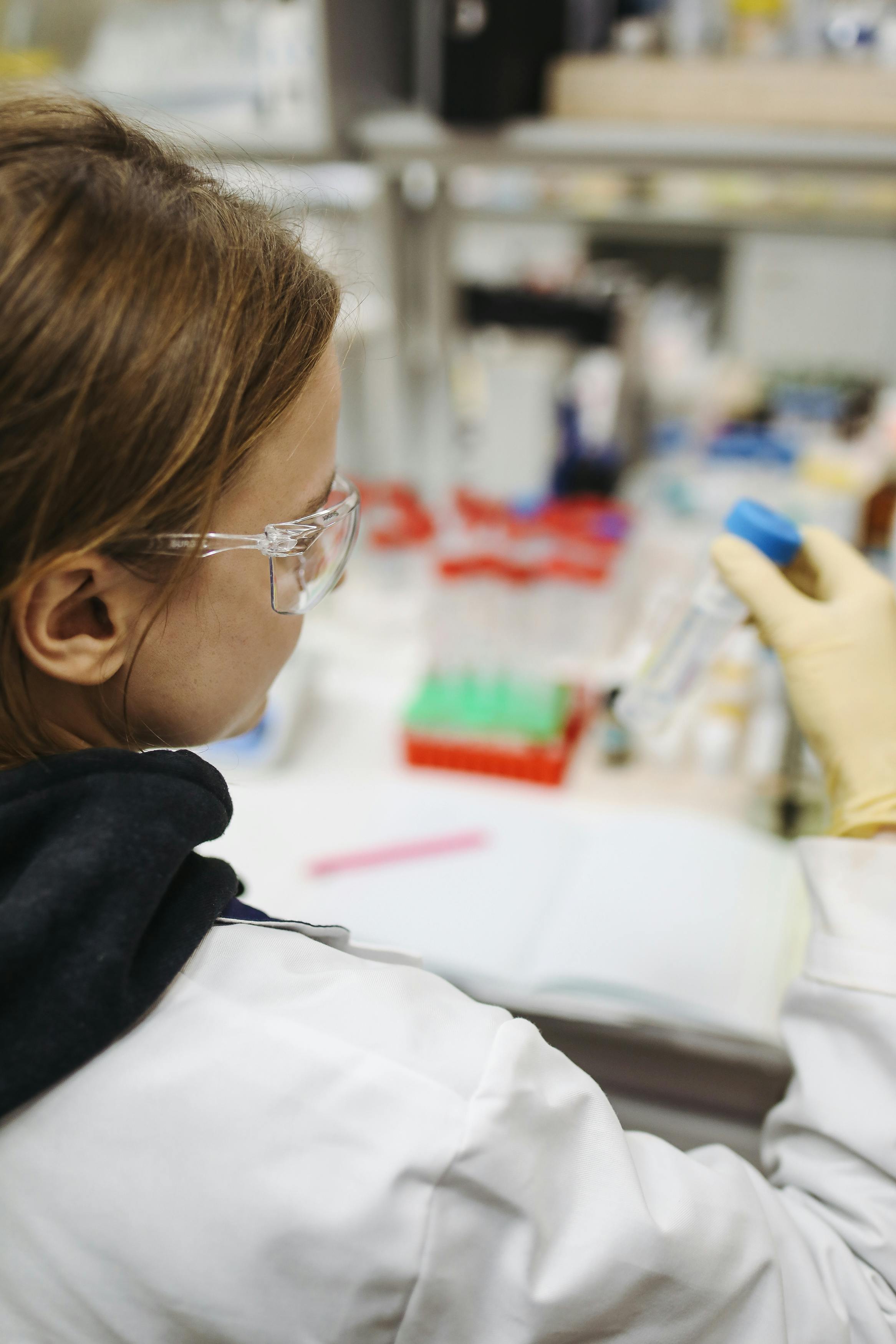
Cell‑free expression systems—essentially purified translation machinery in a tube—enable rapid testing of AI‑designed proteins without the complexity of living cells. They are being explored for:
- On‑demand synthesis of therapeutics in low‑resource settings.
- Portable biosensors for field diagnostics.
- Educational and prototyping platforms for synthetic biology.
Scientific Significance: Probing the Limits of Protein Space
AI‑designed proteins are not just tools; they are experiments in fundamental biology. When a model proposes a sequence with no homologs in known databases—but which nonetheless folds and functions as intended—it challenges assumptions about how “special” natural proteins really are.
What Fraction of Protein Space Has Life Explored?
Protein sequence space is astronomically vast. Even for relatively short proteins, possible sequences exceed the number of atoms in the universe. Yet life uses a minuscule subset. AI‑guided exploration lets researchers ask:
- Are there many alternative solutions to the same biochemical functions?
- Do natural proteins occupy particularly robust or evolvable regions of sequence space?
- Which structural motifs are intrinsically rare or inaccessible?
Interpreting What Models “Know”
Protein language models and geometric networks implicitly encode rules about:
- Hydrophobic core packing and surface polarity patterns.
- Secondary structure preferences and long‑range contacts.
- Co‑evolution of residues at functional sites.
Ongoing research in interpretability aims to map these internal representations to human‑understandable biophysical principles, bridging AI and classical protein theory.
“Every successful de novo design is a new data point about what’s possible in the laws of physics and chemistry.”
— Perspective consistent with recent reviews in Cell.
Milestones: From AlphaFold to AI‑Native Protein Design
The trajectory from structure prediction to generative design includes several key milestones over the past few years.
Key Milestones in AI‑Driven Protein Science
- 2020–2021: AlphaFold2 and RoseTTAFold achieve near‑experimental accuracy in structure prediction, transforming structural biology.
- 2022: Early diffusion‑based and language‑model‑based design tools demonstrate de novo proteins verified experimentally.
- 2023–2024: End‑to‑end workflows emerge that start from a functional specification (e.g., bind protein X) and return validated binders.
- 2024–2025: Integration with high‑throughput automation and active‑learning loops makes AI‑guided design a mainstream capability in well‑resourced labs and biotech companies.
Public Engagement and Media
On platforms like YouTube and TikTok, explainer videos visualize AI “imagining” new protein folds using folding animations and docking simulations. X (Twitter) hosts active communities of computational biologists, chemists, and ethicists debating:
- Benchmarking standards for generative models.
- Reproducibility of design workflows.
- What constitutes genuine scientific understanding versus curve‑fitting.
For accessible introductions, channels such as Two Minute Papers and Kurzgesagt often cover advances in AI and biology with high‑quality visualizations.
Challenges: Validation, Robustness, and Safety
Despite rapid progress, AI‑designed proteins face substantial technical, practical, and ethical challenges that must be addressed for responsible deployment.
Experimental Validation and Robustness
Not every in silico design works in the lab. Common issues include:
- Misfolding or aggregation under physiological conditions.
- Loss of function in the presence of cellular crowding and off‑target interactions.
- Sensitivity to small sequence changes not fully captured by the model.
Large‑scale, unbiased validation studies are essential to avoid cherry‑picking of success stories and to quantify real‑world hit rates.
Generalization and Distribution Shift
AI models trained on natural sequences may struggle when designing far outside the training distribution. Key open questions:
- How far can we extrapolate beyond evolutionary data before reliability collapses?
- Can models accurately predict stability and function for exotic folds?
- How do we detect “hallucinated” designs that look plausible to the model but are biophysically impossible?
Dual‑Use, Governance, and Biosecurity
Generative design tools could, in principle, assist in creating more stable toxins or virulence factors. This has prompted:
- Journal and conference policies on dual‑use screening and red‑teaming of models.
- Proposals for access control to high‑capability design systems.
- Emerging norms around responsible disclosure, similar to cybersecurity.
“The same capabilities that accelerate beneficial biotechnology must be designed and governed to prevent misuse.”
— Aligned with guidance from the U.S. National Academies on dual‑use research.
Ethical and Social Considerations
Beyond security, broader questions include:
- Intellectual property for AI‑generated sequences: who owns the design?
- Equitable access: will only a handful of companies control key therapeutic and industrial enzymes?
- Transparency: how much detail should be shared about powerful generative workflows?
Practical Tooling, Education, and Careers
For students and professionals aiming to enter this field, a blend of computational and experimental skills is increasingly valuable.
Core Skill Areas
- Machine learning: deep learning, generative models, and statistical evaluation.
- Structural biology: protein folding, thermodynamics, and biophysical techniques.
- Wet‑lab methods: cloning, expression, purification, and activity assays.
- Data engineering: handling large sequence/structure datasets and pipeline automation.
Recommended Learning Resources
To build foundational knowledge, many practitioners use a combination of open‑access courses, textbooks, and practical coding. For example, AI for Medicine on Coursera and MIT’s open courseware on computational biology provide solid starting points.
For a deep dive into protein engineering principles, reference books such as Introduction to Protein Structure remain widely used in graduate programs and industry.
Professional Communities
Active discussion and networking happen on:
- LinkedIn groups focused on computational biology and biotech.
- Conferences such as RECOMB and Synthetic Biology conferences.
- Open‑source communities on GitHub that maintain and extend design tools.
Looking Ahead: Convergence with Other Emerging Technologies
AI‑designed proteins do not develop in isolation. They intersect with several other fast‑moving technologies that will shape the next decade of biotechnology.
Integration with DNA Synthesis and Lab Automation
As DNA synthesis costs continue to fall and robotic labs become more common, we can expect:
- Massively parallel testing of designed proteins across environmental conditions.
- Automated optimization cycles running nearly continuously.
- Standardized data formats to feed back into global design models.
AI for Gene Circuits and Whole‑Cell Design
Proteins are just one layer. Models are emerging that design entire gene circuits and metabolic networks, of which proteins are components. This raises the possibility of:
- AI‑assisted design of minimal cells tailored for specific tasks.
- Programmable consortia of microbes cooperating in industrial bioprocesses.
- Hybrid systems where electronic and biological circuits co‑compute.
Human–AI Co‑Design
The most productive workflows are likely to be human‑in‑the‑loop systems, where:
- Scientists specify high‑level functional goals and constraints.
- AI proposes diverse design strategies.
- Domain experts curate and steer exploration based on mechanistic insight and safety considerations.
Conclusion: Redefining the Molecular Toolkit of Life
AI‑designed proteins mark a profound shift in how we interact with biology. Instead of being limited to the molecules that evolution happened to discover, we are beginning to intentionally navigate protein space, proposing structures and functions aligned with human goals in medicine, sustainability, and materials.
The coming years will test whether we can harness this capability responsibly—balancing innovation with rigorous validation, transparent governance, and broad societal benefit. If successful, AI‑guided protein design may be remembered as the moment biology became not just a science of what is, but an engineering discipline of what could be.
Additional Resources and Practical Tips
For readers who want to follow developments, consider the following practices:
- Subscribe to newsletters such as SynBioBeta and major journals’ “AI in biology” collections.
- Monitor preprints on bioRxiv under the bioengineering and synthetic‑biology sections.
- Experiment with open tools and datasets where appropriate, starting with non‑pathogenic, purely educational use cases.
As a practical complement, a good laboratory notebook and data‑management workflow are essential when implementing AI‑guided design. Many researchers rely on robust, lab‑friendly tablets or laptops and accessories that can withstand regular use in demanding environments, which pairs well with digital record‑keeping and automated data capture from instruments.
References / Sources
- Nature Collection: AI and Protein Folding/Design
- Science Magazine – Special issues on AI in Drug Discovery
- Cell Reports Methods – Protein Engineering and Design Methods
- DeepMind – AlphaFold and Scientific Discovery
- ESM Metagenomic Atlas – Large‑Scale Protein Language Models
- NCBI PubMed Central – Open‑access articles on protein design
- National Academies – Dual‑Use Research of Concern
