
How AI-Generated ‘Fake’ Songs Are Forcing a Rewrite of Music, Copyright, and Web3
AI-generated music that imitates famous artists is going viral and forcing a fundamental rethink of creativity, copyright, and monetization—especially as Web3 tools like NFTs, on-chain royalties, and decentralized identity offer new ways to track ownership, pay artists, and manage rights in a world of infinite synthetic songs.
Executive Summary: AI Music Meets Crypto and Web3
AI tools can now generate songs that convincingly mimic the voice, flow, and stylistic DNA of globally recognized artists. These “fake” tracks spread rapidly on TikTok, YouTube Shorts, and X, turning into viral cultural events while exposing how fragile existing copyright, licensing, and royalty systems really are.
At the same time, blockchain, NFTs, and Web3 infrastructure are quietly building a programmable rights and payments layer that could underpin the next generation of music. The collision of AI and crypto is not theoretical—it is a live battlefield over data, identity, ownership, and revenue.
- AI models can clone artist voices and generate full tracks in minutes using text-to-music and voice-conversion systems.
- Traditional copyright and neighboring rights regimes are struggling to address style cloning and synthetic performances.
- Labels are using DMCA takedowns today, but are also exploring new licensing, revenue-sharing, and watermarking frameworks.
- Web3 primitives—NFTs, on-chain royalties, decentralized identifiers (DIDs), and tokenized catalogs—offer more granular control and monetization.
- Emerging platforms are experimenting with “opt-in” AI training licenses, creator DAOs, and on-chain splits so humans and models both get paid.
For crypto-native builders, this is a rare convergence: a massive existing industry (music), a disruptive technology (generative AI), and an open financial and identity stack (blockchains) all intersecting at once.
The AI-Generated Music Phenomenon: How ‘Fake’ Songs Go Viral
Over the past two years, AI-generated tracks that sound eerily like major artists have become a repeat viral pattern. Creators use a stack of tools:
- Text-to-music generators to create instrumentals and melodies from natural language prompts (e.g., “melancholic trap beat with distorted guitars”).
- Voice-cloning and timbre-transfer models trained on publicly available acapellas, live recordings, and interviews to replicate an artist’s vocal fingerprint.
- Alignment and editing tools that sync generated vocals with lyrics, pitch, rhythm, and effects to produce a coherent, studio-like mix.
The result: a teenager with a laptop can release a track that sounds convincingly like two superstars collaborating—without either artist ever entering a studio. These songs are usually distributed first on short-form platforms where:
- Audience expectations are lower for polish but higher for novelty and shareability.
- Recommendation algorithms reward high engagement per second rather than long listening sessions.
- Attribution and rights metadata are weak or non-existent, making enforcement hard and reactive.
“We’re approaching a point where synthetic performances will be indistinguishable from human ones for most listeners. The legal and economic infrastructure is not ready for that.” — Hypothetical summary based on recent statements from industry bodies like IFPI and RIAA
This gap between technical capability and legal/financial infrastructure is precisely where crypto and Web3 can add value.
Under the Hood: The AI Music Stack vs. The Web3 Rights Stack
To understand where blockchain fits, it helps to separate the AI generation stack from the rights and revenue stack.
AI Music Generation Stack
- Foundation models: Large text-to-music and audio diffusion models trained on massive datasets of songs, stems, and sound effects.
- Voice models: Smaller, fine-tuned models built atop public recordings of specific artists (or generalized timbre models conditioned on “style embeddings”).
- Prompting & conditioning: Text, MIDI, or reference audio used to steer genre, tempo, mood, and vocal style.
- Post-production tools: DAWs (Logic, Ableton, FL Studio), mastering plugins, and AI-assisted mixing tools.
Web3 Rights & Payments Stack
The crypto-native stack focuses less on sound generation and more on identity, provenance, licensing, and money flows:
- NFTs & on-chain assets: Represent masters, stems, publishing splits, and sync licenses as tokens.
- Smart contracts: Encode royalty splits, usage rules, and dynamic pricing (e.g., streaming-based payouts, on-chain subscription gates).
- Decentralized identifiers (DIDs): Bind an artist’s identity (human or AI persona) to an on-chain profile used for automated payments and signatures.
- Oracles & data feeds: Connect off-chain usage data (streams, plays, syncs) to on-chain payout contracts.
- DAOs: Collective governance for catalogs, models, or rights pools, including decision-making on licensing AI training data.
The critical opportunity is to connect these two stacks so that AI music generation sits on top of transparent, programmable, and enforceable rights rails.
Current Market Landscape: AI Music, Web3, and Revenue Flows
While exact numbers fluctuate, several converging trends are clear across AI and Web3 music:
| Segment | Key Metric (Approx.) | Source / Context |
|---|---|---|
| AI music tools | Millions of monthly users across leading AI audio platforms | Aggregated from public user disclosures and app download data |
| Music-related NFTs & tokens | Hundreds of millions of USD in cumulative primary and secondary sales since 2021 | Estimates from marketplaces and analytics platforms like OpenSea and Dune dashboards |
| On-chain royalty payments | Tens of millions of USD in on-chain payouts across music protocols and NFT platforms | Reported figures from selected Web3 music projects and royalty NFT platforms |
| AI training data licensing | Emerging; pilot deals and private negotiations rather than standardized markets | Industry news from outlets like CoinDesk, The Block, and traditional music press |
The takeaway: money and attention are clearly flowing into both AI and Web3 music, but the critical missing link is standardized on-chain licensing for AI training and synthetic performances.
Visualizing the Shift: From Traditional Rights to On-Chain AI Music
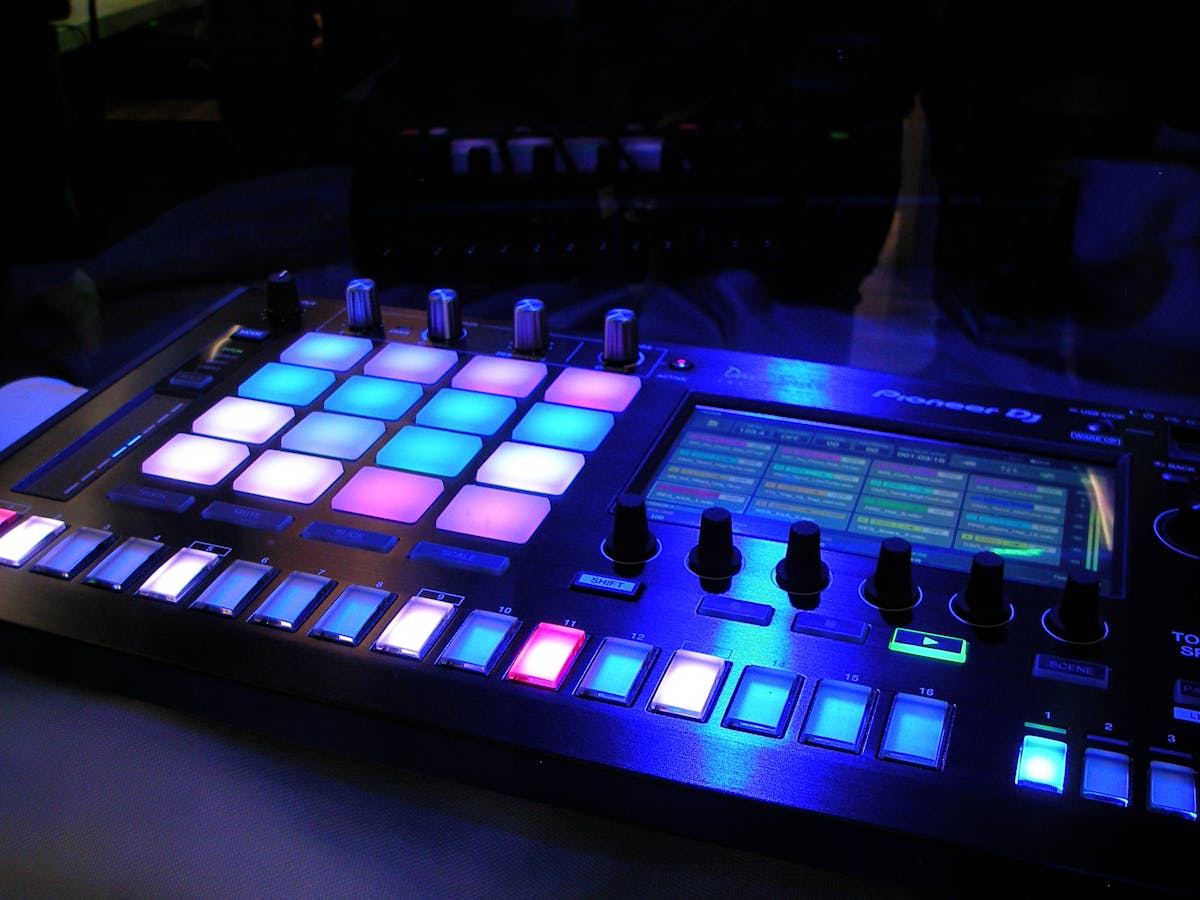
The following visual examples illustrate how AI music, rights, and Web3 infrastructure intersect.


Legal and Regulatory Pressure: Copyright, Deepfakes, and Platform Policies
Copyright and related rights frameworks were built for an era of human performers and analog distribution. AI-generated music stresses these systems in several dimensions:
- Style vs. expression: Copyright generally protects fixed expression, not style. Voice-cloning and stylistic mimicry blur that boundary.
- Right of publicity / personality rights: Some jurisdictions protect an artist’s likeness and voice as part of their persona, but laws vary widely.
- Training data: Whether scraping public recordings for model training constitutes fair use or infringement is the subject of active legal dispute in multiple domains.
- Deepfake and disinformation risks: AI-generated tracks can be weaponized for fake diss tracks, political messaging, or reputational attacks.
Streaming platforms and social networks are responding with evolving policies:
- Labeling requirements or nudges for AI-generated content.
- Deepfake and impersonation policies to remove deceptive or malicious content.
- Early experiments with opt-in voice licensing and revenue-sharing for AI-generated derivatives.
For crypto builders, regulation is both a constraint and a design input: well-architected systems can embed compliance logic into smart contracts and permissioning layers.
Where Crypto Actually Helps: Web3 Opportunities for AI Music
Several concrete use cases show how blockchains can support a sustainable AI music ecosystem rather than just add speculation.
1. On-Chain Identity for Artists and AI Personas
Artists can maintain a verified on-chain identity (e.g., via DIDs or ENS-style names) that:
- Links to their official wallets and royalty-receiving smart contracts.
- Hosts cryptographic attestations about which AI models, datasets, or voice clones are officially authorized.
- Signals authenticity on streaming platforms via verifiable signatures or tokens.
2. Programmable Licensing for AI Training
Catalog owners and independent artists can:
- Tokenize their works as NFTs or fungible catalog tokens.
- Attach smart contracts specifying:
- Whether the track can be used for AI model training.
- What compensation is required (upfront license fee, revenue share, tokenized upside).
- What usage is allowed (non-commercial experiments vs. commercial releases).
- Allow AI labs or platforms to programmatically acquire training rights by interacting with those contracts.
3. Royalty Splits for Synthetic Collaborations
When fans generate tracks using an artist’s authorized AI model, smart contracts can:
- Split revenue between:
- The original artist and rights holders.
- The AI model owner or platform.
- The fan-creator who authored the lyrics and prompts.
- Pay out automatically using stablecoins or liquid governance tokens.
4. Tokenized Catalogs and AI-Ready Rights Pools
Rights holders can launch on-chain catalogs where:
- Each NFT or token bundle represents AI-training-ready works with clear licensing terms.
- Investors and fans can supply capital, earning a share of future AI licensing fees.
- DAOs govern which deals to accept and how to price model access.
This is a natural extension of existing royalty NFT and music DeFi experiments, now oriented toward AI.
Actionable Framework: How Artists and Creators Can Respond
For artists, labels, and producers navigating AI and Web3, a structured playbook is essential. The following framework focuses on practical steps rather than hype.
Step 1: Map Your Rights and Risk Exposure
- Audit ownership of masters, publishing, and neighboring rights.
- Identify where your voice, stems, or catalog are already online and potentially in AI training sets.
- Clarify jurisdictional protections for your voice and likeness.
Step 2: Decide Your AI Posture
Choose a deliberate stance rather than drifting:
- Prohibition: Attempt to block AI training and use your voice only in human-recorded works; rely on takedowns and legal claims.
- Controlled participation: Authorize specific AI models or platforms under license, with clear branding and opt-in rules.
- Open experimentation: Lean into AI co-creation with community, supported by NFT passes, fan tokens, or creator DAOs.
Step 3: Implement Web3 Rails Where It Matters
- Set up a verified on-chain identity and primary wallet.
- Tokenize high-value works or stems as NFTs with explicit licensing terms.
- Use smart contracts to define:
- Royalty shares for collaborators and AI platforms.
- Conditions for derivative AI works (commercial vs. non-commercial).
- Integrate with NFT marketplaces or specialized music protocols that support on-chain splits.
Step 4: Monitor, Enforce, and Iterate
- Use content recognition tools and community reporting to discover unauthorized AI clones.
- Issue takedowns where necessary, but also convert some high-performing fan works into licensed derivatives via on-chain contracts.
- Update DAO or governance parameters as you learn what fans respond to and where abuse appears.
Actionable Framework: How Crypto Builders Should Design AI Music Protocols
For Web3 founders and protocol designers, the challenge is to create infrastructure that is both compliant and compelling for mainstream users.
Design Principle 1: Rights-Aware by Default
- Make every asset (track, stem, voice model) a first-class on-chain object with explicit metadata:
- Who owns it.
- What rights are attached (training, sampling, commercial release).
- Which jurisdictions or collecting societies may have claims.
- Allow off-chain legal references (e.g., IPFS-stored license texts) but bind them to on-chain hashes.
Design Principle 2: Granular and Composable Licensing
- Offer modular license templates instead of one-size-fits-all:
- Personal non-commercial AI experiments.
- Commercial derivative releases with rev-share.
- Exclusive sync and brand usage.
- Enable DeFi-style composability: catalogs, AI models, and distribution platforms can plug into shared standards.
Design Principle 3: Transparent Economics and Risk
If tokens or NFTs are involved:
- Explain clearly what cash flows (if any) they entitle holders to.
- Avoid implying passive guaranteed income; highlight volatility and legal uncertainty.
- Use stablecoins or major assets for payouts where possible to reduce FX risk.
Design Principle 4: UX First, Crypto in the Background
Musicians and fans should not need to be DeFi power users to benefit:
- Abstract gas fees via meta-transactions or bundled flows.
- Support familiar logins (email, OAuth) with non-custodial or semi-custodial wallets underneath.
- Provide clear dashboards showing earnings, splits, and license status in plain language.
Key Risks, Limitations, and Trade-Offs
While Web3 infrastructure can help organize AI music, it does not eliminate core risks:
- Regulatory uncertainty: Securities law, IP law, and data protection regulations may evolve, affecting tokens and on-chain rights structures.
- Enforcement gap: On-chain contracts only bind willing participants; bad actors can still publish synthetic tracks on uncooperative platforms.
- Model leakage: Once an artist-authorized voice model leaks, it can fuel unauthorized clones beyond any on-chain control.
- Speculation vs. sustainability: Tokenized music and AI models can attract speculators whose incentives diverge from long-term artist welfare.
- Privacy and consent: Overly aggressive on-chain tracking of listening or creation data can collide with privacy norms and regulations.
Thoughtful protocol design—especially around permissioning, governance, and reversible or upgradable contracts—will be essential.
Forward-Looking Outlook: Toward Programmable Creativity
AI-generated music is pushing culture to ask foundational questions: What makes a performance “real”? How much do we value human labor versus emotional impact? And who should be paid when style and timbre can be synthesized at scale?
In parallel, blockchains are maturing from speculative ledgers into programmable rights and payment networks. The convergence suggests a future where:
- Every track—human or AI—carries machine-readable rights and revenue logic.
- Artists can authorize official AI versions of themselves, with transparent on-chain revenue splits.
- Fans participate not just as listeners but as co-creators and stakeholders in catalogs and models.
- Regulators, labels, and platforms rely on shared, auditable standards rather than opaque black boxes.
None of this removes the need for strong human governance, ethical norms, and legal guardrails. But for crypto-native builders and music professionals willing to engage deeply, AI-generated music is less an existential threat and more a prompt to construct a new, programmable layer for creativity and compensation.
The most durable advantage will belong to those who can bridge worlds: understanding both the nuances of music culture and the mechanics of blockchains, both the power of generative AI and the realities of intellectual property. That intersection—messy, contested, and full of open questions—is also where the next generation of music infrastructure will be built.
