
How AI-Discovered Antibiotics Are Changing the Fight Against Superbugs
Mission Overview: AI vs. Drug-Resistant Superbugs
Antimicrobial resistance (AMR) is one of the most urgent global health threats of the 21st century. Bacteria that were once easily treated are now shrugging off multiple lines of antibiotics, leading to longer hospital stays, higher medical costs, and increased mortality. The World Health Organization warns that without new interventions, AMR could cause millions of deaths annually in coming decades.
Yet the traditional antibiotic discovery pipeline has stalled. Many “low-hanging fruit” molecules have already been found, and new drugs are slow, expensive, and risky to develop. This is where artificial intelligence (AI) has stepped in, helping researchers explore enormous chemical spaces far beyond what humans could manually evaluate.
Over the last few years, machine learning models—especially deep neural networks—have identified antibiotic candidates with novel chemical scaffolds, including the now-famous compound halicin. These systems are not replacing microbiologists and medicinal chemists; they are powerful tools that prioritize which molecules to test in the lab, dramatically accelerating early discovery.
“AI is giving us a map of chemical space that we simply could not navigate before. It doesn’t solve biology for us, but it tells us where to look.”
— Adapted from public comments by Prof. James Collins, MIT bioengineer and pioneer in AI-driven antibiotic discovery
Visualizing AI-Guided Antibiotic Discovery
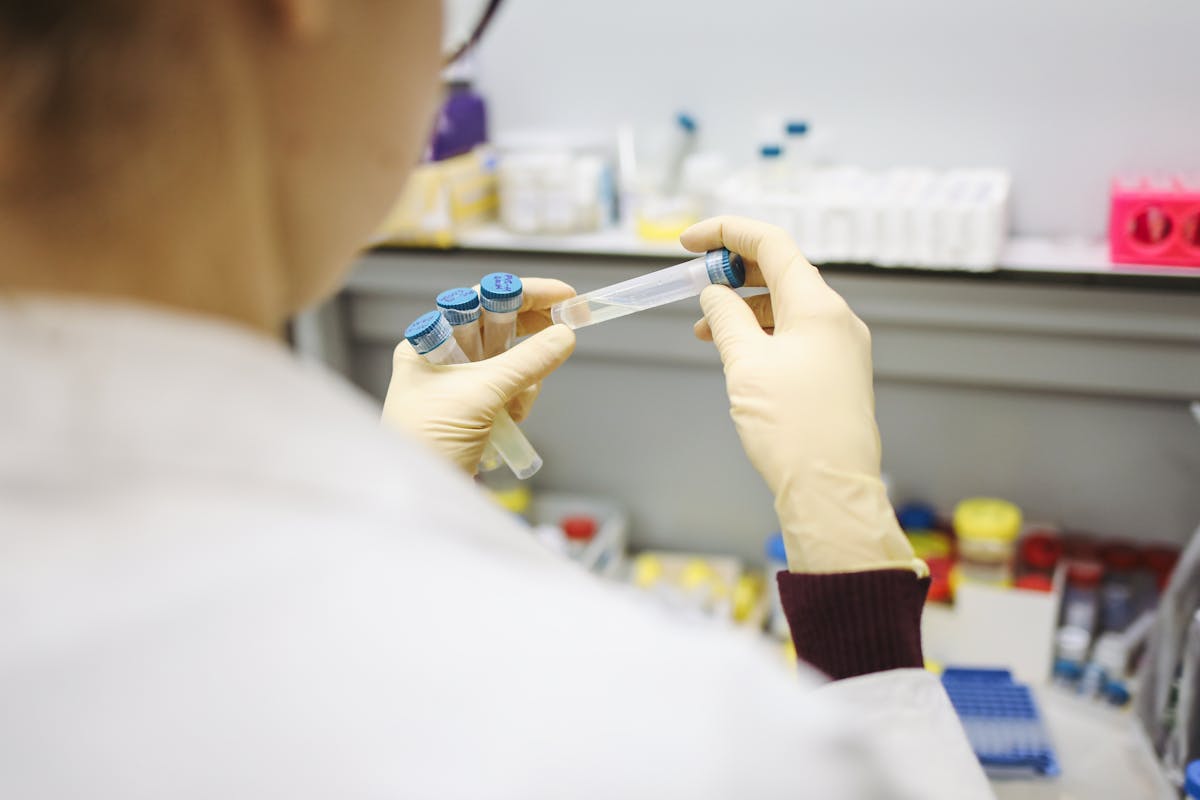
In practice, AI models sit alongside incubators, microscopes, and sequencing platforms, turning large datasets into prioritized lists of molecules that are most likely to kill dangerous pathogens while sparing human cells.
Technology: How AI Discovers New Antibiotics
AI-driven antibiotic discovery combines data from chemistry, microbiology, and genomics. At its core, it attempts to learn patterns that distinguish effective, safe antibacterial compounds from those that are inactive or toxic.
Representing Molecules for Machine Learning
Before a model can make predictions, molecules must be encoded in a machine-readable form. Common encodings include:
- SMILES strings (Simplified Molecular-Input Line-Entry System): text-based encodings of molecular structures.
- Graph representations: atoms as nodes and bonds as edges, ideal for graph neural networks (GNNs).
- Molecular fingerprints: bit vectors that capture the presence or absence of particular substructures or features.
Neural Networks for Antibacterial Activity
Models such as convolutional neural networks (CNNs), recurrent neural networks (RNNs), transformers, and GNNs are trained on labeled datasets of:
- Known antibiotics and their minimum inhibitory concentrations (MICs).
- Inactive or weakly active compounds.
- Toxicity data in mammalian cell lines.
The objective can be either:
- Classification: predict whether a molecule is likely to be antibacterial or not.
- Regression: predict quantitative activity, such as MIC or zone-of-inhibition size.
Transcriptomics-Aware Models
Some of the most exciting post-halicin work integrates bacterial transcriptomic responses—how gene expression changes after drug exposure.
- Researchers expose bacteria to a panel of compounds.
- They sequence RNA to profile which genes are up- or down-regulated.
- AI models learn to associate expression signatures with mechanisms of action and efficacy.
This allows models not only to predict potency but also to infer possible modes of action and cross-resistance patterns.
Generative Models for Novel Scaffolds
Beyond screening existing molecules, generative AI is being used to design new compounds:
- Variational autoencoders (VAEs) and generative adversarial networks (GANs) generate candidate SMILES strings.
- Diffusion models and reinforcement learning frameworks optimize for multi-objective criteria like potency, solubility, and synthetic accessibility.
These generative models explore chemical regions far from known antibiotics, reducing the chance of rediscovering the same old scaffolds.
“Without high-quality microbiology data, even the most sophisticated AI is blind. The algorithm is only as good as the measurements we feed it.”
— Paraphrased from discussions by Dr. Regina Barzilay, MIT computer scientist working on AI for drug discovery
Scientific Significance: Why AI-Discovered Antibiotics Matter
AI-guided antibiotic discovery is more than a clever computational trick; it reshapes the scientific landscape of how we tackle infectious disease.
Expanding Accessible Chemical Space
Traditional screening campaigns might test between 10,000 and 1,000,000 compounds. Modern AI systems can virtually evaluate:
- Millions to billions of small molecules in silico.
- Enormous libraries generated by combinatorial chemistry and public databases.
By focusing wet-lab effort on the most promising candidates, AI vastly increases the effective reach of each experiment.
Identifying Unconventional Mechanisms of Action
Many existing antibiotics target a small set of pathways (cell-wall synthesis, protein synthesis, DNA replication). AI is helping identify compounds that:
- Target metabolic pathways not previously exploited by drugs.
- Disrupt membrane integrity in novel ways.
- Interfere with biofilm formation and quorum sensing.
These new mechanisms are especially valuable against superbugs that have evolved resistance to conventional drug classes.
Quantifying and Anticipating Resistance
AI models, combined with evolution experiments, can help estimate how quickly bacteria may adapt to a new antibiotic:
- Simulating repeated exposure and mutation patterns.
- Analyzing known resistance genes and efflux pumps.
- Predicting cross-resistance with existing drugs.
This supports more rational antibiotic stewardship strategies, including pairing drugs or cycling regimens to slow resistance.
Key Case Study: Halicin and Beyond
One of the landmark successes in AI-guided antibiotic discovery was the identification of halicin by a team from MIT and collaborators, reported in 2020. Using a deep-learning model trained on a relatively modest dataset of molecules, the system screened more than 100 million compounds from the Drug Repurposing Hub and other libraries.
What Made Halicin Special?
- Novel scaffold: Chemically distinct from conventional antibiotics.
- Broad-spectrum activity: Potent against several multidrug-resistant Gram-negative pathogens.
- In vivo efficacy: Demonstrated ability to clear infections in mouse models.
Halicin is not yet an approved human drug, but it proved a crucial concept: deep learning can uncover potent antibiotics that traditional screens might overlook.
Post-Halicin Progress
Since the halicin study, multiple groups have:
- Trained graph neural networks on expanded compound libraries.
- Linked chemical features with RNA-seq profiles of bacterial stress responses.
- Developed cross-species models that predict spectra of activity (Gram-positive vs Gram-negative, anaerobes, etc.).
These efforts frequently trend on platforms like X/Twitter, YouTube, and LinkedIn because they combine cutting-edge AI with an emotionally resonant message: defending humanity against invisible microbial threats.
Methodology: From In Silico Prediction to Wet-Lab Validation
AI can only propose candidates; experimental science decides which survive. The typical pipeline looks like this:
1. Data Collection and Curation
- Compile chemical structures and activity data from public databases (e.g., ChEMBL), proprietary screens, and literature.
- Standardize molecules (tautomer normalization, removal of duplicates).
- Annotate with MIC values, cytotoxicity data, and physicochemical properties.
2. Model Training and Validation
- Split data into training, validation, and test sets.
- Train deep-learning models (GNNs, transformers, etc.).
- Evaluate using metrics like ROC-AUC, precision–recall, and proper calibration.
- Perform cross-validation and external validation on independent datasets.
3. Virtual Screening and Prioritization
After achieving reliable performance, researchers:
- Apply models to huge virtual libraries (107–109 molecules).
- Filter hits based on:
- Predicted potency vs target pathogens.
- Predicted human-cell toxicity.
- Drug-likeness and synthetic feasibility.
4. Experimental Testing
Shortlisted compounds move into the lab:
- MIC assays in broth to quantify growth inhibition.
- Time-kill curves to distinguish bacteriostatic from bactericidal activity.
- Biofilm assays to assess activity against structured bacterial communities.
- Cytotoxicity tests on mammalian cell lines.
5. Optimization and Preclinical Development
Promising hits are iteratively optimized:
- Medicinal chemists modify functional groups to improve potency or solubility.
- AI models predict structure–activity relationships (SAR) to guide design.
- In vivo studies in animal models assess pharmacokinetics, safety, and efficacy.
“AI doesn’t replace the Petri dish. It decides which plates are most worth setting up.”
— Summary of viewpoints expressed by multiple microbiology–AI research teams in recent conferences
Milestones in AI-Driven Antibiotic Discovery
Over the past decade, several key milestones have shaped this field.
Notable Achievements
- Early ML-based QSAR models predicting antibacterial activity from small datasets.
- 2010s: Widespread adoption of deep learning for chemical property prediction.
- 2020: Publication of the halicin study demonstrating AI-guided discovery of a novel broad-spectrum antibiotic candidate.
- 2020s: Emergence of graph neural networks and multimodal models combining chemistry with transcriptomics and proteomics.
- Recent work: Generative AI systems producing de novo molecules optimized for potency, selectivity, and ADMET profiles.
Impact on the Broader AI-in-Medicine Landscape
Successes in antibiotic discovery have:
- Boosted confidence in AI models for small-molecule drug design more generally.
- Inspired similar strategies for antivirals, antifungals, and oncology drugs.
- Encouraged open-science collaborations sharing datasets and models.

Challenges: Beyond Algorithms and Hype
Despite the excitement around “AI vs superbugs,” multiple scientific, economic, and ethical challenges remain.
Scientific and Technical Limitations
- Data quality and bias: Models trained on limited or biased datasets may fail on new chemical classes or pathogens.
- Generalization: Predicting activity under clinically relevant conditions (e.g., biofilms, host environments) is much harder than predicting in-vitro MICs.
- Mechanism-of-action ambiguity: Some AI hits work, but their precise targets remain unclear, complicating safety assessment.
Economic and Regulatory Barriers
Even if AI accelerates discovery, antibiotics face distinct market constraints:
- New antibiotics are used sparingly to preserve effectiveness, limiting revenue.
- Clinical trials are expensive, especially for resistant infections with complex enrollment criteria.
- Regulatory pathways, while evolving, still require rigorous evidence of safety and efficacy.
Many experts argue for “pull” incentives—such as subscription models or market entry rewards—to make antibiotic development financially viable.
Ethical and Stewardship Considerations
- New AI-discovered antibiotics must be integrated into global stewardship frameworks to avoid repeating the overuse that fueled resistance.
- Access and equity are crucial: low- and middle-income countries bear a heavy burden of AMR but often have limited access to cutting-edge drugs.
- Transparency in AI methods and data is important for reproducibility and trust.
“If we do not pair innovation with stewardship, the most brilliant AI-designed antibiotic will be just another temporary fix.”
— Synthesis of viewpoints from AMR policy and infectious disease experts
Public Engagement and Online Discourse
The story of AI-discovered antibiotics has become a popular topic on platforms like YouTube, X/Twitter, TikTok, and LinkedIn. Science communicators explain:
- How biofilms protect bacteria from drugs.
- What efflux pumps are and how they expel antibiotics.
- How bacteria evolve resistance via horizontal gene transfer and spontaneous mutation.
These explainers often break down complex concepts—like MIC, SMILES strings, or graph neural networks—into accessible visuals, helping the public understand both the promise and limitations of AI in medicine.

Tools, Learning Resources, and Helpful Products
For students and professionals interested in AI-guided antibiotic discovery, several tools and resources can accelerate learning.
Educational Resources
- WHO: Tackling Antimicrobial Resistance
- CDC: Antibiotic / Antimicrobial Resistance (AR / AMR)
- Nature Collection on AI in Drug Discovery
- YouTube explainers on AI-discovered antibiotics
Amazon Reading Recommendations
To build foundational knowledge in this area, the following widely read books are useful:
- Big Data: A Revolution That Will Transform How We Live, Work, and Think – for understanding data-driven approaches that underpin AI.
- Antibiotic Resistance: The Battle for the Twenty-First Century – for a clear overview of AMR and why new antibiotics are urgently needed.
Future Directions: Towards an AI-Integrated Antibiotic Ecosystem
Looking ahead, AI’s role in antibiotic discovery is likely to expand from isolated research projects into an integrated, end-to-end ecosystem.
Closed-Loop Discovery Platforms
Many labs are moving toward closed-loop systems where:
- AI models propose candidate molecules.
- Robotic platforms synthesize and test them.
- Experimental results automatically feed back into the model for retraining.
This continuous optimization cycle can drastically shorten the time from concept to validated hit.
Multi-Pathogen and Host-Aware Models
Next-generation models will increasingly:
- Predict activity across multiple priority pathogens at once.
- Account for the host environment, including immune interactions and microbiome context.
- Integrate omics data (genomics, proteomics, metabolomics) for deeper mechanistic insights.
Policy, Collaboration, and Open Science
To fully realize the promise of AI-discovered antibiotics, we will need:
- International consortia sharing data, tools, and benchmarks.
- Incentive structures that reward development of drugs that are used judiciously.
- Transparent, reproducible AI models and validation practices.
Conclusion: A Powerful Ally, Not a Silver Bullet
AI-discovered antibiotics embody a compelling narrative: humanity turning its most advanced computational tools against some of its oldest biological enemies. Deep-learning systems can scan chemical universes too vast for human intuition, highlight unexpected candidates like halicin, and help decode the complex interplay between drugs and microbial life.
But AI is not a magic cure. It depends on meticulous microbiology, careful data curation, rigorous wet-lab validation, robust clinical trials, and thoughtful stewardship. Economic and regulatory hurdles still loom large, and resistance will continue to evolve as long as bacteria exist.
The realistic promise is this: by combining human expertise with AI’s pattern-finding power, we can discover better antibiotics faster, deploy them more wisely, and buy precious time in the ongoing struggle against superbugs. In that partnership between code and culture plate lies one of the most hopeful frontiers in modern medicine.
Additional Tips to Stay Informed and Engaged
You do not need to be a specialist to follow developments in AI-discovered antibiotics and antimicrobial resistance. Here are practical ways to stay informed:
- Subscribe to newsletters from journals like Nature, Science, or The Lancet Infectious Diseases.
- Follow experts in AMR and AI on platforms such as LinkedIn and X/Twitter.
- Watch reputable science channels on YouTube that break down new studies into accessible explainers.
- Support and advocate for responsible antibiotic use in your own life—only take antibiotics when prescribed and complete the full course.
By understanding both the microbiology and the machine learning, you gain a deeper appreciation of how interdisciplinary science is shaping the future of infectious disease treatment.
References / Sources
Further reading from reputable organizations and peer-reviewed literature:
- Stokes et al., “A Deep Learning Approach to Antibiotic Discovery,” Nature (2020)
- WHO: Global Research on Antimicrobial Resistance
- CDC: Antibiotic / Antimicrobial Resistance (AR / AMR)
- Review on Antimicrobial Resistance (UK AMR Review)
- Cell Reports Medicine: Machine Learning Models for Antibiotic Discovery and Optimization
- Nature Reviews Drug Discovery: Artificial Intelligence in Drug Discovery and Development
