
Five Nights at Freddy’s 2 Review: When Horror Sequels Drown in Their Own Lore
Five Nights at Freddy’s 2 arrives at a time when video game adaptations are finally being taken seriously, from the prestige apocalypse of The Last of Us to the pop‑pulp fun of Sonic the Hedgehog and Fallout. In theory, a sequel to 2023’s surprise box‑office hit should be a slam dunk. Instead, Five Nights at Freddy’s 2 feels like a movie made almost exclusively for lore detectives on YouTube, leaving everyone else—star Josh Hutcherson included—looking a bit bored in the dark.
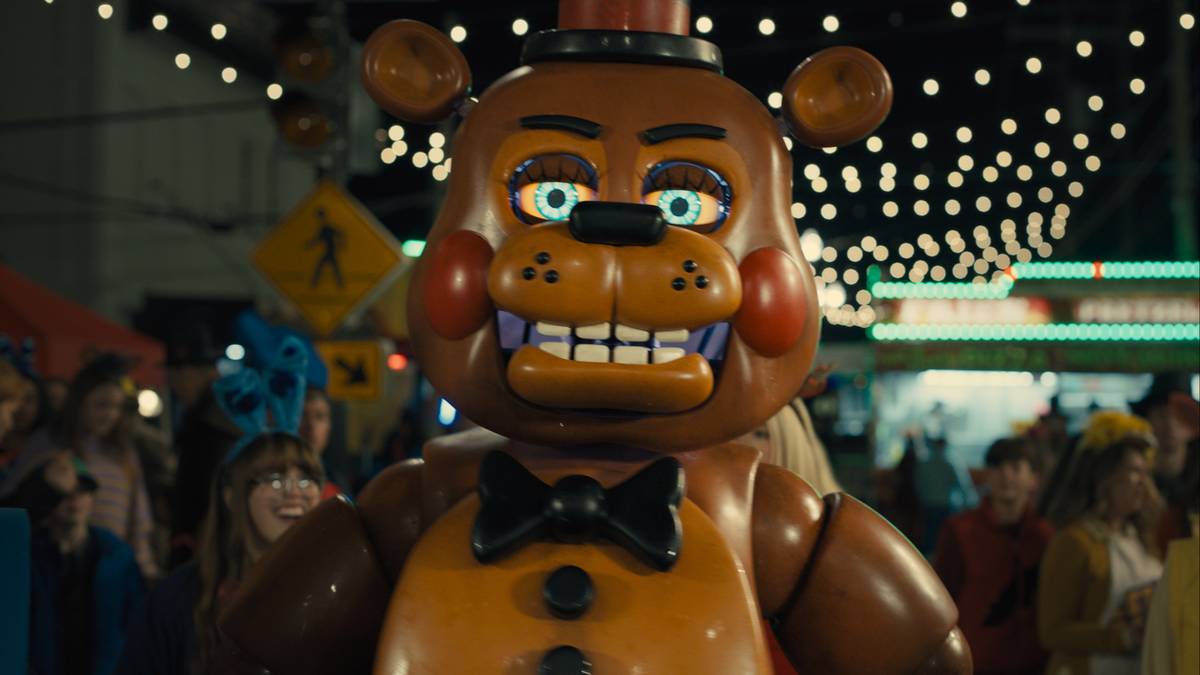
Anchored by the arrival of The Marionette—one of the game series’ most haunting figures—the sequel doubles down on backstory and mystery but forgets to be consistently scary or emotionally gripping. It is, in many ways, the logical endpoint of a fandom‑driven franchise: dense with references, thin on urgency.
From Viral Jumpscares to Movie Multiverse
To understand why Five Nights at Freddy’s 2 looks the way it does, you have to remember where this series came from. Scott Cawthon’s original 2014 indie game was a low‑budget point‑and‑click horror experiment that exploded online thanks to streamers like Markiplier and PewDiePie. Players were locked in a tiny security office, staring at static camera feeds, bracing for animatronics to lunge at the screen. It was barebones—and that was the point.
Over time, FNAF transformed from a clever jumpscare machine into a full‑blown mystery box. Fans began decoding newspaper clippings, menu screens, and background details to piece together a sprawling, quasi‑mythological narrative about missing children, haunted mascots, and a murderous technician in a bunny suit. The lore became the franchise.
The 2023 film adaptation embraced that mythology but still functioned as a straightforward gateway horror movie. It had a clear emotional arc and a sense of novelty: studio‑backed animatronic horror with a massive built‑in fan base. The sequel feels less interested in onboarding newcomers and more in validating years of fan speculation.
The Marionette Takes Center Stage—For Better and Worse
The big headline addition in Five Nights at Freddy’s 2 is The Marionette (sometimes called The Puppet), an unnervingly lanky figure from the games who has long been associated with the souls of murdered children and the franchise’s deeper supernatural rules. Bringing her into the films should have been a chance to ratchet up the tragic horror at the heart of the story.
Instead, the movie largely treats The Marionette as a lore delivery system—a spectral narrator whose main job is to explain things fans already know and new viewers can barely track. Her expanded storyline hints at genuine sadness and moral ambiguity, but the script seems more excited to check off canon bullet points than to build a coherent emotional arc.
“The Marionette was always the conscience of the series for me,” creator Scott Cawthon has said in interviews about the games, “a reminder that behind every jump scare is a story about loss.”
You can feel that intention lurking beneath the movie, but it rarely breaks the surface. The result is a character who is visually memorable and thematically rich, yet dramatically underused—an icon trapped in exposition duty.
Josh Hutcherson’s Sleepy Security Guard: When the Lead Checks Out
Josh Hutcherson’s Mike Schmidt returns as our human anchor, still traumatized, still exhausted, still surrounded by possessed animatronics. The problem is that in this second outing, his exhaustion starts to look like disengagement. What initially read as wary, shell‑shocked stoicism in the first film now often scans as indifference.

To be fair, the script does him few favors. Much of Mike’s time is spent reacting to new revelations about the past, revisiting familiar fears, or standing still while spectral figures monologue around him. The movie keeps telling us he is haunted, but it struggles to find new ways to show it.
- Limited emotional range: Mike rarely moves beyond tired concern, making key scenes feel flat.
- Thin character growth: His arc feels like a remix of the first film’s trauma beats.
- Underused relationships: Family ties and survivor’s guilt are present, but mostly as plot levers, not lived‑in dynamics.
In a franchise so defined by big, theatrical monsters, you need a human center who can sell both terror and tenderness. Here, Hutcherson often seems like he is watching from somewhere just outside the story.
Is It Actually Scary, or Just Familiar?
One of the main challenges of adapting FNAF is that the original game’s horror came from interactivity: you controlled the cameras, you managed the power, you blamed yourself when things went wrong. A movie has to compensate by building tension in other ways—sound design, pacing, character investment.

Five Nights at Freddy’s 2 offers a handful of effective sequences—usually when it leans into the uncanny physicality of the animatronics rather than CGI flourishes. The production design is still impressive, and the soundtrack knows how to weaponize the cheerful menace of children’s entertainment.
But many would‑be scares play like nods instead of nightmares. Shots linger just long enough for fans to recognize an Easter egg, not long enough for the dread to build. You can feel the film constantly trying to balance:
- Serving hardcore fans with deep‑cut references and character reveals.
- Entertaining newcomers who just want a coherent, spooky night at the movies.
In this round, the scale tips decisively toward the first group. If you do not already speak fluent FNAF, the horror can feel oddly weightless—busy, noisy, but rarely piercing.
Where FNAF 2 Fits in the Game Adaptation Boom
Context matters here. We are in a moment when studios have finally realized that treating games as serious source material can pay off, not just in box office, but in cultural cachet. HBO’s The Last of Us built character‑driven drama around a familiar apocalypse. Sonic the Hedgehog leaned shamelessly into cartoon chaos and Jim Carrey’s live‑action Looney Tune energy. Fallout threaded the needle between canon and reinvention.
By comparison, Five Nights at Freddy’s 2 feels conservative. It assumes the fandom will show up, so it focuses on rewarding them rather than expanding the universe in bold ways. This is not necessarily a fatal flaw—franchises like the Resident Evil films survived for years on a similar logic—but it does make the movie feel dated in a landscape where even popcorn adaptations are upping their narrative game.
There is also a business calculus here. A PG‑13 horror series with toy‑friendly mascots and a rabid online following is a merchandising dream. The risk is that, in chasing that dedicated audience, the films stop trying to earn new ones.
What Works, What Doesn’t: A Quick Breakdown

Strengths
- Atmospheric production design: The dilapidated pizzeria settings still feel tactile and unnerving.
- Animatronic presence: Practical suits and physical effects keep the monsters grounded and memorable.
- Expanded mythology: For dedicated fans, The Marionette’s bigger role and the deeper mythos will be satisfying.
Weaknesses
- Lore overload: Newcomers are given little context, and even casual fans may feel overwhelmed.
- Underpowered lead performance: Hutcherson’s Mike rarely animates the drama in the way the story needs.
- Inconsistent scares: Too many moments feel like setup for Easter eggs rather than stand‑alone horror beats.
The movie is not a disaster so much as a missed opportunity: all the ingredients for a standout horror sequel are here, but they are mixed in a way that prioritizes continuity over clarity, and recognition over resonance.
Verdict: A Sequel for the Faithful, Not the Frightened
Five Nights at Freddy’s 2 is the kind of sequel that assumes you have already done the homework. If you have followed the lore threads, watched the theory videos, and memorized every animatronic’s tragic backstory, you will likely find plenty to enjoy in its dense mythology and expanded cast of monsters. If you are just here for a creepy night at the movies, you may walk out wondering why everyone else seems so excited about a story that never quite comes alive.
As video game adaptations continue to mature, the FNAF films face a choice: remain niche comfort food for a specific fandom, or evolve into horror stories that can stand on their own, lore and all. Five Nights at Freddy’s 2 does not make that leap. It is content to stay locked in its security office, watching the same cameras, waiting for the same jumpscares.
For longtime fans, that might be enough. For everyone else, it is a reminder that the scariest thing about this franchise is not the animatronics—it is how easy it is for a story to get lost inside its own mythology.
Rating: 2.5/5
