
DIY Wall Paneling Magic: Turn Boring Walls into Bougie Architectural Moments
Your Walls Are Bored. Let’s Fix That.
DIY wall paneling and slat walls are having such a big moment right now that plain drywall is filing a formal complaint for neglect. Across TikTok, YouTube, and Pinterest, people are grabbing MDF, pine, and peel‑and‑stick slats to turn “rental beige” and “builder basic” into “wait, is this a boutique hotel?”—often in a single weekend.
The magic combo: high impact, relatively low cost, and totally customizable to your vibe—whether that’s modern minimalist, cozy farmhouse, or boho-with-a-side-of-disco-ball. In this guide, we’ll break down how to use DIY wall paneling, slat walls, and trim work as statement wall decor, without needing a renovation budget or a master’s degree in carpentry.
Translation: you, a tape measure, and some boards are about to make your walls the main character.
Why Wall Paneling Is Today’s MVP (Most Valuable Paint-job)
There’s a reason DIY wall paneling is dominating home decor, wall decor, and home improvement feeds right now:
- Budget-friendly drama: A few boards and a gallon of paint give you a custom look without knocking down a single wall. Your bank account remains conscious.
- Weekend-friendly: Most feature walls can be done in a day or two. It’s like a makeover show, except you’re both the contestant and the expert panel.
- Versatile style: Board-and-batten, shiplap, skinny vertical slats, chunky grids—there’s a pattern for every aesthetic and every room.
- Zoning powers: Paneling instantly defines spaces in open-plan homes and small apartments: think cozy bed nook, TV zone, or dining corner.
- Algorithm-approved: These transformations look wildly satisfying in before-and-afters, which means bonus content if you like to share your projects.
The best part? Paneling and slat walls are basically interior design’s version of contouring: sculpted, flattering, and surprisingly easy once you know where to put the lines.
Pick Your Panel Personality: Farmhouse, Minimalist, or Boho?
Before you start gluing things to the wall like a hot-glue-gun-fueled raccoon, pause for a style check. Your wall’s new outfit should match your home’s personality.
1. Farmhouse Charm: Board-and-Batten & Shiplap
For farmhouse decor fans, board-and-batten and shiplap are the wall equivalent of a cozy knitted sweater.
- Where it shines: Entryways, dining rooms, and bedrooms.
- Try this: Half-height board-and-batten with a shelf rail for art, small plants, or that candle you swear you’re not hoarding.
- Color ideas: Soft whites, warm greiges, or a muted sage green for instant cottage-core energy.
2. Minimalist Cool: Slender Slats & Tone-on-Tone
For minimalist home decor, slim, vertical slats are your new best friend: clean lines, quiet texture, maximum sophistication.
- Where it shines: Behind the TV, around a media wall, or behind a desk in your WFH setup.
- Try this: Paint the slats and wall the exact same color for a subtle, architectural look that whispers “designer.”
- Color ideas: Soft white, greige, or deep charcoal for that gallery-like calm.
3. Boho Drama: Mixed Textures & Moody Hues
Love boho decor? Paneling is your backdrop, not your headliner. Pair it with woven art, arches, and lush plants.
- Where it shines: Bedrooms and living rooms where you want a cozy, collected feel.
- Try this: Simple square or rectangular trim pattern, painted in a deep clay, terracotta, or inky blue.
- Style it with: Rattan mirrors, macramé, linen curtains, and warm brass accents.
Planning 101: Measure Twice, Cry Zero Times
A little planning separates “custom feature wall” from “why do those lines look…off?” Here’s the pre-game:
- Pick your hero wall. Choose the wall you naturally face: behind the bed, sofa, or TV. Avoid walls that compete with big windows or already-busy areas.
- Sketch it out. Draw your wall on paper, mark outlets, switches, and doors. Then sketch your panel or slat layout over it. It doesn’t have to be pretty—just accurate.
- Decide your panel style. Grid, vertical battens, horizontal slats, picture-frame boxes—pick one main idea and commit. Your wall is not a collage assignment.
- Do the spacing math. For slats or battens, measure the total width, subtract the combined width of your boards, then divide the leftover by the number of gaps.
Yes, there is math, but the end result is hot, so we cope.
- Choose materials.
- MDF: Smooth, affordable, great for painted paneling.
- Pine or oak: Perfect if you want a natural wood slat look.
- Peel-and-stick panels: Renter-friendly and reversible.
Pro move: use painter’s tape on the wall to mock up your layout before committing. It’s like trying clothes on your wall before buying.
Bedroom Glow-Up: The Paneled Headboard Wall
A paneled headboard wall is trending hard in bedroom decor because it does three things at once: frames the bed, adds depth, and makes the room feel more expensive than it actually was.
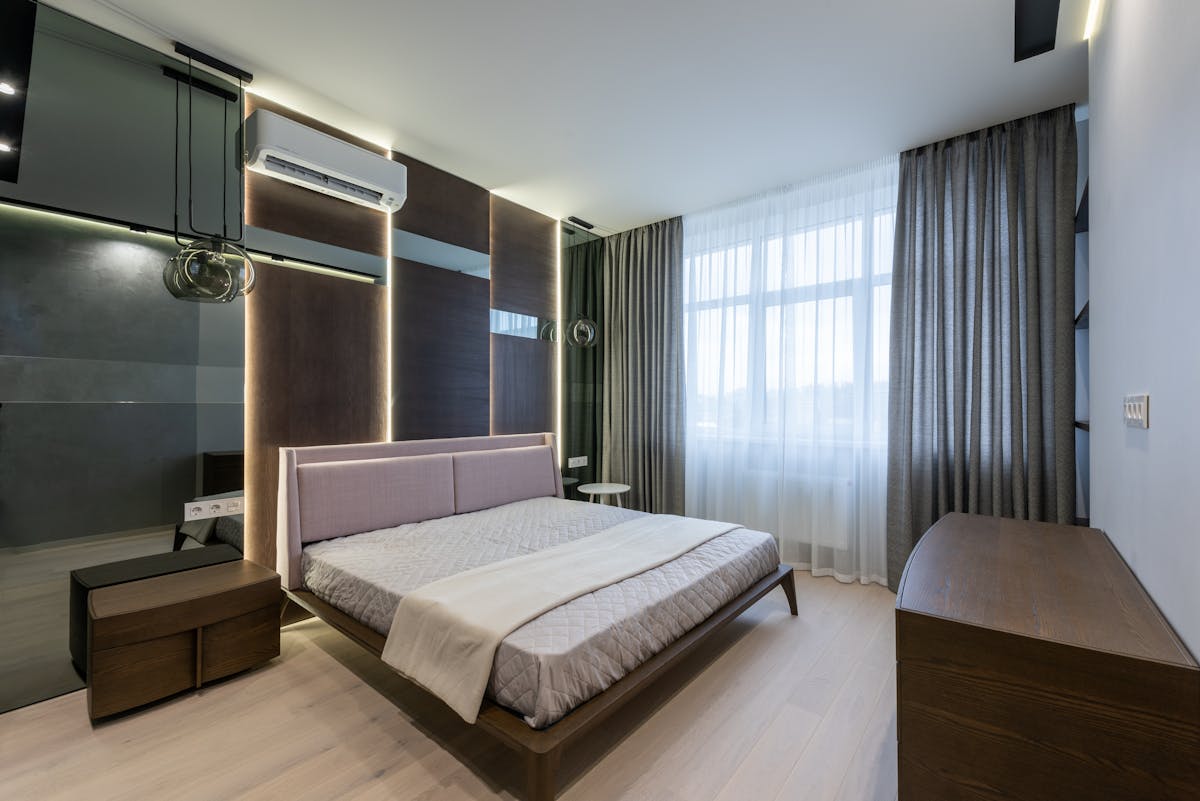
To get that boutique-hotel vibe:
- Height: Run paneling at least as wide as the bed and up to the ceiling for drama, or stop at about two-thirds of the wall height for a classic look.
- Color: Deep tones—ink blue, forest green, charcoal—instantly cozy up the room and make lighter bedding pop.
- Lighting: Add sconces or plug-in wall lights over the panels for layered, hotel-ish lighting that makes even mismatched pajamas feel chic.
Styling tip: Keep bedding simple and layered—think two main colors and one accent. Let the wall be the main drama queen.
Living Room Slat Walls & Media Moments
In living room decor, slat walls are the new gallery wall: sculptural, modern, and much harder to knock crooked. They’re especially popular around media walls and TV setups.
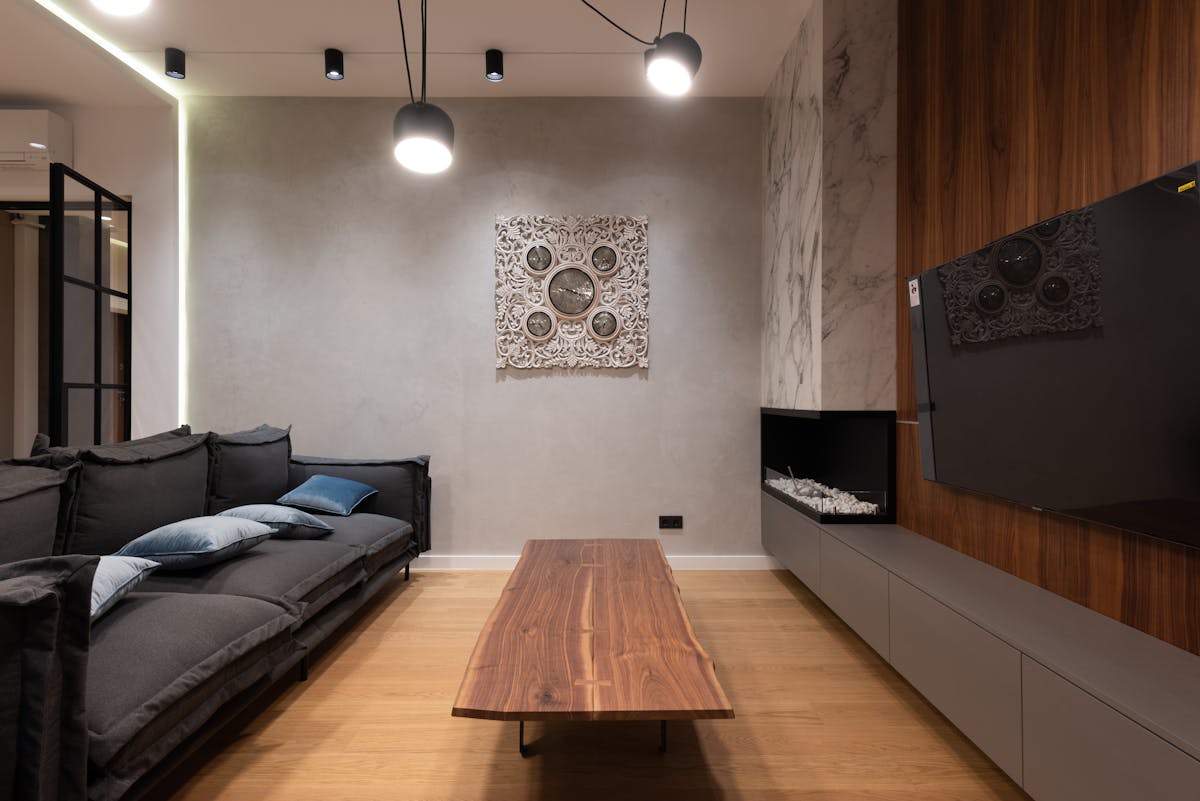
To build a statement media wall without hiring a contractor:
- Frame your TV: Run vertical slats across the section of wall behind the TV only, and paint the wall behind them in a darker shade so the screen blends in.
- Float some storage: Add a floating cabinet or console under the TV for a “built-in” look without actually building in.
- Light it up: Hidden LED strip lights behind slats or under the floating cabinet add that soft-glow “Netflix but make it cinematic” feel.
If you’re team minimalist, keep decor light: a couple of vases, a stack of books, one plant. The slat wall already did the heavy lifting.
Small Space Superpower: Paneling as a Room Divider
Open-plan and tiny-apartment folks, this one’s for you. Paneling and slat walls are an easy way to visually separate “living room,” “dining area,” and “WFH zone” without actually building walls or explaining anything to your landlord.
- Behind the sofa: Add a paneled or slat feature behind your couch to define the living area in a studio.
- Dining corner: Half-height paneling in a contrasting color behind your table instantly creates a “dining zone,” even if your table is 12 inches from the sofa.
- Desk nook: A slim slat panel behind a desk both frames your workspace and upgrades your video-call background from “witness protection” to “architectural influencer.”
Tip: Repeat the wall color on a piece of furniture or in textiles nearby (like cushions or a rug) so your zones feel intentional, not accidental.
Renter-Friendly & Commitment-Phobic Options
If you rent—or just like to change your mind like it’s a sport—there are plenty of reversible, deposit-friendly ways to join the wall-paneling party.
- Peel-and-stick slat panels: Lightweight, faux-wood panels that stick to the wall and can be removed later with gentle pulling and patience (and maybe a podcast).
- Foam or lightweight molding: Attach with removable adhesive strips for the look of real trim without the commitment of nails and caulk.
- Plywood “backer” boards: Mount slats to a thin painted plywood sheet and hang it like oversized art. Take the whole thing with you when you move.
Whatever method you choose, test a small area first, and always read the adhesive instructions so your security deposit doesn’t become a security maybe.
Color, Sheen & Finish: The Glow-Up Details
The difference between “I did this myself” and “a designer did this” is often in the finishing details. Some quick guidelines:
- Sheen: An eggshell or matte finish hides imperfections on textured paneling better than high gloss, unless you want every bump to have its own spotlight.
- Color blocking: Use a darker color on the lower panels and a lighter one above to visually ground the room, especially in tall spaces.
- Monochrome magic: Paint the wall, paneling, trim, and even doors the exact same shade for a calm, cocoon-like feel.
- Prep properly: Sand cut edges, fill nail holes, and caulk gaps before painting. Future-you (and your close-up photos) will be grateful.
Remember: bold color on one paneled wall is less scary than four plain bold walls. It’s basically a test drive for your paint courage.
Quick-Start Guide: From Blank Wall to Show-Off Moment
Here’s a simplified step-by-step you can screenshot and keep handy:
- Choose your wall and style (grid, batten, slat, shiplap).
- Measure wall and sketch layout with exact board widths and gaps.
- Buy materials (boards, adhesive, nails, filler, caulk, paint).
- Cut boards to size and lightly sand edges.
- Attach boards starting with a level top or base piece, then work outward.
- Fill nail holes, caulk gaps, let everything dry.
- Prime (if needed) and paint—two coats usually does it.
- Style the wall with lighting, art, or furniture… then take your victory photos.
If you can assemble flat-pack furniture without tears, you are overqualified for this project.
Let Your Walls Join the Conversation
DIY wall paneling, slat walls, and architectural details aren’t just trends—they’re one of the easiest ways to make your home feel intentional, designed, and a little bit fancy without going full renovation mode.
Whether you’re a renter experimenting with peel-and-stick slats or a homeowner ready to build a dramatic headboard wall in moody charcoal, one weekend of effort can transform your space—and your feed.
So grab a measuring tape, queue up a good playlist, and give your walls the personality they’ve been begging for. They’ve been blank long enough.
