
Did Prince Harry Just Shade Donald Trump on The Late Show?
Was Prince Harry Really Taking a Swipe at Trump on The Late Show?
Prince Harry’s latest pop‑culture crossover—an audition sketch with Stephen Colbert for a fictional “Christmas prince” movie—did what any good late‑night bit is supposed to do: generate laughs, clips, and controversy. A throwaway line that seemed to allude to the power of the US presidency quickly set social media buzzing: was Harry, the once‑spare to the British throne, now throwing shade at former President Donald Trump?
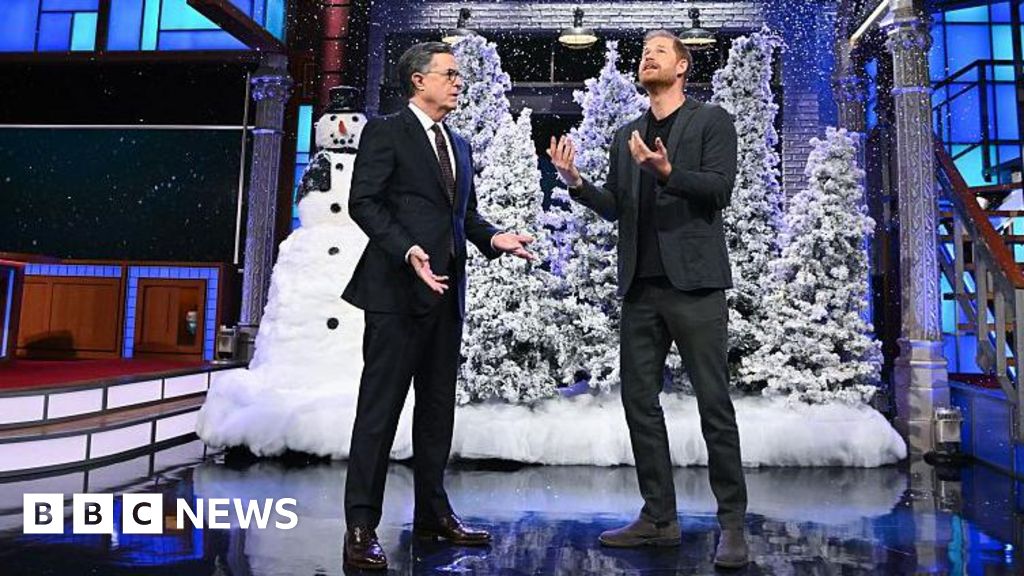
The moment came during Harry’s playful appearance on The Late Show with Stephen Colbert, where he joked his way through an over‑the‑top casting session as a “Christmas prince.” The sketch leaned hard into Hallmark tropes, but one quick political‑flavored aside turned the segment into headline material.
How Prince Harry Ended Up in a “Christmas Prince” Audition
By now, Prince Harry is becoming a late‑night regular. From promoting his memoir Spare to chatting about life in California, he’s already established a comfortable rapport with Colbert. The “Christmas prince” sketch fits into a long tradition of Colbert using celebrity guests as improv partners in mini‑comedy films.
The conceit this time: Harry auditions to play a fictional royal in a holiday movie, deliberately blurring the line between his real royal past and the syrupy clichés of streaming‑era Christmas films. The sketch riffed on all the trademarks—snow‑dusted castles, royal protocol, and that familiar “ordinary girl meets prince” storyline—only with an actual prince in on the joke.
The Joke Everyone’s Talking About: Was It Aimed at Trump?
During the sketch, Harry delivers a line that, in context, reads like a nudge‑and‑wink at the US presidency—complete with a tone that suggests the office has been, let’s say, creatively interpreted in recent years. The BBC reported that viewers quickly connected the dots to Donald Trump, who has long positioned himself as both antagonist and fascination point for the Sussexes’ extended circle, from the British tabloids to US commentators.
The line works on multiple levels:
- Surface‑level gag: A prince joking about political power is inherently funny, especially when he’s pretending to be a low‑stakes holiday movie love interest.
- Cultural echo: Any quip about the presidency in 2020s late‑night TV naturally conjures Trump, the omnipresent specter of US political comedy.
- Royal subtext: It hints at Harry’s unique position—no longer working royal, now media personality—who’s freer to be cheeky but still under intense scrutiny.
The Duke of Sussex appeared to joke about US President Donald Trump in an appearance on The Late Show With Stephen Colbert.
Crucially, Harry doesn’t say Trump’s name. That’s textbook late‑night strategy: leave just enough ambiguity that the audience supplies the reference. Colbert’s crowd clearly picked up the implication, reacting as if they’d just heard a veiled Trump burn.
Why a Trump‑Flavored Joke from Harry Hits Differently
When a standard Hollywood actor riffs on Trump, it’s just another beat in the endless loop of political comedy. When Prince Harry does it, even obliquely, it carries extra cultural baggage. The British royal family has long clung to a public posture of political neutrality—no endorsements, no explicit commentary, and certainly no on‑air jokes about sitting or recent heads of state.
Harry, unshackled from his senior royal role, has taken a different route. Appearing on US television, he’s playing by American talk‑show rules:
- Satire as social currency: In late‑night culture, politics is a mandatory topic, not a forbidden one.
- Brand “relatable”: Being willing to crack a slightly spicy joke helps position Harry as more of a celebrity than an untouchable aristocrat.
- Audience expectations: Colbert’s viewers almost expect a Trump allusion the moment political power is mentioned—Harry leans into that expectation without fully crossing the line.
Late‑Night TV, Royals, and the Trump Era: A Perfect Storm
To understand why this joke took off, you have to look at the ecosystem it landed in. US late‑night television has spent the better part of a decade building a cottage industry around Trump material. Colbert, in particular, saw his ratings surge on the back of pointed political satire aimed squarely at the former president.
At the same time, Harry and Meghan have become fixtures of a different kind of culture war, caught between British tabloid outrage, American celebrity coverage, and political punditry on both sides of the Atlantic. When they speak, commentators tend to hear more than what’s literally on the page—or in the script.
So when Harry drops a line that sits at the intersection of royalty, Christmas movies, and presidential power, the culture‑war machinery instantly clicks on. Was it a deliberate dog whistle or just a line calibrated to Colbert’s audience? From a media‑savvy standpoint, it almost doesn’t matter—the ambiguity is the feature, not the bug.
Was It Actually About Trump? Reading Between the Lines
If you strip away the commentary and just look at the structure of the joke, it’s classic late‑night innuendo: broad enough to apply to “recent presidents” in general, but timed and delivered in a media environment where “recent presidents” almost always translates to “Trump” in the public imagination.
There are a few key reasons Trump feels like the intended reference, even without a namecheck:
- The rhythm of the gag mirrors countless other Trump‑coded jokes in American comedy.
- Colbert’s own track record makes a non‑Trump reading feel almost willfully naïve.
- Audience reaction—laughter plus that “oh, he went there” energy—confirms how people in the room understood it.
At the same time, Harry retains plausible deniability. He doesn’t endorse a candidate, doesn’t directly criticize Trump, and doesn’t make any explicit policy comment. It’s jest, not manifesto—a way to flirt with political humor without fully stepping into the arena.
In an age where every royal sentence is parsed for subtext, it’s no accident that Harry’s gag could make headlines without ever naming its target.
The Sketch as Entertainment: What Worked, What Didn’t
Beyond the Trump speculation, the “Christmas prince” sketch stands on its own as a neat little piece of late‑night theater. Harry has grown noticeably more relaxed on camera, willing to lean into the absurdity of playing a fictionalized version of himself.
What works well:
- Self‑awareness: The sketch winks at the very idea of royal fairy tales that streaming platforms churn out every December.
- Chemistry with Colbert: Their dynamic has the feel of a returning guest rather than a nervy royal first‑timer.
- Shareability: The Trump‑adjacent joke gives the internet something to argue about, which is gold in the attention economy.
Where it’s weaker:
- The concept leans pretty heavily on your existing interest in Harry as a public figure—if you’re not invested, the gag is mostly novelty casting.
- Some beats feel like safe, pre‑cleared territory, as though lawyers hovered just off‑screen with a red pen.

As a piece of entertainment, it’s light, competent, and smart enough to poke at big topics without actually dwelling on them. As a PR move, it successfully keeps Harry in the cultural conversation without requiring another bombshell interview.
Related Royal Screen Moments and Cultural Echoes
Harry’s foray into sketch comedy doesn’t exist in a vacuum. It’s part of a broader trend of royals and ex‑royals stepping into the entertainment spotlight—sometimes directly, sometimes via dramatization.
- The Crown (Netflix): Though fictionalized, the series normalized the idea of royals as serialized characters, priming audiences to see figures like Harry as narrative subjects rather than distant institutions.
- Meghan Markle’s Hollywood background: Her pre‑royal Suits fame and later media ventures paved a natural on‑ramp for the couple’s entertainment collaborations.
- High‑profile interviews: From Oprah to their Netflix docuseries, Harry and Meghan have repeatedly blurred the line between confessional media and prestige TV.

Accessibility, Audience, and the Changing Image of Harry
It’s easy to focus solely on the Trump subtext, but the sketch also reinforces how Harry is recalibrating his relationship with the public. By stepping into the well‑lit, carefully captioned world of US late‑night TV, he’s choosing formats that are widely accessible, clipped for social, and increasingly designed with on‑screen text and clear audio for diverse audiences.
That accessibility isn’t just technical; it’s tonal. The humor is broad, the references familiar, and Harry leans into being an approachable, slightly self‑deprecating figure—someone closer to a Netflix‑friendly public intellectual than an heir‑adjacent royal.

In that sense, the not‑quite‑Trump joke is doing double duty. It keeps him relevant in American political pop culture without requiring him to plant a flag that would box him in later.
Verdict: A Carefully Calculated Wink, Not a Full‑Throated Takedown
The Late Show with Stephen Colbert – Prince Harry “Christmas Prince” Sketch
So, was Harry referencing Trump in that Late Show joke? All signs point to “almost certainly”—but in a deliberately indirect way. The timing, the setting, the cadence of the gag, and the audience reaction all line up with Trump‑coded humor, yet Harry stops just shy of explicit critique. It’s a deft bit of line‑walking: politically flavored enough to feel daring by royal standards, safely vague by American late‑night norms.
As a piece of comedy, the sketch is breezy and fun; as a media move, it reinforces Harry’s ongoing transformation from insulated royal to savvy, self‑aware participant in the global entertainment machine. Expect more of this kind of calibrated irreverence—suggestive, meme‑ready, and always just ambiguous enough to keep everyone talking.
Review by Entertainment Desk
