
China’s 34,000-Mile AI Network Links Data Centers Into One Massive Supercomputer
China has rolled out a vast artificial intelligence network that links major computing centers across the country into a near-unified system, according to state and local media reports in late 2025. The Future Network Test Facility (FNTF), a 34,175-mile (55,000-kilometer) high-speed optical network spanning 40 cities, is designed to pool national computing power for AI model training, scientific research, and industrial applications, while raising new questions about resilience, governance, and global competition in advanced computing.
A National-Scale AI Network Comes Online
The Future Network Test Facility was reported in early December 2025 by Science and Technology Daily, a state-run Chinese newspaper, and later summarized by regional outlets including the South China Morning Post. Project director Liu Yunjie, a veteran network scientist, described the FNTF as a distributed AI computing pool that allows distant data centers to work together “almost like a single supercomputer.”
The fiber-based network reportedly stretches enough distance to circle the equator about 1.5 times and interconnects computing hubs across 40 cities. According to Liu, quoted by Science and Technology Daily, the system can operate at about 98 percent of the efficiency of a single, centralized data center, despite its geographically distributed nature.
Chinese media have framed the launch as a milestone in national computing infrastructure. The FNTF is positioned as both a testbed and operational platform, supporting around-the-clock workloads and thousands of concurrent service trials.
Roots in the “East Data, West Computing” Strategy
The FNTF sits at the center of China’s “East Data, West Computing” initiative, a long-term plan to balance data generation and processing capacity across the country. The strategy, first outlined in national science and infrastructure plans in the early 2010s and formalized in government policy in the 2020s, encourages the placement of power-hungry data centers in resource-rich western regions, while serving data-intensive demand in more industrialized eastern cities.
Under this model, renewable energy and available land in western provinces are used to host large-scale computing facilities, while high-bandwidth optical links move data to and from coastal technology hubs. The National Development and Reform Commission and other agencies have previously promoted the approach as a way to support China’s digital economy while easing power and land constraints in its eastern metropolitan regions.
Analysts see the FNTF as an implementation of this policy vision at high technical sophistication. By treating dispersed centers as parts of a shared computing pool, planners aim to make more efficient use of existing hardware while reducing duplication of infrastructure.
Scale, Performance, and Early Trials
In reports carried by Science and Technology Daily, Liu Yunjie said the FNTF can support 128 heterogeneous networks and run up to 4,096 service trials simultaneously. The system is described as operating 24 hours a day, with centralized management of network resources and latency-sensitive traffic.
One high-profile demonstration involved transferring 72 terabytes of data from a radio telescope in roughly 1.6 hours. Liu told the newspaper that the same transfer over ordinary commercial internet connections would have taken about 699 days, underscoring the network’s bandwidth and efficiency in research scenarios such as astronomy and space science.
Chinese officials and project leaders have also highlighted the system’s applicability to AI model training, intensive simulations, and real-time services. With large language models, computer vision systems, and other AI workloads requiring substantial data movement between storage and compute nodes, a tightly coordinated network is seen as critical to maintaining performance.
Deterministic Networking: Trains on a Timetable
The FNTF is described by its designers as a “deterministic network,” a term used in communications engineering for architectures that tightly control latency, jitter, and bandwidth allocation. In interviews cited by Chinese media, engineers compared it to a train system operating on a fixed schedule, where each “train”—or packet flow—has a reserved slot along the route.
Deterministic networking differs from the best-effort model used on much of the public internet. Instead of packets competing dynamically for bandwidth, resources are pre-allocated to critical flows, which can be important in scenarios like:
- Large-scale AI training and distributed machine learning
- Telemedicine and remote surgery, where low latency is vital
- Industrial internet of things (IIoT) and smart manufacturing
- Real-time control systems in energy and transportation
According to Liu, FNTF achieves its reported efficiency by coordinating these flows across many linked data centers, reducing overhead from congestion and retransmissions. However, network specialists note that deterministic designs can be more sensitive to disruptions, since the timetable-based approach depends on stable routes and predictable conditions.
Planned Applications: From AI Models to 6G Research
Members of the project’s evaluation committee say the FNTF has already been used to support research into 5G and experimental 6G technologies. Wu Hequan, a scientist at the Chinese Academy of Engineering, told Science and Technology Daily that the network has served as an infrastructure backbone for advanced communications trials.
Project leaders have said that in the future, the platform is intended to be opened more widely to sectors such as:
- Industrial manufacturing and automation
- Energy and power-grid optimization
- Low-altitude economy, including drones and aerial logistics
- Healthcare services, including telemedicine and diagnostics
In AI specifically, Chinese outlets say the network is positioned to help train large-scale language and vision models, recommendation engines, and decision-support tools that demand enormous computational resources. By pooling capacity, the system may help institutions that lack ultra-large local clusters tap into national resources.
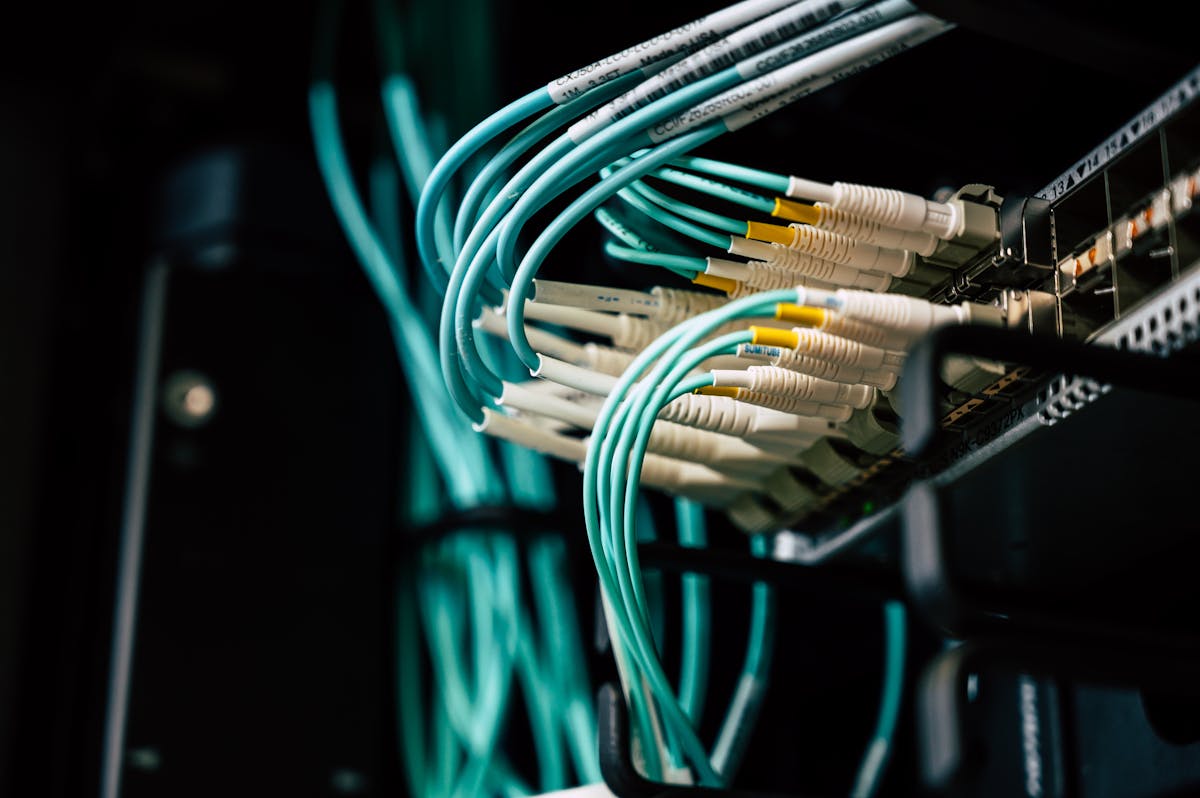
Visualizing China’s AI Computing Network


Supporters See a Leap in AI Capacity
Supporters within China present the FNTF as a transformative step for the country’s digital infrastructure and AI competitiveness. In domestic coverage, officials and researchers argue that the ability to coordinate computing resources nationwide will shorten development cycles for advanced models and help industries adopt AI at scale.
A commentary cited by some outlets, including the security-focused publication The Security Fact, characterized the initiative as “an ambitious gamble” that could provide China a leading edge in artificial intelligence. Proponents say the network could make better use of idle capacity, reduce duplicated investments in isolated supercomputing centers, and enable wider access to high-performance computing for universities and smaller enterprises.
Some Chinese analysts also frame the project as part of an effort to build domestic alternatives to foreign cloud and chip ecosystems, especially under conditions of export controls and technology restrictions affecting advanced semiconductors and AI hardware.
Technical and Operational Challenges
Even as Chinese media promote the FNTF’s capabilities, network engineers and external analysts point to substantial technical challenges. Deterministic networking at the reported scale requires:
- Extremely stable power and cooling for data centers distributed across diverse regions
- Robust fault-tolerance mechanisms in case of fiber cuts, equipment failures, or regional outages
- Complex orchestration software to schedule and monitor AI workloads across many nodes
- Strong cybersecurity and access controls for sensitive research and industrial data
Researchers outside China note that synchronizing compute clusters over long distances can introduce latency and coordination overhead, particularly for tightly coupled AI training jobs. While the FNTF’s designers claim near-local efficiency, independent technical assessments have not yet been published in peer-reviewed venues, making it difficult for outside experts to verify the performance figures.
Energy consumption is another consideration. Large-scale AI and high-bandwidth networking draw significant power, and sustaining such a system 24/7 may test the resilience of local grids, even in regions with abundant generation capacity.
Global Reactions and Strategic Context
Internationally, the FNTF is being discussed within a broader context of AI and supercomputing competition. While comprehensive foreign-language reporting remains limited, technology analysts and think-tank researchers have linked the initiative to China’s goals of technological self-reliance and leadership in next-generation networks.
In the United States, Europe, and other regions, governments and industry are exploring their own models for distributed supercomputing, including cloud-based AI clusters, exascale systems, and cross-border research networks. Some observers see China’s efforts as intensifying a race to build national or regional AI infrastructure capable of training ever-larger models.
At the same time, policy experts warn that highly centralized or state-coordinated computing systems raise questions about data governance, privacy, and interoperability with international standards. These debates echo wider discussions on digital sovereignty and the governance of critical infrastructure.
Outlook: A Test of Technology and Governance
As 2025 draws to a close, China’s Future Network Test Facility stands out as one of the most expansive attempts yet to treat a nation’s computing resources as a single, coordinated AI platform. The project’s long-term significance will depend on how reliably it operates at scale, how widely it is opened to researchers and industry, and how it is governed in terms of security and data use.
While proponents inside China argue that the network could accelerate innovation and strengthen the country’s position in artificial intelligence and advanced communications, independent verification of performance claims and more detailed technical disclosures will be needed for the international research community to fully assess its impact. For now, the FNTF illustrates how large-scale, deterministic networking is moving from concept to practice in the global race to build next-generation AI infrastructure.
