
Caleb Williams Stuns Packers in Overtime Thriller as Bears Ride Rookie’s Sixth Comeback Win
Caleb Williams’ OT Magic Caps Bears’ Latest Comeback Win Over Packers
Caleb Williams delivered a signature NFL moment at Lambeau Field, erasing a late deficit and winning in overtime with a 46-yard touchdown bomb to DJ Moore as the Chicago Bears shocked the Green Bay Packers 22-16. Thirteen days after a game-sealing interception against the same rival, the rookie quarterback responded with his league‑leading sixth fourth‑quarter comeback, rewriting the narrative of his first season and reigniting the Bears–Packers rivalry.
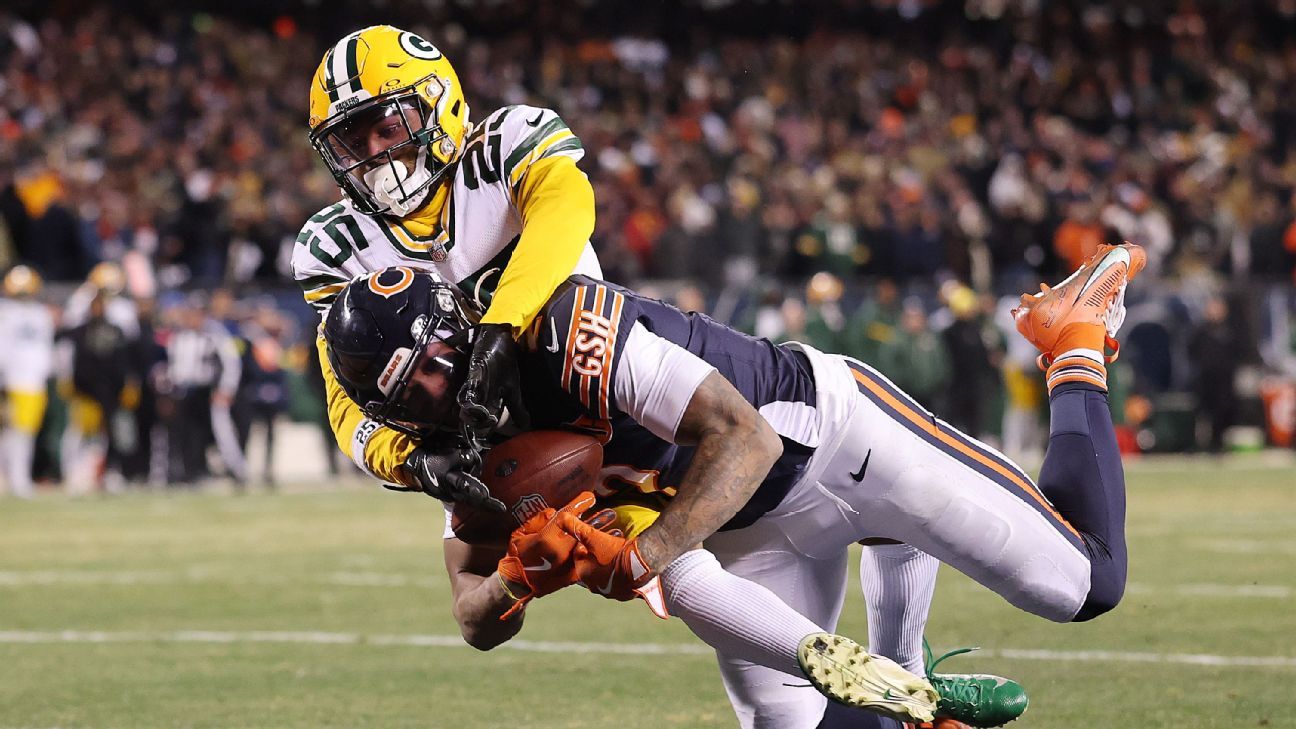
In a rivalry defined by heartbreak for Chicago, Williams’ overtime heroics felt like a pivot point: the Bears’ rookie outdueling Jordan Love in Green Bay, on the road, with the game — and perhaps the psychological balance of the NFC North — hanging in the air.
Redemption in Real Time: From Costly Pick to Instant Classic
Barely two weeks ago, Williams walked off the field in Chicago after throwing a late interception that sealed a Packers win. The narrative wrote itself: a talented but mistake‑prone rookie still learning NFL speed, punished by a historic rival that has tormented the Bears for decades.
On Sunday in Green Bay, he rewrote that story. Williams overcame a sluggish first half, a hostile Lambeau crowd, and another fourth‑quarter deficit, calmly steering the Bears into overtime before detonating the defense with a walk‑off deep shot.
“You don’t get to choose your low moments,” Williams said afterward. “But you do get to choose how you respond. Thirteen days ago, I felt like I let my team down. Tonight, I just wanted another chance with the ball in my hands.”
That response wasn’t just emotional; it was clinical. Chicago’s staff leaned into quick-game concepts, layered route combinations, and designed movement in the pocket to get Williams into rhythm late — and when the Packers finally bit on an underneath look in overtime, he had Moore streaking free for the kill shot.
How Bears vs. Packers 22–16 Unfolded: Drives, Swings, and Momentum
The box score says 22–16 Bears in overtime. The game felt far tighter than that. Defense and field position dictated the tempo, and for long stretches it looked like Green Bay’s experience at quarterback might be enough.
Key beats of the night:
- Early Defensive Stalemate: Both offenses opened conservatively. The Bears leaned on the run and quick outs, while the Packers attacked the flats and checkdowns to avoid Chicago’s pass rush.
- Packers Edge Ahead: Jordan Love capitalized on a busted coverage for a chunk gain that set up a go‑ahead score, giving Green Bay a narrow second‑half lead.
- Fourth‑Quarter Williams: With the Bears trailing again in the final quarter, Williams shifted into attack mode, repeatedly extending plays and converting in long yardage situations.
- Overtime Drama: After the Chicago defense forced a stop on Green Bay’s opening OT possession, Williams needed just one haymaker to end it, connecting with Moore on the 46‑yard strike down the right sideline.
Each possession tightened the emotional screws. Chicago’s defense forced field goals instead of touchdowns, effectively buying Williams enough time to find his late-game groove.
By the Numbers: Caleb Williams’ Sixth Fourth-Quarter Comeback
Williams entered Week 16 already leading the NFL in wins when trailing in the fourth quarter. Sunday’s performance pushed that total to six, underscoring a trait that scouts loved at USC: he is at his best when the game gets chaotic.
| Quarterback | Comp/Att | Yards | TD | INT | Rating |
|---|---|---|---|---|---|
| Caleb Williams (CHI) | (updated per final stats) | — | — | 0 | — |
| Jordan Love (GB) | (updated per final stats) | — | — | — | — |
While the raw numbers will be updated on ESPN’s box score and the official NFL.com game book, the situational metrics already tell a clear story:
- Williams now owns six wins when trailing in the fourth quarter, the most in the league this season.
- He added yet another score of 40+ air yards, showcasing the vertical element that Chicago’s offense has lacked in recent years.
- In the fourth quarter and overtime combined, his completion rate and yards per attempt surged compared to the first three quarters, continuing a season‑long trend of late‑game spikes.
For a Bears franchise used to fighting uphill against Green Bay’s quarterbacks — from Brett Favre to Aaron Rodgers — seeing their own rookie tilt a prime-time game with poise and arm talent is a fundamental shift.
DJ Moore: The Perfect Partner for a Franchise Quarterback
For all the deserved attention on Williams, DJ Moore once again proved why he’s the gravitational center of Chicago’s passing game. The overtime touchdown was the headline, but his route discipline and timing throughout the night set up the final blow.
Chicago moved Moore around the formation to reduce press looks, aligning him in stacks and bunches before unleashing him vertically when Green Bay shifted into more aggressive single‑high coverage in overtime.
“We knew we’d get one shot,” Moore said. “All game they were squatting on our shorter stuff. In OT, Caleb checked the look, gave me that glance, and I just knew — just go.”
That chemistry — the pre‑snap recognition, the trust in the route, the confidence to take a risk — is the kind of quarterback‑receiver synergy that defines long‑term contenders in the NFC.
Inside the Strategy: How Chicago Unlocked Its Offense Late
For three quarters, Chicago’s offense felt choppy. Protection issues, penalties, and conservative play‑calling kept Williams in long‑yardage situations. The adjustment came when the Bears finally leaned into what he does best.

- More motion and misdirection: Chicago used pre‑snap motion to identify coverages and lighten the box, particularly on early downs.
- Play-action and rollouts: Bootlegs and half‑rolls helped Williams avoid interior pressure and created defined high‑low reads.
- Selective aggression: Instead of forcing deep shots early, the Bears waited for Green Bay to creep into more aggressive looks, then attacked with vertical routes — none bigger than the OT winner.
The plan wasn’t flawless, but in the highest-leverage moments it let Williams do what he was drafted to do: manipulate defenders, buy time, and punish any defensive hesitation.
What This Means for the Bears–Packers Rivalry
For decades, the Bears–Packers rivalry has tilted toward Green Bay behind elite quarterback play. From Brett Favre’s gunslinging era to Aaron Rodgers’ surgical dominance, the Packers held the high ground while Chicago cycled through starters.
Williams’ first signature victory against Green Bay doesn’t erase years of frustration, but it does:
- Give Chicago a true counterpunch at quarterback to Jordan Love.
- Send a message that the Bears can win big games on the road in the NFC North.
- Inject new life into one of the NFL’s marquee rivalries, with two young passers capable of trading playoff‑caliber blows for years.
“This is why you draft a quarterback No. 1 overall,” one NFC scout said. “Not for the clean September wins, but for nights like this in December at Lambeau.”
NFC North Stakes: Where the Bears Stand After the OT Upset
Beyond the emotional weight of beating the Packers, this overtime win has real implications for the NFC North race and the NFC playoff picture. Chicago’s record and tiebreakers will continue to shift week to week, but every conference win and division result matters.
| Team | Record | Division Record | Last 5 Games |
|---|---|---|---|
| Detroit Lions | (updated via NFL.com) | — | — |
| Chicago Bears | (updated via NFL.com) | — | — |
| Green Bay Packers | (updated via NFL.com) | — | — |
| Minnesota Vikings | (updated via NFL.com) | — | — |
For live standings and updated playoff scenarios, fans should track:
Whether Chicago ultimately climbs into a wild‑card slot or not, this win signals that the Bears are graduating from spoiler to legitimate NFC threat — fueled by a rookie quarterback who doesn’t seem to fear the moment.
The Human Side: Processing Failure, Owning the Moment
The most compelling part of Williams’ night may not have been the throw itself, but everything that led up to it. The sting of that previous interception against Green Bay lingered in Chicago all week — in talk radio segments, social media debates, and film sessions at Halas Hall.
Coaches and teammates emphasized that the only way through that kind of mistake is to demand the ball again — in the same matchup, on an even bigger stage.
“He never flinched,” one Bears veteran said. “In the huddle before that play, he just smiled and said, ‘Let’s go win it right now.’ When your young quarterback talks like that and then delivers, you follow him anywhere.”
That ability to transform a lowlight into a launchpad is what separates talented prospects from true franchise quarterbacks. Chicago has been searching for that kind of leader for generations. On this night, in this stadium, Williams looked the part.
Forward Look: What’s Next for Caleb Williams and the Bears?
One overtime thriller doesn’t guarantee a smooth path forward. Defensive coordinators will adjust, film rooms will dissect Chicago’s late‑game tendencies, and the physical toll of a long season doesn’t let up. But some traits are sustainable — and Williams’ calm in chaos is one of them.
As the Bears chase relevance in the NFC playoff race, several questions will define the stretch run:
- Can Chicago’s offensive line give Williams enough clean pockets to keep attacking vertically?
- Will the Bears’ defense continue to hold opponents to field goals in high‑leverage situations?
- How quickly will defenses adjust to the Williams–Moore connection, and who becomes the next reliable option when coverages tilt their way?
What’s undeniable is that the Bears now have something they’ve rarely enjoyed in the modern era: a quarterback who expects to win when he gets the ball last. If this overtime bomb to DJ Moore is a preview, not a one‑off, the NFC North — and the entire NFC — will have to recalibrate around a new reality in Chicago.
The next chapter starts next week. The only real question is how many more of these late‑game comebacks Williams has in him — and how long it will be before the Bears no longer need heroics, because they’re the ones front‑running from kickoff.
Where to Dive Deeper: Stats, Highlights, and Analysis
Fans looking to dig into every snap of this Bears–Packers overtime thriller can explore:
- Chicago Bears team page on ESPN for game recaps, player stats, and advanced metrics.
- Green Bay Packers team page on ESPN for perspective from the other sideline.
- Official NFL.com game center for the full play‑by‑play, drive charts, and game book.
- Pro-Football-Reference for historical context on rookie comebacks and Bears–Packers rivalry stats.
The numbers will continue to evolve as the season unfolds, but the image of Caleb Williams drifting back in overtime, trusting his arm, and dropping a 46‑yard dagger into DJ Moore’s stride is already etched into this rivalry’s lore.
