
Billie Jean King Weighs In: Why Sabalenka vs Kyrgios Isn’t Another ‘Battle of the Sexes’
Billie Jean King has pushed back on comparisons between the planned Aryna Sabalenka vs Nick Kyrgios exhibition and her iconic 1973 “Battle of the Sexes” against Bobby Riggs, insisting this new match is “not the same” in stakes or symbolism. As tennis gears up for another high-profile gender showcase, the tension between pure entertainment and deeper equality issues is back in the spotlight.
From Houston 1973 to Today: Why This ‘Battle’ Feels Different
When Billie Jean King defeated Bobby Riggs in straight sets at the Houston Astrodome in 1973, it was far more than a tennis match. The spectacle drew an estimated 90 million TV viewers worldwide and became a cultural flashpoint in the fight for women’s rights, equal pay, and respect for women’s sports.
The proposed showdown between Aryna Sabalenka, a four-time major singles champion, and Nick Kyrgios, the mercurial Australian and former world No. 13, has obvious echoes of that historic night. But King is adamant that, despite the surface similarities, the context has changed dramatically.
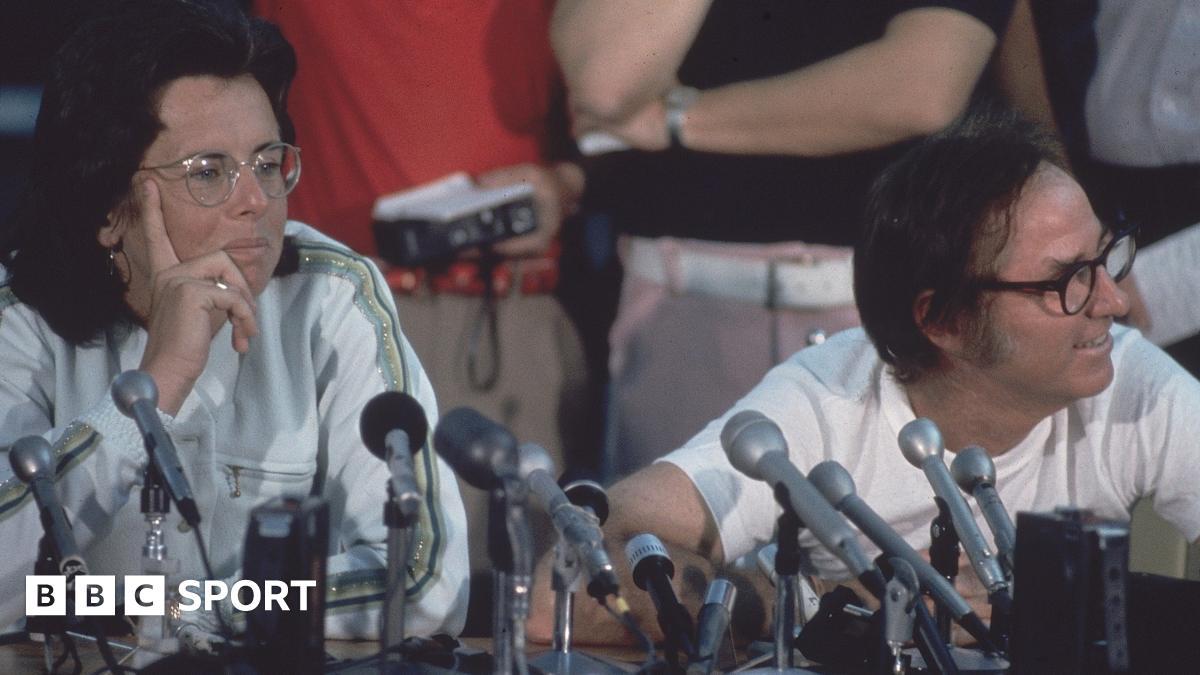
“It’s not the same. In 1973, we were fighting for our livelihoods, for respect, for the future of women’s tennis. This is entertainment. That doesn’t mean it doesn’t matter, but it carries a different weight.”
King’s distinction matters. Her match with Riggs arrived at a time when women’s tennis was fighting for recognition, scrambling for prize money, and pushing for basic credibility. Today, the WTA is a global powerhouse, and stars like Sabalenka command major endorsement deals and prime-time billing at the Grand Slams.
Aryna Sabalenka vs Nick Kyrgios: Power, Flair, and a Clash of Styles
From a pure tennis standpoint, Sabalenka vs Kyrgios is a fascinating contrast in weapons and temperament. Sabalenka brings relentless baseline power and improved composure; Kyrgios offers one of the most explosive serves on tour and an improvisational shot-making arsenal rarely seen in the modern game.


| Metric | Aryna Sabalenka | Nick Kyrgios |
|---|---|---|
| Peak singles ranking | No. 1 WTA | No. 13 ATP |
| Grand Slam singles titles | 4 | 0 (1 Wimbledon final) |
| Playing style | Aggressive baseline power, big serve, improved defense | Huge serve, touch, improvisation, frequent net approaches |
| Personality on court | Fiery but increasingly controlled | Mercurial, showman, emotionally volatile |
While exact exhibition rules and surface will significantly influence the matchup, the stylistic clash alone guarantees intrigue. Sabalenka’s heavy groundstrokes could grind down many ATP-level players in extended rallies, while Kyrgios’ serve and first-strike aggression can neutralize almost anyone if he finds his rhythm.
Why Billie Jean King Says It’s “Not the Same”
King’s resistance to direct comparison isn’t about downplaying Sabalenka or Kyrgios—it’s about context. In 1973, the “Battle of the Sexes” arrived amid open mockery of women’s tennis and skepticism about whether women deserved equal prize money or prime-time coverage.
- Economic stakes: King’s match was intertwined with the emerging women’s pro tour and a push for equal prize money.
- Cultural stakes: The Riggs challenge was framed as a referendum on women’s athletic legitimacy.
- Media narrative: Coverage focused on whether a top female player could beat a male opponent at all.
By contrast, Sabalenka and Kyrgios are operating in a world where women’s Grand Slams routinely sell out night sessions, and stars like WTA champions are mainstream sporting icons.
“Today’s players stand on the shoulders of what we fought for. When Aryna walks onto court, she does so as a proven champion, not as someone trying to prove women belong.”
That doesn’t mean this exhibition is irrelevant, but it does mean it shouldn’t be positioned as a verdict on women’s tennis.
Harmless Fun or Step Backward? The Debate Around Gender Exhibitions
Reaction across the tennis community has been split. Some fans and analysts see Sabalenka vs Kyrgios as a creative way to market the sport; others fear it risks reviving tired stereotypes about men “naturally” beating women.
- Entertainment-first perspective
Supporters argue that mixed-gender exhibitions generate buzz, attract casual fans, and showcase different tennis styles on the same stage. With social media highlights and cross-tour storylines, the sport gains valuable visibility.
- Caution-first perspective
Critics worry that framing the match as a “Battle of the Sexes 2.0” invites simplistic interpretations. If Kyrgios dominates, some will use it (wrongly) as “proof” that women’s tennis is inferior; if Sabalenka wins, it may be dismissed as the man not trying or it being “just an exhibition.”

King’s stance leans toward nuance: enjoy the event, respect the athletes, but avoid turning the result into a verdict on an entire gender or tour.
The Numbers Game: How Men’s and Women’s Tennis Compare
Gender exhibitions inevitably bring out questions about serve speeds, rally patterns, and physicality. From a performance analytics standpoint, ATP and WTA tennis are distinct but equally elite products.
| Metric (Hard Courts) | Top ATP | Top WTA |
|---|---|---|
| Average 1st-serve speed | 200–210 km/h | 175–185 km/h |
| Rally length (median) | 3–5 shots | 4–6 shots |
| Aces per service game | 0.6–0.9 | 0.3–0.6 |
| Return points won | ~31–33% | ~35–38% |
These differences shape how an exhibition like Sabalenka vs Kyrgios might unfold. Kyrgios’ serve may give him quick, cheap points; Sabalenka’s heavier rally tolerance and aggressive returns could trouble him if rallies extend and concentration wavers.

What matters most, King would argue, is not who wins, but how the event is framed: as a showcase of two elite professionals, not a pseudo-scientific experiment on gender.
Human Stories: Pressure, Legacy, and the Players’ Perspective
For Sabalenka, this exhibition is another entry in a growing portfolio of big-stage moments. She competes not just as a major champion, but as a standard bearer for a generation of WTA players who grew up idolizing Serena Williams and, yes, Billie Jean King.
Kyrgios, meanwhile, returns from long injury stretches and off-court battles eager to remind fans why he became must-watch TV in the first place. An exhibition like this plays to his strengths: showmanship, crowd energy, and a license to experiment.
“The key is that both players feel respected,” King has often said about mixed-gender events. “You want them walking off court thinking, ‘We put on a great show, and the game is better for it.’”

That human element—how Sabalenka and Kyrgios embrace the moment, acknowledge the history, and engage with fans—will define this event more than the scoreboard.
Tactical Outlook and Informed Prediction
Predicting a result in an exhibition is always risky—effort levels, format tweaks, and atmosphere can tilt the balance. Still, a few tactical themes stand out:
- Serve vs return: Kyrgios’ serve is a massive weapon, but Sabalenka is one of the WTA’s biggest ball-strikers and can attack short second serves.
- Rally patterns: Longer exchanges likely favor Sabalenka’s rhythm; Kyrgios will want to shorten points with variety and net rushes.
- Mental swings: Sabalenka has improved her composure in majors; Kyrgios’ level can spike or dip dramatically within a set.
If format and conditions mirror standard tour play and Kyrgios is dialed in, his serve-and-first-strike advantage makes him the slight favorite on paper. But if rallies extend and the atmosphere turns into a true grind, Sabalenka’s power and baseline intensity could very much turn this into a coin flip.
The smarter focus, aligning with King’s perspective, is less “who should win?” and more “what does the event showcase?” A fiercely competitive, respectful match—regardless of outcome—strengthens tennis as a whole.
Beyond the Scoreline: Protecting the Legacy of the Original Battle
Billie Jean King’s insistence that Sabalenka vs Kyrgios is “not the same” as her match with Riggs is a reminder to protect the legacy of 1973. That night in Houston wasn’t just about who could hit forehands and serves under pressure—it was about whether women athletes would be treated as equals.
Today’s exhibition can still carry meaning—showcasing mutual respect, highlighting how far women’s tennis has come, and inspiring the next generation of players on both tours. But it doesn’t need to relitigate the questions King already answered half a century ago.
As fans tune in, the real questions are forward-looking:
- How can mixed-gender events highlight the strengths of both tours without turning into a referendum on gender?
- Can exhibitions like this drive new investment, viewership, and grassroots interest in tennis worldwide?
- What responsibility do promoters and broadcasters have to present the match in a way that respects the sport’s history?
King’s message is clear: enjoy Sabalenka vs Kyrgios for what it is—a showcase of two unique talents—while remembering what her original “Battle of the Sexes” truly represented. The past has already made its statement. Now, it’s up to today’s stars to write the next chapter responsibly.
For more context on the professional tours and historical statistics, visit the official ATP Tour and WTA websites, along with reputable stats resources like Tennis Abstract.
