
Ashes Turning Point: Was Harry Brook’s Reverse Sweep a Brain Fade or Brave Intent?
Ashes 2025-26 Flashpoint: Was Harry Brook’s Reverse Sweep Reckless or Justified?
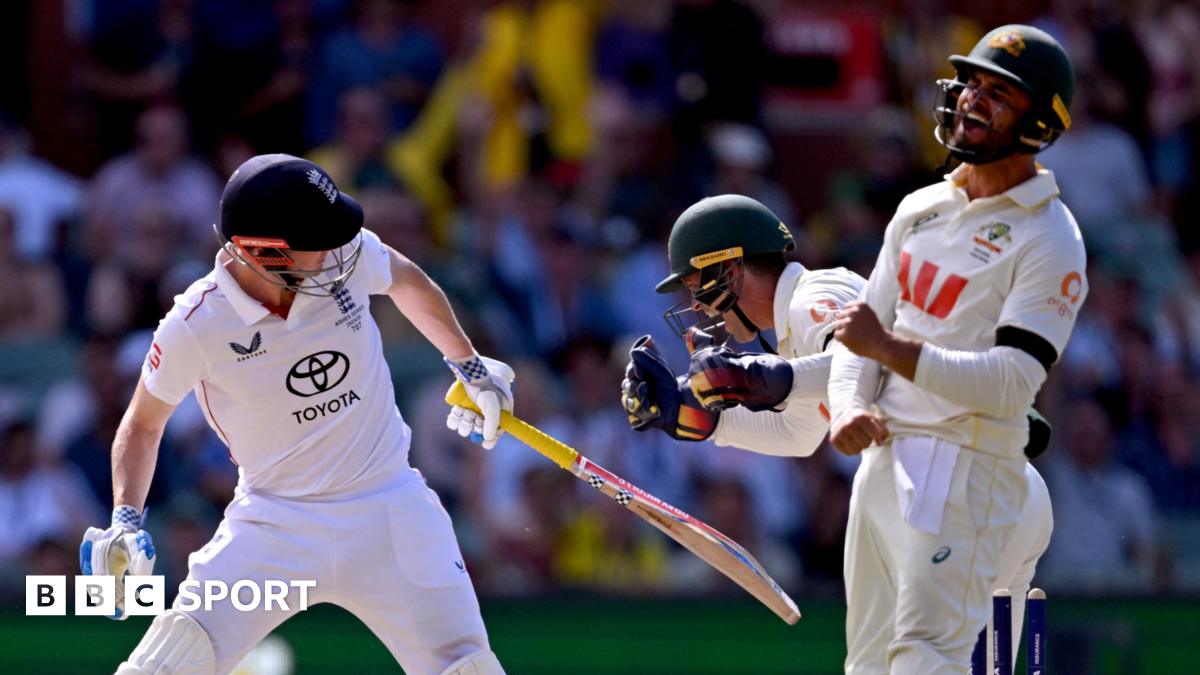
Harry Brook’s dismissal – a high‑risk reverse sweep with England clinging to Ashes hopes in 2025-26 – has already become one of those moments that will be replayed for years. In a series defined by the clash between Australia’s relentlessness and England’s Bazball intent, Brook’s choice of stroke with the game on the line has split opinion: was it a moment of reckless stupidity, or a bold shot entirely consistent with the philosophy that revived English Test cricket?
To judge the shot fairly, you have to look beyond the slow‑motion replays. Context, match situation, conditions, Brook’s strengths, and England’s attacking blueprint all feed into whether that single reverse sweep was defensible, or whether it will be filed alongside some of the most infamous Ashes brain fades.
Match Situation: Why Brook’s Wicket Felt So Huge
When Brook walked out, England were not just chasing runs; they were chasing the series. The Ashes ledger read heavily in Australia’s favour, and this Test had become England’s last realistic route back. The pitch was wearing, Nathan Lyon and Australia’s seamers had their tails up, and every wicket felt like a door slamming on English hope.
Crucially, Brook had started with uncharacteristic patience. Across his first 25 balls he largely shelved the big strokes, playing within himself, picking length late and respecting the straight ball. That restraint was noticed precisely because the Yorkshire right‑hander usually scores at a tempo that bends games. On this day, he seemed determined to prove he could dig in.
“We just wanted Harry to be himself,” an England coach suggested afterwards. “He’s at his best when he’s positive. You don’t pick him to prod and poke.”
That tension – between survival and expression – framed every decision Brook made, including the one that sent him back to the pavilion.
The Bazball Lens: Live by the Sword, Die by the Sword
Since Ben Stokes and Brendon McCullum took charge, England’s batting identity has been brutally clear: proactive, aggressive, and occasionally bordering on reckless. The numbers since the start of the Bazball era underline the shift.
| Stat (Home & Away) | Pre‑Bazball (2018–2021) | Bazball Era (2022–2025) |
|---|---|---|
| Run rate (runs per over) | 3.10 | 4.50+ |
| 50+ scores per Test | 3.1 | 4.2 |
| Four‑ or five‑day finishes | 68% | 90%+ |
Source: Aggregated Test stats from ESPNcricinfo and ICC records.
Within that framework, dismissals like Brook’s are almost built into the model. You take on the bowlers, you accept ugly looking failures. England’s leaders have repeatedly insisted they will not criticise players for getting out playing their shots.
“If you get out being positive, that’s fine by me,” Stokes has said more than once. “We’ll never hammer a guy for taking the game on.”
That doesn’t mean every attacking stroke is automatically smart. It does, however, tilt the conversation: instead of asking “Why did he play that?” the better question becomes “Was that the right attacking option in that situation?”
Breaking Down the Dismissal: Ball, Field, and Option
To evaluate whether Brook’s reverse sweep was stupid or valid, you have to break the moment into parts:
- The bowler and line: Lyon was attacking the rough outside off, dragging Brook across his stumps. The orthodox off‑side scoring areas were heavily patrolled.
- The field: Australia had packed the off‑side ring with catchers and sweepers, leaving the fine third and backward‑point region relatively open for the reverse.
- The match situation: England still needed a sizeable chunk of runs with the tail exposed. Brook was England’s last recognised counter‑puncher.
- Brook’s strengths: He has a strong base against spin, and the reverse sweep is not alien to his game, though it is not his primary scoring shot in Tests.

On paper, a reverse sweep to exploit the gap behind point was not inherently irrational. The ball was outside off, the boundary was temptingly square, and runs were needed. What made the dismissal look ugly was the execution: Brook was late into position, the bat face was not stable, and the top edge flew to a perfectly stationed catcher.
“He picked the right shot to the field, but not the right ball,” one former England batter observed on TV. “That one was just a fraction too full and too quick to go square early.”
Numbers Game: How Risky Was the Reverse Sweep for Brook?
Modern cricket analytics can put a rough value on shots like Brook’s. Analysts often look at boundary percentage, dismissal percentage, and expected runs per stroke. Based on publicly available wagon‑wheel and dismissal data for Brook in Tests up to late 2025, his relationship with the sweep family of strokes is revealing.
| Stroke vs Spin (Tests) | Approx. Balls Faced | Boundaries % | Dismissals % |
|---|---|---|---|
| Conventional drives (on/off) | 250+ | 18–20% | 7–8% |
| Sweep (front‑of‑square) | 90–110 | 24–26% | 10–12% |
| Reverse sweep / scoop | 40–50 | 28–30% | 14–16% |
Estimates based on Test innings data and ball‑by‑ball logs from ESPNcricinfo’s Harry Brook profile. Percentages are approximate but capture relative risk.
This rough snapshot shows that Brook’s reverse options do return boundaries more often than his drives – but also get him out roughly twice as frequently. They are high‑leverage strokes. In a chase where England still had overs in hand but were running thin on batting, layering that extra risk on top of an already precarious situation was always going to be heavily scrutinised if it failed.

The Case for “Valid” and the Case for “Stupid”
In the hours after the dismissal, opinion split sharply. Strip away the emotion and both camps have reasonable arguments.
Why the shot was valid
- Aligned with team philosophy: England have been explicit: keep attacking, even when the pressure spikes. Brook stayed true to that brief.
- Tactical response to the field: Australia’s off‑side cordon made conventional scoring costly. The reverse targeted the least protected area.
- Element of surprise: After a spell of watchfulness, a sudden gear‑change can disrupt a bowler’s rhythm and force field changes.
- Brook’s scoring role: With the tail looming, Brook was not just there to survive; he was there to narrow the target quickly before partners ran out.
Why the shot looked stupid
- Game state demanded percentage cricket: England were not chasing at 7 an over in a T20; nudging, wearing Lyon down and farming the strike might have been safer.
- Risk stacked on risk: A high‑variance stroke against the only bowler consistently threatening the edge gave Australia a free roll.
- Execution window was tiny: On a tiring pitch with variable bounce, the margin for error on a reverse sweep shrinks dramatically.
- Psychological impact: A dismissal that “looks bad” energises the opposition and deflates the dressing room more than a nick to slip after a defensive error.
“In another universe, that flies for four and he’s a genius,” a former Australia great said on radio. “But in this one, he’s walking off and everyone’s asking why he didn’t just bat time.”
The Human Angle: Brook’s Temperament and England’s Trust
Beyond the technical breakdown, this flashpoint is about a 20‑something batter still learning where his limits truly lie in Test cricket. Harry Brook has already played match‑shaping innings in Pakistan, New Zealand and at home. His game is built on confidence and tempo; dulling that edge excessively risks diminishing the very qualities that make him special.
Insiders have consistently described Brook as “fearless rather than careless”. Those close to the England setup say the dressing room message after the Ashes loss was supportive rather than accusatory.
“He’ll be hurting, of course he will,” a senior England player reflected. “But we’d be hypocrites if we suddenly told him to go into his shell. We win a lot of games because he takes options like that.”
That backing matters. At Ashes level, the mental toll of a high‑profile mistake – amplified by social media clips and endless replays – can linger. England’s challenge is to make sure this becomes a learning point, not a scar that pushes Brook away from his natural game.

So, Was It Stupid or Valid? A Nuanced Verdict
Inside the raw emotion of an Ashes defeat, it is easy to brand Brook’s stroke “stupid”. It looked ugly, it came at the worst possible time, and it confirmed Australia’s grip on the urn. But judged against England’s philosophy, the field, and Brook’s role, the call is more nuanced.
- Strategically: Choosing a boundary option to a ball outside off with third man open was not inherently brainless.
- Tactically: The specific delivery – a touch fuller and quicker – made the execution window far narrower than Brook seemed to allow for.
- Execution: Footwork and bat control deserted him at the crucial moment; the shot failed more because of mechanics than concept.
In other words, the idea was just about defensible within Bazball logic, but the timing and execution turned it into a bad decision. Not sheer stupidity, but certainly a mis‑calculation that he, and England, will replay for a long time.
Australia, for their part, executed their plans ruthlessly, squeezing Brook into searching for high‑risk options. That is what the Ashes does: it compresses time and space until great players are forced into marginal calls.

What Brook’s Shot Means for the Future of England’s Bazball
Brook’s reverse sweep will live in Ashes highlight reels, but its true impact may be felt in quieter rooms: selection meetings, batting reviews, and tactical debriefs. England now face a defining question for the Bazball project: when the urn is on the line, does “fearless” need a slightly firmer set of red lines?
Expect teams to respond in a few key ways:
- Refined shot selection: England may encourage batters to separate “percentage” attacking shots from “hail Mary” options late in tight chases.
- Match‑up planning: More detailed plans for each spinner – when to sweep, when to skip down, when to milk – especially in high‑pressure fourth‑innings scenarios.
- Mental routines: Batters like Brook working with psychologists and coaches to reset after big moments, so one dismissal doesn’t reshape their entire method.
As the dust settles on the 2025-26 Ashes, the bigger story is not one reverse sweep. It is whether England can keep playing bold, exhilarating cricket while sharpening their decision‑making in the moments that truly decide the urn.
When Brook next faces Australia, and Lyon floats one up outside off with the field split, the cricket world will hold its breath. Does he go again, or does he tuck it for one? That answer will tell us as much about the evolution of Bazball as any press conference soundbite.
For full scorecards, ball‑by‑ball details and official Ashes standings, visit the ICC’s official site and the ESPNcricinfo Ashes 2025-26 series hub.
