
Apple’s On‑Device AI Revolution: How the Next iPhone and Mac Will Change Private Computing
From Neural Engine–optimized silicon to privacy‑preserving system features and new tools for developers, Apple’s AI strategy is reshaping what we expect our personal devices to do locally—without constantly phoning home to the cloud.
Apple’s AI story is fundamentally different from that of OpenAI, Google, or Microsoft. While others race to ship ever‑larger cloud models, Apple is methodically building an AI layer into iOS, iPadOS, and macOS that runs on the device itself. This approach is rooted in three pillars: custom silicon, integrated software, and a long‑standing commitment to privacy. As the next wave of iPhones and Macs approaches, on‑device AI is moving from a background enabler to the main reason many users consider upgrading their hardware.
Tech media such as The Verge, Wired, and TechRadar increasingly frame Apple’s launches around AI: How smart is the new photo search? Does dictation finally feel human‑grade? Can Siri meaningfully catch up to Gemini and Copilot? Underneath these questions lies a deeper shift: your phone and laptop are becoming personal AI appliances tailored to you, not generic terminals to a remote supercomputer.
Mission Overview: Apple’s Vision for On‑Device Intelligence
Apple’s mission is to make AI feel invisible, ambient, and trustworthy—baked into everyday tasks rather than presented as a standalone chatbot. In Apple’s own language, this is often called “intelligence” or “machine learning” instead of “AI,” but the underlying technologies are the same: deep neural networks, generative models, and multimodal perception.
“We believe AI is most powerful when it’s deeply integrated into the experience, designed to protect user privacy, and runs seamlessly on the devices people use every day.” — Attributed to senior Apple leadership in recent public statements
From an ecosystem perspective, Apple’s goals include:
- Enhancing core apps like Photos, Mail, Messages, and Notes with AI features that feel native and fast.
- Reducing cloud dependence by shifting more inference to A‑series and M‑series chips’ Neural Engines.
- Empowering developers through frameworks like Core ML and Create ML while keeping energy usage manageable.
- Preserving privacy with on‑device processing and strict data minimization when cloud services are necessary.
In practice, this means the next iPhone and Mac generations will ship not just with faster CPUs and GPUs, but with substantially upgraded NPUs (Neural Processing Units) and model‑aware system software.
OS‑Level AI Features: Everyday Intelligence in iOS and macOS
Each new version of iOS and macOS has quietly expanded AI features, many of them running entirely on‑device:
- Semantic photo search: Find “dog at the beach at night” without manually tagging images.
- On‑device photo editing: Background removal, subject lifts, portrait relighting, and object cleanup.
- Enhanced dictation and translation: Hybrid on‑device/cloud models that adapt to your voice and language patterns.
- Smart text features: Autocorrect powered by transformer models, inline predictions, and on‑device summarization of long notes or web content.
- Proactive suggestions: Siri Suggestions in Mail, Messages, and Calendar that anticipate actions based on context.
Rumors and developer‑tooling hints suggest that upcoming releases may broaden this to:
- System‑wide summarization for documents, email threads, PDFs, and even live meeting transcripts.
- Advanced accessibility tools, such as live scene descriptions, object identification, and personal voice assistance fully on‑device.
- Generative writing aid within Mail and Messages that drafts replies, subject lines, or clarifications while preserving your tone.
YouTube reviewers regularly benchmark these experiences against cloud assistants like Google Gemini or ChatGPT, highlighting one core trade‑off: Apple’s on‑device features often feel more responsive and private, but currently less open‑ended or conversational than large cloud models.
Technology: A‑Series and M‑Series Silicon as AI Engines
Apple’s on‑device AI push is inseparable from its chip design. Since the introduction of the Neural Engine in A11 Bionic, every new generation of A‑series (for iPhone) and M‑series (for Mac) silicon has significantly increased AI throughput—measured in trillions of operations per second (TOPS)—while improving efficiency.
Neural Engine and Heterogeneous Computing
Modern Apple SoCs use a heterogeneous architecture:
- CPU cores handle general logic and control flow.
- GPU cores accelerate parallelizable tasks like graphics and some ML operations.
- Neural Engine (NPU) is optimized specifically for matrix multiplications and tensor operations common in deep learning.
As TOPS increases, Apple can run:
- Higher‑capacity models entirely on‑device (larger vocabularies, more context, richer semantics).
- Multiple concurrent models (e.g., voice recognition + predictive text + image understanding) with minimal lag.
- Lower‑precision inference (e.g., 8‑bit or 4‑bit quantization) to save power while maintaining acceptable accuracy.
Core ML, Neural Engine, and Model Optimization
Developers access this hardware through Core ML and Metal Performance Shaders. Apple’s toolchain supports:
- Model conversion from popular frameworks like PyTorch and TensorFlow into Core ML format.
- Quantization and pruning to reduce model size so that it fits device memory and power envelopes.
- On‑device personalization through lightweight fine‑tuning or adapter layers fed by user interaction data.
“On‑device machine learning isn’t just about privacy; it’s about latency and reliability. Your app should continue to feel intelligent even with no network at all.” — Apple WWDC machine learning sessions
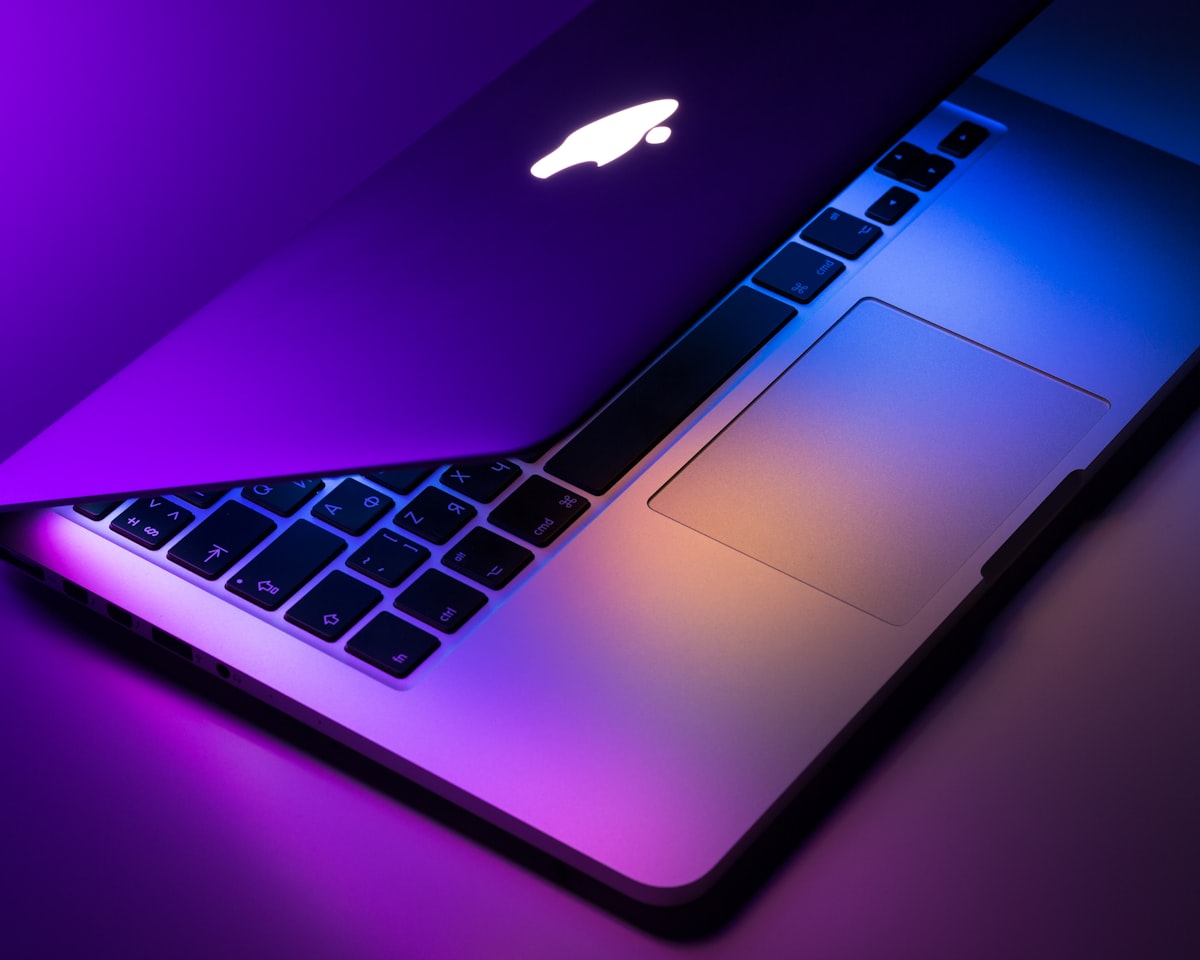
Visualizing Apple’s On‑Device AI Future


Privacy and Data Governance: Why On‑Device Matters
Apple’s brand is tightly coupled to privacy. On‑device AI is not only a technical strategy; it is a trust strategy. By processing sensitive data—photos, messages, location history, health metrics—locally, Apple limits how often that information needs to traverse the network or sit on remote servers.
On‑Device vs Cloud: Trade‑Offs
Publications like Wired and Recode analyze the balance between Apple’s privacy stance and the capabilities of giant cloud models:
- On‑device strengths:
- Low latency and offline availability.
- Stronger privacy by default; sensitive data doesn’t leave the device.
- More predictable behavior, since models can be tested against specific hardware.
- Cloud strengths:
- Access to massive models with billions of parameters.
- Continuous server‑side updates without device OS upgrades.
- Easier integration with cross‑platform services and external data sources.
Apple navigates this by:
- Maximizing what can run on‑device.
- Using data minimization and sometimes differential privacy when data must be collected for improvement.
- Leaning on end‑to‑end encryption for services like iMessage and iCloud Keychain.
“We build privacy into everything we do, and that includes the way we design and deploy machine learning.” — Apple Privacy Principles
The open question for the next iPhone and Mac generation is how far on‑device models can stretch toward the open‑ended reasoning and generation we associate with frontier cloud AI, without eroding those privacy guarantees.
Hardware Upgrades: AI as the New Upgrade Cycle
Historically, users upgraded phones and laptops for faster performance, better cameras, and improved displays. AI is emerging as a new motivator: certain headline features may be gated to newer chips because of their Neural Engine performance or memory bandwidth.
Feature Gating and Generational Cutoffs
Reviewers from Ars Technica, TechRadar, and YouTube channels frequently track which AI features land only on the latest models. Reasons include:
- Model size and latency: Older chips may not run newer models at interactive speeds.
- Battery impact: Long‑running inference can drain older batteries quickly.
- Thermal constraints: Intensive AI workloads generate heat, requiring better thermal design.
This leads to an AI‑driven upgrade cycle:
- AI features are announced as key selling points of the newest iPhone or Mac.
- Older devices receive a partial subset, often missing real‑time or generative capabilities.
- Users who rely on creative, productivity, or accessibility workflows increasingly see value in upgrading.
Preparing for AI‑Heavy Workloads
Power users and developers may want to invest in higher‑end configurations to future‑proof for AI:
- More unified memory on Macs for running multiple or larger models locally.
- Higher‑end GPUs/NPUs in M‑series chips for on‑device training and fine‑tuning experiments.
- Higher‑capacity storage to cache models, embeddings, and AI‑generated content.
For readers considering a purchase, devices like the MacBook Air with M2 or M3 in the U.S. market are popular choices that balance performance, efficiency, and AI readiness.
Competitive Positioning: Apple vs OpenAI, Google, and Microsoft
While Apple emphasizes on‑device intelligence, competitors lean on powerful cloud services:
- Google integrates Gemini into Android and Google Workspace, with deep search and web context.
- Microsoft weaves Copilot through Windows, Office, and Azure.
- OpenAI pushes frontier models like GPT‑4‑class systems and multimodal assistants accessible via the web and APIs.
Commenters on Hacker News and podcasts debate whether Apple will:
- Expand partnerships with providers like OpenAI for certain queries requiring cloud‑scale reasoning.
- Double down on its own models for conversational and generative capabilities.
- Adopt a hybrid approach: a powerful local assistant that selectively escalates tasks to trusted cloud partners.
YouTube analyses, including in‑depth teardown videos and benchmark comparisons, suggest that Apple’s key differentiator will be tight, low‑friction integration—AI that is simply “part of the OS” rather than a separate app or subscription.
Analysts have argued that Apple’s advantage is not in shipping the largest model, but in making AI “disappear into the experience” through hardware, software, and services working together.
The next major iPhone and Mac launches are likely to crystallize this strategy—with Siri upgrades, AI‑assisted camera features, and smarter system‑wide tools forming the narrative centerpiece.
Ecosystem Implications: What This Means for Developers
For developers, the shift toward on‑device AI changes both architecture and business models. Instead of relying entirely on remote inference, many apps will increasingly:
- Use system‑provided models (e.g., Apple’s text, vision, or speech models) for common tasks.
- Deploy custom, smaller models via Core ML for domain‑specific intelligence.
- Adopt hybrid patterns, where simple or sensitive tasks run locally and complex reasoning goes to the cloud.
Key Questions for Developers
Developer‑focused outlets and WWDC sessions highlight several questions:
- Will Apple expose enough API surface to build rich AI experiences without shipping large models?
- How will battery and thermal constraints shape app design for always‑on intelligence?
- What will be the App Store review guidelines for AI‑powered apps, especially regarding content safety and privacy?
Apple’s frameworks already support features like:
- On‑device text classification and sentiment analysis.
- Vision models for object recognition, barcode scanning, and hand‑pose detection.
- Audio analysis for wake‑words and sound classification.
Resources such as Apple’s official WWDC machine learning sessions and third‑party tutorials on platforms like YouTube give developers practical patterns for integrating these capabilities while meeting Apple’s stringent performance and privacy guidelines.
Scientific Significance: Personalized Models and Edge AI
From a research perspective, Apple’s on‑device focus contributes to broader trends in edge AI and federated learning. Rather than centralizing all intelligence on servers, the computation is distributed across billions of endpoints.
Advantages of Edge AI
Edge‑centric architectures can:
- Reduce bandwidth by sending only model updates or aggregated statistics.
- Improve robustness when networks are unreliable or congested.
- Support personalization based on local user behavior without raw data leaving the device.
Apple’s past exploration of differential privacy and on‑device learning suggests that the next generation of iPhones and Macs could push further into:
- Per‑user model customization (e.g., writing style, frequently used entities, accessibility preferences).
- Cross‑device intelligence where your Mac and iPhone coordinate via secure, encrypted channels to share improvements.
- Energy‑aware scheduling of AI tasks (for instance, batching intensive inference when devices are plugged in).
Milestones: How We Got Here
Apple’s on‑device AI path has unfolded over several key milestones:
- Early Siri (iPhone 4s era): Cloud‑based assistant with limited context, setting the stage for voice interfaces.
- A11 Bionic Neural Engine: Hardware‑accelerated inference for Face ID and early ML tasks.
- Core ML launch: Standardized pipeline for developers to deploy models on iOS and macOS.
- Apple Silicon for Mac: Unified architecture across iPhone, iPad, and Mac, making cross‑platform AI viable.
- Transformer‑based features for autocorrect, dictation, and language understanding in recent OS versions.
Each step tightened the feedback loop between hardware, software, and AI: more capable silicon enabled richer models, which in turn justified new system features and developer capabilities.
Looking ahead, the rumor cycle around forthcoming iPhones and Macs suggests that:
- Siri will see deeper OS‑level integration with context awareness across apps.
- The Camera app will use on‑device generative models to enhance low‑light performance and composition suggestions.
- Accessibility will gain AI‑powered live descriptions and custom assistive workflows.
Challenges: Limits, Risks, and Open Questions
Apple’s approach is not without constraints and risks that tech media and researchers emphasize.
Technical and Product Challenges
- Model size vs device limits: Fitting powerful models into mobile memory and storage while maintaining speed.
- Keeping pace with frontier research: Matching cloud‑scale models in reasoning, creativity, and multimodality.
- Testing across hardware generations: Ensuring consistent behavior from older iPhones to the latest Macs.
Ethical and Governance Challenges
- Transparency: Explaining what is processed on‑device versus in the cloud in clear, user‑friendly language.
- Bias and fairness: Ensuring on‑device models are inclusive across languages, dialects, and cultures.
- Content safety: Managing generative features so that they avoid harmful or misleading outputs.
As Wired has noted, “privacy‑preserving AI doesn’t automatically mean fair or transparent AI”—companies still need robust evaluation and disclosure practices.
There is also a strategic question: will consumers accept a somewhat more constrained but private on‑device assistant over a more capable but data‑hungry cloud counterpart? The answer will shape Apple’s long‑term AI trajectory.
Practical Guidance: Preparing for the Next iPhone and Mac Generation
If you are evaluating when and what to upgrade, consider the following AI‑centric criteria:
- Neural Engine generation: Newer A‑series and M‑series chips typically unlock more features and smoother inference.
- Memory and storage: Aim for configurations that comfortably handle local models, especially on Macs.
- Battery health: On‑device AI tasks are efficient, but older batteries may struggle with sustained workloads.
Complementary hardware can also help you take full advantage of AI workflows. For example, many users pair their Mac with a high‑quality webcam such as the Logitech StreamCam for AI‑enhanced video calls, background effects, and auto‑framing.
Developers and power users may also want a reliable external SSD, like the Samsung T7 Portable SSD , to store large datasets, model checkpoints, or AI‑generated media without crowding internal storage.
Conclusion: Personal Devices as Private AI Hubs
Apple’s integration of on‑device AI into iOS and macOS marks a deep shift in personal computing. Rather than framing the future as “AI in the cloud,” Apple is positioning the iPhone and Mac as private AI hubs—always with you, tuned to your patterns, and increasingly capable of complex perception and generation without constant network access.
The coming iPhone and Mac generations will test how far this philosophy can go. If Apple can deliver assistants and features that feel as capable as cloud‑based rivals while preserving privacy and responsiveness, it could redefine mainstream expectations for what “intelligent devices” mean—pushing the broader ecosystem toward more responsible, user‑centric AI.
For users, the bottom line is simple: your next device purchase is no longer just about CPU speed or camera megapixels. It’s about how much trustworthy, personalized intelligence you want living directly in your pocket or on your desk.
Additional Resources and Further Reading
To dive deeper into Apple’s on‑device AI and the broader edge‑AI landscape, explore:
- Apple Machine Learning Research – Official blog with technical deep dives and papers.
- Apple Developer: Machine Learning – Documentation and WWDC videos.
- Wired AI Coverage – Critical reporting on AI, privacy, and policy.
- The Verge: Apple – Product news, rumors, and feature analyses.
- YouTube: Apple On‑Device AI & WWDC Sessions – Talks and commentary.
- arXiv.org – Search for papers on edge AI, federated learning, and mobile inference.
Following researchers on professional networks such as LinkedIn and X (Twitter)—for example, Yoshua Bengio or Andrew Ng—can also provide broader context on where on‑device and cloud AI are heading.
